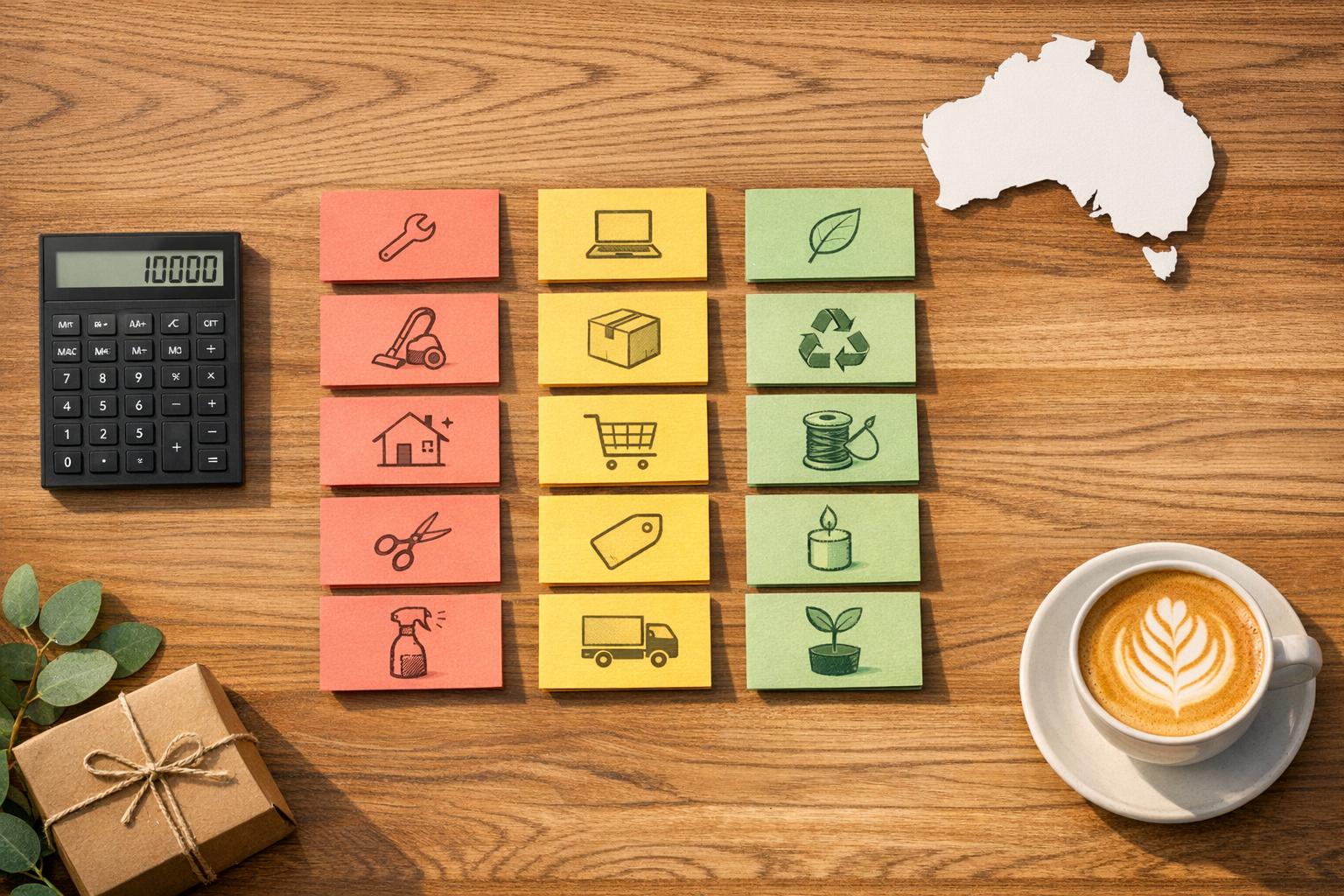
Starting a business in Australia with $10,000 is not only possible but also practical in 2026. With 97.3% of Australian businesses being small ventures, the market is ripe for low-cost, high-potential opportunities. Advances in AI, automation, and online tools have lowered barriers, making it easier than ever to start and manage a business. Here are 15 realistic ideas across four categories:
- Low-Cost Services: Virtual assistant services, mobile car detailing, eco-friendly cleaning, and social media management.
- E-commerce: Dropshipping, print-on-demand, niche subscription boxes, and digital products like online courses or templates.
- Handmade Ventures: Candle making, curated vintage fashion, men's grooming products, and freelance graphic design.
- Eco-Friendly Businesses: Services like solar panel cleaning, compost collection, and eco-friendly cleaning.
Each idea aligns with trends like sustainability, online shopping, and the growing use of AI. Whether you focus on services, products, or niche markets, these options provide a clear path to entrepreneurship with a $10,000 budget.
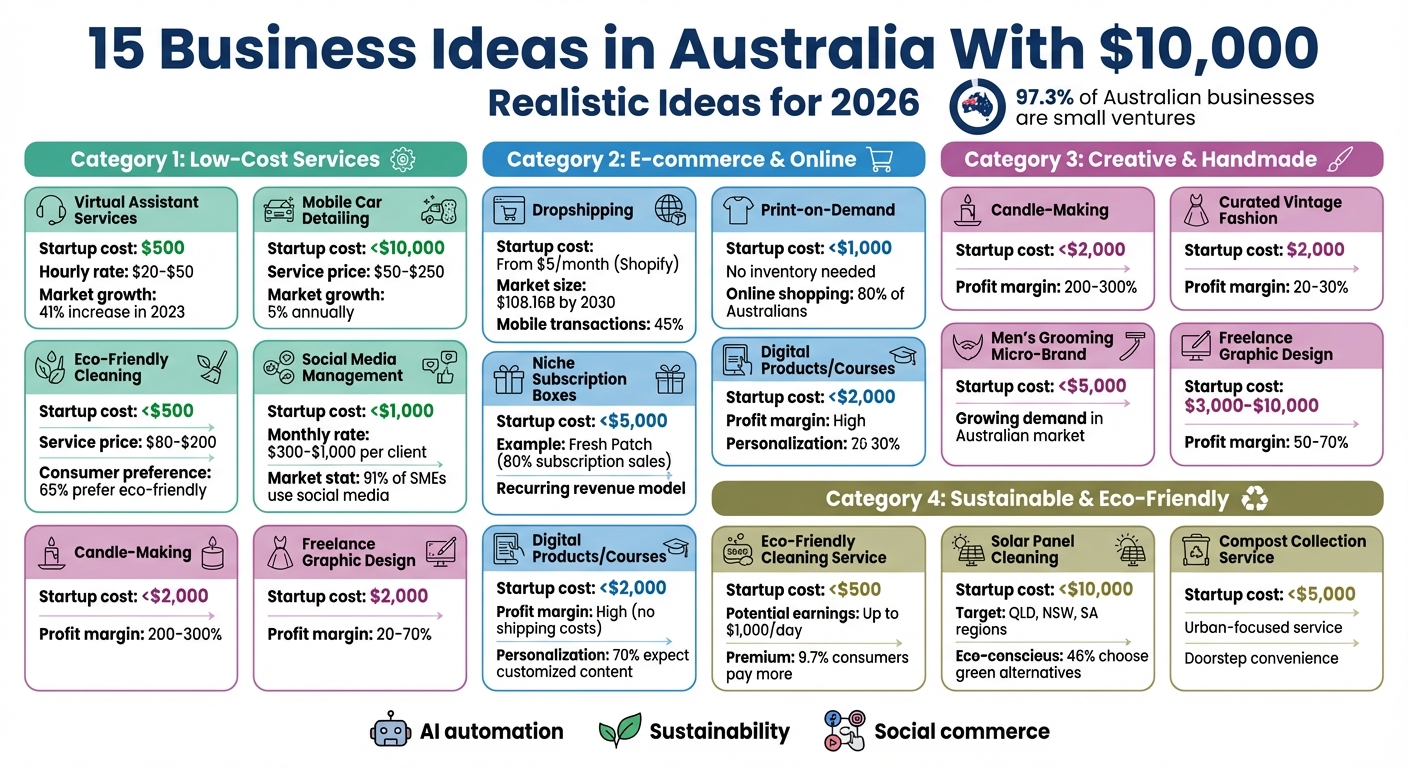
15 Business Ideas in Australia Under $10,000: Startup Costs and Revenue Potential
25 Easy Side Hustle / Business Ideas to Make Money in Australia in 2025
sbb-itb-08dd11e
1. Low-Cost Services
Starting a service-based business is a smart move when working with a smaller budget. These ventures rely on personal expertise and typically require minimal upfront investment. With 91% of small-to-medium enterprises already using social media for marketing, the landscape is ripe for service-based startups. Here are four ideas that fit within a $10,000 startup budget.
Virtual Assistant Services can be launched for as little as $500. With remote work on the rise, demand for virtual assistants has surged - Australia alone saw a 41% increase in 2023. All you need is a reliable laptop and cloud-based tools for scheduling and communication. Virtual assistants handle tasks like managing emails, coordinating calendars, and providing customer support. Hourly rates typically range from $20 to $50. Platforms like Upwork and Fiverr are great for finding clients and building your portfolio.
Mobile Car Detailing is another low-cost option. All you need is a cleaning kit, eco-friendly products, and insurance to get started. The Australian car detailing market is growing at a 5% annual rate, and services are priced between $50 and $250, depending on the package. Since you travel to clients, there's no need to rent a commercial space. Consider focusing on a niche, like detailing for Airbnb hosts or luxury vehicles, to stand out in your area.
Eco-Friendly Cleaning Services are a great fit for today's environmentally conscious consumers - 65% of Australians prefer eco-friendly services. Startup costs are low, requiring only non-toxic cleaning supplies, liability insurance, and some basic marketing. Service fees typically range from $80 to $200. Targeting specific markets, like vacation rentals or small offices, can help you build a steady stream of recurring clients. Delivering quality results can lead to valuable word-of-mouth referrals.
Social Media Management is another service that requires minimal investment. With just a laptop and software subscriptions, you can offer your expertise to businesses navigating the digital space. Small-to-medium enterprises' heavy use of social media creates strong demand for skilled managers. You can charge between $300 and $1,000 per client each month. Specializing in a specific industry - like cafes, fitness studios, or local shops - can help you create tailored strategies and show quick, measurable results.
2. E-commerce and Online Businesses
Online businesses offer an appealing combination of flexibility and low startup costs, making them a great option for entrepreneurs. Australia's e-commerce market is expected to hit $108.16 billion by 2030, with over 80% of Australians shopping online regularly. Interestingly, about 45% of these transactions take place on mobile devices. Here are four online business models you can start with $10,000 or less.
Dropshipping is a model where you don’t need to manage inventory or deal with storage. Instead, a third-party supplier handles product fulfillment, and you only pay for items after customers place orders. This approach minimizes risk and allows you to experiment with different products and niches without a hefty upfront investment. You can start with a Shopify store (costs as low as $5 per month), use tools like Google Trends to gauge demand, and focus on a specific niche to stand out from larger competitors.
Print-on-Demand (POD) lets you create custom products - such as clothing or home décor - without the need for upfront inventory. Products are printed and shipped only when a customer places an order.
Entrepreneur Kamil Sattar explains: "Print on demand gives you that option to be like, 'You know what, I want to start a fashion brand, not have to pay for any stock, test these designs out, and see if they do well'".
If you’re not confident in your design skills, platforms like Fiverr can connect you with affordable designers. This model is a great way to test creative ideas without significant financial risk.
Niche Subscription Boxes are another promising option, offering recurring revenue by delivering curated products regularly. For example, Fresh Patch, an Australian company that sells grass patches for pets, reported that over 80% of its sales came from subscriptions as of December 2025.
Founder Andrew Feld advises: "Try and find something that is necessary and needs to be replenished".
Consider focusing on specific markets like eco-friendly products, specialty foods, or pet supplies. The Vegan Box, which caters to plant-based consumers, is a prime example of success in a focused niche.
Digital Products and Online Courses provide high margins since there are no shipping or inventory costs. You can sell items like ebooks, templates, guides, or video courses that draw on your expertise. With 70% of consumers expecting personalized experiences, tailoring your content to solve specific problems for a targeted audience can make a big difference. Platforms like Shopify can host your store and handle digital downloads automatically. While creating the content requires time and effort upfront, each sale offers substantial returns.
3. Creative and Handmade Ventures
If you have a knack for creating handmade items, Australia's increasing interest in personalized and eco-friendly products offers plenty of opportunities. These types of businesses are ideal for starting small, often requiring less than $5,000 to get off the ground, and can be run from home - saving you from high rental costs. Creative ventures like these align well with the low-cost services and online businesses mentioned earlier. Here's a look at four creative business ideas that fit within a $10,000 budget.
Starting a creative business allows you to combine passion with practicality, offering a more hands-on path to entrepreneurship.
Candle-Making Business is a great option, boasting profit margins of 200%–300% per candle. Even better, you can get started for under $2,000. To begin, you’ll need basic supplies like wax, fragrances, and molds. Kristen Pumphrey, the founder of P.F. Candle Co., highlights the importance of finding your niche:
"You have to figure out what's not being fulfilled in the market. For us, that was creating a unisex candle".
Start small by selling your candles at local markets or pop-up events in Australia, and then expand to an online store once you’ve tested your products.
Curated Vintage Fashion taps into the growing upcycling trend. With startup costs as low as $2,000, you can source high-quality pieces from thrift stores and consignment shops, then resell them on platforms like Etsy or Instagram. Margins typically range from 20% to 30%, so having an eye for standout brands and knowing what appeals to your audience is crucial.
Men's Grooming Micro-Brand focuses on artisanal products like beard oils, colognes, and skincare items. You can start with less than $5,000 and take advantage of the rising demand for grooming products tailored to Australian men. Offering unique formulations or eco-friendly packaging can help your brand stand out in this competitive market.
Freelance Graphic Design is another avenue, requiring an initial investment of $3,000–$10,000 for software, hardware, and setting up a portfolio website. Chris Hughes, founder of Timberware, advises:
"My best advice would be to start with what you can afford and slowly grow your tool arsenal. Be patient, and don't overextend yourself".
By leveraging AI tools to handle administrative tasks, you can focus on creative work and achieve profit margins of 50%–70%.
These creative ventures not only offer financial rewards but also allow you to turn your passion into a thriving business.
4. Sustainable and Eco-Friendly Businesses
Australia’s sustainability market is thriving, with consumers willing to pay a 9.7% premium for eco-friendly products, and 46% actively choosing green alternatives. This trend is opening up real opportunities for entrepreneurs who want to align their businesses with environmental values. As Phantila Phataprasit, founder of Sabai Design, explains:
"People really do want to support sustainable brands, want to buy products that are sustainable, and those companies are growing faster than their counterparts across the board".
Here are three business ideas that require relatively low investment and align with this growing demand:
- Eco-Friendly Cleaning Service: With an initial investment of under $500, you can offer cleaning services using natural, non-toxic supplies like vinegar, lemon, and baking soda. This service appeals to homes, Airbnbs, and offices looking for chemical-free alternatives. Depending on your pricing, this niche can generate earnings of up to $1,000 per day.
- Solar Panel Cleaning and Maintenance: In sunny regions like Queensland, New South Wales, and South Australia, solar panel cleaning is in high demand. Dust and debris reduce panel efficiency, making regular maintenance essential. Starting this business requires minimal equipment and transportation and can be launched for less than $10,000.
- Compost Collection Service: This model involves picking up food scraps from homes and cafes in sealed buckets to create nutrient-rich compost for gardeners. With basic transport and containers, this service is particularly suited to urban areas with eco-conscious residents. Offering doorstep pickup adds convenience, making this an attractive option.
Sarah Paiji Yoo, founder of Blueland, emphasizes the importance of transparency in this space:
"There's so much greenwashing in this day and age. None of these terms - eco‑friendly, sustainable, green - none of it's regulated".
To stand out in this competitive market, consider obtaining certifications like Fair Trade or organic labels. These can help build trust and credibility with customers who are increasingly scrutinizing claims of sustainability.
Conclusion
Starting a business in Australia with $10,000 is more than achievable - it’s a smart move when paired with thoughtful planning, market awareness, and a clear budget.
Begin by validating your idea. Use tools like Google Trends and SEMrush to assess demand, conduct local surveys to understand your target audience, and create a lean business plan. Today’s tools, from AI to social media, make it easier than ever to launch. As Lizzie Davey from Shopify wisely notes:
"The most successful business starts with a good idea".
Looking ahead to 2026, key trends like AI-powered workflow automation, sustainability (with 46% of shoppers favoring eco-friendly products), and social commerce via platforms like TikTok Shop and Instagram Shop are shaping the future. Whether you’re offering virtual assistant services for under $500, starting an eco-friendly cleaning business, or launching a bookkeeping service with an investment between $300 and $1,200, aligning with these trends can help you stand out.
The focus should be on building a lean, flexible business model. Start small - perhaps as a side hustle - while maintaining other income streams. Choose a niche to reduce competition and use profit calculators to ensure your pricing is sustainable. Don’t forget the essentials: secure your ABN, meet tax requirements, and take advantage of government support programs.
With a budget of $10,000, you have the resources to kickstart a business that taps into these trends. The real question is: are you ready to take that first step? By staying adaptable and learning from feedback, you can reduce risks and position yourself for success in Australia’s ever-evolving business landscape.
FAQs
Which of these ideas is best for beginners?
For those just starting out, the most approachable business ideas are ones that require low startup costs, straightforward setups, and don’t demand extensive expertise. Service-based ventures are a great fit. Options like virtual assistant services, freelance writing, social media management, pet care, and home cleaning stand out. These types of businesses are not only affordable to launch - often costing less than $1,000 - but also provide the chance to build experience while growing at your own pace. This makes them an excellent choice for first-time entrepreneurs.
How do I validate demand before I spend money?
Before diving headfirst into your business idea, it’s smart to confirm there’s a real demand for what you’re offering. Start with market research to see if people actually need your product or service.
Here are a few ways to test the waters:
- Talk to potential customers: Have direct conversations to understand their pain points and whether your idea solves them.
- Run surveys: Gather insights from a broader audience to gauge interest and refine your concept.
- Test interest with low-cost methods: Create a simple landing page, run ads, or even pre-sell your product to see if people are willing to commit.
By studying market trends and gathering feedback early, you’ll know if your idea resonates with your target audience. This approach not only helps you fine-tune your offering but also minimizes financial risks down the line.
What legal steps do I need to start in Australia?
To launch a business in Australia, you’ll need to tackle a few essential legal tasks. Start by registering your business name and securing an Australian Business Number (ABN). Additionally, make sure your operations comply with local regulations to meet government requirements and run your business legally.
Related Blog Posts
- 21 Low-Investment Business Ideas for Women in Australia
- What Can I Start With $5,000? 27 High-ROI Small Businesses
- Best Small Business Ideas in Australia Under $5,000
- 18 Low-Investment Business Ideas in Australia for 2026