If I were new to Australia and wanted to start a business, I’d begin with low-cost services like cleaning, tutoring, pet care, or virtual assistant work. They cost the least to start, can bring in money within 1 to 4 weeks, and usually need less paperwork than food, trade, or vehicle-heavy businesses.
Here’s the short version:
- I’d check visa work rights first
- I’d get an ABN for free
- I’d watch the GST threshold at $75,000 a year
- I’d start with a business that fits my skills, English level, savings, and access to a car
- I’d test demand by speaking to at least 20 people before buying gear or signing a lease
The article covers these main paths:
- Low-cost services: cleaning, tutoring, virtual assistant work
- Care and education: NDIS support work, support coordination, specialist tutoring
- Mobile services: lawn mowing, car detailing, removalist work
- Online selling: dropshipping and e-commerce
- Higher-cost paths: food trucks and skilled trades
A few numbers stand out:
- ABN: free
- Company registration: $611 to set up, $329 each year
- GST registration: required at $75,000 turnover
- Cleaning startup cost: about $2,000 to $5,000
- Tutoring startup cost: often under $1,000
- Pet care startup cost: often under $300
- NDIS startup cost: about $2,000 to $8,000 in the article’s main comparison
- Food truck startup cost: about $20,000 to $80,000
How to Start a Business in Australia as an African Immigrant | What No One Tells You
sbb-itb-08dd11e
Quick Comparison
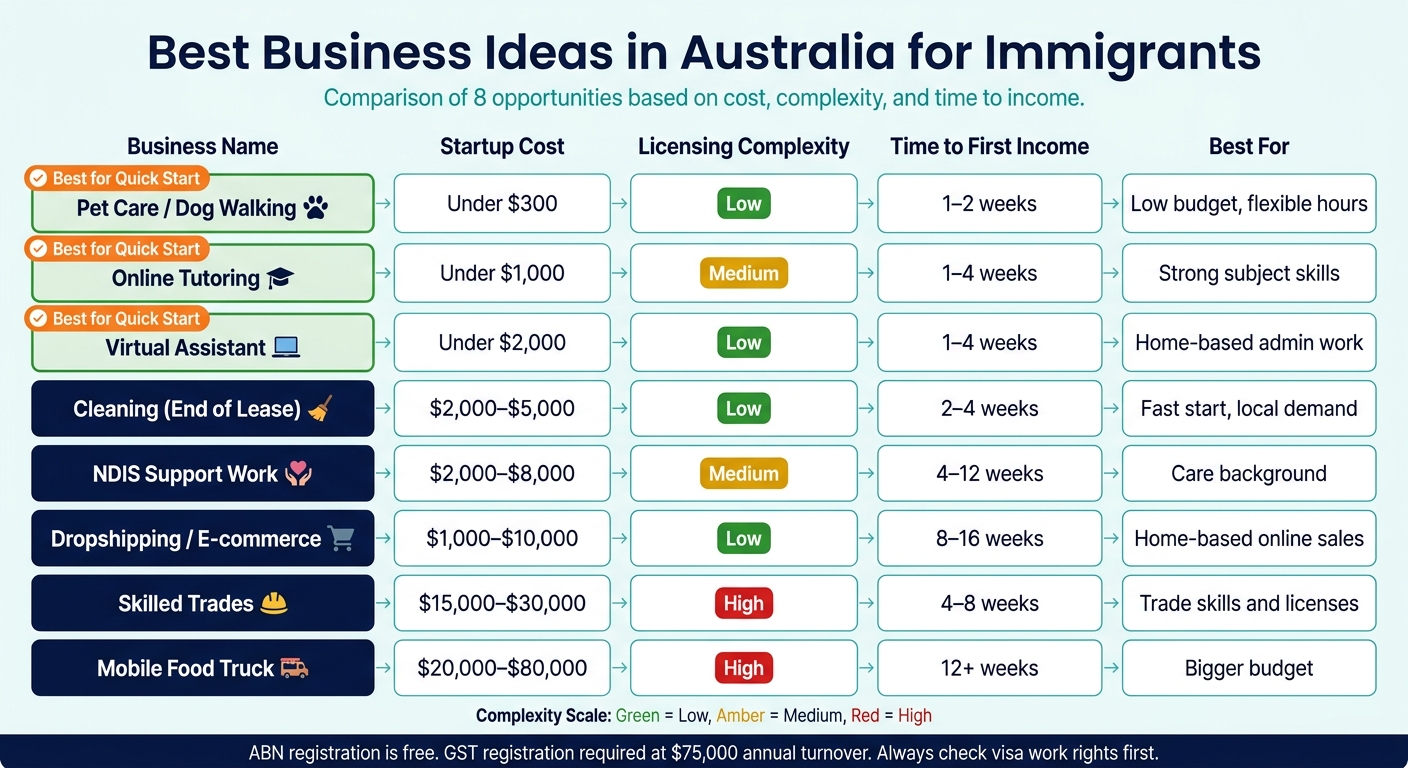
Best Business Ideas in Australia for Immigrants: Startup Cost & Time to Income
| Business idea | Startup cost | Paperwork | Time to first income | Best fit |
|---|---|---|---|---|
| Cleaning | $2,000–$5,000 | Low | 2–4 weeks | Fast start, local demand |
| Online tutoring | Under $1,000 | Medium | 1–4 weeks | Strong subject skills |
| Pet care / dog walking | Under $300 | Low | 1–2 weeks | Low budget, flexible hours |
| Virtual assistant | Under $2,000 | Low | 1–4 weeks | Home-based admin work |
| NDIS support work | $2,000–$8,000 | Medium | 4–12 weeks | Care background |
| Dropshipping / e-commerce | $1,000–$10,000 | Low | 8–16 weeks | Home-based online sales |
| Mobile food truck | $20,000–$80,000 | High | 12+ weeks | Bigger budget |
| Skilled trades | $15,000–$30,000 | High | 4–8 weeks | Trade skills and licenses |
My takeaway is simple: the best first business is usually the one with the lowest startup cost, least paperwork, and fastest path to a first customer. For most new residents, that means starting small, keeping costs low, and picking one idea that matches where they are right now.
What Newcomers Should Check Before Starting a Business in Australia
Your visa comes first. Before you register anything, make sure your visa lets you run a business or work for yourself. Check your work rights with the Department of Home Affairs.
Once that’s sorted, get an Australian Business Number (ABN). This 11-digit number is what you’ll use to trade, send invoices, and open a business bank account. You can register for an ABN for free through the Australian Business Register. It’s best to skip paid middlemen. If your identity check has to be done by hand, approval can take up to 20 business days.
Your business structure matters too. Many newcomers start as a sole trader because it’s simple and cheap to set up. But there’s a catch: you and the business are the same legal entity. That means you take on unlimited personal liability, and your income is taxed at personal marginal rates that can go as high as 47%. A registered company (Pty Ltd) is a separate legal entity taxed at 25% for most small companies, which can look far more appealing on paper. Still, it costs more to set up and run. ASIC charges $611 to register a company and $329 each year after that. And every Pty Ltd must have at least one director who lives in Australia.
For GST, registration becomes mandatory once your annual turnover hits, or is likely to hit, $75,000. If you’re under that amount, registration is optional. Either way, keep clean records from day one, including proof of when you started trading. The ABR can review your ABN at any time.
Before you sign a lease or spend money on gear, use ABLIS to check state, territory, and local permits.
With those basics in place, you can start weighing business ideas by cost, demand, and how much licensing they involve.
Quick Comparison of the Best Business Ideas for New Residents
Use this table to narrow down your options based on startup cost, licensing, and how soon you can get paid.
| Business Idea | Startup Cost | Licensing Complexity | Time to First Income | Why It Suits Newcomers |
|---|---|---|---|---|
| Cleaning (End of Lease) | $2,000–$5,000 | Low (ABN + insurance) | 2–4 weeks | High demand, low English barrier, easy agency partnerships |
| Online Tutoring | Under $1,000 | Medium (WWCC required) | 1–4 weeks | Uses existing academic skills; hybrid in-person/online model works well |
| Pet Care / Dog Walking | Under $300 | Low (ABN + public liability insurance) | 1–2 weeks | Flexible hours, strong pet ownership culture, builds local community ties |
| Virtual Assistant | Under $2,000 | Low (ABN + insurance) | 1–4 weeks | Home-based, low overhead, no local network needed |
| NDIS support work for self-managed participants | $2,000–$8,000 | Medium (Worker Screening Check) | 4–12 weeks | Access to a large government-funded sector without the $1,000–$15,000 audit cost of full registration |
| Dropshipping / E-commerce | $1,000–$10,000 | Low (ABN + product compliance checks) | 8–16 weeks | No inventory needed, location independent, scalable over time |
| Mobile food truck | $20,000–$80,000 | High (council permits + Food Safety Supervisor Certificate) | 12+ weeks | Strong revenue potential, but big upfront cost and slower approval time |
| Skilled trades | $15,000–$30,000 | High (trade certifications; White Card for site work) | 4–8 weeks | Severe skill shortages can mean very high margins once certified |
The pattern is pretty clear. Low-cost service businesses like cleaning, pet care, and virtual assistance are the fastest and cheapest ways to get started. They don’t ask for much upfront, and you can often start earning within a few weeks. NDIS support work takes more setup time, but it gives you a path into a large government-funded sector.
By contrast, mobile food and skilled trades can bring in strong income, but they also come with more paperwork, more money down, and more waiting before you can launch.
If your visa limits your working hours, this matters even more. For example, Student Visa (Subclass 500) holders may be capped at 48 hours every two weeks, so it often makes more sense to focus on higher-value hourly work like tutoring or virtual assistance instead of lower-paid, volume-based work like delivery driving.
Use this table as a first filter. If you need income soon, start with the lowest-cost service options. Then check demand in your suburb or city before you commit. You can always move into more regulated or asset-heavy businesses later.
1. Low-cost service businesses
These are some of the fastest ways to start earning. They don't take much money to get off the ground, they're simple to test, and they can help newcomers build income, reviews, and local trust fast while settling in.
- Cleaning services (end-of-lease focus)
Basic supplies usually cost about $300–$800. A smart first move is to contact local real estate agencies. They often need end-of-lease and strata cleaners to keep up with demand. Residential cleaning usually pays $35–$55 per hour. Flat-rate end-of-lease jobs can make pricing simpler to plan, such as about $180 for a 3-bedroom home. You'll need an ABN and Public Liability Insurance. Most commercial and strata contracts ask for $10M–$20M in cover, which usually costs $600–$1,500 per year.
- Tutoring
Tutoring can start for under $100 in basic setup if you already have subject knowledge or bilingual skills. Rates usually range from $30 to $100 per hour, depending on the subject and year level. A simple way to split your offer is to do online sessions for senior students and in-person sessions for primary students. Before tutoring minors, you'll need a Working with Children Check in every Australian state. First students often come from local school noticeboards, local Facebook groups, and a Google Business Profile.
- Virtual assistant (VA) services for tradespeople
A VA business can start with just a laptop and internet access. One strong angle is admin support for tradespeople like plumbers and electricians. That gives you a clear service offer, even if you don't yet have a big local network. Trade-focused VA work can earn $50–$120 per hour. To get early clients, use platforms like Airtasker or Upwork, then back that up with a Google Business Profile and local Facebook groups.
If you're open to more compliance, the regulated care and education options in the next section are worth comparing.
2. Regulated care and education services
If you want steadier demand and can handle extra checks, these options sit a step above basic service work.
- NDIS support work (in-home care)
NDIS work has steady demand and a low-barrier starting point for newcomers. As an in-home support worker, you help participants with day-to-day tasks like personal care, meal prep, and transport. A simple way in is to start unregistered, which lets you work with self-managed or plan-managed participants without going through a full audit.
Startup costs can be as low as $500–$3,000, mostly for insurance, policies, and setup costs. You’ll need an NDIS Worker Screening Check and public liability insurance. It’s smart to apply for the screening check early, since it can take several weeks to process. If you speak more than one language, that can help you build trust faster in migrant and multilingual communities.
If hands-on care isn’t your thing, support coordination gives you a more admin-focused path.
- NDIS support coordination
If you’d rather do admin work than direct care, support coordination is a remote-friendly niche. Support coordinators help NDIS participants understand their plans and connect with the right service providers. The work is mostly admin-based and can often be done remotely.
If you later decide to register formally, plan for $1,000–$3,000 for a verification audit. One area with growing demand is culturally specific supports for migrant and multilingual communities.
- Private tutoring (specialist subjects)
If you want higher hourly rates, it makes sense to move from general tutoring into exam prep and specialist subjects. Specialist HSC, VCE, or UCAT prep can bring in $60–$130 per hour. You’ll need an ABN, a Working with Children Check (WWCC) for your state, and insurance.
WWCC fees vary by state:
- NSW: about $91
- Victoria: about $129
- Queensland: about $103
One thing to watch: don’t promise grade improvements in your marketing. A growing demand area is neurodiversity-informed tutoring for students with ADHD or autism. If you can offer a more specialized approach, that can support higher rates.
3. Mobile and vehicle-based businesses
If you want flexible work that follows demand and doesn’t need a storefront, mobile businesses are a solid place to start. They keep startup costs lower, let you build clients suburb by suburb, and help new residents earn money locally while meeting people face to face. That matters. Trust is often built on the driveway, at the front gate, or during a quick chat after the job.
A few options stand out:
- Lawn mowing and garden maintenance: Low regulation and no trade license make this an easy entry point for newcomers. Startup costs usually land around $5,000–$10,000 for a mower, basic tools, and a trailer. And because many customers book regular visits, residential jobs can turn into steady repeat work.
- Mobile car detailing: You don’t need a shopfront, so overhead stays low. You’ll also need an ABN, and public liability insurance is important.
- Van-based removalist services: No specific removalist license is needed to start. Startup cost can be close to zero if you already own a van, though a removal truck can cost $50,000+. One insurance detail matters a lot here: goods-in-transit insurance. It protects customer belongings during a move. Standard public liability does not cover items being transported.
If you’re thinking about a vehicle-based business, it often makes sense to rent first and test demand before buying. That gives you a way to see how much work is out there without sinking a lot of money into a van or truck too early.
4. Online and product-based businesses
For newcomers who want a home-based start, online selling is a low-overhead way into the Australian market. Dropshipping is often the easiest first move, with a first-month cost of about $620–$650 AUD.
Build the store mobile first. Most retail traffic now comes from phones. After that, focus on turning visits into sales with clear branding and dependable fulfillment.
Branding and customer experience matter more than picking a product just because it looks popular. In plain English: a solid store with fast, dependable service can beat a shaky store selling the “right” item. Local or regional suppliers can also give you an edge on shipping, since Australian shoppers expect delivery within five business days.
Before you launch your own store, test demand and pricing on existing marketplaces. eBay Australia and Etsy are good places to start because they let you gather actual sales data without a big upfront spend.
And one point you can't afford to miss: Australian Consumer Law still applies to your business. If a product is faulty or misdescribed, blanket no-refund policies are not allowed, even if a supplier handles fulfillment.
Startup Cost Ranges: Low, Medium, and Higher-Cost Options
A simple way to narrow your choices is to sort them by how much cash you can put in right now.
| Budget Tier | Startup Cost Range | Typical Business Models |
|---|---|---|
| Low-Cost | Under $5,000 | Tutoring, virtual assistance, cleaning, pet sitting |
| Medium-Cost | $5,000–$20,000 | Mobile coffee cart, bookkeeping, pest control, catering |
| Higher-Cost | $20,000–$100,000+ | Food trucks, trade vans, delivery and logistics businesses, small service teams |
Low-cost options are the safest first test for newcomers who want to check demand before putting in more money.
Medium-cost ideas often come with added setup needs, like a vehicle, equipment, or licensing. They can still be within reach, but the path in is a bit heavier.
Higher-cost models usually involve bigger upfront needs, such as vehicles, premises, or inventory. That means more risk if you’re still figuring out what the market wants.
If two ideas sit in the same budget range, go with the one that has the simplest licensing and the fastest path to first income.
Next, compare each option against your skills and visa limits.
How to Choose the Right Business Idea for Your Skills, Budget, and Settlement Goals
Start with what you already have. Four simple filters help narrow the list fast: English, experience, savings, and time.
Those four filters can turn a long list of business ideas into a short list that fits your life right now.
If your English is still developing, it makes sense to lean toward work that depends more on what people can see than on polished sales conversations. Cleaning, lawn mowing, car detailing, and handyman work fit that mold. People care about showing up, doing the job well, and being dependable. If your English is strong, you can look at higher-paying paths like HSC/VCE tutoring, digital marketing, or specialized virtual assistant work for trade businesses.
Your work history can matter even more than your English level. Care experience can transfer straight into NDIS support work, where you can begin as an unregistered provider for self-managed participants. If you come from a trade, you may have a path into services like solar panel maintenance, plumbing, or electrical work. These can bring repeat customers and strong margins. If your background is corporate or professional, specialized VA work for tradespeople may be a strong fit.
Two practical filters often get missed: family responsibilities and access to a car. They sound basic, but they shape what you can do day to day. If you're caring for family at home or you don't have a vehicle yet, online-first options like tutoring, virtual assistance, and e-commerce can start from home with a laptop and an ABN. If you do have a car and some savings, mobile services like cleaning, pet sitting, or lawn mowing can give you more flexibility around your schedule.
Then match the idea to how fast you need money coming in. If you need income within weeks, cleaning, pet sitting, or tutoring are usually the fastest options. If you can give it more time, NDIS support or specialized trade services may offer more earning room over time and more space to grow.
Use the matrix below to line up each option with your skills, budget, and settlement goals.
| Your Situation | Best-Fit Direction | Why It Works |
|---|---|---|
| Developing English, low savings | Cleaning, lawn mowing, pet sitting | Low barrier, results-based, fast income |
| Strong English, professional background | Specialized VA work, tutoring | Higher rates, remote-friendly, flexible |
| Care experience, no local degree | NDIS support (unregistered start) | Values lived experience; high demand |
| Trade-qualified, larger savings | Specialized trade services | High margins, recurring revenue |
| Care duties, no car | Online tutoring, e-commerce | No fixed hours, runs from home |
Conclusion
The best business idea is the one that matches your visa, skills, budget, and local demand. In many cases, that means a low-cost service business you can start fast and tweak as you get settled. Start small, and test demand before you spend money on equipment or lock yourself into fixed costs.
Validate demand before you spend. Talk to at least 20 potential customers.
Once you know people want what you're offering, take care of the basics. Register your ABN for free, keep your business and personal finances separate, and check your visa work rights before you take on your first client. If your revenue is moving toward $75,000 per year, register for GST. Go with the option that has the lowest setup cost, the simplest licensing, and the fastest path to income.
NDIS and specialized trade services can offer more upside over time when you're ready to deal with extra compliance.
Pick one idea, test it on a small scale, and get your first paying customer.
FAQs
Which business is easiest to start first?
The easiest businesses to start usually have three things in common: low startup costs, skills you already have, and the ability to run them as a sole trader.
That’s why service businesses are often the simplest way in. Private tutoring, virtual assistance, and cleaning tend to be the most accessible options because local demand is steady and setup is pretty simple.
Starting as a sole trader is often the most straightforward and cost-effective way to get going while you build your first client base.
How do I know if my visa allows self-employment?
Check the specific conditions attached to your visa with the Department of Home Affairs. Not every visa lets you run a business, so look at your visa grant notice or confirm your status on the department’s website.
If you’re not sure, speak with a registered migration agent about your visa situation.
What should I do before spending money on a business?
Before you spend any money, make sure your visa terms clearly allow you to own a business. That step comes first. If your visa doesn’t permit it, everything that follows can turn into a headache fast.
Next, test the idea before you commit. Look into local demand, study your competitors, and check whether people will actually pay for what you want to sell. A good idea on paper isn’t enough. You need proof that there’s a market for it.
You’ll also want to see if the business makes sense from a money point of view. Estimate your startup costs, including equipment, licensing, and insurance. Then map out a 12-month cash flow forecast so you can see what’s coming in, what’s going out, and where things might get tight.
Put all of this into a simple business plan before paying for registrations or starting operations. It doesn’t need to be fancy. It just needs to show that the idea is legal, wanted, and affordable.
Related Blog Posts
- 21 Low-Investment Business Ideas for Women in Australia
- Best Small Business Ideas in Australia Under $5,000
- What Business Can You Start in Australia With $10,000? 15 Realistic Ideas for 2026
- 19 Low-Cost Business Ideas in Australia With High Profit Potential