Starting a business in Australia with just $1,000 is more achievable than you might think. By focusing on low-cost service-based ventures, digital opportunities, eco-friendly ideas, or local services, you can address specific needs in growing markets. Whether you’re leveraging personal skills, tapping into AI tools, or catering to sustainability trends, these ideas are designed to be both affordable and practical.
Key Ideas:
- Service-Based Businesses: Examples include AI workflow consulting, virtual assistance, bookkeeping, or aged care concierge services.
- Digital Businesses: Options like selling digital products, AI-powered content services, niche affiliate websites, or social commerce reselling.
- Eco-Friendly Ventures: Start an eco-cleaning service, thermal efficiency consulting, or sustainability workshops.
- Local Services: Offer dog walking, pet sitting, or tech setup help for seniors.
Quick Comparison:
| Category | Example Business | Startup Cost | Potential Income |
|---|---|---|---|
| Service-Based | AI Workflow Consulting | <$1,000 | $500–$2,000 per client |
| Digital | AI-Powered Content Service | <$1,000 | $120,000 annually |
| Eco-Friendly | Eco-Friendly Cleaning Service | <$1,000 | $70K–$100K annually |
| Local | Dog Walking & Pet Sitting | $300–$500 | Recurring weekly income |
By keeping costs low and focusing on solving real problems, you can build a profitable business model in 2026. Start small, validate your idea, and grow from there.
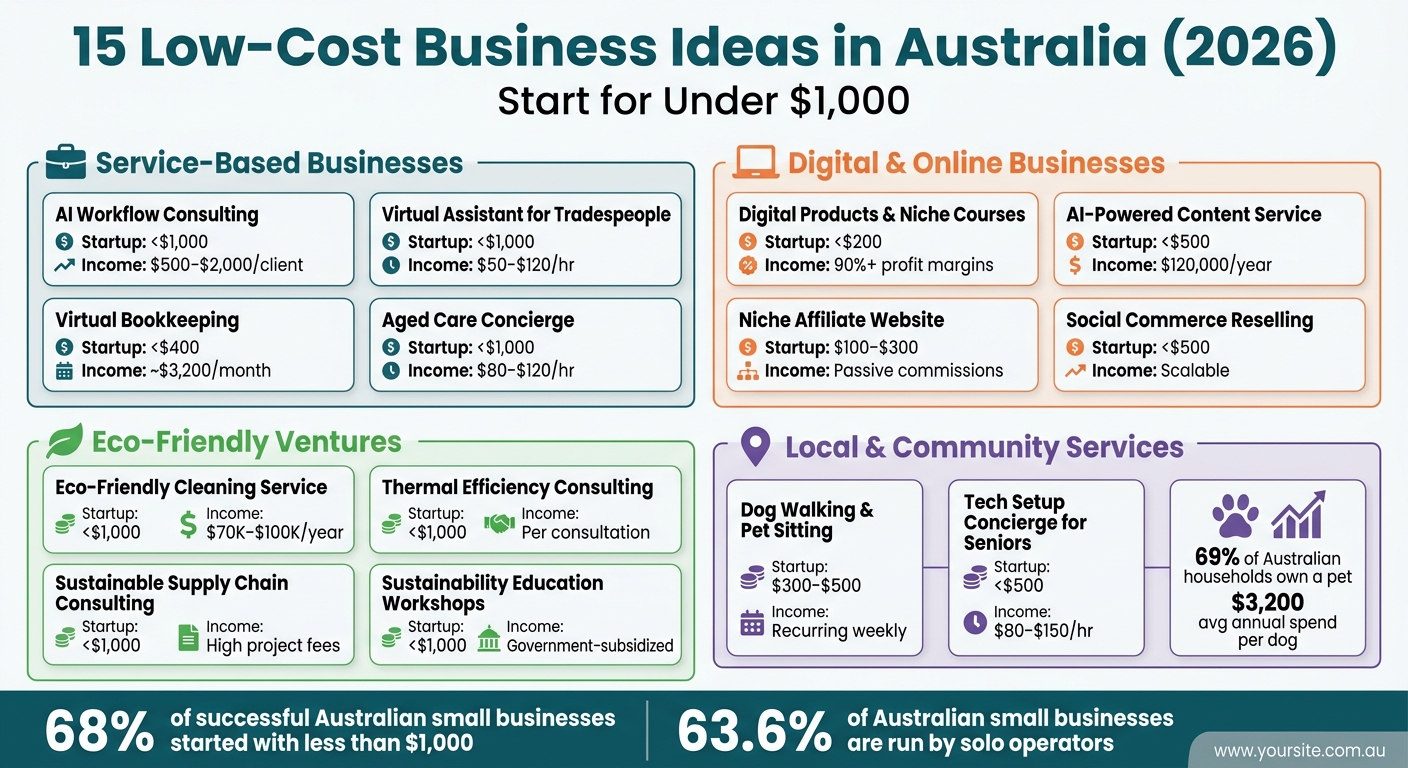
15 Low-Cost Business Ideas in Australia 2026: Startup Cost vs. Income Potential
10 Simple Businesses You Can Start for Under $100 in Australia
sbb-itb-08dd11e
1. Service-Based Businesses
Service businesses are a great option if you're looking for a low-cost way to start a venture. They don’t require inventory or rent - just your skills and expertise. In fact, 63.6% of Australian small businesses are now run by solo operators, proving how scalable this model can be.
Here are four service-based ideas to consider in 2026:
- AI Workflow Consulting
While many small Australian businesses are aware of AI, most haven’t adopted it effectively. 40% of SMEs have started using AI tools, but most struggle to integrate them into daily operations. This is where you can step in. Using tools like ChatGPT, Zapier, or Make, you can help businesses automate repetitive tasks, charging $500–$2,000 per engagement. With startup costs under $1,000, landing your first client could be as simple as sending a few LinkedIn messages. - Virtual Assistant for Tradespeople
New Payday Super compliance requirements coming in July 2026 mean tradespeople like plumbers and builders are looking to outsource admin tasks. Specializing as a VA for a specific niche - say, Brisbane-based roofers - can make you stand out. Rates range from $50–$120 per hour, and focusing on one niche makes you both easier to find and harder to replace. - Virtual Bookkeeping
With an online certification in Xero or QuickBooks (available for under $400), you can start a home-based bookkeeping business. The average earnings are around $3,200 per month, and demand is steady because compliance is a constant need. Keep in mind, you’ll need to register for GST once your turnover exceeds $75,000. - Aged Care Concierge
By 2030, more than 20% of Australia’s population will be over 65. An aged care concierge provides services for seniors, such as running errands, attending appointments, and managing daily tasks - services families are willing to pay for. Rates typically range from $80–$120 per hour, and startup costs are low, covering essentials like a police check, NDIS screening, and liability insurance.
These ideas highlight how leveraging specific skills and keeping overhead low can lead to profitable service ventures. Up next, we’ll look at digital and online business opportunities that also require minimal investment.
2. Digital and Online Businesses
The internet has made it easier than ever to launch a business right from your laptop. Whether you're offering services based on your personal skills or tapping into the online world’s scalability, the opportunities are endless. With 91% of Australian households connected to the internet and ecommerce sales projected to reach around $69 billion in 2024, the digital business landscape offers plenty of potential. The best part? These ventures often don’t require a warehouse, storefront, or even a team. Here are four digital business models that align with today’s market trends.
- Digital Products and Niche Courses
The Australian market for digital products and online courses is thriving, with revenues hitting $4.5 billion and growing by 30% annually. If you have expertise in a specific area, package it into a digital product like templates, checklists, or short courses. Platforms like Etsy can host your downloads, while Shopify offers course hosting for $29/month. With startup costs under $200 and profit margins often exceeding 90%, this is a low-risk way to turn your knowledge into income. - AI-Powered Content Service
Content creation is a constant need for businesses, but many lack the time or skills to handle it themselves. Tools like ChatGPT and Canva allow you to create social media posts, email campaigns, or blog content as a productized service. For example, in early 2026, Emem, a former real estate marketer, launched an AI content service for property agents. Charging $200 per property and handling over 50 properties, Emem generated more than $120,000 annually. The initial investment? Just a few software subscriptions. - Niche Affiliate or Content Website
Focus on a specific topic with low competition - like "best solar panels for Queensland homes" or "Australian pet insurance reviews" - and build a content site around it. With 96% of web pages receiving no Google traffic, the key is targeting keywords with a Difficulty (KD) score under 30. You can earn commissions through affiliate programs like Amazon Australia or niche comparison sites. Starting costs for domain registration and hosting range from $100 to $300. - Social Commerce Reselling
Social media is a powerful sales channel, with 76% of Australian consumers buying products directly from social media posts. Platforms like Instagram and TikTok Shop make it easy to sell trending products through digital dropshipping. This model lets you resell ebooks, software, or courses without holding inventory. Start by testing demand on free social platforms, then reinvest profits into a Shopify storefront for a more polished presence.
Digital businesses are especially appealing for new entrepreneurs because they combine high profit margins with minimal startup costs.
"A profitable online business is not merely one that makes sales. It's one that keeps enough of those sales after software costs, ad spend, contractor costs, tax, refunds, and compliance work." - Puneet Singh, Principal, Nanak Accountants & Associates
From the very beginning, it’s crucial to register an ABN and set up a dedicated business bank account. Keeping personal and business finances separate can save you from tax complications later on.
3. Sustainability and Eco-Friendly Ventures
Australia's push toward a greener economy is creating exciting business opportunities. With the government setting an ambitious 80% resource recovery target by 2030 and introducing mandatory climate-related financial disclosures through 2027, there’s a growing demand for sustainable solutions. Whether you're a solo entrepreneur or someone with a passion for the environment, the ideas below are budget-friendly, each requiring less than $1,000 to get started.
"The most successful small business models in Australia for 2026 will be led by 'Lean Operators' who prioritize asset-light scalability and maximizing net margins." - Jasmeet Singh, Founder, Monkish
- Eco-Friendly Cleaning Service
Ditch the harsh chemicals and offer non-toxic cleaning solutions. Target residential clients and Airbnb hosts who prefer safer, eco-conscious options. Solo operators can earn between $70K and $100K annually, with startup costs limited to essentials like insurance, a vacuum, and eco-friendly cleaning products. Use free tools like Google Business Profile and local Facebook groups to connect with potential clients without spending on ads. - Thermal Efficiency Consulting
With energy prices climbing, homeowners are eager to reduce their bills. Offer consultations to assess insulation, windows, and blinds, and recommend upgrades. For instance, thermal blinds can cut cooling costs by up to 30%, making it easy to demonstrate value. Startup costs are minimal, and you can charge per consultation. - Sustainable Supply Chain Consulting
As climate disclosure rules tighten, small and mid-sized businesses need guidance. If you have experience in logistics, procurement, or operations, you can help SMEs comply with new regulations. This service allows you to charge higher project fees while keeping startup costs low - under $1,000. - Sustainability Education Workshops
Schools and local councils are eager for hands-on sustainability programs. Government-backed "Green Skills" initiatives can subsidize or fund these workshops, reducing your customer acquisition costs. If you’re a former teacher, environmental science graduate, or someone passionate about education, this is a great way to make an impact. Startup costs are under $1,000.
| Eco-Friendly Business Idea | Startup Cost | Target Market |
|---|---|---|
| Eco-Friendly Cleaning Service | <$1,000 | Residential & Airbnb hosts |
| Thermal Efficiency Consulting | <$1,000 | Homeowners |
| Sustainable Supply Chain Consulting | <$1,000 | SMEs & Corporate Logistics |
| Sustainability Education Workshops | <$1,000 | Schools & Local Councils |
These ideas not only align with Australia’s sustainability goals but also cater to specific market needs, making them practical and accessible for aspiring entrepreneurs.
4. Local and Community-Centered Services
Local services are stepping up to meet the growing everyday needs of Australian communities. With hybrid work reshaping how people live, suburbs have become bustling hubs of activity. This shift has sparked demand for services that make daily routines smoother and more efficient. Here are two ideas that align perfectly with this trend - and both can be started for less than $1,000.
"The best business to start in Australia is not a magic bullet. It is a service that solves an immediate, painful problem for an Australian consumer or business." - Chandan, Author, True Wealth Management
Dog Walking & Pet Sitting
With 69% of Australian households owning a pet by 2026 and an average annual spend of $3,200 per dog on services and products, this market is thriving. Starting a pet care business costs between $300 and $500, covering essentials like basic insurance and local advertising. To ensure steady income, focus on locking clients into recurring weekly schedules. As Marine, Founder of WoofSpark, explains: "People can tell when you genuinely care. That's your real advantage - not your prices."
Tech Setup Concierge for Seniors
Seniors are rapidly adopting smartphones and smart home devices, but many find setup and troubleshooting daunting. A tech concierge service can step in to help with tasks like Wi-Fi optimization, device setup, and digital literacy. With hourly rates ranging from $80 to $150, this service requires minimal startup investment. A Google Business Profile and positive local reviews can quickly make you visible in local "near me" searches.
As the market continues to evolve, offering personalized, local services remains a reliable way to establish a profitable, low-cost business.
Conclusion
Starting a business in Australia with just $1,000 in 2026 is entirely possible when your idea aligns with a real need. The 15 options we’ve discussed share a common foundation: they focus on solving actual problems, keeping costs low, and leveraging your skills. Whether it’s dog walking, creating digital products, or reselling eco-friendly goods, the key to success lies in combining your expertise with a solution people are willing to pay for.
Here’s an eye-opening fact: 68% of successful small businesses in Australia began with less than $1,000 in initial investment. This highlights an important truth - your budget matters far less than having a clear idea and understanding your target audience.
"Passion is essential, but it doesn't pay the bills." - Dotto
The difference between a concept and a thriving business is validation. Before you invest in branding or marketing, test your idea with at least 10 unbiased potential customers. A simple Google Form can help you gauge demand. Also, set up a dedicated business bank account from the start to keep your finances in check. These small, practical steps can help you avoid common pitfalls that contribute to the 42% failure rate among new businesses.
This is where tools like IdeaFloat can make a big impact. By combining live research, competitor analysis, financial modeling, and go-to-market planning, it helps you transform a rough concept into a validated, market-ready idea. With real data in hand, you’ll know if your $1,000 business idea has the potential to generate profit - before spending a single dollar.
The opportunity is right in front of you. The resources are within reach. It’s time to take that first step.
FAQs
How do I pick the best $1,000 business idea for my skills?
Begin by looking inward: What are you naturally good at? What topics or tasks excite you? What do people often turn to you for advice or help with? These clues can guide you toward an idea that aligns with your strengths and interests, making it easier to hit the ground running.
Choose a Viable Idea
When narrowing down your options, think about a few key factors:
- Market demand: Is there a need for this product or service?
- Scalability: Can this idea grow over time, or is it limited in scope?
- Risk: How risky is it to start, and what’s the potential downside?
- Compliance: Don’t forget legal requirements, like registering an ABN.
Test Your Idea
Before fully committing, put your concept to the test. Look into what your competitors are doing or ask potential customers for feedback. This step can save you time and money by confirming there’s real interest in your idea.
Ideas for a $1,000 Budget
With $1,000, service-based businesses are a smart choice. Options like freelance writing, tutoring, or other skill-based services often have low startup costs and can generate income quickly.
What licenses or insurance do I need to start in Australia?
The licenses and permits your business needs will vary based on your industry, location, and the products or services you provide. It's essential to consult with your local council to understand specific requirements, such as zoning regulations or signage approvals. If your business deals with regulated items like food or alcohol, you’ll need to secure additional licenses. While this section doesn’t dive into specific insurance policies, ensuring your business is properly registered, adhering to contracts, and staying compliant with regulations can help minimize potential risks.
How can I validate demand before spending my $1,000?
If you're working with a tight budget, the key to testing your idea lies in finding proof of intent rather than just gauging interest. What does that mean? Instead of relying on vague enthusiasm, focus on signals that show people are willing to take action - like investing their time, signing up with their email, or even placing a pre-order.
Here’s how you can get started:
- Dig into real problems: Platforms like Reddit or Google are goldmines for uncovering issues people are actively discussing. Look for recurring pain points or challenges that align with your idea.
- Talk to your audience: Conduct 10–20 interviews, but don’t waste time on hypothetical questions. Instead, ask about their past behavior. For example, “How have you tried solving this issue before?” will give you much more insight than “Would you use this product?”
- Test commitment: Create a simple landing page or pre-order form to gauge interest. This step is critical - actual commitments, like email sign-ups or pre-orders, are far more reliable indicators of demand than verbal agreements.
By focusing on these actionable steps, you can validate your idea effectively without burning through your budget.
Related Blog Posts
- 21 Low-Investment Business Ideas for Women in Australia
- Best Small Business Ideas in Australia Under $5,000
- What Business Can You Start in Australia With $10,000? 15 Realistic Ideas for 2026
- 19 Low-Cost Business Ideas in Australia With High Profit Potential