Starting a pressure washing business is an affordable way to enter the service industry, but understanding the costs is key to success. Here's what you need to know:
- Startup Costs: Initial investment ranges from $1,000 for basic setups to $10,000+ for commercial-grade operations.
- Equipment: A good pressure washer costs $500–$15,000 depending on the type (gas or electric) and power. Accessories like hoses, nozzles, and surface cleaners add $300–$1,000.
- Transport: Use an existing vehicle or invest in a truck/trailer ($300–$22,000) for professional setups.
- Licensing & Insurance: Business licenses, permits, and insurance can total $1,000–$4,000. General liability insurance alone costs $300–$1,000 annually.
- Profit Potential: Revenue in the first year can range from $20,000 to $60,000, with many businesses breaking even in 6–12 months.
To succeed, focus on buying quality equipment, pricing your services to cover costs and profit, and staying compliant with local laws. Proper planning can help you recover your investment quickly and build a profitable business.
Pressure Washing Business Starter Kit | Everything You NEED!
Startup Costs for a Pressure Washing Business
Understanding your startup costs is key to building a successful pressure washing business. Initial investments can range from around $1,000 for a basic setup to over $10,000 for a fully equipped commercial operation. Your expenses will depend on whether you're starting a small side gig or a full-scale business, and whether you already own a suitable vehicle.
Pressure washing has relatively low barriers to entry compared to other service businesses - no need for a storefront or a large inventory. However, skimping on equipment can hurt your earnings and lead to higher repair costs. As Joshua Brown, owner of Brown's Pressure Washing, advises:
"Your equipment will determine how much you can make. … Start with the best equipment you can afford and build from there".
Let’s break down the main costs involved in starting your pressure washing business.
Equipment and Supplies
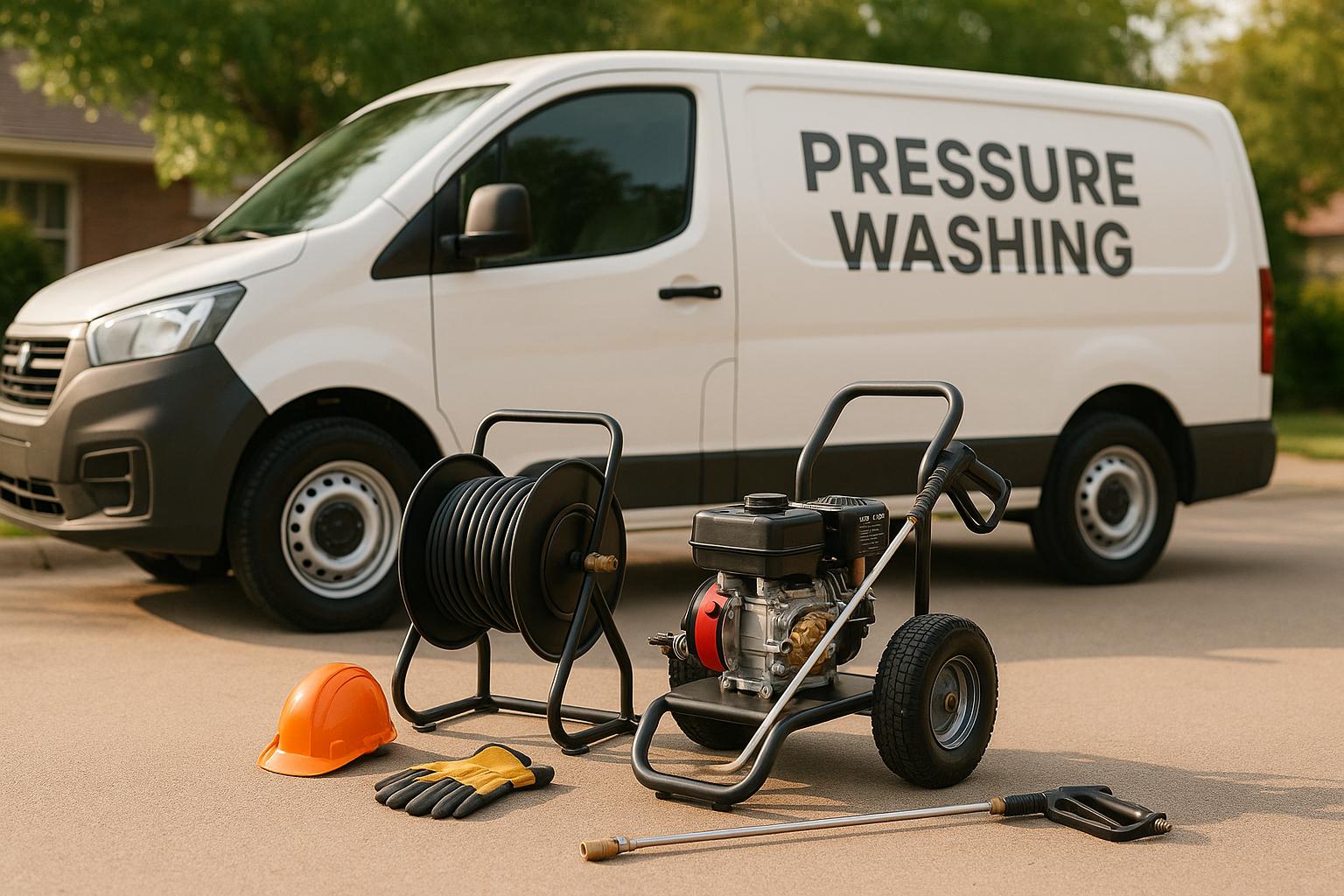
At the core of your business is your pressure washer. Investing in a high-quality machine is essential. Commercial-grade pressure washers typically deliver 3,000+ PSI for cleaning power and 2.5+ GPM for speed - minimum specs for professional jobs. Gas-powered models are preferred for their power and mobility, with prices ranging between $500 and $3,000 for a reliable commercial-grade machine. For residential work, a less expensive pressure washer in the $1,000–$3,000 range might suffice, but heavy-duty commercial machines can cost $3,000 to $15,000+.
Electric pressure washers are cheaper, costing $100–$500, but they lack the power and flexibility needed for larger projects.
You’ll also need essential accessories. A surface cleaner attachment, which speeds up jobs like cleaning driveways, typically costs $150–$500. High-quality hoses and nozzles range from $50 to $200, and having a variety of nozzle tips (e.g., a zero-degree tip for tough grime and a 40-degree tip for delicate surfaces) ensures you’re prepared for different tasks.
Don’t overlook cleaning chemicals, which are an ongoing expense. Start with an initial budget of $100–$300 for chemicals and plan for $100–$200 in monthly costs. Safety gear is another must. Items like safety glasses, hearing protection, gloves, and protective clothing will cost between $50 and $200.
As your business grows, you might need additional equipment, such as a water tank (priced between $100 and $900) for jobs in areas with limited water access. While new equipment offers warranties, buying used can save money upfront but may lead to higher maintenance costs. Factor in regular maintenance expenses, like oil changes and pump care, to keep your equipment in top shape.
Once you’ve got your tools, you’ll need a way to transport them efficiently.
Vehicle and Transport
Transporting your equipment efficiently is crucial. You might use a vehicle you already own, but for a more professional setup, consider investing in a dedicated work truck or trailer system. A pickup truck works but may require extra precautions to prevent equipment from shifting.
For a streamlined solution, look into a pressure washing skid - a mounted rig that secures your equipment in the truck bed. Skids can cost around $22,000 and improve efficiency.
If buying a new vehicle isn’t an option, a utility trailer is a more affordable alternative. Joshua Brown started his business using a boat trailer that cost just $300. Purpose-built pressure washing trailers start at about $5,000. Trailers allow you to use your existing vehicle while keeping your equipment organized and secure. Remember to account for commercial auto insurance, fuel, maintenance, and registration costs if you’re using a vehicle for business purposes.
After covering equipment and transportation, it’s time to budget for legal and insurance requirements.
Licensing, Permits, and Insurance
Staying legally compliant protects your business. Start by choosing a business structure - many pressure washing entrepreneurs opt for an LLC to separate personal and business liabilities. LLC registration fees range from $50 to $500, with some states charging an additional $100–$300 annually for registered agent services. You’ll also need an EIN (Employer Identification Number) from the IRS, which is free to obtain online.
Business licenses and permits vary by location. A basic business license costs $25–$100+, while permits can range from $50 to $1,000, depending on local requirements. If you plan to charge sales tax, you’ll need a sales tax ID, which is also free. Check with your local government to ensure all necessary paperwork is completed.
In some areas, you may need environmental permits due to regulations on water runoff and chemical use. Contact your local environmental agency for guidance.
Insurance is non-negotiable. General liability insurance, which protects against property damage or injury claims, costs $300–$1,000 annually (or $40–$200 monthly). If you’re using a vehicle for business, commercial auto insurance is required. Costs vary based on factors like vehicle type and driving record, but this coverage is often more expensive than personal auto insurance. Once you hire employees, most states mandate workers’ compensation insurance, with rates tied to payroll. Additional policies to consider include commercial property insurance, inland marine insurance (for portable equipment), and umbrella insurance to extend liability coverage. Avoid bare-bones coverage and opt for comprehensive policies to fully safeguard your business.
For a basic setup, expect to spend $1,000–$4,000. A professional-grade operation will require $3,000–$10,000. While the upfront costs may feel steep, careful planning and smart purchases can set you up for long-term success in the pressure washing industry.
Calculating ROI and Profitability
Once you've broken down your startup costs, the next step is to calculate your Return on Investment (ROI) and assess your profitability. This is where you confirm whether your business has the financial potential to thrive. After covering initial expenses like equipment and licensing, it's time to focus on how quickly your investment can pay off. The pressure washing industry is known for offering a relatively fast path to profitability, with many businesses breaking even within 6 to 12 months. Tracking your finances from the very beginning is crucial - it helps you set the right prices, control spending, and fuel growth.
ROI and Break-Even Calculations
Your break-even point is the moment when your total revenue matches your total costs. To figure this out, start by summing up your startup expenses. Next, calculate your net monthly profit by subtracting ongoing operating costs from your monthly revenue. For example, if you invested $7,300 to launch your business and your operations generate a net monthly profit of $1,000, your payback period would be around 7 to 8 months. Of course, this timeline can vary depending on factors like the volume of jobs, pricing strategies, seasonal demand, and how well you manage costs.
Keeping detailed records is non-negotiable. Use tools like spreadsheets or accounting software to log every expense - fuel, chemicals, equipment maintenance, insurance, and vehicle upkeep - as well as job-specific details like pricing, time spent, and materials used. These records not only help you refine your pricing strategy but also signal when it's time to reinvest in your business. Once you've hit your break-even point, your next challenge is pricing your services effectively.
Pricing Services for Profit
Having a clear understanding of your ROI directly influences your pricing strategy. Getting your pricing right is critical for building a sustainable business. Pressure washing services typically use one of three pricing models: hourly rates, square footage pricing, or flat-rate pricing.
- Hourly Rates: Many residential jobs are priced between $50 and $100 per hour. This approach is particularly helpful when you're still learning how long different types of jobs take.
- Square Footage Pricing: For surfaces like driveways, decks, or patios, rates often range from $0.10 to $0.50 per square foot. Adjustments may be needed for materials that require extra care.
- Flat-Rate Pricing: This method simplifies estimates by assigning standard fees to common jobs, ensuring your costs and effort are adequately covered.
When setting your rates, make sure your prices cover direct costs, overhead expenses, and include a healthy profit margin. Direct costs might include items like fuel, chemicals, and equipment wear and tear. Overhead expenses - such as insurance, vehicle maintenance, and marketing - should be distributed across all jobs. Finally, add a profit margin that aligns with your income goals and market conditions. Instead of underpricing to compete, focus on delivering high-quality work, being reliable, and maintaining professionalism. These qualities justify premium rates and help build long-term customer loyalty.
Reducing Costs and Improving Margins
Increasing your profit margins isn't just about earning more - it's also about spending smarter. Here are some ways to cut costs while maintaining quality:
- Consider Used Equipment: Starting with used equipment can save you money upfront. Just make sure to inspect it thoroughly and check its maintenance records.
- Regular Maintenance: Taking care of your equipment and scaling up only as demand increases can keep costs under control.
- Upgrade for Efficiency: Investing in a higher-flow (GPM) machine can reduce the time needed for each job, allowing you to schedule more appointments in a day.
- Optimize Scheduling: Grouping appointments in the same area minimizes drive time and lowers fuel expenses.
- Buy in Bulk: Once your business is stable, purchasing chemicals in bulk can reduce costs per job. Keep an eye on your expenses to spot any unexpected increases.
sbb-itb-08dd11e
Licenses, Compliance, and Legal Requirements
Starting a pressure washing business might seem straightforward, but there are important legal and regulatory steps to address before you get started. These aren’t just bureaucratic hoops - they’re essential for avoiding fines, shutdowns, or worse. With a bit of upfront research and preparation, you can set up your business on solid legal ground. Here's what you need to know.
Business Formation and Local Licensing
The first step is deciding on your business structure. You’ll typically choose between a sole proprietorship, LLC, or corporation, each with its own pros and cons.
- A sole proprietorship is the simplest option, requiring minimal paperwork. However, keep in mind that it doesn’t separate your personal assets from your business liabilities.
- An LLC (Limited Liability Company) offers a layer of protection by keeping your personal assets separate from business risks. Costs for setting up and maintaining an LLC vary depending on your state but are often worth it for the added security.
- A corporation (C-corp or S-corp) provides even stronger liability protection but comes with more paperwork and a complex tax structure. For most small pressure washing startups, this option is less common unless you’re planning for rapid growth or outside investment.
Once you’ve chosen your structure, you’ll likely need a general business license from your city or county. If you’re running the business from home, some areas require a home occupation permit. Additionally, if your services include tasks like cleaning structures or prepping surfaces for painting, you might need a contractor’s license. Always double-check local requirements through your city clerk, county office, or state registration website.
Environmental Regulations and Wastewater Management
Pressure washing businesses must adhere to strict environmental regulations, particularly those related to wastewater management. Under the Clean Water Act, discharging pollutants like oil, grease, cleaning chemicals, or debris into storm drains or waterways is prohibited. Non-compliance can lead to hefty penalties.
To stay compliant, you’ll need to manage wastewater responsibly. This often involves using reclamation systems or containment tools like berms and mats to capture and treat runoff. Before taking on commercial projects, consult your local water quality management district or municipal stormwater department to fully understand the rules in your area.
Insurance Requirements and Costs
Insurance isn’t just a smart safety net - it’s often a legal necessity and a key factor in landing commercial contracts. Here are the main types of insurance to consider:
- General liability insurance: Protects you in cases of property damage or injuries caused by your work. For example, if your pressure washing accidentally damages a client’s property, this coverage can save you from costly claims.
- Commercial auto insurance: If you’re using a vehicle for business purposes, you’ll need this, as personal auto policies usually don’t cover business-related activities.
- Workers’ compensation insurance: Required if you have employees, this covers medical expenses and lost wages for on-the-job injuries.
- Equipment insurance: Protects your essential tools and machinery from theft or damage.
It’s a good idea to consult an insurance agent familiar with the pressure washing industry. They can help you customize coverage based on your specific operations and local requirements, ensuring you’re protected from unexpected risks.
Key Takeaways and Next Steps
Starting a pressure washing business doesn't demand massive capital, but it does require smart planning. The key is to select equipment and tools that align with your target market. Beyond that, you'll need to budget for other essentials like vehicle setup, cleaning solutions, and safety gear, all tailored to the needs of your ideal clients.
It's also crucial to address the legal and regulatory aspects upfront. Choose a business structure that protects your personal assets and make sure to obtain the necessary local licenses. Liability insurance is a must when working on client properties, and you'll need to comply with strict rules for handling wastewater to avoid any fines.
Setting the right price for your services is what separates a hobby from a thriving business. Account for all your costs, including equipment wear and tear, fuel, insurance, and labor. Calculating your break-even point will show you how many jobs you need to cover costs and start turning a profit. Use this information to fine-tune your business strategy.
Market research is another essential step. Study the local demand, understand what your competitors are offering, and create solid financial projections. A detailed business plan will not only help you set competitive prices but also provide a roadmap for scaling your operations.
With careful planning and execution, the pressure washing industry has the potential to deliver solid profits. By keeping your costs transparent, pricing your services to reflect their true worth, and staying on top of legal requirements, you can build a business that generates reliable income right from the start.
FAQs
What equipment do I need to start a pressure washing business, and which items should I buy first?
To kick off a pressure washing business, you'll need some key equipment. Start with a commercial pressure washer, which usually costs between $2,000 and $5,000. Alongside this, gather durable hoses, adjustable nozzles, surface cleaners, and essential safety gear like gloves and goggles.
The pressure washer is the heart of your operation, so choose one that's reliable and built to last. Pair it with sturdy accessories and proper safety equipment to work efficiently while keeping yourself protected on the job.
What steps should I take to ensure my pressure washing business complies with local environmental regulations, especially regarding wastewater management?
To meet local rules on water and waste management, ensure you secure any necessary wastewater discharge permits and stick to the guidelines for handling water runoff. Opt for eco-friendly cleaning products and think about using equipment designed to capture and filter wastewater, reducing the risk of contamination. Regular maintenance and inspections of your equipment are crucial to prevent accidental leaks or discharges. Staying updated on local regulations is equally important to avoid fines or legal issues. Working with a local environmental agency or consultant can also be a smart move to help keep your operations in line with compliance standards.
How can I set competitive prices for pressure washing services while ensuring I cover costs and stay profitable?
To determine competitive pricing, start by looking into local market rates and seeing what other businesses in your area charge for similar services. Depending on your service type and what customers expect, you might choose pricing models like flat rates, hourly fees, or charges based on square footage.
When setting your prices, be sure to include all your operating costs. This means factoring in expenses like equipment, cleaning supplies, licensing, insurance, labor, and even marketing efforts. Offering top-notch service can help you justify higher rates, especially if you target lucrative niches like commercial properties or specialized cleaning services. Additionally, consider adjusting your rates during peak seasons to boost profits while staying competitive in your market.
Related Blog Posts
- How to Start a Pressure Washing Business With Under $1,000
- How to Start a Mobile Car Detailing Business: Complete Guide
- How to Start a Pressure Washing Business for Under $500 (Complete Guide)
- Mobile Detailing Startup Costs: Packages, Pricing, Profit