Solar panel cleaning is essential to maintain peak energy output and protect your investment. Dirt, dust, and debris can reduce efficiency by 15–30%, with routine cleaning boosting performance by up to 25%. Neglecting this maintenance can void warranties and lead to costly repairs. Here’s a quick breakdown:
- Routes: Plan efficient routes using software to save time and costs. Group jobs by area for better profitability.
- Pricing: Residential cleaning costs range from $150–$500 per visit, with per-panel rates of $8–$25. Commercial contracts vary based on system size, starting at $500 for smaller setups.
- Safety: Use proper PPE, follow OSHA guidelines for fall protection, and avoid cleaning during extreme weather.
- DIY vs. Professional: DIY costs are lower but time-intensive. Professionals offer faster, safer services, often boosting energy output significantly.
Prioritize regular cleaning, safety protocols, and tailored pricing strategies to ensure optimal performance and long-term savings.
How to Start A Solar Panel Cleaning Business!
How to Plan Cleaning Routes for Solar Panels
Start by mapping out your solar installation layout and identifying access points. This helps you plan cleaning routes that maximize efficiency. Using route optimization software can significantly cut travel time - by as much as 15–20% - and slash fuel costs by 30%. Grouping jobs within the same area can further enhance daily profits by up to 25% while lowering crew mobilization expenses.
For example, one Solar Unsoiled customer saw an average performance improvement of 7.1% across 30 sites. By prioritizing cleaning based on financial losses, they achieved a cleaning payback period of just 7.2 months, adding hundreds of thousands of dollars in extra profit.
Once your routes are planned, consider specific strategies for different types of solar installations: ground-mounted panels, rooftop systems, and large-scale farms.
Cleaning Ground-Mounted Panels
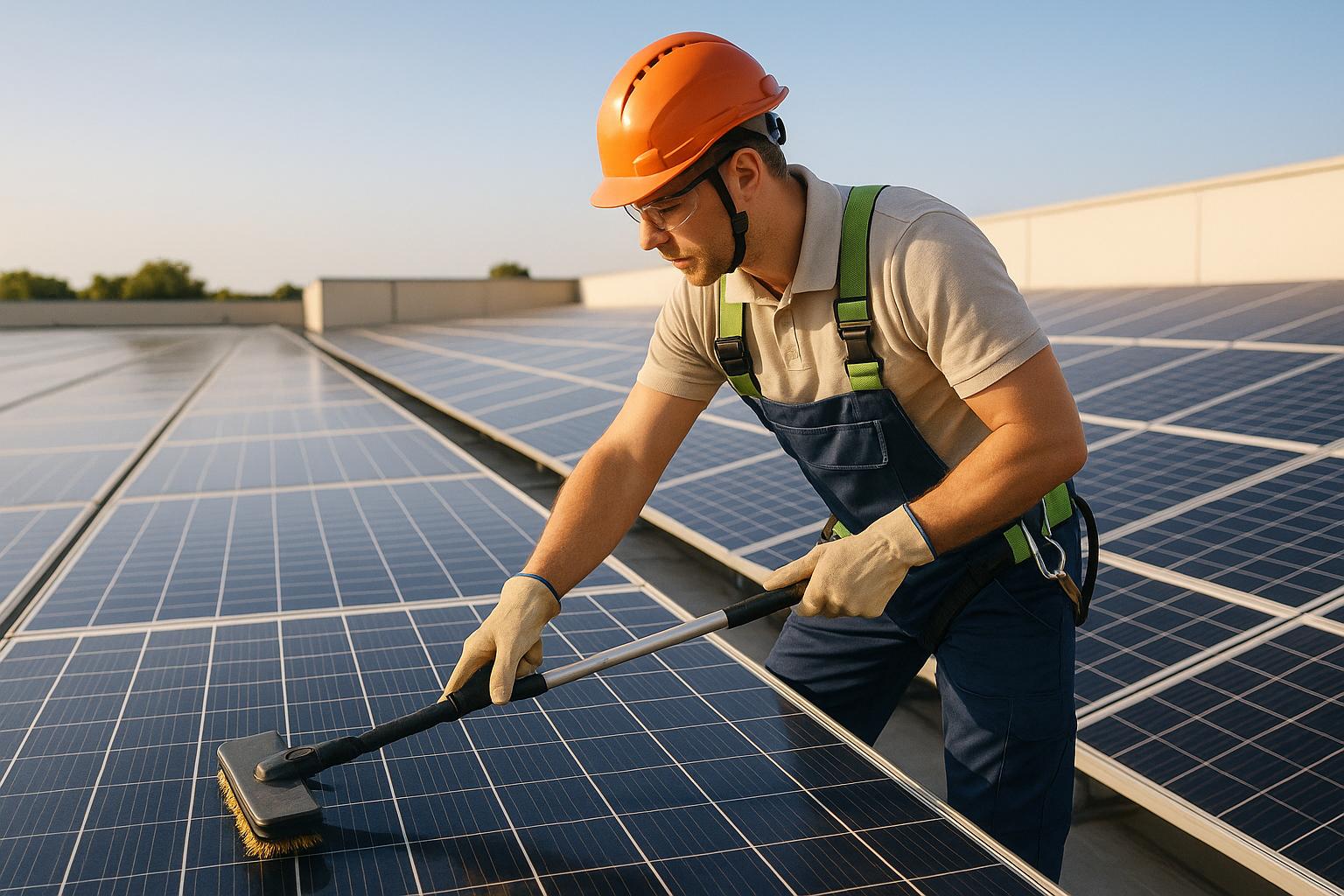
Ground-mounted panels are the most accessible for cleaning crews. Telescopic poles equipped with pure water systems allow workers to clean panels from the ground, reducing fall risks. Crews can move systematically along rows, ensuring each section is thoroughly cleaned.
Cleaning Rooftop Panels
Rooftop systems require careful planning to balance safety and efficiency. Water-fed poles can clean many residential rooftops from the ground or the base of a ladder, minimizing the need to climb onto the roof. When roof access is unavoidable, work in sections, starting from the top and moving downward. Always secure anchor points before beginning and plan routes to limit time spent near edges or steep areas.
Cleaning Large-Scale Solar Farms
Large-scale solar farms need a more advanced approach. Tools like drones, automated systems, and robotic cleaners are now common for managing these installations. Soiling rates often vary across large farms, so targeted cleaning is usually more effective than a one-size-fits-all schedule. Advanced tools like ENGIE Laborelec's CleanRight use key performance metrics and predictive models to plan cleanings months in advance. This forward-thinking strategy has largely replaced the outdated method of waiting until performance visibly declines.
Solar Panel Cleaning Pricing Models
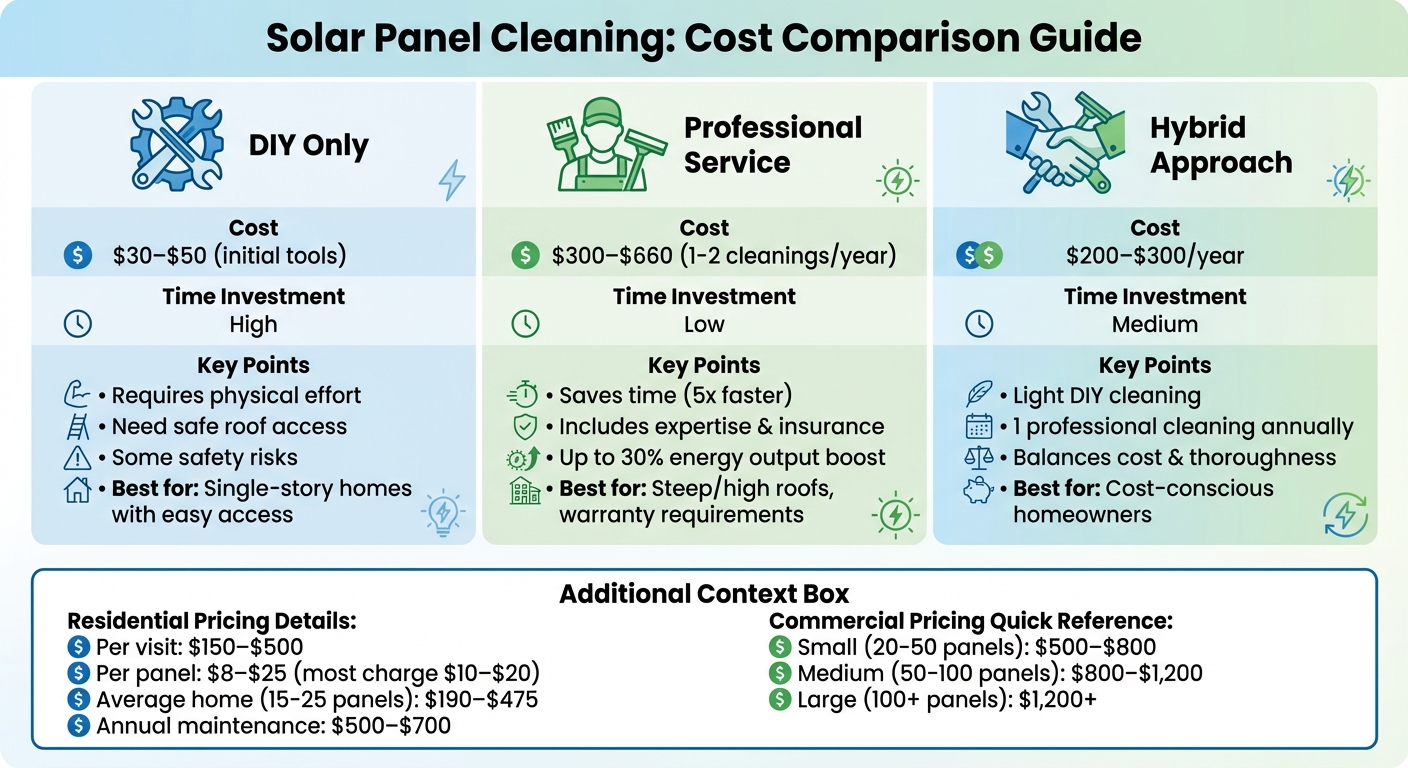
Solar Panel Cleaning Cost Comparison: DIY vs Professional vs Hybrid Methods
Understanding pricing structures can help you budget effectively and choose the right service for your needs.
Residential Cleaning Costs
For homeowners, professional solar panel cleaning typically costs between $150 and $500 per visit, with the national average ranging from $258 to $465, depending on the complexity of the system. Per-panel rates are often between $8 and $25, with most professionals charging $10 to $20 per panel.
For instance, Crystal Clear Window Washing in Encinitas, California, charges $5 to $10 per panel, with second-story installations priced at $8 per panel. Meanwhile, Window Genie of the East Valley in Gilbert, Arizona, offers a flat rate of $129 to $149 for up to 32 panels, adding $2.50 per panel beyond that. Since most U.S. homes have 15 to 25 panels, standard cleaning usually falls between $190 and $475.
Several factors influence the cost, including roof height and steepness, the amount of debris, equipment needs, and local labor rates. Annual maintenance, even with just one or two cleanings, generally costs between $500 and $700.
For larger residential systems, pricing adjusts to account for the added scale and complexity.
Commercial Cleaning Contracts
Commercial solar panel cleaning tends to cost more than residential services because of larger systems and the need for specialized equipment. Costs vary based on the number of panels, system complexity, site access, and how often inspections or monitoring are required.
- Small businesses with 20–50 panels typically spend $500 to $800.
- Medium-sized businesses with 50–100 panels usually pay $800 to $1,200.
- Larger installations exceeding 100 panels cost $1,200 or more.
For businesses, regular cleaning ensures maximum energy efficiency and reduces long-term maintenance costs.
DIY vs. Professional Cleaning Costs
If you'd rather handle cleaning yourself, the upfront cost of equipment is much lower than hiring a professional. Basic supplies like a soft brush, mild soap, and a garden hose cost between $30 and $50. More advanced tools, such as water-fed poles and brushes, range from $50 to $250 and $30 to $150, respectively, while a quality ladder can add around $125. Automated cleaning systems start at about $2,250, and autonomous cleaning robots cost roughly $3,000.
While DIY cleaning saves money, professional services are faster and safer. Professionals can clean panels in about 1/5th the time it takes to do it yourself, and regular cleaning can boost energy output by up to 30%, making it a worthwhile investment. A hybrid approach - doing light cleaning yourself and scheduling one professional cleaning annually - typically costs $200 to $300 per year.
| Method | Cost | Notes |
|---|---|---|
| DIY Only | $30–$50 (initial tools) | Requires time, physical effort, and safe roof access; involves some safety risks |
| Professional (1–2 cleanings) | $300–$660 | Saves time; includes expertise and insurance; ideal for steep or high roofs |
| Hybrid | $200–$300 | Balances cost savings with professional thoroughness |
DIY cleaning is a good option for single-story homes with easy roof access, especially if you're comfortable using a ladder. On the other hand, professional services are better for steep or high roofs, areas with hard water that may cause mineral deposits, or if your system warranty requires professional maintenance. Choosing the right pricing model can help you maintain safety and maximize energy efficiency.
Safety Protocols for Solar Panel Cleaning
Cleaning solar panels comes with risks like electrocution and falls, making proper equipment, training, and awareness of the environment absolutely essential.
Personal Protective Equipment (PPE)
Solar panels generate electricity as long as they’re exposed to daylight, which means the risk of electrocution is always present during cleaning. The International Solar Cleaning Association (ISCA) emphasizes:
"The bottom line is that solar panel cleaning is spraying water on to an electricity-creating device, often with a carbon pole in your hand. Wearing the correct PPE is essential."
To stay safe, make sure to use the following:
- Class 0 electrical gloves (rated for 1,000V AC / 1,500V DC) to protect your hands.
- Class G hard hats (rated for 2,200V) for head safety.
- Class 0 dielectric boots (rated for 1kV) to guard against electrocution while also preventing slips.
If you’re working at heights and using tools like rotating brushes or water-fed poles, an arc flash harness offers added protection. All PPE should meet current safety standards, be marked with the "CE" label, and undergo regular inspections to ensure they’re still effective.
While PPE is critical, fall prevention is equally important when working on rooftops.
Fall Prevention and Working at Heights
Cleaning panels on rooftops introduces a high risk of falls. OSHA guidelines require:
- Fall protection for maintenance work at heights of 4 feet or more.
- Guardrail systems, safety nets, or personal fall arrest systems for installation work at heights of 6 feet or more.
Workers should use full-body harnesses attached to anchor points capable of supporting at least 5,000 pounds. Before starting any job, conduct a Job Hazard Analysis to identify risks. Install guardrails or warning lines near roof edges and ensure skylights are securely covered or screened to prevent accidental falls.
Limit ladder use whenever possible. If a ladder is necessary, place it at a 4:1 angle on stable ground, maintain three points of contact while climbing, and have a spotter if available. For longer tasks, scaffolding or aerial lifts are safer alternatives.
Weather and Environmental Factors
Weather conditions directly impact both the safety and effectiveness of cleaning solar panels. Early morning or late afternoon is the best time to work, as cooler temperatures prevent water from evaporating too quickly, reducing streaks. Cooler conditions also avoid the risk of thermal shock, which can occur if cold water is sprayed on hot panels.
Always check the weather forecast before scheduling a cleaning session. Avoid working in heavy rain, as wet surfaces can become dangerously slippery. In dry, dusty climates, opt for soft-bristle brushes or water-fed poles instead of high-pressure cleaning to prevent micro-scratches. In coastal areas, regular rinsing with deionized water helps reduce salt buildup. For snowy regions, cleaning should be done before the first snowfall using non-metallic tools to avoid damaging the panels.
Lastly, turn off the solar system before cleaning to minimize electrical hazards. With weather patterns constantly changing, it’s crucial to reassess conditions throughout the job.
sbb-itb-08dd11e
Tools and Equipment for Solar Panel Cleaning
Choosing the right tools for cleaning solar panels depends largely on the system's size - whether it's a residential setup or a larger commercial installation. The goal is to clean panels both safely and effectively. Here’s a closer look at some essential tools:
Pure Water Systems and Brushes
Purified water systems, which use deionized or distilled water, are crucial for avoiding mineral deposits and streaks that can occur with regular tap water. When tap water evaporates, it often leaves behind minerals that can reduce panel efficiency and create a hazy residue. In contrast, pure water dries without leaving marks, ensuring the panels maintain peak performance without requiring additional wiping.
To complement these systems, soft-bristle brushes designed specifically for solar panels are a must. These brushes are gentle enough to clean without scratching the surface, which is especially important for thin-film panels, as they are more fragile than monocrystalline or polycrystalline types. For smaller residential setups, a basic deionized (DI) water filter attached to a garden hose can suffice. On the other hand, commercial systems often require larger tank-based setups to handle greater water volumes efficiently.
If you’re cleaning rooftop panels, telescopic poles paired with low-pressure rinsing systems are indispensable.
Telescopic Poles and Low-Pressure Hoses
Telescopic poles equipped with water-fed systems allow you to clean rooftop panels safely from the ground, reducing the risks associated with working at heights. Lightweight carbon fiber poles, which can extend up to 25 feet, are particularly useful as they provide ample reach without adding unnecessary weight. These poles often feature an internal channel that directs purified water to the brush head, enabling simultaneous scrubbing and rinsing.
Avoid high-pressure washers when cleaning solar panels. The intense force can crack the glass, damage seals, and even void warranties. Instead, opt for low-pressure hoses to gently rinse away dirt and debris. For ground-mounted panels, a garden hose with an adjustable nozzle set to a gentle spray works just as effectively.
Step-by-Step Solar Panel Cleaning Process
Now that you've considered the planning and safety tips, here's a detailed guide to help you clean your solar panels properly.
Pre-Clean Inspection
Before you begin, make sure to switch off your system at the main breaker. Even with the isolator off, solar panels remain electrically active during daylight hours, so always handle them with care. If the panels have been in direct sunlight, allow them to cool first.
Choose a cool, overcast day or aim for early morning or late evening to clean. Avoid windy, rainy, or icy conditions, as these can lead to rapid water evaporation or create slippery surfaces. Before cleaning, inspect the panels for cracks, discoloration, or loose connections that might need professional attention.
To protect nearby plants or wildlife, use tarps to manage runoff if necessary. Gather the right tools: a soft-bristle brush, a telescopic pole, a hose with a gentle spray nozzle, and a mild biodegradable detergent like Dawn dish soap. Never use a pressure washer - high pressure can damage the glass and void warranties.
Once you've inspected the panels and gathered your materials, you're ready to start cleaning.
Cleaning Methods
Begin by gently rinsing the panels with lukewarm water to remove loose debris. Next, apply a mild detergent or a vinegar solution with a soft brush, using circular motions and working from top to bottom. Avoid scraping or rubbing dry dirt, as this could scratch the surface.
Rinse thoroughly with room-temperature water to avoid thermal shock, especially if the panels are warm. If you have access to a deionized water system, it’s ideal for the final rinse since it prevents mineral deposits and streaks, eliminating the need for wiping. For rooftop panels, use telescopic poles to clean safely from the ground - climbing ladders or walking on the panels is not recommended unless explicitly allowed by the manufacturer, as it can cause hidden damage.
Once the panels are rinsed and clean, move on to evaluate your work.
Post-Clean Efficiency Check
After cleaning, monitor your system's energy output to measure the improvement. Clean panels can boost performance by 10–25%, so compare your energy production data and utility bills from before and after cleaning to see the difference.
Keep a record of your cleaning dates along with the corresponding energy output. Over time, this will help you identify patterns and determine how often you need to clean your panels based on your location and conditions. If you notice a significant drop in performance after cleaning, it could signal a maintenance issue that requires professional attention. Many modern systems come with 24/7 monitoring technology, which can alert you to any performance problems automatically.
Conclusion
Keeping solar panels clean is essential for protecting your investment and ensuring they produce maximum energy. Planning ahead is crucial - schedule cleanings well in advance and organize sites by region to reduce travel costs.
Pricing is another critical factor. For residential jobs, charging per panel might make sense, while commercial projects may require different pricing models. Whatever the case, your rates should account for everything - travel time, unique site challenges, and more - while staying competitive in the market.
Safety should always be a top priority in solar panel cleaning. Proper PPE, avoiding extreme weather, and adhering to fall prevention measures are non-negotiable. Cutting corners on safety might save a few minutes, but it significantly increases the risk of injuries and equipment damage.
Combining strict safety protocols with flexible cleaning schedules can greatly improve operations. Adapting schedules based on real-time soiling conditions often outperforms rigid, pre-set timelines. Research shows that optimized cleaning schedules can increase profits by 8% and boost efficiency by 6% compared to fixed routines. Regularly monitoring your system's performance data helps determine when cleaning is truly necessary, avoiding wasteful or poorly timed efforts.
In short: clean panels mean better energy output, and smart cleaning strategies deliver measurable results. By focusing on efficient route planning, fair pricing, robust safety practices, and data-informed scheduling, you’ll not only protect your investment but also achieve top performance while keeping your team safe and your costs under control.
FAQs
How often should I clean my solar panels to keep them working efficiently?
To keep solar panels working their best, it's generally recommended to clean them once or twice a year. That said, how often you clean them can depend on several factors, like where you live, the local weather, and how much dust, dirt, or debris builds up on the surface. For instance, if you're in an area with heavy pollution, lots of bird activity, or little rainfall, you might need to clean them more often.
Keeping your panels clean isn’t just about maximizing efficiency - it also helps prolong their lifespan. If cleaning them yourself feels unsafe or they’re hard to reach, it’s a good idea to call in professionals who have the right tools and expertise.
What are the key safety precautions for cleaning rooftop solar panels?
Before you clean rooftop solar panels, make sure to turn off the system to avoid any electrical risks. Use a long-handled brush or sponge to reduce the need for walking on the roof, and if you must work at height, wear a safety harness. Having someone nearby as a spotter is a smart precaution for added security. If you're working more than 4 feet off the ground, ensure you have proper fall protection in place. Keep a safe distance from electrical components throughout the process. Your safety - and the safety of the equipment - should always come first.
Should I clean my solar panels myself or hire a professional?
When it comes to solar panel cleaning, hiring a professional often makes more sense. Sure, cleaning them yourself might seem like a budget-friendly option at first, but professionals bring the right tools and know-how to get the job done without risking damage to your panels. Plus, they follow strict safety measures, which is crucial - especially if your panels are installed on a roof or other high places.
While DIY cleaning can save you some cash upfront, using the wrong methods could hurt your panels' efficiency, void warranties, or even lead to expensive repairs. By choosing a professional, you’re ensuring the cleaning is done safely, thoroughly, and in a way that protects your investment for the long haul.
Related Blog Posts
- How to Start a Cleaning Business: From First Client to Full Schedule
- How to Start a Pressure Washing Business for Under $500 (Complete Guide)
- How to Start a Profitable Cleaning Business: Ultimate 2025 Guide
- Pressure Washing Startup Costs: Gear, Licences, ROI