The party rental industry in the US is booming, with projected revenues of $8.5 billion by 2025, growing at 8.3% annually since 2020. If you're considering starting a business, photobooths and marquees (party tents) are top choices due to their high demand and profitability. Here's what you need to know:
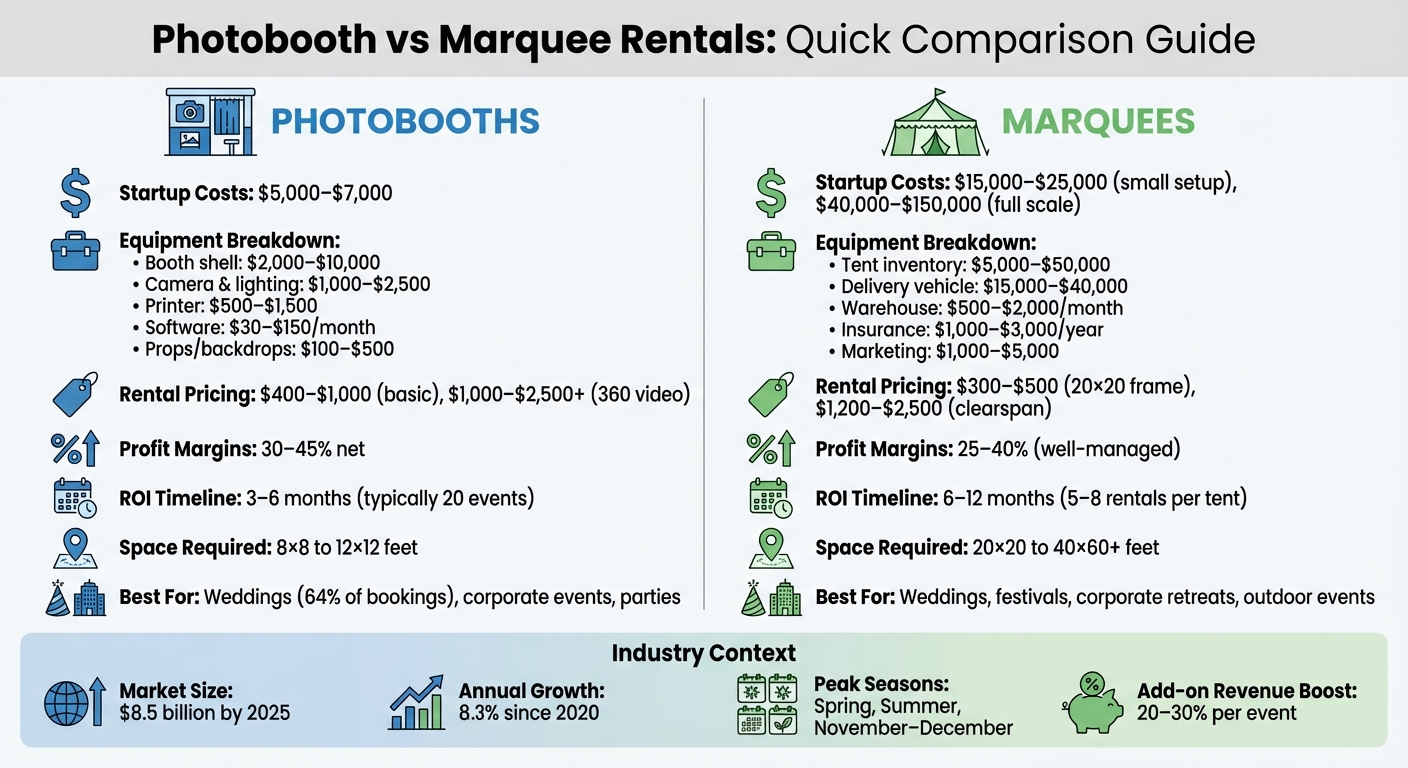
- Startup Costs: Photobooth businesses require $5,000–$7,000 to start, while marquee rentals need $15,000–$25,000 for smaller setups.
- Profit Margins: Photobooth rentals offer 30–45% net margins, while marquee businesses can see 25–40%.
- ROI Timelines: Most photobooth operators recover costs in 3–6 months, while marquee businesses typically break even in 6–12 months.
- Market Trends: Weddings, corporate events, and outdoor gatherings drive demand, with seasonal peaks in spring, summer, and holidays.
- Add-Ons: Upselling extras like backdrops, lighting, or tables significantly boosts revenue.
Whether you're starting small or scaling up, understanding costs, pricing, and ROI is key to success. Keep reading for detailed insights on equipment options, pricing strategies, and market opportunities.
Photobooth vs Marquee Rental Business Comparison: Costs, ROI & Profit Margins
Market Demand and Business Models in the US
Who Rents Event Equipment and Why
Event rental services cater to two main groups: commercial users, who make up 70.4% of the photobooth market, and individual consumers. Weddings and corporate events dominate demand, accounting for 64% of new photobooth bookings. Notably, corporate events have seen the fastest growth, with usage surging by 150% in recent years. Companies increasingly view photobooths as more than just entertainment - they’re now tools for lead capture, branded content creation, and data collection, offering a clear return on investment (ROI).
"Corporate event photo booth rentals aren't just entertainment anymore - they're sophisticated marketing tools that provide measurable ROI."
– Feature Booth
For marquees and tents, the demand largely stems from weddings, festivals, corporate retreats, sporting events, and trade shows. The rise of outdoor events during and after COVID-19 has sustained interest in micro-weddings, pop-up gatherings, and outdoor corporate functions. Around 48% of event planners now include photobooths in their standard packages [16, 19], and over 70% of photobooth users share their photos online instantly, generating free promotion for event hosts and rental businesses alike [16, 19].
Seasonal trends play a big role, too. Peak demand typically aligns with the wedding season (spring and summer) and the holiday period (November through December). In colder regions like the Midwest, outdoor rentals are busiest from March through November. During the slower winter months, operators often pivot to offering indoor-friendly items to maintain revenue.
These varied customer needs have led to a range of business strategies, from low-cost, home-based setups to more sophisticated, digitally optimized operations. The diversity in demand highlights the importance of flexible business models that cater to a wide array of customer preferences.
Different Ways to Run an Event Rental Business
Event rental businesses operate under several models tailored to specific market needs. Many entrepreneurs start small, using a home-based or weekend setup. With minimal startup costs, they often store equipment in a garage or small storage unit [8, 15]. Photobooth operators, in particular, frequently begin as part-time solo ventures, leveraging portable equipment to keep overhead low while maintaining a work-life balance [16, 17, 20].
Brick-and-mortar businesses, on the other hand, rely on physical storefronts to attract walk-in customers and build trust. However, this model comes with higher overhead and limited geographic reach, especially as 67% of customers now prefer to book online. A hybrid "bricks-and-clicks" approach combines physical inventory storage with an online reservation system, offering both the convenience of digital booking and the operational control needed to manage inventory effectively.
Some businesses carve out a niche by focusing on high-demand, premium items like luxury tents or upscale photobooths. This strategy allows them to charge higher rates and establish a unique position in the market [15, 26]. For example, Arapahoe Rental in Colorado and Wyoming operates nine locations with a centralized inventory system, solving what General Manager Evan Moore described as "inventory nightmares", where equipment at one location was inaccessible to customers at another. Similarly, Flagstaff Equipment in Arizona streamlined its operations with a digital rental model, cutting customer phone time by 50% and achieving consistent revenue growth month over month.
Top-performing rental businesses often report EBITDA margins exceeding 40%. Achieving this level of profitability typically requires a combination of investments in quality inventory, automated booking systems, and bundling core offerings with high-margin add-ons like photobooths or concession machines [8, 15, 24].
Photobooth Rentals: Costs, Pricing, and Profits
Types of Photobooths and When to Use Them
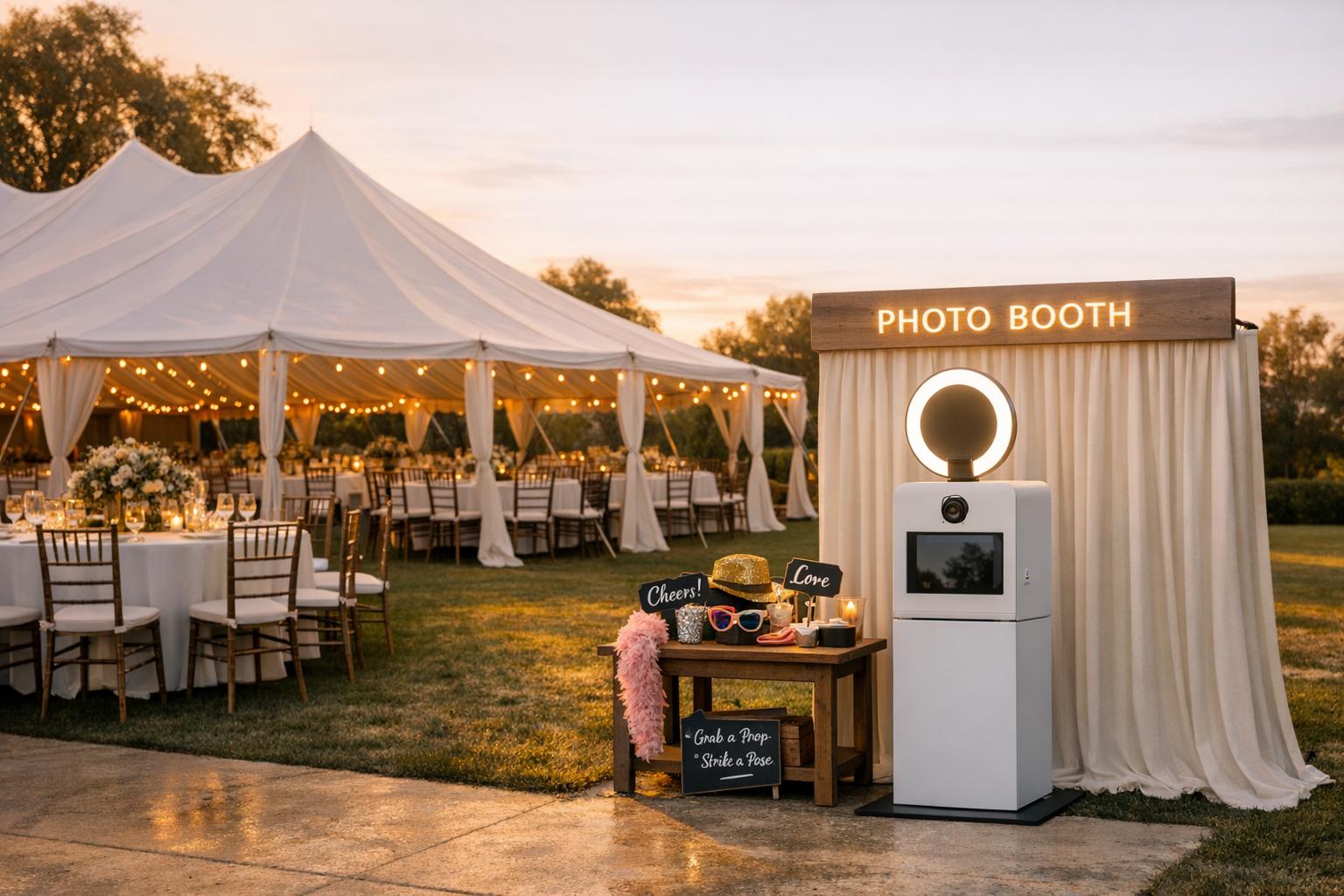
Open-air booths are a popular choice for rental businesses because they’re flexible and can accommodate larger groups. These booths need about 8×8 feet of space and are great for creating a lively party vibe since guests can watch others enjoying themselves. They’re also efficient, handling 30–45 sessions per hour.
"For the large majority of events, an open-air photo booth is the best option... It contributes to a party atmosphere by letting others see your guests having fun." – Ubersnap
Mirror booths stand out with their sleek, full-length interactive touchscreens, making them ideal for elegant events like weddings and galas. On the other hand, 360 video booths capture slow-motion videos with a rotating camera arm, but they need a bit more space - around 10×10 to 12×12 feet - and careful planning to set up. Roaming booths, which are handheld devices carried by an attendant, work well for cocktail hours or venues with limited space.
For guests who prefer privacy, enclosed booths are a great option. Meanwhile, high-budget events often go for specialty setups like GlamBots or AI-powered booths. As Andrew Robinson, CEO of Extraordinary, puts it, "a photo booth can transform any celebration from ordinary to unforgettable, creating lasting memories and keeping guests entertained".
Now, let’s dive into the setup costs and pricing strategies that can help you turn these booths into a profitable venture.
Startup Costs and How to Price Your Services
Once you’ve chosen the right type of booth, it’s important to understand the initial investment and how to price your services effectively. Startup costs typically range from US$4,400 to US$18,800, covering essentials like:
- Booth shell: US$2,000–US$10,000
- DSLR camera and lighting: US$1,000–US$2,500
- Dye-sublimation printer: US$500–US$1,500
- Software licenses: US$30–US$150 per month
- Props and backdrops: US$100–US$500
Monthly expenses include software subscriptions (US$30–US$150), business insurance (US$50–US$100), and marketing efforts (US$100–US$500). Consumables like printer paper and ink cost about US$0.12 to US$0.25 per print.
Pricing depends on the region and type of event. Basic packages usually range from US$400 to US$1,000 for 2–4 hours, while 360 video booths can charge US$1,000 to US$2,500+ per event. For instance, in Los Angeles, wedding packages typically cost US$1,200 to US$2,000, while corporate events can bring in US$1,500 to US$3,000+. In Nashville, rates are slightly lower - US$900 to US$1,500 for weddings and US$1,000 to US$2,000 for corporate events.
Corporate bookings often come with a 15–30% premium due to additional branding and data collection requirements. Add-ons like custom backdrops, green screens, or logo overlays can further boost revenue, bringing in an extra US$50 to US$150 per event. Thoughtful pricing strategies can make a big difference in your return on investment.
How Much Money You Can Make
With clear pricing and costs, you can estimate your profit potential. Photobooth businesses generally see gross margins of 50–70% and net margins of 30–45%. On average, owner-operators earn about US$800 per event, while hiring an attendant may reduce profits slightly to around US$665 due to labor costs.
Most operators break even within 6–12 months, often after about 20 events priced at US$300–US$600 per booking. For example, purchasing a Selfie Booth S5 for US$8,990 can pay off in roughly 18 events, whereas renting equipment for US$800–US$1,200 per use may take longer to recoup. These numbers highlight the potential for strong returns when managed effectively.
| Photobooth Type | Rental Price Range | Space Required | Best For |
|---|---|---|---|
| Open-Air | US$500–US$1,500 | 8′ × 8′ | Weddings, parties |
| 360 Video | US$1,000–US$3,000 | 12′ × 12′ | Brand activations, social media |
| Magic Mirror | US$600–US$1,500 | 8′ × 10′ | Galas, upscale weddings |
| Roaming | US$400–US$800 | Mobile | Cocktail hours, confined spaces |
| Enclosed | US$500–US$1,200 | 4′ × 6′ | Private parties |
The photobooth industry is thriving, with the market growing from US$463.2 million in 2022 and projected to hit nearly US$1.2 billion by 2032. This demand spans social and corporate events, making it an exciting opportunity for entrepreneurs.
Marquee and Tent Rentals: Costs, Pricing, and Profits
Types of Marquees and Where They're Used
Frame tents are versatile and work well in various settings, from urban patios to backyard lawns. A 20×20-foot frame tent, priced between $1,800 and $2,500, is perfect for small gatherings. For larger events like weddings or corporate functions, a 20×40-foot frame tent costs $2,800 to $3,800 and provides ample space for guests. These tents are self-supporting, making them ideal for venues with hard surfaces or limited space.
Pole tents, with their classic peaked roofs, are a more budget-friendly option, costing about 30–40% less than frame tents. A 20×30-foot pole tent, for instance, is priced at $1,200 to $1,800. However, they need soft ground, like grass, for proper setup. For upscale events, clearspan structures offer a sleek, open interior free of center poles but come with a higher price tag, ranging from $8,000 to $15,000.
Each type of tent caters to different needs and budgets, shaping both pricing strategies and investment decisions.
Startup Costs and Pricing Methods
Starting a tent rental business requires a substantial initial investment. Compared to simpler setups like photobooths, marquee rentals demand more capital upfront but share similar potential for return on investment. Startup costs typically fall between $40,000 and $150,000, depending on the scale of the operation. Smaller setups can begin with $15,000 to $25,000, covering essentials like:
- Tent inventory: $5,000–$50,000
- Delivery vehicle: $15,000–$40,000
- Warehouse rental: $500–$2,000 per month
- Annual insurance: $1,000–$3,000
- Marketing efforts: $1,000–$5,000
- Operational costs (e.g., cleaning, labor, fuel): Included in pricing
Rental rates are typically set at 8–15% of the tent's purchase price per event, helping businesses recover their investment efficiently.
| Tent Type | Size | Purchase Cost | Rental Rate (Per Event) | ROI Timeline |
|---|---|---|---|---|
| Frame Tent | 20×20 ft | $1,800–$2,500 | $300–$500 | 6–12 months |
| Frame Tent | 20×40 ft | $2,800–$3,800 | $450–$800 | 6–12 months |
| Pole Tent | 20×30 ft | $1,200–$1,800 | $350–$550 | 4–8 months |
| Pole Tent | 40×60 ft | $3,200–$4,500 | $800–$1,300 | 4–8 months |
| Clearspan | Large | $8,000–$15,000 | $1,200–$2,500 | 12–18 months |
Profit Margins and ROI Timelines
Understanding profit margins and payback timelines is crucial to evaluating the profitability of marquee rentals. On average, the industry sees profit margins of 10–15%, but well-managed businesses can achieve margins of 25–40%. A high-quality tent can often pay for itself in just five rentals, with most equipment breaking even after six to eight bookings.
Offering additional services and accessories boosts revenue without significant extra marketing costs. For example, adding flooring (priced at $1–$5 per square foot) or bistro lighting ($45–$65 per 100 feet) can significantly increase earnings per event. Many businesses recover their full investment in 12 to 24 months, especially if they maintain 15–20% extra inventory for last-minute bookings. High-demand items, like standard frame tents, can generate annual returns of 450–600% when rented regularly.
sbb-itb-08dd11e
Calculating ROI, Setting Prices, and Growing Your Business
How to Calculate Your ROI Step by Step
Start by adding up all your initial expenses - this includes equipment, cameras, lighting, backdrops, and transport cases. This total represents your initial investment. Next, separate your fixed monthly costs (like insurance, subscriptions, and storage) from your variable costs, such as staffing, gas, parking, and consumables.
To pinpoint your break-even point, divide your total startup costs by the average profit you make per event. For instance, if you invested $5,000 and typically earn $500 in net profit per booking, you’ll need to complete 10 events to break even. Many businesses manage to hit this milestone within 6 to 12 months by keeping costs in check and ensuring steady bookings. Keep in mind that seasonal demand can affect your timeline, so adjust your projections accordingly.
Use accounting software to track the costs of each event. This helps you spot trends that might eat into your margins, allowing you to tweak your pricing before your profits take a hit. Once you’ve nailed down your break-even point, it’s time to focus on pricing strategies that maximize revenue.
Using AI Tools to Set Better Prices
Getting your pricing right means striking a balance between staying competitive and being profitable. Advanced tools like IdeaFloat can help with this process by analyzing competitor rates and applying proven pricing strategies. With IdeaFloat's Advanced Pricing Research, you can scan market rates and let the AI suggest optimal pricing. You can either allow the tool to automate pricing adjustments or use its insights to make manual tweaks.
Did you know that 80% of couples prefer to see pricing upfront on your website before reaching out? Transparency is key. Offering tiered packages - such as Basic, Standard, and Premium - can cater to a variety of budgets while letting you charge more for premium features like 360-video or custom branding. You can also adjust pricing based on demand: charge more for peak seasons and Saturdays, while offering 10–15% discounts for weekday or off-peak bookings to keep your calendar full year-round. These strategies not only help you set competitive rates but also lay the groundwork for growing your business.
Ways to Grow Your Event Rental Business
Once your core equipment starts getting booked regularly, focus on increasing your revenue per event by upselling add-ons. Extras like custom backdrops, social media stations, themed props, or extended hours can boost profits by 20–30% per booking.
Keep an eye on your inventory’s performance to expand strategically. If an item like a tent or photo booth is booked more than 85% of the time, consider raising its price by 20–30% or investing in additional units to meet demand. Adding complementary items - such as uplighting, tables, or chairs - can also help you create bundled packages that not only increase your average order value but also make your service more appealing by offering a one-stop solution.
Leverage IdeaFloat's Go-to-Market Strategy to identify online communities where your target audience hangs out, calculate customer acquisition costs, and access pre-made outreach scripts designed to convert leads into bookings. This tool provides a data-driven playbook to help you consistently secure new clients and grow your business. By implementing these strategies, you can build a profitable and sustainable event rental operation.
Party Rental ROI, Prices, and When To Hire Someone vs Doing It Yourself
Conclusion: Starting Your Event Rental Business
Starting a photobooth or marquee rental business in the US can be a rewarding venture, especially if you focus on planning with ROI in mind from the very beginning. With an initial investment of $5,000 to $7,000, many entrepreneurs see revenue rolling in within just two weeks and recover their startup costs in as little as 3 to 6 months. To achieve this, it’s crucial to understand your break-even point, keep an eye on utilization rates, and set pricing that ensures profit margins between 15% and 40%.
This $5 billion industry, expected to grow to $8 billion by 2033, demands more than just purchasing equipment. Success hinges on calculating ROI, factoring in hidden costs like maintenance and labor, and focusing on high-demand items that are consistently booked. Offering clear, tiered pricing packages and enabling online booking are no longer optional - they’re must-haves for converting inquiries into paying customers.
To stay ahead, adopt data-driven strategies to streamline your operations. Tools like IdeaFloat can help validate market demand, refine pricing through competitor analysis, and craft effective go-to-market strategies. From projecting your finances to building a professional, user-friendly website with online booking features, platforms like this can help you move from concept to your first booking much faster than traditional methods.
Start with high-demand items, create bundles that encourage larger bookings, and use data to guide your expansion. With thoughtful planning and the right tools, your event rental business can grow into a profitable and reliable operation, meeting the increasing demand for unforgettable celebrations across the United States.
FAQs
What should I consider when deciding between starting a photobooth or marquee rental business?
When deciding between launching a photobooth or marquee rental business, it's crucial to assess the market demand in your area. This will play a big role in determining how successful your venture could be.
Start by weighing the initial investment costs. Photobooths typically require advanced technology and specialized software, which can add up. On the other hand, marquees often come with higher upfront expenses due to the need for materials and storage space.
Next, consider the return on investment (ROI) for each option. Photobooths tend to bring in consistent income from events like weddings and corporate functions. Marquees, however, might see higher seasonal demand and command larger rental fees, but their usage may fluctuate throughout the year.
Other factors to keep in mind include your target audience's preferences, the labor requirements for setup and maintenance, and the durability of the equipment. Ensuring your equipment can withstand repeated use is key to long-term profitability.
Lastly, take a close look at your local competition. Research their pricing, services, and offerings to identify ways you can differentiate yourself and carve out a unique position in the market.
How can I calculate and boost the ROI of my event rental business?
To figure out your ROI, use this formula: (Net Profit ÷ Total Investment) × 100. This calculation tells you the percentage return on your investment. For instance, if you earned a net profit of $10,000 from a total investment of $25,000, your ROI would be 40%.
If you’re looking to boost your ROI, there are a few practical steps to consider. Start by trimming operating costs wherever possible, setting prices that strike the right balance between competitiveness and profitability, and tapping into customer demand. Keep an eye on essential metrics like profit margins and cash flow to pinpoint opportunities to improve. Another smart move? Invest in rentals that are in high demand - think photobooths or marquees. These can bring in more revenue and give your profitability a nice lift.
How can I keep my party and event rentals business busy during slower seasons?
To keep bookings consistent during slower seasons, try introducing seasonal discounts or special promotional offers to draw in customers. Packaging popular services - like photobooths and marquees - into bundled deals can also encourage clients to book more. Another smart move is to broaden your services to include smaller, year-round events, such as corporate meetings or birthday parties, which can help bridge the demand gap. Lastly, double down on targeted marketing efforts, such as engaging social media campaigns or personalized email promotions, to stay on your audience's radar during quieter times.
Related Blog Posts
- How to Start a Profitable Airbnb Business in 2025 (Without Owning Property)
- How to Start a Vacation Rental Business Without Owning Property
- Bookkeeping Startup Costs: Software, Pricing, Profit
- Mobile Detailing Startup Costs: Packages, Pricing, Profit