Starting a business with just $1,000 is not only possible but also practical if you focus on low-cost opportunities. Here’s the key takeaway: service-based, digital, product-based, and local businesses can all be launched on a small budget. The secret lies in leveraging your skills, using free or affordable tools, and starting small to minimize risks.
Key Points:
- Service-Based Ideas: Start as a virtual assistant, pet sitter, or personal trainer with costs ranging from $100 to $1,000.
- Digital Businesses: Launch ventures like freelance writing, web design, or affiliate marketing with minimal upfront expenses.
- Product-Based Options: Resell vintage clothing, start a home bakery, or try dropshipping - all under $1,000.
- Local Services: Offer handyman work, window cleaning, or landscaping using basic tools and resources.
Pro Tip: Use what you already have (laptop, smartphone, etc.) to reduce costs and reinvest early profits into growth.
With careful planning and effort, a $1,000 investment can be the start of a profitable business, whether it’s online, service-based, or in your local community.
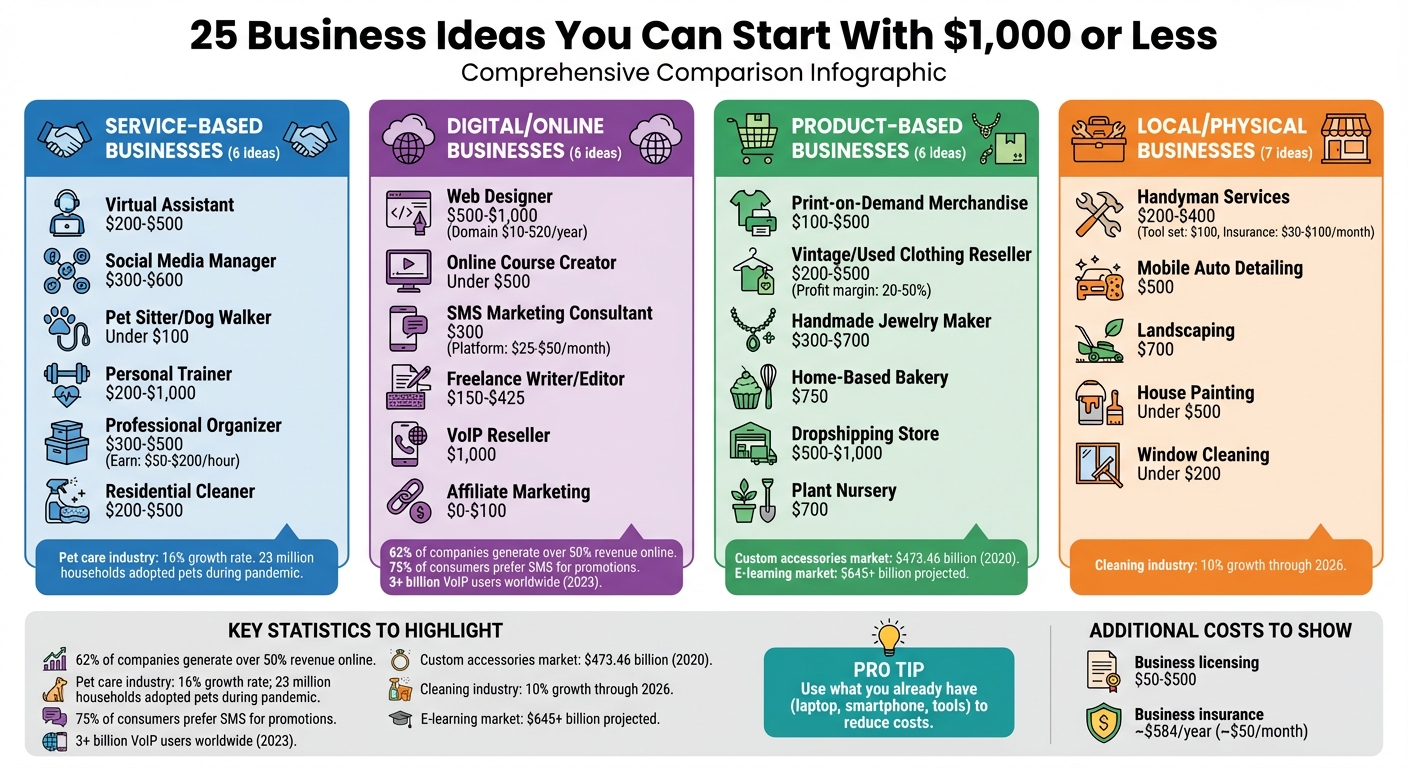
25 Business Ideas Under $1000: Startup Costs by Category
The Smartest Way to Start a Business With $1,000
1. Service-Based Businesses
Starting a service-based business is an excellent option if you're working with a tight budget. Since you're offering your skills and expertise rather than selling physical products, you can keep costs low and enjoy higher profit margins.
One of the biggest perks? Platforms like Rover, TaskRabbit, and Upwork make it easy to connect with clients without spending much on advertising. As Georgi Todorov, Founder of Create & Grow, puts it:
"You don't need a lot of money or a new invention to start a business - offering simple, practical services, like helping businesses improve their online presence, can be a great way to begin."
Here are six service-based business ideas you can start with just $1,000 or less:
- Virtual Assistant
Offer administrative support like managing emails, scheduling, and data entry for entrepreneurs or small business owners. Expect startup costs between $200 and $500, which typically cover essential tools like software subscriptions. Platforms like Upwork and Fiverr are great places to land your first clients. - Social Media Manager
Help businesses grow their online presence by creating content and managing posting schedules. A budget of $300 to $600 can cover tools like Buffer or Hootsuite for scheduling, and Canva for design. With 62% of companies generating over half their revenue through online platforms, the demand for digital expertise is strong. - Pet Sitter/Dog Walker
Care for pets while their owners are busy or traveling. You can get started for under $100, which includes platform fees (around $35 on Rover), leashes, and waste bags. The pet care industry is booming, with a 16% growth rate, and 23 million American households adopted pets during the pandemic. - Personal Trainer
Provide fitness coaching in clients' homes or at local parks using portable gear like resistance bands and dumbbells. Startup costs range from $200 to $1,000, mainly for certification and equipment. Earning a certification not only adds credibility but can also boost your income. - Professional Organizer
Help people declutter and set up efficient storage systems. Expect to spend $300 to $500, which can include a provisional membership with the National Association of Productivity and Organizing Professionals (around $319) and basic organizing supplies. You could earn $50 to $200 per hour in this role. - Residential Cleaner
Offer eco-friendly cleaning services for homes. Startup costs typically range from $200 to $500, covering items like a vacuum, cleaning supplies, and liability insurance. The cleaning industry is expected to grow by 10% through 2026.
These ideas show how you can turn a small budget into a profitable venture, making the most of your time, skills, and resources.
2. Digital/Online Businesses
Starting a digital business has never been more accessible - or affordable. With just a laptop and a smartphone, you can launch a venture without worrying about storefronts, inventory, or hefty overhead costs. As Mia Taylor from Cheapism puts it:
"Starting a small business is easier and cheaper than ever, particularly if you already own a computer and a smartphone."
The numbers back it up: 62% of companies report generating more than half of their revenue through their websites, underscoring the growing demand for digital services. Like service-based businesses, digital models thrive on low startup costs while offering the advantage of reaching a global audience.
If you’re looking to get started, here are six online business ideas you can launch with $1,000 or less:
- Web Designer
Create websites for local businesses using tools like WordPress or Wix. With a $1,000 budget, you can cover essentials like a domain name (around $10–$20 per year), hosting, and design tools. Many small businesses still lack a professional online presence, making web design a service that’s always in demand. - Online Course Creator
Share your expertise by creating and selling courses on platforms like Udemy or Teachable. For example, Jenny Wilson launched her digital marketing consultancy for under $500. The e-learning market is booming, with projections suggesting it will surpass $645 billion in the near future. - SMS Marketing Consultant
Help local businesses connect with their customers through SMS campaigns using platforms like Twilio, which costs $25–$50 per month. Startup expenses, including platform fees and advertising, typically run around $300. It’s a smart choice - 75% of consumers prefer receiving promotional content via SMS. - Freelance Writer/Editor
Offer writing or editing services to clients. You can start with an investment of $150–$425 in certifications or software. Take Vaibhav Kishnani, for example - he founded Content-Whale in 2017 with just $35, and by 2022, his agency was generating $514,000 annually with a team of over 500 writers. - VoIP Reseller
Partner with an established provider to sell VoIP communication services under your own brand. With more than three billion VoIP users worldwide as of 2023, this market is full of opportunity. A $1,000 budget is enough to cover setup and marketing expenses. - Affiliate Marketing
Earn commissions by promoting products on your blog or social media. Programs like Amazon Associates make it easy to start with little to no upfront costs. In 2019, Alex Tran began an online resale business with zero investment, earning $700 in the first month and scaling to over $3,000 in monthly revenue.
These ideas show that starting a digital business doesn’t have to break the bank. With the right tools and approach, you can tap into growing markets and build a profitable venture from your laptop.
sbb-itb-08dd11e
3. Product-Based Businesses
Starting a business that sells physical products might seem like a costly endeavor, but with a thoughtful plan, you can get started for under $1,000. The trick is finding the right balance between your time, money, and effort to make it work.
Today’s product-based businesses come with fewer inventory risks, thanks to models like dropshipping, print-on-demand, handmade goods, and reselling. Here are six ideas to help you kickstart your product business on a budget:
- Print-on-Demand Merchandise
This model lets you sell custom-designed products without keeping any inventory. Third-party services handle the printing and shipping, so you don’t need upfront stock. For example, in 2009, entrepreneur Cinquanta Cox-Smith started a print-on-demand T-shirt business with just $100 and grew it into a $120,000-per-year venture. - Vintage/Used Clothing Reseller
Apps like Poshmark, Depop, and eBay make it easy to sell thrifted or gently used clothing. Profit margins typically fall between 20% and 50%, making this a solid option for anyone with an eye for fashion and bargains. - Handmade Jewelry Maker
With a basic jewelry-making kit, you can create unique accessories and sell them through platforms like Etsy or Shopify. To build your portfolio, consider offering your first pieces at cost to friends or family. The demand for personalized accessories is strong - the custom accessories market was valued at nearly $473.46 billion in 2020. - Home-Based Bakery
If you love baking, a home bakery could be a sweet opportunity. With about $750 for ingredients and equipment, you can start selling cupcakes, cookies, or other treats. Subscription models, like monthly baked goods deliveries, can help generate steady income. Just make sure to check local food business regulations before diving in. - Dropshipping Store
Dropshipping allows you to run an online store without holding any inventory. Manufacturers ship products directly to your customers, which keeps upfront costs low. Startup expenses typically range from $500 to $1,000, covering website setup and marketing. As Meghan Stabler, Chief Marketing Officer at ThriveCart, puts it:"The beauty of the dropshipping model is you don't have to actually manufacture any products to get started".
- Plant Nursery
If you’ve got a green thumb, consider growing and selling plants from home. For around $700, you can get started with seeds, soil, fertilizer, and basic supplies. The demand for pet-safe plants and greenery is rising, and using a "just in time" inventory approach - buying supplies only after orders come in - can help you manage costs effectively.
These ideas show how careful planning and resourcefulness can stretch a $1,000 budget into a thriving business. Whether you’re crafting handmade goods, curating vintage finds, or connecting buyers with manufacturers, there’s plenty of opportunity to get started. Up next, let’s look at local and physical business models that also make the most of a small budget.
4. Local/Physical Businesses
Starting a local business doesn't have to break the bank. With a little creativity and by using what you already have - like your car, tools, or personal skills - you can keep startup costs low and focus on getting your business off the ground.
Devin, who owns a landscaping business, shares some practical advice:
"I recommend starting small with the equipment you have. Ask around in your neighborhood if people need their lawns mowed or odd jobs done... I didn't need to worry about financing larger equipment... until a few months in."
Local businesses, much like digital or product-based ventures, thrive on accessible resources. They also deliver quick, tangible results in your community.
Here are five local business ideas you can start for under $1,000:
- Handyman Services: If you’ve got basic tools, you’re already halfway there. A solid 210-piece tool set costs about $100, and liability insurance ranges from $30 to $100 per month. Platforms like TaskRabbit can connect you with clients, saving you from spending on heavy marketing efforts.
- Mobile Auto Detailing: For around $500, you can get the essentials like a vacuum, hose, microfiber cloths, and cleaning supplies. Since you work at the client’s location, there’s no need for a physical shop, keeping costs low.
- Landscaping: Starting with about $700, you can purchase a basic mower, trimmer, and leaf blower. Simple tasks like mowing lawns and raking leaves are great for gaining experience before investing in more advanced equipment.
- House Painting: With less than $500, you can get rollers, brushes, tape, and drop cloths. Start small with interior projects to build your portfolio before moving on to bigger exterior jobs.
- Window Cleaning: This business can be launched for under $200 with squeegees, buckets, and cleaning solutions. Since you can operate directly from your vehicle, there’s no need for a storefront.
Before you dive in, make sure to check your local licensing requirements - permits can cost between $50 and $500. Additionally, business insurance typically runs about $584 annually (less than $50 per month). To promote your services without spending much, take advantage of free platforms like Instagram and Facebook. Sharing before-and-after photos of your work is an easy way to build a portfolio and attract new clients .
Conclusion
Starting a business with just $1,000 is entirely possible - if you approach it with a clear plan and dedication. As one expert puts it, success is about more than just money; it’s about combining your financial resources with consistent effort and smart decision-making.
The examples we've explored demonstrate how careful planning can turn a modest budget into a solid foundation. Service-based businesses like tutoring or bookkeeping often require little to no upfront costs, while digital ventures such as blogging or freelance writing need only a laptop and internet access. Even product-focused or local businesses - like reselling on eBay or offering mobile auto detailing - can fit within a $1,000 budget if you start small and make the most of what you already have.
To stretch your budget, consider using low-cost resources and simple strategies. For instance, register your business directly through your state’s Secretary of State website, which usually costs between $50 and $150. Instead of splurging on a complex website, create a basic landing page. Take advantage of free software trials to keep expenses down until your business starts generating revenue.
Successful businesses don’t rely on large initial investments - they start lean, test their ideas quickly, and reinvest profits to grow. Focus on an idea that matches your skills and passions, research your market to ensure there’s demand, and take that first step. Begin with what you have, stay focused, and reinvest as you go. By keeping things simple and efficient, you can turn a small investment into a thriving venture.
FAQs
What are the best affordable tools to start a business with $1,000?
Starting a business with just $1,000 is entirely doable if you take advantage of free or budget-friendly tools that keep costs low without sacrificing efficiency. When it comes to finding clients, platforms like Fiverr, Upwork, and Guru let you showcase your skills and bid on projects without any upfront investment. These platforms make it easier to turn your expertise into income right away.
For staying organized and managing tasks, tools like Zapier can handle repetitive jobs such as invoicing, managing leads, or scheduling social media posts. Many of these tools offer free plans or low-cost subscriptions, helping you get the most out of your budget. By relying on these resources, you can allocate your $1,000 toward essentials like securing a domain name, basic marketing efforts, or stocking inventory, all while keeping your operational expenses under control.
What are some effective ways to market my new business on a small budget?
Marketing your new business on a budget means being smart and resourceful. Start by creating a simple, professional online presence. Build a free website or landing page with clear, engaging content that explains your services and highlights what sets you apart. Use basic SEO strategies, claim your free Google Business Profile, and stay active on social media to increase visibility - all without spending a dime.
Take advantage of free platforms to showcase your work and connect with potential clients. For example, share a polished portfolio on freelance marketplaces or actively network on LinkedIn, local Facebook groups, and community forums. Personal recommendations and word-of-mouth can often outperform paid ads in terms of impact. To save time and stay consistent, use free tools to automate tasks like follow-up emails or scheduling social media posts. By combining a strong online presence, strategic networking, and automation, you can promote your business effectively without stretching your wallet.
What challenges might I face starting a business with just $1,000?
Starting a business with just $1,000 is no small feat. With such a tight budget, every dollar counts, and even small expenses can feel like a big hit. Things like registering your business, getting the necessary licenses, or buying basic equipment can quickly eat into your funds. This often leaves little room for surprises or a safety net to fall back on.
One of the biggest hurdles is working with a limited marketing budget. When funds are tight, you’re often left relying on low-cost methods like social media, word-of-mouth, or creating a DIY website. While these approaches can work, they take time to build momentum and may not help you stand out in a crowded market right away. On top of that, you’ll likely have to wear many hats - handling marketing, bookkeeping, product development, and more - all while operating with a small inventory. This can limit your ability to meet demand and increases the risk of running out of stock.
Another challenge is that limited funds can make it tough to access financing or credit. Without additional resources to fall back on, unexpected expenses can quickly derail your plans. Overcoming these hurdles requires careful planning, creativity, and resourcefulness to stretch every dollar and build a business that can grow over time.
Related Blog Posts
- Start a Business with Just $500: Complete Guide
- The $100 Business Experiment That Worked
- From Broke to Business Owner: Real Stories
- How to Start a Pressure Washing Business With Under $1,000