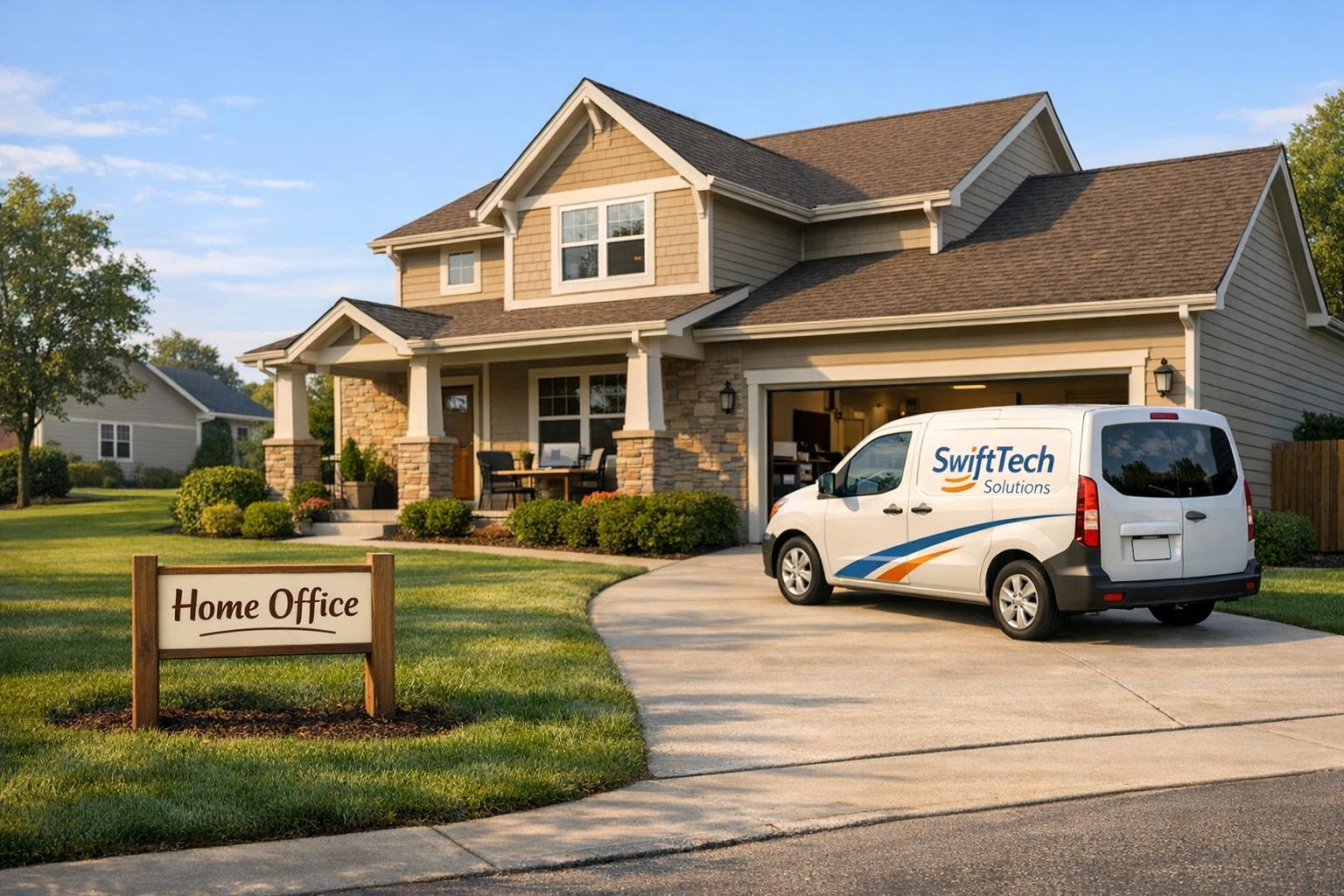
Running a business from home can save money and eliminate commuting, but it’s not as simple as setting up shop. You’ll need to navigate zoning laws, HOA rules, and permit requirements to ensure your business is legal. Here’s what to know:
- Zoning Laws: These dictate how much of your home can be used for business, limit noise or traffic, and may restrict employees or client visits.
- HOA Rules: Homeowners associations often have stricter rules than cities, like banning visible signs or prohibiting non-resident employees.
- Permits: Most businesses need a general business license and, often, a home occupation permit. Specialized permits may be required for certain industries, like food or childcare.
Ignoring these rules can lead to fines, shutdowns, or legal trouble. Always check local regulations and HOA documents before starting. If your plans face restrictions, variances or conditional use permits might offer a solution.
Pro Tip: Research zoning classifications and HOA rules early. Consulting professionals or your city planning office can help you avoid costly mistakes.
What Is A Home Occupation Permit? - CountyOffice.org
What Stops People From Starting Home-Based Businesses
Starting a home-based business can seem like a great idea, but there are three major hurdles that often hold people back: zoning laws, HOA restrictions, and permit requirements. Let’s take a closer look at these challenges and how they can impact your ability to run a business from home.
Zoning Laws and Their Impact on Home-Based Businesses
Zoning laws are designed to maintain the residential feel of neighborhoods, but they can complicate running a business from home. These rules often dictate how much of your home can be used for business purposes and may limit physical changes to your property. For instance, many residential zones restrict non-resident employees to just one - or sometimes none at all. Client visits might also be tightly regulated, such as allowing only one visitor per hour within specific timeframes (e.g., 8 a.m. to 8 p.m.). Even deliveries can be capped, with some areas permitting no more than two per day.
If your business involves equipment that creates noise, smoke, or odors, you could face additional restrictions. And zoning laws go even further, covering details like parking availability, waste management, and compliance with ADA requirements for private and public signage.
"Zoning laws involve granular details. You'll need to account for onsite as well as any off-street parking, your waste and recycling plans, entryway staircase conditions, and even ADA-compliant private and public signage."
– Jim Pendergast, Senior Vice President, altLINE
Some areas also limit the portion of your home that can be dedicated to business activities - sometimes to as little as 25% of your home’s total square footage. High-impact businesses like retail stores, restaurants, or anything involving hazardous materials are often outright banned in residential zones. Enforcement typically happens when neighbors file complaints, so keeping your business discreet can help avoid issues.
HOA Rules and Property Covenant Restrictions
Homeowners Associations (HOAs) often have their own set of rules, known as Covenants, Conditions, and Restrictions (CC&Rs), which can be even stricter than local zoning laws. These rules may outright ban business operations or limit them to specific, low-profile activities. As Nolo puts it:
"CC&Rs pertaining to home-based businesses are often significantly stricter than those found in city ordinances."
– Nolo
For those living in rental properties, condominiums, or cooperative housing, the lease or ownership agreement might add another layer of restrictions. This is something Wolters Kluwer highlights:
"If you rent your house or apartment rather than own it, check your lease agreement because it might prohibit a home business."
– Wolters Kluwer
Permits Needed to Legally Run a Home Business
Even if you clear zoning and HOA hurdles, you’ll likely need permits to operate legally. Most cities require a general business license or tax certificate as a starting point. Beyond that, you might need a home occupation permit, which varies based on the nature of your business.
For example, Portland has a two-tier system: a Type A permit is for low-impact businesses like freelance writing or consulting that don’t involve on-site employees or customers. A Type B permit is for operations like tutoring or hair styling, which allow one employee and up to 15 daily customers. Type B permits often require notifying neighbors and undergoing inspections. In some cities, like Santa Ana, you’ll need to secure your home occupation permit before applying for a general business license.
Certain businesses, such as home daycares or food preparation, require additional state-level licenses. If you plan to advertise with outdoor signage, you’ll likely need a separate sign permit to regulate its size, materials, and lighting. And if your business type isn’t explicitly allowed under local zoning laws, you may need a conditional use permit or zoning variance, both of which can be difficult to obtain.
| Permit Type | Purpose | Typical Issuing Authority |
|---|---|---|
| Home Occupation Permit | Authorizes business activity in residential zones | Local Planning/Zoning Department |
| General Business License | Allows legal commercial operation | Tax Collector or Finance Department |
| Professional License | Validates credentials for specific industries | State Licensing Board |
| Sign Permit | Regulates outdoor advertising size and placement | Building or Zoning Department |
How to Work With Zoning Laws and HOA Restrictions
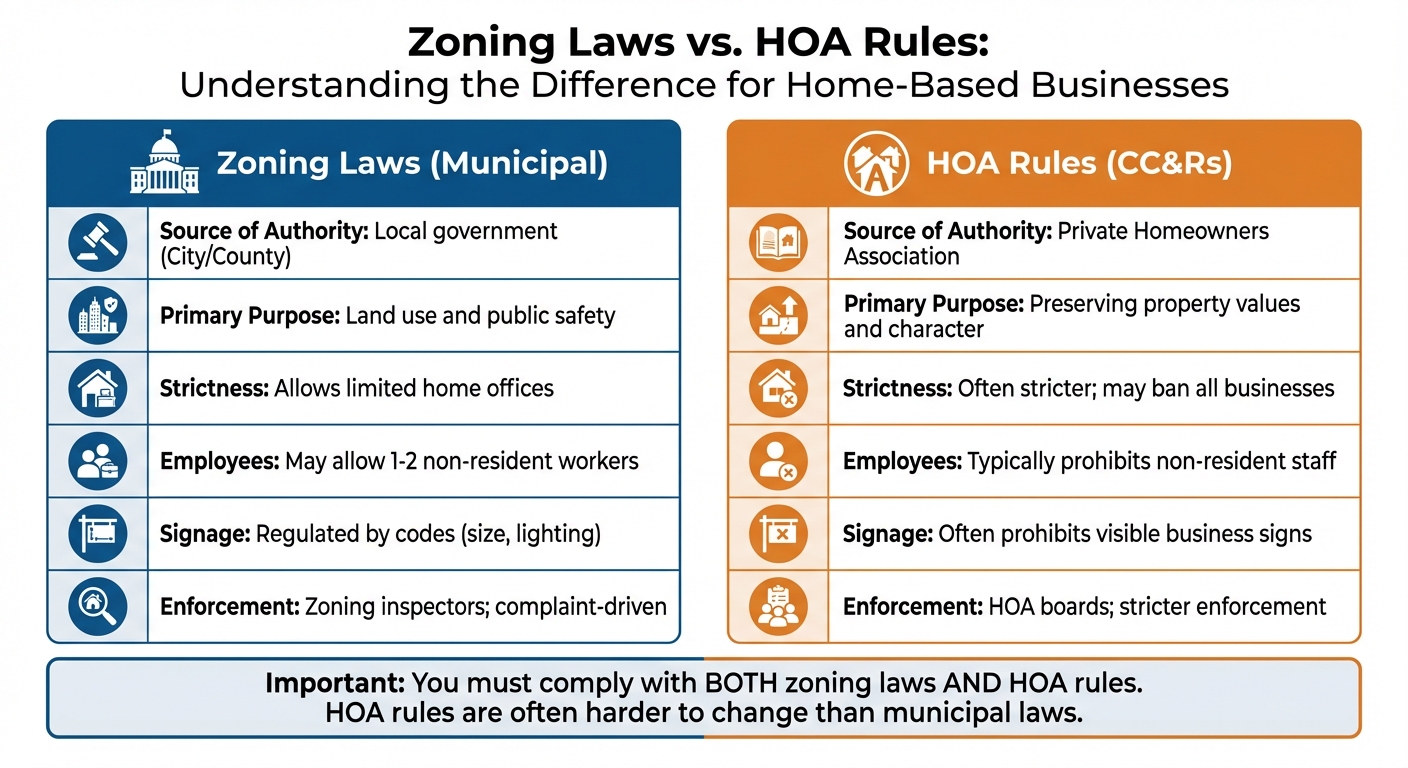
Zoning Laws vs HOA Rules for Home-Based Businesses
Navigating zoning laws and HOA rules might seem daunting, but having the right information and knowing how to handle restrictions can make the process much smoother. Below, we’ll break down how to check local zoning regulations, understand the differences between zoning laws and HOA rules, and what to do if your business plans hit a roadblock.
How to Check Your Local Zoning Regulations
Most municipalities provide zoning data online through parcel maps or planning department databases. By entering your address, you can find your property’s zoning classification, like R-1 or R-2, and see what activities are permitted. If online tools aren’t available or you need more clarity, you can reach out to your city or county clerk, planning department, or tax assessor’s office for assistance.
For added confirmation, some cities offer official documents like Zoning Compliance Letters or Zoning Clearances. For instance, Kansas City charges $143.00 per parcel for a Zoning Compliance Letter. You can also access zoning ordinances at public libraries or through the city attorney’s office. When contacting city hall, ask specifically for the "home occupation ordinance" to understand the rules for running a business from a residential property.
If you’re hesitant to draw attention to your plans, consider having a friend inquire with the planning department on your behalf.
Zoning Laws vs. HOA Rules: What's the Difference?
Zoning laws and HOA rules may overlap, but they come from different authorities and serve distinct purposes. Understanding these differences is key to staying compliant.
| Feature | Zoning Laws (Municipal) | HOA Rules (CC&Rs) |
|---|---|---|
| Source of Authority | Local government (City/County) | Private Homeowners Association |
| Primary Purpose | Land use and public safety | Preserving property values and character |
| Strictness | Allows limited home offices | Often stricter; may ban all businesses |
| Employees | May allow 1-2 non-resident workers | Typically prohibits non-resident staff |
| Signage | Regulated by codes (size, lighting) | Often prohibits visible business signs |
| Enforcement | Zoning inspectors; complaint-driven | HOA boards; stricter enforcement |
Even if your city allows your business, HOA rules - outlined in Covenants, Conditions, and Restrictions (CC&Rs) - may impose stricter limits. As Nolo’s editorial staff explains:
"As long as the rules of your planned development are reasonably clear and consistently enforced, you must follow them. Because many planned developments enforce their rules more zealously than municipalities do, it's essential that you make sure your home-based business is in full compliance."
– Nolo Editorial Staff
HOA rules are often harder to amend than municipal laws, as changes usually require agreement from the association board or members. Always review both zoning laws and HOA documents before moving forward with your business plans.
How to Apply for Variances or Conditional Use Permits
If your business doesn’t align with current zoning regulations, you can apply for a variance (an exception to the rules) or a conditional use permit, which allows you to operate under specific conditions. Start by contacting your local planning department or zoning board to discuss the issues and gather the necessary application materials.
The application process typically involves submitting detailed documents, including plans for parking, waste management, entryways, and ADA-compliant signage. After paying the required fees, your request will often go to a public hearing where officials assess its impact on the neighborhood. Variances are usually granted if the current rules unfairly restrict your ability to earn a living, your business won’t harm the area, or your intended use aligns with other permitted activities.
Getting your neighbors on board can make a big difference. Before filing your application, talk to them about your plans - zoning boards are more likely to approve requests that have community support. If your application is denied, you can often appeal the decision to the city council or county board of supervisors.
For those renting a property that requires rezoning, consider negotiating a contingent lease. This type of lease sets a specific deadline for completing the rezoning process, protecting you from being locked into a space that isn’t legally eligible for your business.
sbb-itb-08dd11e
Steps to Follow Before You Launch Your Business
Starting a home-based business can be exciting, but before you dive in, it's crucial to address some legal and logistical details. Checking local zoning codes, HOA restrictions, and permit requirements early on can save you from costly legal headaches down the road. These steps lay the groundwork for a smooth and compliant launch.
Review Legal Requirements for Your Business
First, figure out how your property is zoned. You can get this information from your local planning office. Look into the "home occupation ordinance" for your area, as cities often categorize home businesses differently. For instance, Portland separates businesses into "Type A" (no employees or customers, often no permit needed) and "Type B" (limited employees and customers, permit required).
Next, review your HOA's CC&Rs (Covenants, Conditions, and Restrictions). These rules might be stricter than city codes and could limit your business operations. For example, many residential zones restrict visible business signs and limit non-resident employees to just one person.
Create a checklist of the permits and licenses you’ll need to operate legally. This might include a general business license, a home occupation permit, or even industry-specific licenses like health permits for food-related businesses or state certifications for salons. If you plan to have clients or employees visit your home, make sure your space complies with Americans with Disabilities Act (ADA) accessibility standards. Having this checklist ensures you’re covering all the legal bases before seeking professional advice.
Get Legal Advice From Professionals
If zoning laws or other regulations seem overwhelming, it’s wise to consult a professional. Jim Pendergast, Senior Vice President at altLINE, highlights how detailed zoning laws can get:
"Zoning laws involve granular details. You'll need to account for onsite as well as any off-street parking, your waste and recycling plans, entryway staircase conditions, and even [Americans with Disabilities Act]-compliant private and public signage."
For businesses involving remodeling, multiple employees, or unclear regulations, a local real estate attorney or zoning expert can be invaluable. They can help you determine if you need a "change of occupancy" permit or assist with applying for variances or conditional use permits. An attorney can also review your HOA's CC&Rs to see if certain restrictions can be negotiated or challenged.
Additionally, contact your homeowner's insurance provider to update your policy. A business rider or a combined residential-commercial policy may be necessary, as standard homeowner’s insurance typically doesn’t cover business-related losses. Failing to notify your insurer could even void your existing coverage.
Validate Your Business Idea With IdeaFloat

Once your legal groundwork is solid, it’s time to test your business idea. IdeaFloat is a platform that helps you validate your concept using real market data, so you can make smarter decisions before investing in permits or equipment.
The platform’s Problem Validator tool measures customer demand and urgency for your product or service. This helps you confirm that your idea has a market before you commit. IdeaFloat’s Consumer Insights feature lets you explore online conversations to see if people are actually looking for what you want to offer. If your local rules limit customer visits, the Competitor Analysis tool can help you identify opportunities for businesses that don’t rely on in-person interactions, like online services or mobile operations.
IdeaFloat also offers tools like Cost Analysis and Financial Modeling to calculate your startup and operating expenses, including permit fees and insurance adjustments. These features give you a clear picture of whether your business idea is financially viable. If the numbers don’t add up, you can adjust your plan to a less restrictive business model - saving you time and money before filing any permits.
Conclusion: Making Your Home-Based Business Work Within the Rules
Starting and running a home-based business means playing by the rules - zoning laws, HOA regulations, and permit requirements all need your attention. Ignoring these can lead to serious consequences, like fines, cease-and-desist orders that could halt your business on the spot, or even HOA legal actions such as lawsuits or property liens. Being aware of these risks is a vital part of preparing for success.
FAQs
What should I do if my HOA rules conflict with my plans to run a business from home?
If your HOA rules seem to limit your home-based business, the first step is to review the HOA’s governing documents. Look for the specific rule that conflicts with your business and familiarize yourself with the enforcement and appeal process. Make sure to document everything - save emails, take photos, and keep detailed records of how the restriction affects your business. These records can be essential if you need to make a formal case.
Once you’ve done your homework, reach out to your HOA board in writing. Clearly outline your business operations, show how they align with local zoning laws, and address potential concerns like noise, increased traffic, or visible signage. If your request is denied, you may need to consider other avenues like mediation or arbitration, which many HOAs require before escalating to legal action. If those steps don’t resolve the issue, consulting an attorney might be necessary to assess whether the rule is enforceable under state law or if you can apply for a variance or other legal solutions.
Throughout this entire process, double-check that your business complies with local zoning laws and licensing requirements. In some cases, these regulations can take precedence over restrictive HOA rules.
How can I check if I’m allowed to run a business from my home?
To determine if your property is zoned for a home-based business, the first step is to identify your zoning designation. Many cities and counties provide online zoning maps or GIS tools where you can input your address to find your zoning classification (e.g., R-1, C-2). If these resources aren’t available, reaching out to your local planning or zoning office can help.
Once you’ve identified your zoning classification, take a closer look at the specific regulations for home-based businesses in your area. These rules often cover aspects like business size, signage, parking, operating hours, or the number of employees you can have. Most of this information is available on your city’s website or in its municipal code library. If your business idea doesn’t align with the rules, you might need to apply for a variance or a special permit.
Don’t forget to check for additional restrictions, such as homeowners association (HOA) rules, deed restrictions, or lease agreements. These can sometimes impose stricter limitations than local zoning laws. By following these steps, you’ll have a clear understanding of what’s permitted and can ensure your business adheres to all applicable regulations.
What happens if I run a home business without the necessary permits?
Running a home business without the proper permits can lead to serious trouble. Authorities at the local or state level might hit you with fines that range from a few hundred to several thousand dollars. In some areas, these fines can pile up daily until you resolve the issue. Worse yet, you could be slapped with a cease-and-desist order, forced to shut down your business, or even face criminal charges in extreme cases.
Ignoring permit requirements doesn’t just invite legal and financial headaches - it can also tarnish your reputation. Competitors or customers might take legal action, and courts could hold you responsible for damages. On top of that, running an unlicensed business could void your insurance coverage, leaving you unprotected when you need it most. To steer clear of these risks, make sure your business meets all local laws and licensing requirements.
Related Blog Posts
- How to Start a Profitable Airbnb Business in 2025 (Without Owning Property)
- The Most Profitable Service Businesses You Can Start From Home in 2025
- Can You Run a Business From Residential Property? (US Zoning Rules)
- Can You Build a Business on Residential Land? What the Law Says