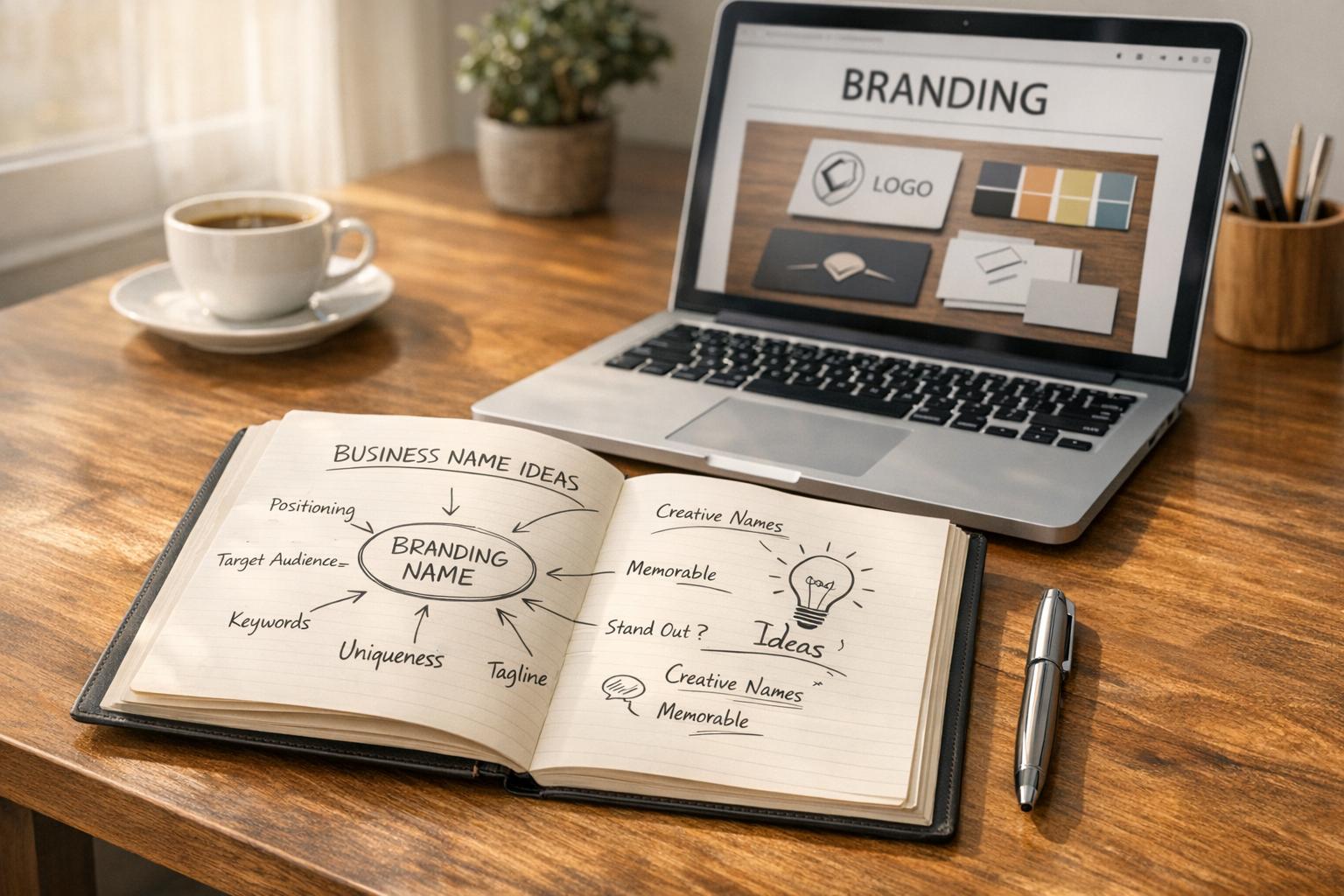
Your business name is more than a label - it's the first impression customers and investors have of your brand. Choosing the right name starts with defining your positioning: who you serve, the problem you solve, and what makes you stand out. This approach ensures your name resonates emotionally, avoids being overly niche, and sets you apart in crowded markets.
Key Takeaways:
- Positioning First: Define your target audience and unique value proposition before brainstorming names.
- Emotional Impact: Names that evoke feelings or imagery (like "Apple") are more memorable than descriptive ones.
- Simplicity Wins: Short, easy-to-pronounce names are easier to recall and build trust.
- Sound Matters: Words with certain sounds (e.g., plosives like "p" or "k") grab attention and stick in memory.
- Test Before You Commit: Validate name ideas with real people and check for domain/social media availability.
Using a simple 20-minute method, you can define your positioning, brainstorm ideas, refine options, and test your top picks to find a name that connects with your audience and grows with your brand.
The Psychology of Business Names
sbb-itb-08dd11e
Psychology Behind Business Names That Work
When you're crafting a business name that aligns with your positioning-first strategy, it's important to understand how it taps into the brain's cognitive responses. Your brain doesn’t treat business names the same way it processes straightforward descriptive phrases. Take "Apple" or "Dove", for instance - hearing these names instantly conjures up emotions and mental images tied to those objects. This is why abstract or non-descriptive names often forge deeper emotional connections compared to direct ones like "Whole Foods". The brain encodes these unique names similarly to how it remembers people’s names, which makes them stick better than clunky descriptive labels like "Tall Skinny Man".
How Names Create Emotional Connections and First Impressions
The most effective names often carry an element of surprise. They’re just unexpected enough to spark curiosity without feeling disconnected from the product. This slight mental leap creates an "aha" moment when people make the connection, leaving a positive and lasting impression. It’s like solving a tiny puzzle - satisfying and memorable.
Sound plays a surprisingly big role here, too. The Bouba/Kiki effect shows that 95% of people across different cultures associate the word "Kiki" with a sharp, pointy shape, while "Bouba" feels round and soft. Sounds inherently carry meaning: front vowels like "e" and "i" evoke feelings of lightness and sharpness, while back vowels such as "o" and "u" suggest heaviness and roundness. For example, a name like "Crisp" immediately feels light and refreshing, while "Robust" conveys strength and solidity. These auditory cues help build emotional connections right from the start.
Why Simple Names Are Easier to Remember
Simple names stick. They act as mental shortcuts that make recall effortless. Think of "Mustang" - it instantly brings to mind speed and power. This ease of processing, known as processing fluency, plays a big role in how much trust and credibility a name inspires. Simple names feel clear and approachable, while more complex ones require extra mental effort, which can dilute their impact. Short names tend to project a direct, action-oriented personality, while longer ones can feel more intricate and imaginative. This is why the "keep it simple, stupid" approach often wins when naming a brand. Plus, a simple name keeps your options open. For example, "KetoProtein" might box you into a specific niche, limiting future growth opportunities.
Beyond simplicity, the rhythm and sound of a name also play a major role in making it unforgettable.
Using Words and Sounds That Trigger Positive Reactions
Even the way a name feels when pronounced can influence how people perceive it. Names ending in a hard "e" sound - like "Christie" or "Nicki" - naturally make your mouth form a slight smile, which can subtly boost both the speaker’s and listener’s mood. This ties into the Facial Feedback Hypothesis, where smiling can actually lead to positive emotional states.
How a name flows also matters. For instance, names with consonants that move from the front to the back of the mouth - like "Buleka" - mimic the action of swallowing, which the brain associates with acceptance and approach. On the flip side, names with sounds that move in the opposite direction can feel less inviting. Starting a name with plosives (like b, d, g, k, p, t) creates a sharp, popping sound that makes it more attention-grabbing and easier to recall. These sound dynamics reinforce your brand’s positioning, ensuring the name resonates both cognitively and emotionally.
| Sound Type | Examples | Perceived Characteristics |
|---|---|---|
| Front Vowels | e, i | Small, fast, sharp |
| Back Vowels | o, u | Large, heavy, warm |
| Plosives | b, d, g, k, p, t | Explosive, memorable |
| Fricatives | s, f, z | Small, fast, light |
Rhyming names add yet another layer of memorability. Thanks to the rhyme-as-reason effect, rhyming names are easier for the brain to process, making them seem more credible and trustworthy. This is why brands like "FitBit" and "Coca-Cola" feel so familiar and appealing from the very first encounter.
The 20-Minute Positioning-First Naming Method

20-Minute Positioning-First Business Naming Method
Use this quick, 20-minute method to create a name that perfectly reflects your market niche. The key? Start with strong positioning to guide your choices.
Step 1: Define Your Positioning (Minutes 1–5)
Begin by identifying the mental space you want to claim in your audience's mind. Think about who you're targeting, the problem you solve, and what makes you stand out. Use this simple formula to clarify your positioning:
"For [target audience] who [need], [brand/product] is the [market definition] that [unique value], because [reason]."
Next, decide on your competitive focus. Will you emphasize price (economy or premium), quality (reliability or performance), product (innovation or features), or use case (specific occasion or user type)?. For example, if you're launching a meal kit service, are you the affordable option for busy parents or the upscale choice for food lovers who want restaurant-quality meals? This clarity will shape the names you consider.
"Positioning is not what you do to a product. Positioning is what you do to the mind of the prospect. That is, you position the product in the mind of the prospect." - Ries & Trout
Step 2: Brainstorm Audience-Driven Words (Minutes 6–10)
Spend the next five minutes listing 15–20 words that resonate with your audience and highlight your unique value. Think about the emotions you want to spark, the benefits you offer, and the imagery tied to your positioning. For instance:
- If you're a premium meal kit, words like "artisan", "curated", or "savor" might fit.
- If you're a budget-friendly option, words like "quick", "simple", or "smart" could work.
This list will serve as the foundation for generating name ideas.
Step 3: Create and Refine Name Options (Minutes 11–15)
Combine the words from your list to craft 10–15 potential names. Blend descriptive terms with evocative ones, or invent something entirely new that hints at your positioning without being overly literal. Take "Fitbit", for example - it subtly conveys both fitness and data without needing further explanation.
Now, filter your ideas by asking:
- Is it easy to spell, pronounce, and remember?
- Can it grow with your brand's future ambitions?
- Does it sound appealing and encourage word-of-mouth?
- Does it stand out from competitors?
- Is it free of negative connotations in other languages?
| Evaluation Category | Key Criteria |
|---|---|
| Simplicity | Easy to spell, pronounce, and remember |
| Scalability | Adaptable for future growth |
| Sound | Pleasant to say and shareable |
| Distinctiveness | Clearly differentiates from competitors |
| Cultural Fit | No unintended meanings in other languages |
Once you've narrowed it down, you're ready to test your top choices.
Step 4: Test and Fine-Tune Your Favorites (Minutes 16–20)
Take your top 3–5 name ideas and test them with real people using the 3×5 Card Method. Write each name on a card and ask, "What comes to mind when you see this?" Look for consistent associations that align with your intended positioning.
Try using the names in sentences like, "I'm launching [name]" or "Have you heard of [name]?" to see how they sound in everyday conversation. Don’t forget to check if the .com domain and social media handles are available - these are crucial for your online presence.
Lastly, apply the 48-Hour Rule: sit with your top choice for a couple of days. If it still feels like the right fit after some time, you’ve likely found your winner.
"Your company name has to do one thing: Get the right people to think the right things about your company." - David Card, C42D
Tools That Make Naming Faster and Easier
Using the right tools can simplify the naming process while ensuring the results are aligned with your brand's goals. By incorporating data-driven research, you can validate your ideas and ensure your name resonates with your audience and reflects your positioning.
Using IdeaFloat for Research-Based Naming
IdeaFloat offers tools that bring market insights into your naming process. Start with Consumer Insights to uncover what your target audience is saying about businesses like yours. You'll gain an understanding of the language they use, the emotions they associate with certain words, and the phrases that resonate most. For example, if you're in the health and wellness industry, you might find that words like "vitality", "balance", or "restore" frequently appear in your audience's discussions, giving you clear direction for your naming efforts.
Next, leverage Competitor Analysis to identify naming trends within your industry. This tool helps you spot overused patterns and find opportunities to stand out. For instance, if most competitors rely on technical or clinical names, choosing a warmer, more approachable name can set you apart.
The Unique Value Proposition (UVP) tool helps ensure your name reflects your brand's core positioning. It focuses on articulating the primary idea your brand represents, avoiding the pitfall of trying to communicate too much at once. As Brian Lischer, Founder of Ignyte Brands, explains:
"A great brand name doesn't try to represent too much. It focuses on the communication of one central idea, instead of trying to be a catchall for everything the organization stands for."
Once you have a shortlist of potential names, validate them using IdeaFloat's research tools. Run A/B tests on platforms like social media or landing pages to measure which names resonate most with your audience. Additionally, track sentiment around your shortlisted names to see how people respond to them in various contexts. This data-driven approach eliminates guesswork, giving you confidence that your chosen name will connect with your audience before making a final decision.
Turning Your Name into a Complete Brand Identity
A strong name is just the beginning - it needs to be supported by a cohesive visual and verbal identity. IdeaFloat's Logo Generator helps you visualize how your name will look across different typography and layouts, which is crucial for brand recognition. Studies show that people are 81% more likely to remember a brand's colors than its name, and using a signature color can boost brand recognition by 80%. The Logo Generator ensures your name has the visual appeal to leave a lasting impression.
After finalizing your name and logo, the Branding Guide helps create a unified visual and verbal identity that strengthens customer engagement. Consistent branding can lead to a 23% increase in revenue, and 89% of consumers are more loyal to brands that maintain a consistent look and feel. This guide ensures your name becomes part of a well-rounded identity that builds trust and recognition from the start.
Conclusion: Creating a Name That Connects and Stands Out
Your business name is more than just a label - it's the longest-lasting element of your company. It will outlive your first product, your earliest customers, and even the founding team. That’s why starting with clear positioning is so important. When you define your strategic fit upfront, your name naturally reflects your brand’s core essence and creates an emotional connection with your audience.
The 20-minute method offers a straightforward way to go from positioning to a final name. Entrepreneur Gretta van Riel reminds us that "many iconic brand names only became memorable after people experienced an incredible product or service". Think about it: Google was once called "BackRub", and 3M started as "Minnesota Mining and Manufacturing Company." These names became legendary because of the value they delivered, not because they were flawless from the start.
By combining the 20-minute method with psychological insights - like sound symbolism, processing fluency, and the concreteness effect - you can create a name that feels right on an instinctive level. Tools like IdeaFloat's Consumer Insights and Competitor Analysis take this process further by showing you the language your audience actually uses and pinpointing gaps in the competition. This data-driven approach ensures your name is more than a guess - it’s validated before you commit. That clarity makes it easier to move forward with confidence.
Don’t get stuck chasing the "perfect" name. As Arielle Jackson from First Round wisely points out, "If you ask a bunch of people to help pick a name, you're likely to end up with a least common denominator name: one that pleases everyone but means nothing". Instead, focus on your positioning, validate your ideas with real audience insights, and take action. A good name with a clear purpose will always beat a perfect name that tries to be everything to everyone.
FAQs
How does brand positioning impact the success of a business name?
Brand positioning influences how people perceive your business and lays the groundwork for creating a name that resonates with your audience. When you define your values, benefits, and identity clearly, you can develop a name that mirrors these traits - making it easier for your brand to stand out and connect with the right people.
Positioning works by building association and familiarity. A thoughtful name can create positive connections. For example, a name like "Eco-Clean" signals an environmentally friendly brand, immediately setting the right tone. At the same time, using language your audience already relates to makes your brand more approachable, memorable, and trustworthy.
A strong position also helps your name rise above the competition. By incorporating distinctive words, unique sounds, or even surprising combinations, your name becomes easier to recall and leaves a lasting impression. Ultimately, positioning ensures your business name isn’t just different - it’s meaningful and aligned with what your customers care about.
Why do certain sounds matter when naming a business?
The sounds within a business name play a big role in shaping how people perceive and remember it. Our brains naturally link certain sounds to specific emotions and characteristics. For instance, names with soft, vowel-heavy sounds often come across as warm and approachable, while those with hard, sharp consonants project strength and authority.
Sound also affects how memorable a name is. Names that are easy to say and have a pleasing rhythm tend to stick in people’s minds, making them easier to share through word-of-mouth. By selecting sounds that match your brand’s identity - like smooth, flowing vowels for a luxury brand or bold, strong consonants for a tech company - you can craft a name that connects emotionally with your audience and makes a lasting impact.
How can I test and validate my business name ideas effectively?
To evaluate your business name ideas efficiently, try these steps:
- Focus on one element at a time: Zero in on specific factors like how memorable, appealing, or relevant the name is. Keep other variables, like your logo or tagline, unchanged to get clear and accurate feedback.
- Provide context: Offer a brief, one-sentence explanation of your business. Include what it does, who it serves, and its primary benefit. This ensures people assess the name with the right perspective.
- Check ease of pronunciation and spelling: Ask others how simple the name is to say and spell. Pay attention to any common mispronunciations or misspellings they mention.
- Test combinations: Pair the name with visuals like a logo or a tagline. This helps you see how well the name fits when used in real-world branding scenarios.
- Refine and finalize: Use the feedback to tweak your options, then test again if necessary. Before settling on a name, confirm its practicality by checking for domain availability, potential trademark issues, and how well it suits U.S. audiences.
These steps will guide you toward selecting a name that connects emotionally, aligns with your brand, and works from a practical standpoint.
Related Blog Posts
- The 10/10/10 Method for Risk-Free Business Validation
- IdeaFloat Just Saved Me 40 Hours of Business Planning (Here's How)
- The Psychological Trick That Makes Your Business Name More Memorable
- Idea to Identity: Name + Logo in 60 Minutes (Positioning-First Method)