Starting a coffee shop in 2025 requires careful planning to avoid common pitfalls like underestimating costs or misjudging market demand. Here's what you need to know:
- Startup Costs: Expenses range from $50,000 for a mobile setup to over $350,000 for a full-service café. Key costs include equipment, renovations, permits, and working capital.
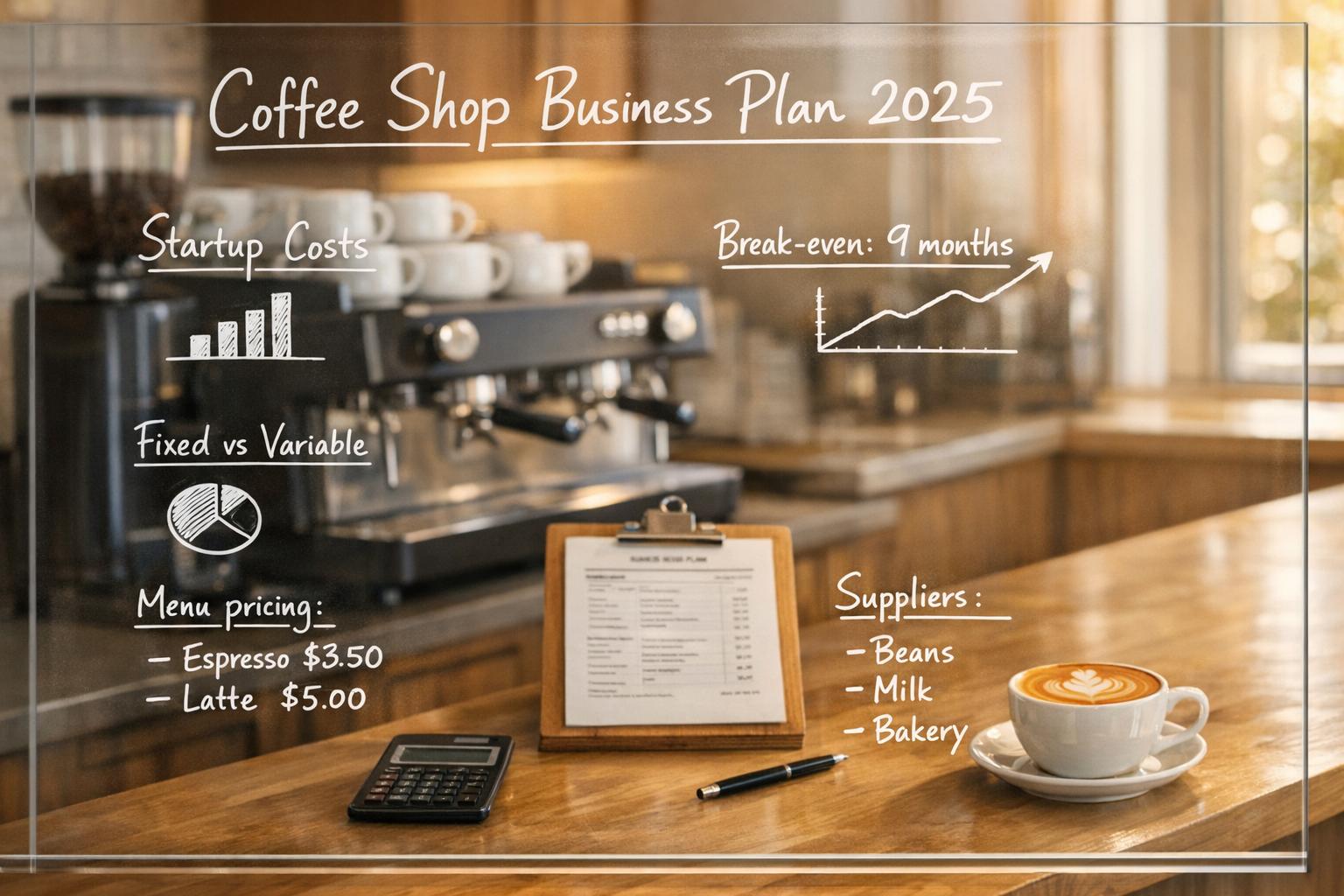
- Break-even Timeline: Most coffee shops take 6–12 months to break even, with a clear financial plan being crucial.
- Profit Margins: Drinks like lattes and drip coffee can have gross margins of 70–90%, but labor, rent, and utilities narrow overall profit margins to 8–12%.
- Key Steps: Research your market, secure funding, develop a focused menu, and price items strategically to balance costs and profits.
With 65% of Americans drinking coffee daily, the demand is strong, but success hinges on thorough preparation, financial planning, and monitoring performance.
How to write a Business Plan for a Startup Coffee Shop in 2025! (with free template)
Building Your Coffee Shop Business Plan
A business plan turns your coffee shop idea into a detailed document that investors and lenders can evaluate. It lays out the market demand and potential profitability of your venture. Pete from Growth Grid sums it up perfectly:
"Lenders and investors don't fund dreams; they fund well-researched opportunities. Your business plan is how you speak their language."
Each part of the plan addresses an essential element of your business, from proving market demand to demonstrating profitability. The goal is to be specific - define your concept, understand your customers, and back it all up with numbers. Here's how to break down the critical sections of your plan to ensure a smooth launch.
Executive Summary
Even though this section comes first in your business plan, write it last. Think of it as your elevator pitch - condensed into 1–2 pages. It should highlight your mission, concept, target market, and key financial details. For example, if your vision is a third-wave coffee shop specializing in single-origin beans and manual brewing methods, make that clear upfront. Include revenue goals and what makes your shop stand out from competitors in your area. If your concept incorporates trends like sustainability or tech integration, mention them to show you’re in tune with the 2025 coffee market.
Once you've nailed your pitch, move on to defining your business's identity.
Company Description and Concept
This section answers the question: Who are you as a business? Start by stating your legal structure - many coffee shops opt for an LLC because it offers liability protection and simpler taxes. Then, describe your concept. Are you creating a quick-service kiosk for busy commuters? A cozy spot for remote workers with high-speed Wi-Fi? Or maybe a hybrid bookstore-cafe? For instance, BeanBrews Corner in Charlotte, NC, launched as an LLC with a focus on artisanal coffee and gourmet pastries.
Be sure to cover your atmosphere (modern, rustic, minimalist), your mission (like ethical sourcing or community engagement), and your unique selling points. These could include proprietary bean blends, nitro cold brew on tap, or a prime location near a bustling office district.
Market Analysis
Once you’ve defined your concept, analyze your local market to confirm there’s demand for your coffee shop. Since coffee consumption is heavily influenced by convenience and daily routines, focus your research on a 3-mile radius around your planned location.
Identify your target customers by visiting 3–5 competitors during peak hours like morning and afternoon rushes. Pay attention to their foot traffic, average order sizes, and any areas where they fall short - such as slow service, lack of Wi-Fi, or cramped seating. Tools like Google Maps and Yelp can help you spot common complaints.
To estimate your market size, use these three metrics:
- TAM (Total Addressable Market): All U.S. coffee drinkers.
- SAM (Serviceable Addressable Market): Coffee drinkers in your city.
- SOM (Serviceable Obtainable Market): The realistic portion of the market you can capture.
Finally, conduct a SWOT analysis to outline your business's Strengths, Weaknesses, Opportunities, and Threats. This will give you a clear picture of where you stand and how to position yourself for success.
Creating Your Menu and Pricing Strategy
Your menu isn't just a list of items - it's a roadmap to profitability. A streamlined selection of 8–12 core offerings can help maintain quick service and healthy profit margins. Aim for a mix like this: 3–4 espresso-based drinks, 2–3 drip or cold brews, 3–5 flavor options, and 1–2 seasonal specialties. Keep in mind that larger menus with 15 or more items can slow down service by 30–60 seconds per order, which might cut your peak-hour capacity by 20–30%.
A carefully designed menu and pricing approach are essential to keeping customers happy while boosting your bottom line.
Core Products and Suppliers
Focus on drinks that deliver strong profit margins. For example, a $4.50 latte costs about $1.30 to make, leaving you with a margin of 70–80%. Drip coffee is even better - costing just $0.20–$0.30 per cup and yielding margins of 88–92%. Adding pastries sourced from local bakeries can enhance your offerings while keeping labor costs low. Pastries typically offer margins of 60–70% and can increase transaction totals by $2–$4.
Choose suppliers who can deliver frequently to keep your inventory fresh. Collaborating with a local coffee roaster to create a custom blend can set your shop apart. Additionally, offering options like oat, almond, and soy milk, along with gluten-free or vegan pastries, can attract customers with varied dietary needs. These supplier decisions directly shape your pricing strategy.
Setting Prices for Profit
When pricing your menu, aim for food costs to fall between 25–35% of the final price. For instance, if a 16oz mocha costs $1.04 to make (including espresso, milk, chocolate, and packaging), a 25% food cost would suggest a price of about $5.20. Also, consider local market trends. If you use premium beans or offer manual brewing methods, you might be able to price your drinks 15–20% higher than the average.
Psychological pricing can also influence customer perceptions. For example, pricing a drink at $3.95 instead of $4.00 (charm pricing) or showcasing a premium item first (anchor pricing) can make your menu feel more appealing. Offering three sizes - small, medium, and large - with the largest delivering the best per-ounce value is another effective strategy. You can also bundle items, like a coffee and pastry, at a slight discount to encourage higher spending. Seasonal drinks, such as a Pumpkin Spice Latte in the fall or a fruit-infused cold brew in the summer, create urgency and justify higher prices.
These pricing techniques should align with your financial goals. The table below highlights key pricing metrics for popular menu items.
| Item Type | Typical Price Range | Estimated Ingredient Cost | Gross Margin |
|---|---|---|---|
| Drip Coffee | $2.50 – $3.50 | $0.20 – $0.30 | 88% – 92% |
| Espresso (2oz) | $2.50 – $3.50 | $0.40 – $0.60 | 84% – 88% |
| Latte (12oz) | $4.50 – $6.50 | $0.80 – $1.20 | 75% – 82% |
| Cold Brew | $4.50 – $6.00 | $0.65 – $0.85 | 80% – 85% |
| Pastries | $2.50 – $4.00 | $1.00 – $1.50 | 60% – 70% |
sbb-itb-08dd11e
Calculating Startup Costs for a Coffee Shop
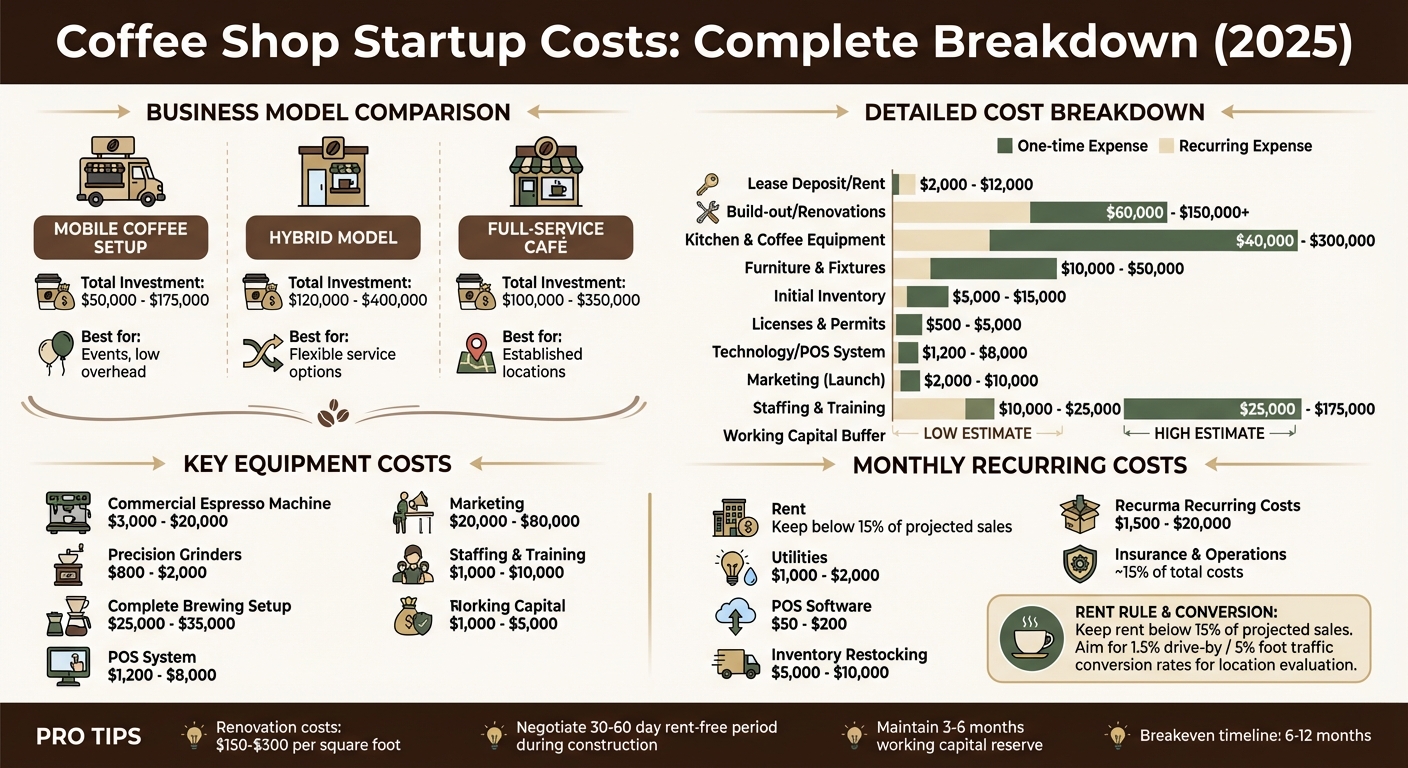
Coffee Shop Startup Costs Breakdown by Business Type 2025
Starting a coffee shop requires a solid financial plan, as the initial investment can vary widely depending on the type of shop you want to open. For example, a mobile coffee setup might cost between $50,000 and $175,000, while a full-service café could range from $100,000 to $350,000. Hybrid models fall somewhere in between, with costs from $120,000 to $400,000. A good rule of thumb is to keep rent below 15% of your projected monthly sales. To estimate potential sales, count cars during peak hours - about 1.5% of drive-side traffic and 5% of foot traffic typically stop in. This exercise can help you gauge whether a location is worth the investment.
Main Expense Categories
Build-out and Renovations
The cost of transforming your space depends on its size and condition. Renovations usually run $150 to $300 per square foot. For a smaller, 300-square-foot location, expect to spend $45,000 to $90,000, while a larger, 1,800-square-foot venue could require $270,000 to $540,000. Structural changes, plumbing, and electrical work alone can cost around $60,000. To ease pre-opening expenses, try negotiating with your landlord for a rent-free period of 30 to 60 days during construction.
Equipment Costs
Investing in quality equipment is crucial. Though used equipment may seem like a bargain, new machines minimize repair costs and downtime. A commercial espresso machine costs anywhere from $3,000 to $20,000, while precision grinders range from $800 to $2,000. A complete brewing setup typically costs $25,000 to $35,000. Add $1,200 to $8,000 for a point-of-sale (POS) system to handle transactions efficiently.
Licenses and Permits
Before opening, you’ll need to secure the necessary licenses and permits, which usually cost between $500 and $5,000. This includes a business license ($50 to $150), a food manager permit ($150 to $200), and sign permits ($250 to $1,200).
Initial Inventory
Stocking up for your first week requires about 1.5 times your expected sales volume. Plan to spend $5,000 to $15,000 on essentials like coffee beans, dairy, syrups, cups, and napkins. After opening, monthly restocking will run between $5,000 and $10,000.
Working Capital Buffer
Having a financial cushion is essential for covering operating costs - such as payroll, rent, and utilities - until your shop becomes profitable. This breakeven point often takes 6 to 12 months. For a mid-sized operation, set aside $25,000 to $175,000 to cover 3 to 6 months of expenses.
Startup Cost Summary Table
Here’s a breakdown of typical startup costs for a coffee shop, based on current market trends for 2025:
| Expense Category | Low Estimate (USD) | High Estimate (USD) | Type |
|---|---|---|---|
| Lease Deposit/Rent | $2,000 | $12,000 | Recurring (Monthly) |
| Build-out/Renovations | $60,000 | $150,000+ | One-time |
| Kitchen & Coffee Equipment | $40,000 | $300,000 | One-time |
| Furniture & Fixtures | $10,000 | $50,000 | One-time |
| Initial Inventory | $5,000 | $15,000 | One-time |
| Licenses & Permits | $500 | $5,000 | One-time |
| Technology/POS System | $1,200 | $8,000 | One-time |
| Marketing (Launch) | $2,000 | $10,000 | One-time |
| Staffing & Training | $10,000 | $25,000 | One-time (Pre-opening) |
| Working Capital Buffer | $25,000 | $175,000 | Reserve |
Other Recurring Costs
Beyond rent, you’ll need to budget for monthly utilities ($1,000 to $2,000), POS software fees ($50 to $200), and ongoing inventory restocking. Insurance and other operational expenses often make up around 15% of your total costs. Don’t forget professional fees - architects, attorneys, and accountants can add another $500 to $2,000 during setup.
Financial Projections and Breakeven Analysis
After estimating your costs and analyzing the market, creating detailed financial projections will help confirm whether your coffee shop plan is financially sound. Once you’ve outlined your startup costs, the next step is forecasting when your business will start turning a profit. These projections should cover monthly data for the first year and quarterly data for the second and third years. This level of detail can help you spot cash flow issues early on.
Revenue and Expense Forecasts
To estimate monthly revenue, use this formula: Seats × Average Turns × Average Ticket × Operating Days.
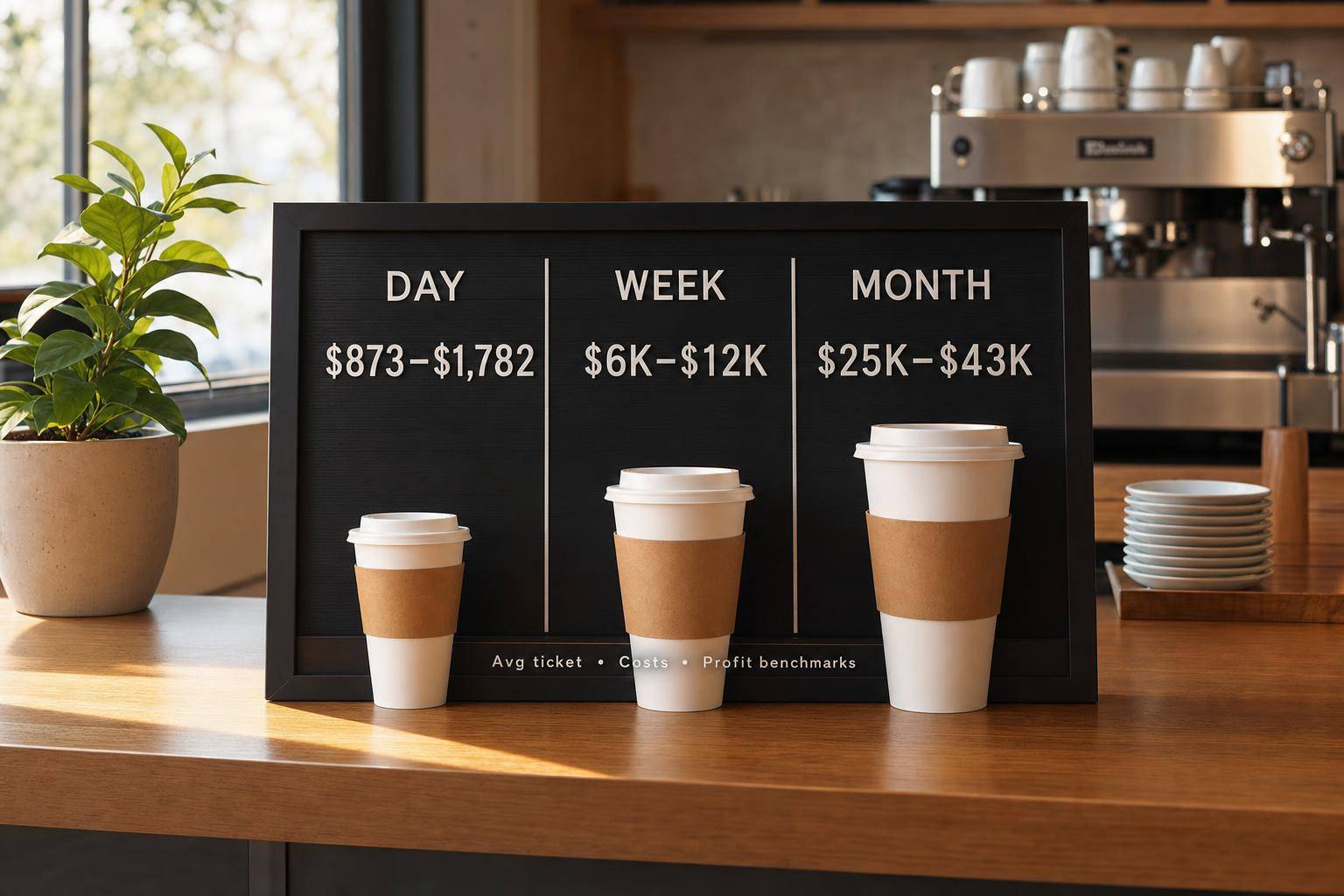
For instance, if your coffee shop has 20 seats, each turning over twice during a four-hour morning rush, with an average ticket of $11.00 and 26 operating days in a month, your morning revenue alone would total $11,440. Adding revenue from afternoon and evening service will provide a fuller picture. On average, coffee shops generate around $873 in daily revenue.
Expenses fall into two categories: fixed (like rent, salaries, and insurance) and variable (such as ingredients and supplies). To stay financially healthy, aim to keep prime costs (COGS plus labor) below 65% of revenue. For example, if your monthly revenue is $75,000, your ingredient and payroll costs should not exceed $48,750. Adjust your projections for seasonal trends, such as holiday surges or slower summer months. You can also smooth out revenue fluctuations by adding secondary income streams like wholesale beans, catering, or branded merchandise.
Here’s an example of a simplified monthly income statement based on a strong month in your first year:
| Description | Amount (USD) |
|---|---|
| Total Revenue | $205,000 |
| Cost of Goods Sold (COGS) | ($64,000) |
| Gross Profit | $141,000 |
| Operating Expenses (Rent, Salaries, Utilities) | ($19,000) |
| EBITDA | $122,000 |
| Taxes, Interest, Depreciation | ($39,050) |
| Net Income | $82,950 |
While coffee shops typically achieve net profit margins of 8% to 12% once established, individual drinks - especially espresso-based beverages - can have gross margins as high as 70% to 80%. However, labor, rent, and utilities narrow those margins significantly.
With this framework, you can now calculate the monthly sales needed to break even.
Calculating Your Breakeven Point
Your breakeven point represents the monthly sales required to cover all costs without incurring a loss. To find this, divide your total fixed costs by your contribution margin - the percentage of revenue left after deducting variable costs.
For example, if your fixed costs are $18,000 per month and your variable costs account for 32% of sales (leaving a 68% contribution margin), your breakeven sales target would be about $26,471.
Here’s how this calculation looks in practice:
| Metric | Value |
|---|---|
| Monthly Fixed Costs (Rent, Wages, Insurance) | $18,000 |
| Average Monthly Revenue | $75,000 |
| Variable Costs (Ingredients, Supplies) | $24,000 |
| Contribution Margin | 0.68 (68%) |
| Monthly Breakeven Sales Goal | $26,471 |
If your average ticket is $11.00 and you operate 30 days a month, serving around 80 customers daily will help you meet the breakeven target.
Most coffee shops take 6 to 12 months to become profitable. To safeguard against early challenges, it’s smart to maintain a working capital reserve equal to 3 to 6 months of operating expenses. Keep in mind that about 17% of restaurants, including coffee shops, fail within their first year. Monitoring your breakeven progress weekly can help you make timely adjustments to pricing, staffing, or marketing efforts before small problems escalate.
Conclusion
Launching a coffee shop in 2025 takes more than just a love for coffee - it demands a well-thought-out, fundable plan. Without one, you risk falling into the 17% of new coffee shops that close within their first year. With 65% of Americans enjoying coffee daily, the market potential is undeniable, but turning that potential into success hinges on careful preparation and smart financial management.
This guide provides the tools you need for every financial and operational decision. Whether it's calculating your break-even point, maintaining a 3–6 month capital reserve, or tracking daily performance, every detail counts. Many coffee shops achieve profitability within their first year, but only if they monitor progress closely and adjust as needed.
Think of your business plan as a living document. Use it to set clear benchmarks, update it as you gather real-world data, and let it guide your daily operations. With this framework, you'll be equipped to handle challenges and make informed decisions.
To get started, follow these key steps: secure funding, establish your legal structure, and obtain permits at least 2–4 months before opening. Next, source your equipment, hire your team, and conduct a soft launch with friends and family to identify and fix any operational issues.
The coffee shop industry offers promising economics, with individual drinks yielding gross margins of 70% to 80%. Armed with the cost estimates, revenue formulas, and break-even analysis in this guide, you'll have a solid roadmap to profitability in 2025. Execute your plan, and you'll be well on your way to success.
FAQs
What should I consider when selecting a location for my coffee shop?
Picking the right spot for your coffee shop can make or break its success. Start by scouting areas with high foot traffic - places like bustling streets, shopping malls, or locations near public transit hubs. A spot that's easy to find and convenient to access can draw in more walk-ins and keep customers coming back.
Think about your target audience and the competition in the area. Your location should match your brand's vibe and sit near businesses that complement your offerings. For example, being close to bookstores or coworking spaces could naturally bring in coffee lovers. Also, the type of shop you’re planning - whether it’s a cozy cafe, a quick drive-thru, or a mobile cart - will shape your space and setup requirements.
Lastly, take a close look at real estate costs and lease agreements. Striking the right balance between affordability and potential earnings is essential to keeping your business financially healthy in the long run.
What are the best strategies to make my coffee shop stand out in a competitive market?
To help your coffee shop stand out, focus on building a distinct brand identity and creating experiences that customers won’t forget. Think about offering signature drinks that people can’t find anywhere else, using top-quality ingredients, and ensuring every interaction with your staff leaves a positive impression. The ambiance matters too - whether it’s a cozy, welcoming vibe or a unique theme tied to your community, the right atmosphere can turn first-time visitors into regulars.
Use imaginative marketing strategies to get noticed. This might include running fun and engaging social media campaigns, collaborating with local businesses, or offering special promotions that draw people in. If you incorporate eco-friendly practices, like sustainable packaging or ethically sourced coffee, you’ll likely win over customers who care about the environment - an increasingly important factor for many.
Lastly, always stay flexible. Pay attention to what your customers are saying and keep an eye on new trends in the coffee industry. By blending a solid brand, fresh marketing ideas, and a dedication to quality, your coffee shop can thrive, even in a crowded market.
What are the best ways to control costs and boost profits in a coffee shop?
To keep costs under control and boost profits in your coffee shop, start with a well-thought-out budget. Include everything - equipment, permits, inventory, and marketing. Break these down into fixed and variable costs, and don’t forget to add a 15–20% buffer for those unexpected expenses that always seem to pop up. This kind of preparation can help you steer clear of financial headaches and keep things running smoothly.
Once your shop is up and running, focus on selling high-margin items - these are your profit-makers. Keep an eye on staffing, too. Efficiently managing your team, especially during busy hours, can make a big difference in your bottom line. If you're just starting out, consider smaller setups like kiosks or drive-thrus - they need less upfront investment and can turn a profit more quickly.
Finally, use tools to track your expenses and predict revenue trends. These insights will help you make smarter decisions and keep your coffee shop on the path to long-term success.
Related Blog Posts
- How To Work Out Start-Up Costs: A Step-by-Step Guide
- How much do coffee shops make?
- Coffee Shop - Business Plan Template (2025)
- Hidden Costs That Kill New Businesses