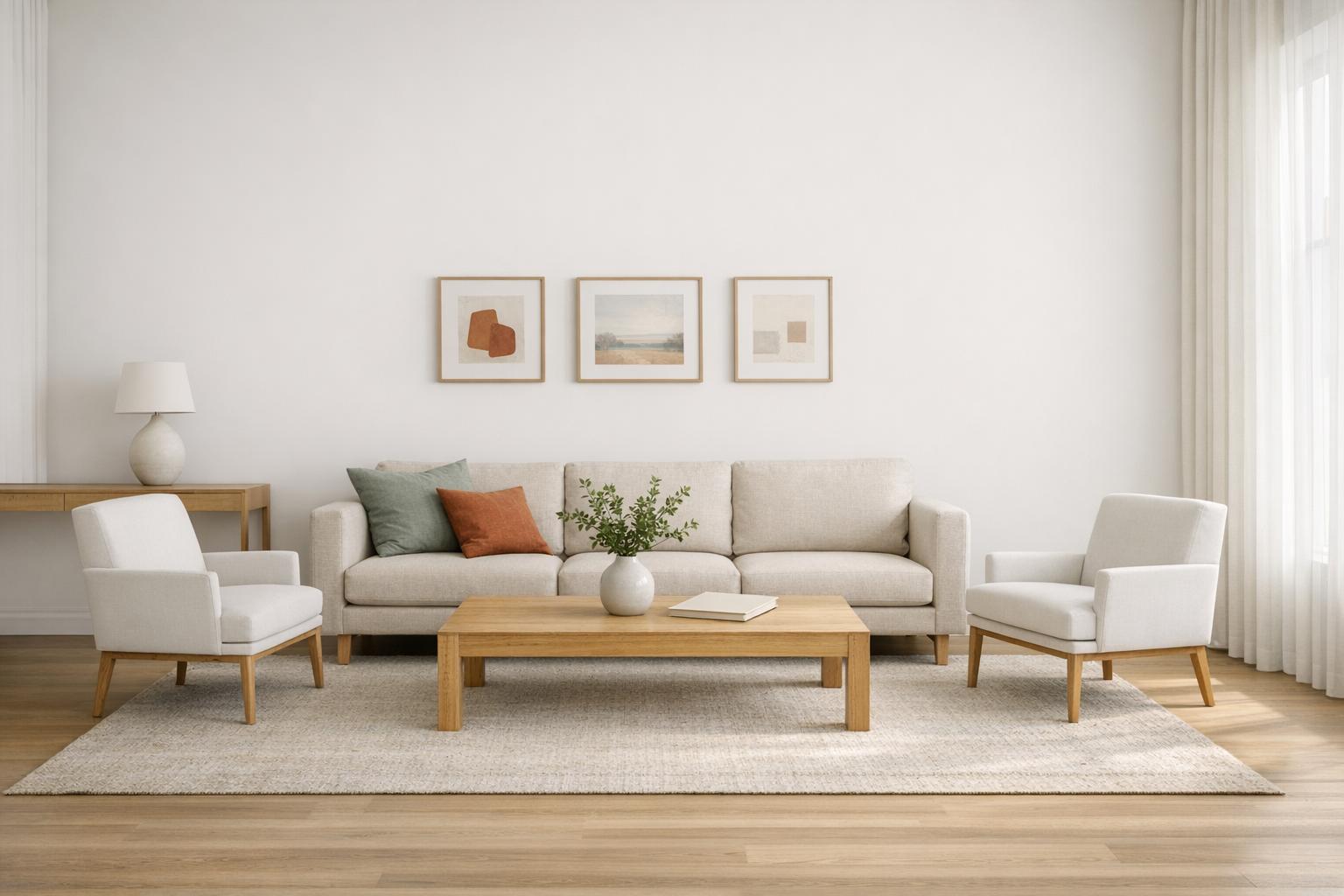
Home staging helps sell homes faster and for more money by creating inviting spaces that appeal to potential buyers. Staged homes often sell for 1%–5% more, with some seeing a boost of up to $70,000. Costs for staging typically range from $600 to $4,000, depending on the property size and service level.
Key Points:
- Packages: Options include Basic ($1,650–$3,200+), Standard ($1,900–$4,800+), and Premium ($2,200–$7,000+), each covering different rooms and furniture quality.
- Pricing Models: Stagers may charge hourly ($25–$200), per room ($300–$700), or by square footage ($0.10–$0.30/sq. ft.). Luxury homes may cost 0.5%–2% of the list price.
- Portfolio Tips: Look for before-and-after photos, testimonials, and proven results, like faster sales and higher offers.
Staging is an investment that can deliver a high return by making your property stand out in a competitive market.
Home staging costs explained: what you REALLY need to know
sbb-itb-08dd11e
Home Staging Service Packages
Home Staging Package Tiers: Pricing and Services Comparison Guide
Home staging services are typically offered in tiered packages, designed to suit different property sizes, furniture quality, and service needs. These packages make it easier to choose the right option based on your home's size and market value.
Package Tiers and What They Include
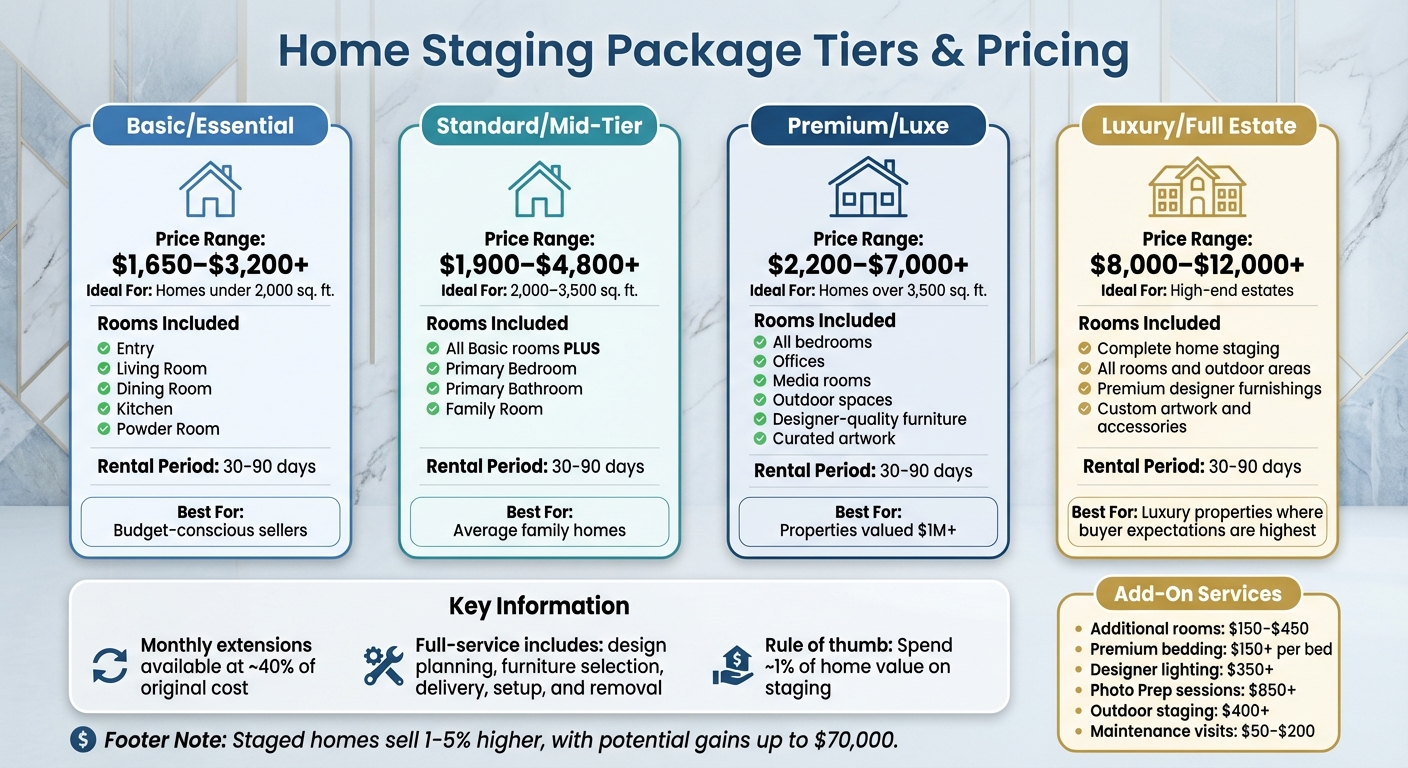
Basic or Essential Packages focus on staging key areas that attract buyers, such as the entryway, living room, dining room, kitchen, and powder room. These packages are ideal for smaller homes under 2,000 square feet or for sellers working within a tighter budget. Prices generally range from $1,650 to $3,200+.
Standard or Mid-Tier Packages cover more ground by including additional spaces like the primary bedroom, primary bathroom, and sometimes a family room or hallway. This option is a favorite for mid-sized family homes between 2,000 and 3,500 square feet. Costs typically fall between $1,900 and $4,800+.
Premium or Luxe Packages offer a full staging experience for larger homes over 3,500 square feet or properties valued above $1 million. These packages include all bedrooms, offices, media rooms, and outdoor spaces. Furniture and decor are upgraded to designer-quality pieces, often featuring curated artwork. Pricing starts at $2,200 and can exceed $7,000, with luxury estates sometimes costing over $10,000.
"A good rule of thumb is to consider spending a little less or around 1 percent the value of the home on vacant staging in order for the staging to match the luxury level of the home." – Audra Slinkey, President and Founder, Home Staging Resource
Most packages come with an initial rental period of 30, 60, or 90 days, with monthly extensions available at about 40% of the original cost. Full-service options typically include design planning, furniture selection, delivery, setup, and removal.
These tiers provide a solid starting point, with add-ons available to tailor the staging to your specific needs.
Add-On Services and Custom Options
You can enhance your staging package with additional services. For example, smaller rooms like home offices, nurseries, or guest suites can be staged for $150 to $450 per room, while larger spaces like secondary bedrooms or patios start at $400+.
For a more polished look, aesthetic upgrades are available. These include premium bedding packages (starting at $150 per bed), designer lighting (from $350), and curated artwork. Some companies also offer "Photo Prep" sessions - three hours of styling to perfect the home for listing photos - priced around $850+.
Outdoor areas like patios and decks can also be staged to highlight their entertaining potential. Maintenance visits, typically costing $50 to $200, ensure decor and plants stay fresh during longer listing periods. For occupied homes, "fluffing" services blend your existing furniture with professional accessories, usually costing $1,000 to $1,200.
Specialized services include color consultations, space planning, and staging for short-term rentals like VRBOs. Some companies even offer "Shop the Stage" programs, allowing buyers to purchase the furniture used in the staging.
Package Comparison Table
| Package Tier | Typical Rooms Included | Ideal For | Price Range |
|---|---|---|---|
| Basic/Essential | Entry, Living Room, Dining Room, Kitchen, Powder Room | Homes under 2,000 sq. ft. or budget-conscious sellers | $1,650–$3,200+ |
| Standard/Mid-Tier | Basic rooms plus Primary Bedroom, Primary Bathroom, Family Room | Average family homes (2,000–3,500 sq. ft.) | $1,900–$4,800+ |
| Premium/Luxe | All bedrooms, offices, media rooms, outdoor areas | Properties over 3,500 sq. ft. or $1M+ listings | $2,200–$7,000+ |
| Luxury/Full Estate | Complete home staging with designer furnishings | High-end estates where buyer expectations are highest | $8,000–$12,000+ |
Home Staging Pricing Structures
How Pricing Models Work
Home stagers use various pricing methods depending on the property's size, type, and needs. Hourly rates, which typically range from $25 to $200 per hour, are common for consultations or smaller projects. Another popular option is per-room pricing, where flat fees generally fall between $300 and $700 per room, making it a good fit for staging specific spaces in vacant homes.
For larger properties or builder-owned homes, pricing by square footage is often the go-to model, with rates averaging $0.10 to $0.30 per square foot. Luxury listings, on the other hand, may involve fees based on a percentage of the home's list price, usually between 0.5% and 2%, allowing the cost to scale with the property’s value. Some stagers offer bundled flat or project fees, covering services for 30 to 90 days, which typically range from $800 to $4,000.
For instance, in early 2026, a California student quoted $8,000 to stage a $3.2 million home, which included floral arrangements and custom bedding. Meanwhile, Stage To Sell in Boston offers tiered consultation pricing: $350 for a verbal "walk and talk" report and $500 for a detailed written action plan.
What Affects Staging Costs
Beyond pricing models, several factors influence the final cost of staging. One of the biggest considerations is whether the home is occupied or vacant. Vacant homes generally require full furniture rentals, delivery, and setup, while occupied homes often need only accessory updates or minor adjustments. The property's size and layout also play a role, as larger or multi-story homes may require more furniture, decor, and labor.
Staging contracts typically last 30 to 90 days, with extensions adding 10%–30% of the original fee per additional month. The scope of services also impacts pricing; full-service staging naturally costs more than basic consultations. Market conditions and the home’s list price are other factors, especially for high-end properties that call for designer-quality furnishings. Location matters too - cities like New York or Los Angeles often come with higher staging fees due to increased demand and overhead costs. For example, Three Bears Home Staging in Houston charges $249 to $349 for verbal consultations, depending on the property’s square footage.
These pricing structures and factors allow homeowners and professionals to select staging options that fit their needs and budgets.
Pricing Examples by Property Type
Here’s a breakdown of typical staging costs by property type:
| Property Type | Typical Square Footage | Average Staging Cost Range |
|---|---|---|
| Studio / 1-BR Apartment | < 1,000 sq. ft. | $250–$4,500 |
| Condo / Townhome | Varies | $4,500–$6,500 |
| Mid-Range Home (2-3 BR) | 1,000–2,000 sq. ft. | $1,000–$5,000 |
| Large Home (4+ BR) | 2,000–4,000 sq. ft. | $1,500–$6,000 |
| Luxury Estate | 4,000+ sq. ft. | $4,500–$15,000+ |
Smaller properties, like apartments and condos, tend to fall on the lower end of the price range, though additional costs may apply for challenges like limited access or elevator restrictions. For single-family homes, staging costs generally increase with the number of bedrooms. For example, staging a 2- to 3-bedroom home typically ranges from $1,000 to $5,000, while homes with 4 or more bedrooms often cost between $1,500 and $6,000. In competitive markets like Los Angeles, staging a 2- to 3-bedroom home for three months can cost around $8,000.
Luxury estates demand the highest fees, starting at roughly $4,500 and sometimes exceeding $15,000, due to the need for premium furniture, curated artwork, and other high-end touches. Vacant properties also tend to be pricier, with staging costs ranging from $2,000 to over $7,000, compared to $600 to $1,200 for occupied homes.
Building a Home Staging Portfolio
What to Include in Your Portfolio
Your portfolio should showcase your skills and creativity while telling a compelling story. Include before-and-after photos, detailed project descriptions, client testimonials, and a professional headshot. The key is to highlight the transformation - your "before" photos should clearly show challenges like clutter or poor layout, while the "after" photos should reveal how your staging created a warm, inviting space. Focus on dramatic changes that grab attention.
If you're just starting out, you can stage your own home, help friends or family, or even volunteer for charity projects to build your portfolio. Tailor your portfolio to match the type of properties in your area, whether it’s sleek urban apartments or spacious suburban homes. This helps potential clients see how your work aligns with their needs.
Once you've outlined what to include, it's time to ensure your visuals are top-notch.
Taking Quality Portfolio Photos
Great photos are non-negotiable since 95% of property searches begin online. While hiring a professional real estate photographer is ideal (typically costing $180–$350), you can take your own photos with the right tools and techniques.
Use a tripod set at waist height (roughly half the room's ceiling height) and a wide-angle lens (18–22mm) in horizontal mode to capture the room’s flow. Open all curtains and blinds to maximize natural light, and ensure every light bulb in the room has the same warm white color temperature (2,700–3,000K) to avoid mismatched lighting or shadows.
When framing your shots, follow the "Rule of Thirds" for balance and use natural lines, like floorboards, to guide the viewer's eye. Add depth by layering elements from foreground to background. These techniques will make your photos look polished and professional.
Once your visuals are ready, back them up with real-world results to make an even stronger impression.
Using Client Results and Testimonials
Numbers tell a powerful story. For example, a 750 sq. ft. condo in Chicago was originally valued at $350,000. Without staging, similar units sat on the market for four months and sold for $322,000 - an 8% drop in value. After a $3,000 staging investment, the condo sold in just three weeks for $343,000. The result? An $18,000 net gain and a 600% return on investment.
Testimonials can also provide credibility. Include specific metrics like shorter time on the market or multiple offers received. If you provided consultation and the client handled the staging themselves, position yourself as the "Creative Director" with captions like, "This transformation was achieved by the client using my personalized staging advice."
"If we are the major force behind a successful home sale it is appropriate to give ourselves credit as well." – Stacy Goade, Alaska Premier Home Staging
When asking for testimonials, compliment your clients for following your guidance - it encourages them to provide glowing feedback. By combining striking visuals with measurable results and positive testimonials, you’ll create a portfolio that stands out and builds trust with potential clients.
Evaluating a Home Stager's Portfolio
Portfolio Quality Indicators
When examining a stager's portfolio, focus on before-and-after photos that showcase real transformations, not just aesthetically pleasing rooms. The "before" images should clearly highlight challenges like clutter or awkward layouts, while the "after" photos should emphasize how these issues were resolved. Also, check for variety in styles - a strong portfolio will feature diverse designs tailored to different home styles and price ranges, rather than repeating the same look.
Consider whether the stager's work aligns with your property's level of luxury. As Audra Slinkey, President of Home Staging Resource, explains:
"The million-plus dollar home needs to be staged like a million bucks …. buyers expect this".
High-end homes demand premium furnishings, not budget-friendly alternatives.
You should also look for performance metrics that demonstrate a stager's effectiveness. For instance, in 2023, Classic Staging in Atlanta reported that their staged homes averaged just 16 days on the market and sold for 99.8% of the original list price. This outperformed Georgia's market average of 40 days and 96.6% of list price. These kinds of results are just as important as having an eye for design.
Finally, professionalism isn't just about aesthetics - transparent pricing is another key indicator.
Reviewing Pricing and Service Details
A clear and detailed pricing structure builds trust and ensures the service aligns with your budget. Typically, an initial consultation costs between $150 and $600. Be cautious of rates that seem unusually low, as they may signal inexperience or the use of lower-quality furnishings. Most professionals recommend starting with a tailored consultation to evaluate your property's specific needs before providing a full quote.
Ask about the stager's furniture sources. Certified stagers often have access to wholesale luxury furnishings, which can offer better value for your investment. Carefully review their service descriptions to understand what they provide. Do they offer full-home staging, room-specific packages, or additional lifestyle touches? Vague or unclear service details might indicate a lack of training or experience.
Warning Signs to Watch For
Spotting red flags early can save you from hiring a stager whose portfolio doesn't reflect their actual abilities.
One major warning sign is the use of stock photos in their portfolio. Some training programs supply pre-made portfolios to their students, and stagers using these instead of showcasing their own work may not have the experience they claim. If you're unsure, ask for specific details about the properties featured in their portfolio - if they can't provide them, the work may not be theirs.
Avoid stagers whose portfolios include low-quality photos with poor lighting, awkward angles, or visible clutter. This could indicate unprofessional standards. Additionally, a stager who can't discuss local market trends or buyer preferences in your neighborhood and price range is another red flag. Professionals should understand what buyers in your area are looking for and price their services accordingly. Extremely low pricing often points to subpar furnishings or a lack of proper insurance.
Conclusion
Integrating clear service packages, upfront pricing, and an impressive portfolio makes home staging a powerful tool for maximizing property value. Understanding the distinctions between Basic, Standard, and Premium packages allows you to align your budget with rooms that make the biggest impact - like the kitchen, living room, and primary bedroom, which account for 80% of the staging effect. Transparent pricing, whether through flat fees or percentage-based models, eliminates surprises and helps you plan with confidence. This clarity ensures that staging delivers measurable benefits.
An outstanding portfolio is your proof of a stager's ability to meet the level of sophistication your property requires. Staged homes consistently sell faster and at higher prices, translating into real financial gains and reduced carrying costs. Sellers who allocate around 1% of their home's value to staging often see significant returns.
For staging professionals, focusing on these three pillars - packages, pricing, and portfolios - builds trust and attracts high-quality clients. As Cindy from Staged4more puts it, "Start with value. End with price". This strategy shifts the focus from upfront costs to the long-term benefits of staging.
Whether you're a homeowner looking to sell or a professional building a staging business, these principles create better outcomes for everyone. Sellers enjoy faster sales and higher profits, while staging professionals establish sustainable and well-defined businesses. In essence, staging is more than just a service - it's a proven marketing strategy that reshapes buyer perceptions and enhances property value.
FAQs
Which rooms should I stage first for the biggest impact?
The living room and entryway are the first spaces buyers see, so they set the tone for the entire home. A well-staged entryway feels inviting, while a thoughtfully arranged living room helps potential buyers imagine themselves living there. These areas create an emotional connection and leave a lasting first impression, making them some of the most important spaces to focus on.
How do I choose the right staging package for my home?
When deciding on a staging package, think about your budget, the size of the project, and the results you’re aiming for. Common choices include:
- Full-home staging: Ideal if you want to stage the entire property for maximum impact. This option can help attract buyers quickly and potentially boost the sale price.
- Individual room packages: A more focused approach, perfect for highlighting key areas like the living room or master bedroom.
- Virtual staging: A budget-friendly choice where digital tools enhance photos of empty spaces.
Each option has its pros and cons, but the key is to find the right balance between your financial investment and the level of staging needed to make your home stand out to buyers.
What should I look for in a stager’s portfolio to avoid red flags?
When checking out a stager’s portfolio, focus on clear before-and-after photos, a consistent styling approach, and examples of successful projects. Steer clear of portfolios that have blurry or low-quality images, lack detailed information, or show inconsistent presentation - these could be red flags.
Related Blog Posts
- Laundry Service (Pickup & Delivery): Bags, Routes, Profit
- Property Maintenance “Hub”: Bundle 5 Services for Higher Margins
- How to Start a Photography Business: Packages, Pricing, Portfolio
- Window Cleaning Business: 2025 Guide