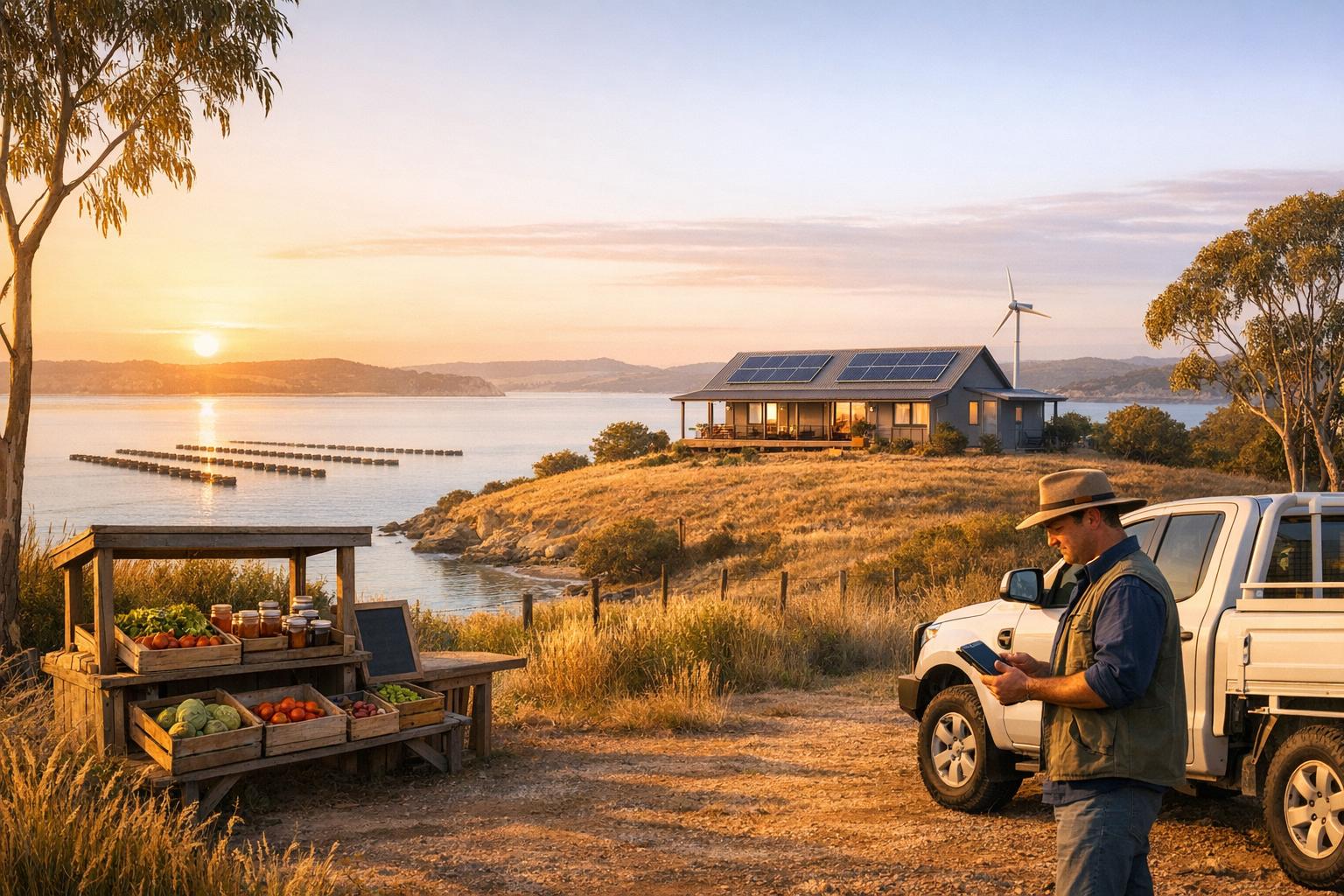
Rural and coastal Australia offers untapped potential for businesses that align with local strengths and address specific needs. Whether it’s farm-based tourism, eco-friendly ventures, or tech-driven services, opportunities abound for those willing to think locally and act strategically. Here’s a quick overview of promising ideas:
- Agritourism: Farm stays, glamping, workshops, and farm-to-table dining are growing as tourists seek immersive rural experiences.
- Eco Ventures: Oyster farming, artisan salt production, and solar energy services leverage natural resources for profit.
- Local Food: Beekeeping, organic farming, and produce delivery services cater to rising demand for regional, high-quality products.
- Tech Solutions: Co-working spaces, digital marketing for small businesses, and off-grid power systems meet modern connectivity and energy needs.
These ventures thrive by utilizing local resources, meeting community needs, and tapping into broader trends like eco-consciousness and remote work. Start small, validate your idea, and focus on delivering value to your community while building a sustainable business.
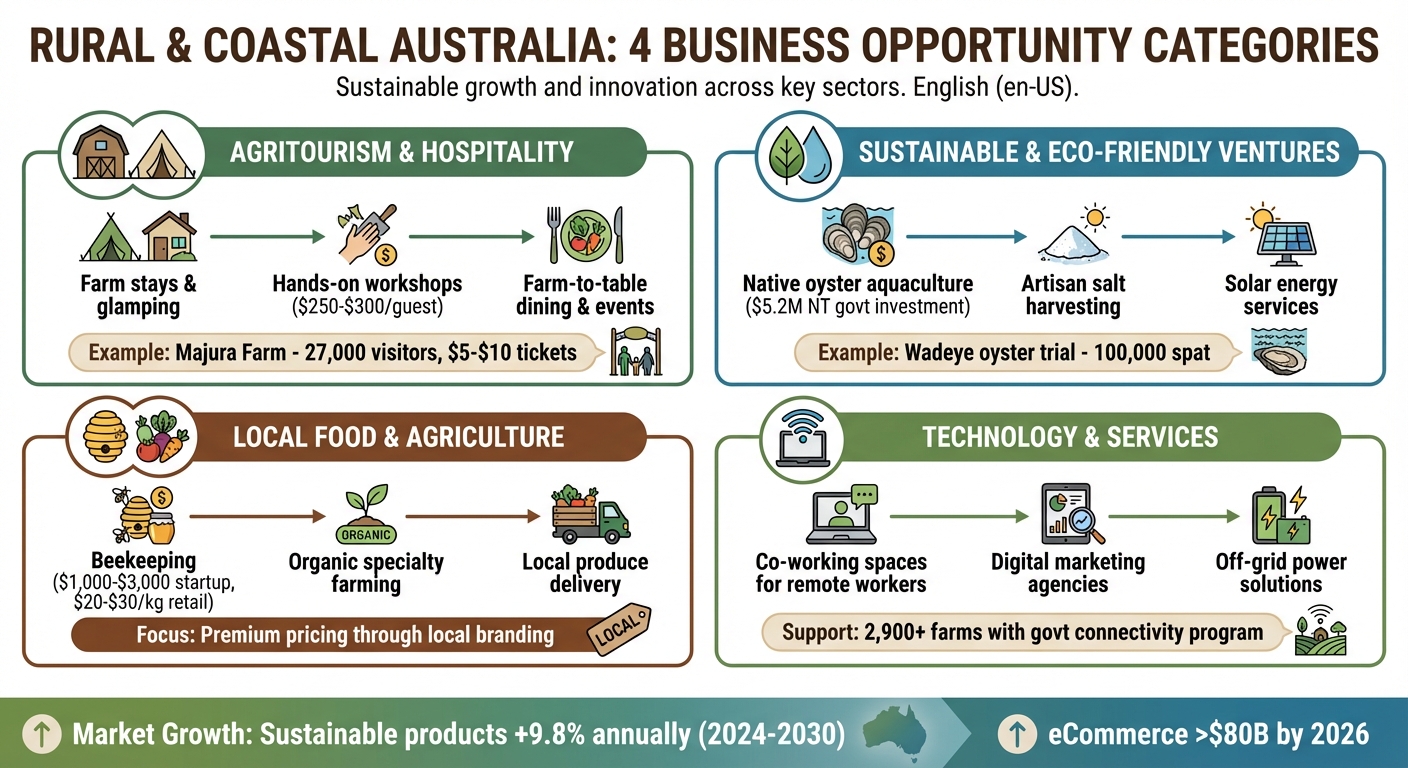
4 Business Opportunity Categories for Rural and Coastal Australia
How a migrant family turned farming heritage into a thriving Australian agri-business
sbb-itb-08dd11e
1. Agritourism and Hospitality
Farm Stays and Glamping Experiences
Tiny homes, glamping tents, and renovated sheds are a great way to dip your toes into rural hospitality without taking on too much risk. As Kay Tommerup, owner of Tommerup Dairy, puts it:
Guests seek authentic farm life - to experience the land firsthand and hear stories of resilience.
Starting small - perhaps with just one or two units - can help you gauge demand before scaling up. Urban visitors are often fascinated by everyday farm activities like milking cows, harvesting crops, or feeding animals. A great example of this is Majura Farm, which drew 27,000 visitors to its sunflower maze in October 2024. With tickets priced at $5 for kids and $10 for adults, the farm kept things organized using a booking system that capped attendance at 300 guests across four daily sessions. To attract travelers, consider listing your property on platforms like the Australian Tourism Data Warehouse (ATDW), Airbnb, or Hipcamp. These accommodations serve as a gateway for visitors to connect deeply with farm life.
Hands-On Workshops and Educational Experiences
Beyond overnight stays, interactive workshops let visitors roll up their sleeves and dive into farm life. Whether it’s learning how to keep bees, making butter, churning jam, or picking fresh produce, these experiences leave lasting impressions. Pricing can vary widely - some boutique wineries, for instance, charge between $250 and $300 per guest. When setting your prices, factor in the value of your time and the exclusive opportunities you’re offering. These workshops not only educate but also add a steady revenue stream to your rural business.
Farm-to-Table Dining and Event Venues
Long-table lunches in the paddock, farm-to-table cafes, and rustic barn weddings are all in high demand as people seek out genuine rural experiences. Take The Pines Dairy in Kiama as an example: their events often see triple the usual visitation and book out months in advance. To get started, check with your local council to ensure you have the necessary approvals. You’ll also need development approval, public liability insurance, and compliance with food safety standards if you plan to serve meals . These dining and event opportunities offer a powerful way to tap into the growing appetite for rural and coastal experiences.
2. Sustainable and Eco-Friendly Ventures
Native Oyster Aquaculture
Coastal regions have the potential to cultivate high-value tropical blacklip rock oysters in tidal waters. A notable example comes from Wadeye, Northern Territory, where traditional owners, led by Tobias Nganbe and supported by Thamarrurr rangers, began a trial in March 2024 with 100,000 oyster spat flown in from Darwin. These oysters are grown in cages that naturally rotate with the tide in the Joseph Bonaparte Gulf, requiring minimal intervention. Since 2020, the Northern Territory government has allocated $5.2 million toward this project, with the goal of establishing a commercial market within three years. Mark Monaghan, NT Minister for Agribusiness and Fisheries, explains:
In the Top End, blacklip rock oyster aquaculture incorporates local knowledge, historical connection, cultural appropriateness and low‑tech farming methods to crack into a new commercial oyster market.
This initiative highlights how coastal communities can tap into marine resources for economic growth. But the potential for sustainable ventures isn’t limited to aquaculture - rural areas are finding creative ways to use their natural resources, too.
Artisan Salt Harvesting
In arid rural areas, terminal salt lakes present an unexpected business opportunity. Take Jill McNamara, for example. Since 2022, she has been running a salt-harvesting business on her family’s sheep and goat property near Wilcannia, New South Wales. Using simple tools, she collects salt from a 344-hectare (roughly 850-acre) lake, then dries, grinds, and flavors it with locally grown herbs like basil and rosemary. Her products are sold in nearby stores, around 25 miles away. This small-scale operation turns what was once considered a barren salt lake into a valuable resource, requiring minimal startup costs. Much like aquaculture, this approach shows how natural resources can be transformed into profitable ventures.
Renewable Energy Services
Rural and coastal areas, blessed with ample sunshine, are ideal for solar energy solutions. There’s growing demand for services like solar panel installation, battery storage, and maintenance, especially in off-grid locations. For instance, offering solar panel cleaning and upkeep requires little initial investment but addresses a critical need for remote farms and properties. By maintaining energy efficiency, this service helps reduce utility bills and enhances the reliability of solar systems. It’s a practical way for rural entrepreneurs to step into the expanding green energy sector while leveraging natural advantages.
These examples demonstrate how rural and coastal communities can use their surroundings to build sustainable businesses and strengthen their economies. From aquaculture to renewable energy, the possibilities are diverse and promising.
3. Local Food and Agriculture
Local food and agriculture ventures tap into regional strengths, creating profitable opportunities while supporting community-focused business models.
Beekeeping and Honey Production
Launching a beekeeping operation doesn’t require a hefty investment. With basic equipment and hives costing around $1,000–$3,000, it’s a manageable entry point for many. Plus, the returns can be impressive, especially in areas with diverse native plants. Local honey often commands higher prices, retailing at $20–$30 per kilogram, far exceeding typical supermarket offerings. Branding plays a huge role here - names like "Yarra Valley Raw Honey" or "Coastal Wildflower Honey" give products a sense of place and exclusivity. Selling through farmers' markets, health stores, and cafes not only boosts visibility but also justifies premium pricing. This hyper-local approach can inspire other niche farming ideas.
Specialized Organic and Eco-Friendly Farming
Niche farming is another way to meet the growing demand for ethically produced goods. Products like microgreens, edible flowers, and free-range poultry are highly sought after, especially when they come with certifications for organic or sustainable practices. Customers are willing to pay more for products they trust, particularly when they know the story behind them. Starting small - perhaps by testing products at farmers' markets - can help gauge interest before scaling up. The trend of supporting local producers strengthens this model, as buyers feel good knowing exactly where their food originates.
Local Produce Delivery Services
Direct-to-consumer delivery services offer a practical way to connect farms with local residents, especially in areas where grocery stores are sparse. This approach doesn’t need a big upfront investment. Weekly curated boxes filled with fresh, locally sourced fruits, vegetables, and dairy provide convenience while maximizing profits. By using simple tools like social media or a basic website for orders, these services can flourish. They’re particularly valuable in rural or coastal regions where access to fresh produce might otherwise be a challenge. This model not only supports local farms but also meets a genuine community need.
4. Technology and Services for Rural Areas
Rural and coastal regions often face challenges with connectivity and infrastructure, which creates opportunities for tech-driven solutions to address these gaps. Over 2,900 primary production businesses are already benefiting from government initiatives aimed at improving on-farm connectivity. As these efforts grow, so does the need for tailored technology services in rural economies.
Regional Co-Working Spaces
With remote work becoming more common, many professionals are relocating to rural areas. But working from the kitchen table or a makeshift home office isn't always ideal. Co-working spaces with reliable high-speed Wi-Fi, professional meeting rooms, and other essential amenities can meet this growing demand. These spaces cater to digital nomads and local entrepreneurs alike, offering a productive alternative to commuting to urban centers. The best part? They don’t require huge investments - existing buildings or storefronts can be repurposed to create these hubs, as long as they provide the right infrastructure.
Digital Service Agencies for Local Businesses
Physical workspaces are only part of the equation. Many rural businesses - whether they're mechanics, florists, or cafes - struggle to manage their online presence. This is where digital service agencies come in. These agencies can help with websites, Google Business Profiles, and social media management. By focusing on critical services, such as ensuring a business appears in search results or keeping their hours updated online, these agencies can make a huge impact. Starting small with a few clients and straightforward monthly packages is a practical way to launch. Programs like the Australian Government's On Farm Connectivity Program, which has already allocated $53 million across three rounds, highlight the ongoing investment in rural digital infrastructure. Round 3 of this program is expected to open in the second quarter of 2026.
Off-Grid Power and Battery Storage Solutions
Energy needs are evolving in rural areas, especially with the rise of connected technologies like farm machinery and home offices. Solar power and battery storage systems offer a reliable energy solution for remote properties, particularly in sunny regions. These systems provide consistent energy, ensuring operations aren't disrupted by unreliable power networks. Off-grid solutions are especially appealing for properties far from the main grid, offering independence and reliability. As businesses increasingly adopt technologies like sensors and connected equipment, the demand for dependable, renewable energy systems is only set to grow.
Conclusion
Rural and coastal Australia holds genuine potential for entrepreneurs ready to align their businesses with local assets like fresh produce, stunning landscapes, tourism appeal, and community-driven needs. The most successful ventures take advantage of these regional strengths while addressing modern demands for eco-conscious practices, genuine experiences, and online accessibility.
The numbers back this up: Australia's market for sustainable products is expected to grow at an annual rate of 9.8% from 2024 to 2030. Meanwhile, the eCommerce sector is projected to exceed US$80 billion by 2026. These trends create a promising environment for rural businesses that can bridge local resources with the expectations of a broader audience.
"Starting a business in the country isn't just about making money - it's about creating something that adds value to your community and lifestyle." - POSApt
Success often begins with small, calculated steps. Collaborate with local partners and utilize digital tools like a Google Business Profile to expand your reach. Keep an eye on performance, make adjustments as needed, and explore ways to diversify your income. For example, a farm might offer hands-on experience days, a local shop could introduce subscription boxes, or a service business might go mobile to serve multiple communities.
Before diving in, validate your idea with thorough market research and real data. Tools like IdeaFloat can help you assess competition, estimate costs, and craft a solid go-to-market plan before making significant investments.
Australia rewards businesses that combine authentic local narratives with practical solutions to regional challenges. Whether you're considering agritourism, eco-friendly ventures, niche food production, or tech-based services, aligning your idea with the needs of the community is essential. With thoughtful planning, a lean startup mindset, and the right validation tools, you can create a business that’s not only profitable but also enriches the community you’re part of. This balanced approach highlights the potential for rural and coastal areas to thrive through sustainable, community-focused growth.
FAQs
How do I pick the best rural or coastal business idea for my area?
To begin, take a close look at the resources, environment, and needs of your local area. Look for opportunities that make the most of what’s already around you - things like available land, scenic landscapes, or historical and cultural landmarks. For example, ventures like agritourism or eco-tourism can showcase these local strengths while drawing visitors. Make sure your concept matches both market demand and your own expertise to build a venture that supports you and brings positive impact to your community.
What permits or insurance do I need for agritourism or events?
When hosting agritourism activities or events, it's crucial to secure the necessary planning approvals and permits. These often include permissions for land use and compliance with health and safety standards. On top of that, make sure you have the right insurance to protect against potential liabilities. Always review local regulations to understand the specific requirements in your area.
How can I validate demand before spending a lot of money?
To test demand without pouring in a lot of resources, you can try a few straightforward approaches:
- Build a Minimum Viable Product (MVP): Create a basic version of your idea that requires minimal effort and resources. This lets you test the waters without overcommitting.
- Conduct Customer Interviews: Talk directly to potential customers. Their feedback can offer clarity on whether your idea resonates with them.
- Set Up a Simple Landing Page: Use it to showcase your idea, gauge interest, and collect email sign-ups. This is a quick way to measure how many people are intrigued.
By engaging early with potential customers and gathering their feedback, you can confirm if there’s real interest. This reduces risks and helps you determine if your business idea has legs.
Related Blog Posts
- 21 Low-Investment Business Ideas for Women in Australia
- 18 Low-Investment Business Ideas in Australia for 2026
- Best Business Ideas in Australia for Women Starting From Home
- What Business Can You Start in Australia With $10,000? 15 Realistic Ideas for 2026