If I had to sum it up in one line: the best tiny home business in Australia is the one that fits your land, budget, skills, and local council rules.
Australia’s housing pressure and travel demand are both pushing this market forward. The article shows two big drivers right away: 437,000 households need social housing, and 28% of Australians said they feared losing housing within 12 months. On the travel side, nature-based tourism grew 47% from 2014 to 2023.
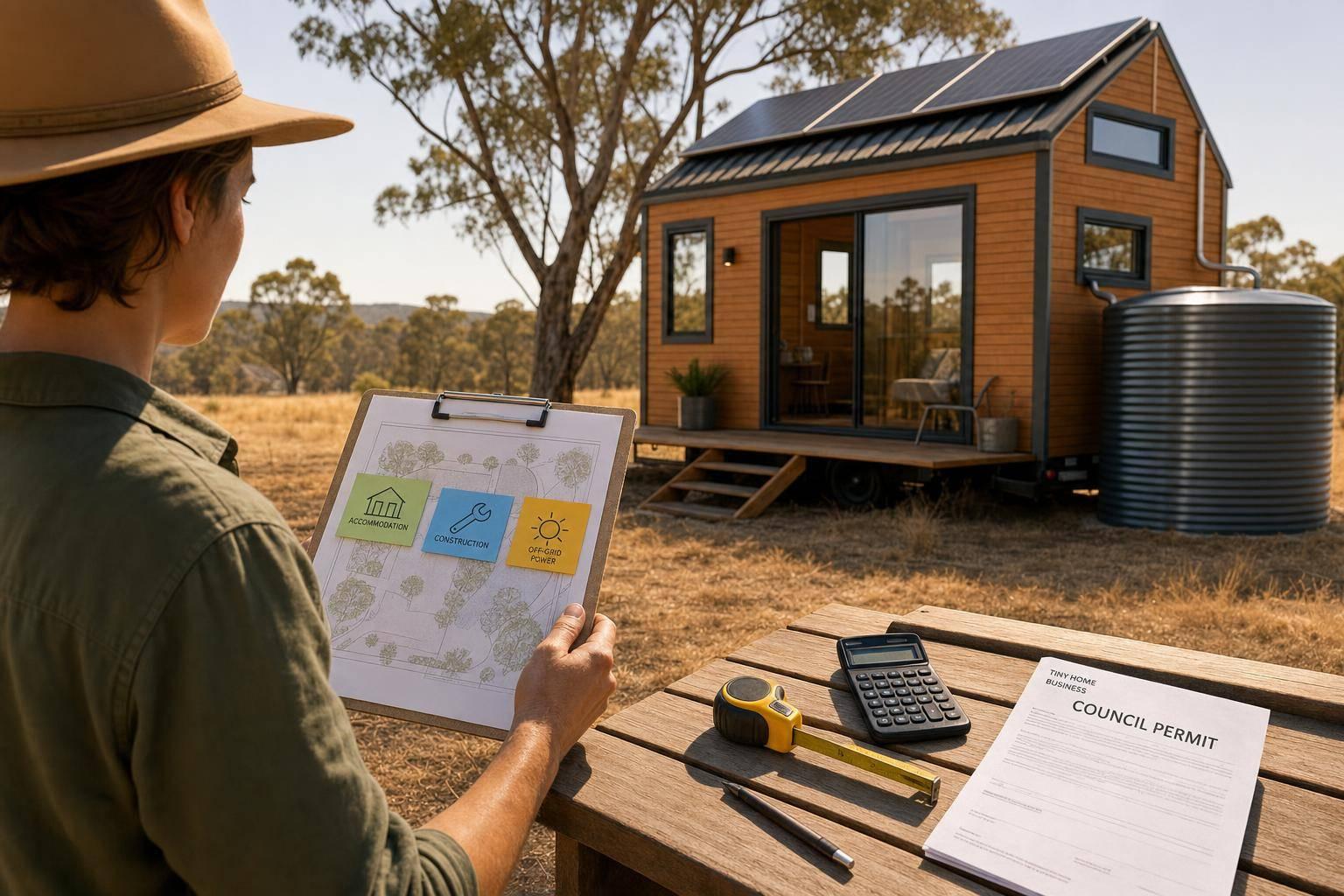
So if I were sizing up this space, I’d focus on four paths:
- Accommodation: short-stay rental, farmstay, eco-retreat
- Construction: custom tiny home building
- Infrastructure: off-grid setup, site prep, utility connections
- Management services: guest support, cleaning, upkeep, maintenance
Here’s the plain takeaway:
- If you own land, hosting can be the easiest starting point
- If you build or work in trades, construction or install work may fit better
- If you want lower upfront cost, service-based work often makes more sense
- If local short-stay rules are tight, long-stay housing or owner-focused services may be a better bet
Money and rules matter more than the idea itself. Tiny homes may cost about $32,000 to $96,000+ to build in Australia before all add-ons, while short-stay revenue can land around $45,000 to $95,000 a year in the right market. But those numbers only work if zoning, permits, and stay limits line up.
Aussie entrepreneur's innovative solution to current housing crisis | 9 News Australia
sbb-itb-08dd11e
Quick Comparison
| Model | Best for | Upfront cost | Main risk | Income style |
|---|---|---|---|---|
| Short-stay hosting | Landowners, hosts | Medium to high | Council limits, occupancy swings | Recurring |
| Custom building | Builders, carpenters, trades | High | Compliance, workshop cost, sales pipeline | Project-based |
| Off-grid/site services | Electricians, plumbers, contractors | Medium | Job flow, certification needs | Project-based |
| Guest management/maintenance | Service operators | Low | Client churn, travel time | Recurring |
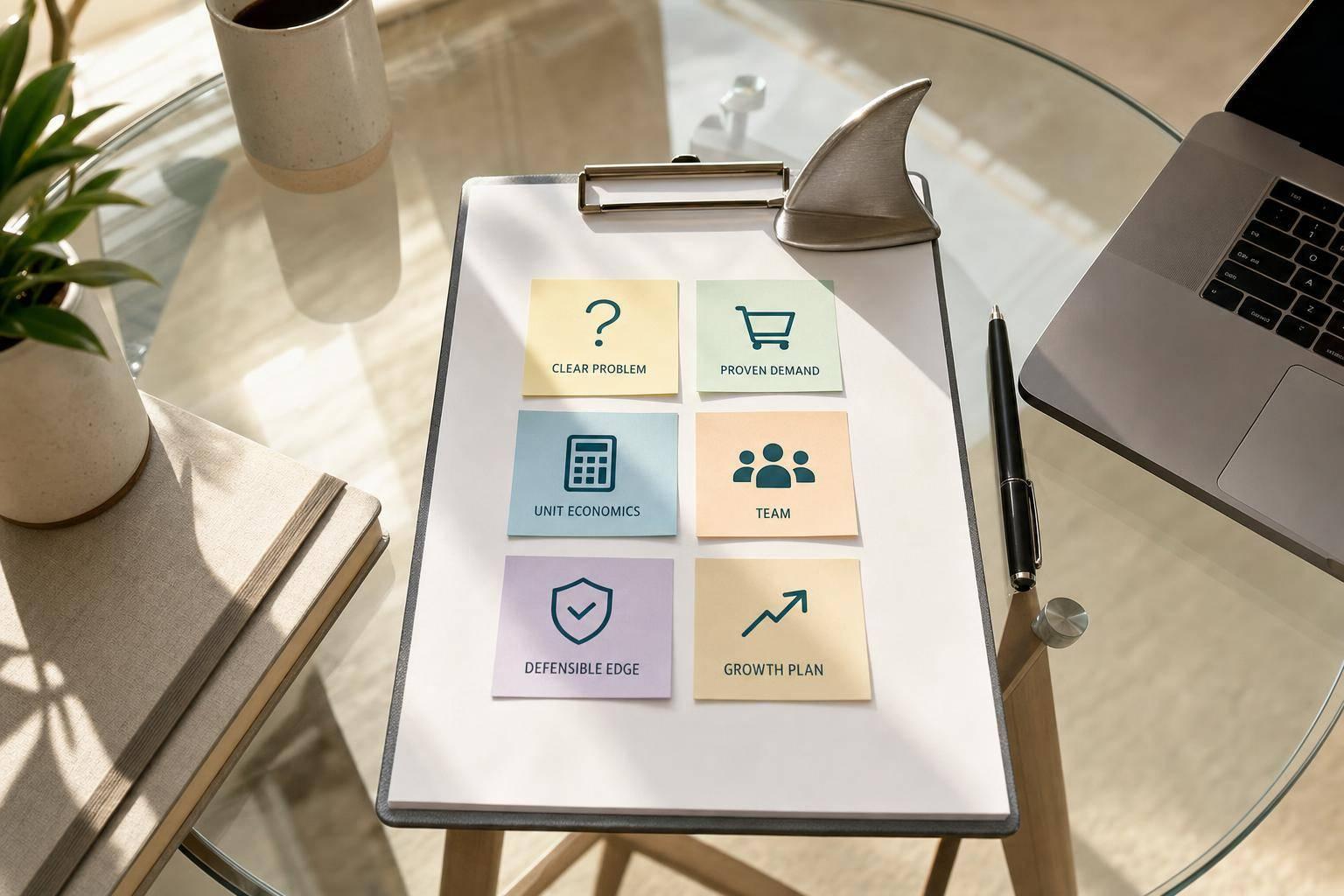
If I were reading this article to make a decision, I’d use one filter first: What can I run profitably under local rules? That question cuts through most of the noise and points you to the model worth testing.
Why Tiny Home Businesses Are Gaining Momentum in Australia
Australia’s housing affordability crunch is one of the main reasons tiny homes are picking up speed. Median advertised rents climbed about 48% over the 10 years to March 2025, and by June 2024, Perth and Sydney were the least affordable metro markets. At the same time, housing supply still isn’t keeping up. Only about 172,000 dwellings were completed in 2023, and national forecasts point to more undersupply and worsening affordability through at least 2029.
That mismatch matters. When housing gets harder to afford and supply stays tight, smaller and lower-cost dwellings start to look less like a niche idea and more like a practical option. For business owners, that means there’s a clear market for tiny homes. This isn’t just a design trend or an Instagram-friendly lifestyle shift. It creates room for business models built around lower-cost housing.
Lifestyle demand is part of the story too. More Australians are choosing to downsize and live with less, not only to save money, but because they want a simpler way of life. That shift has helped create demand for short-stay tiny homes, where guests can try the experience before deciding whether to buy one themselves.
Tourism adds another layer. Eco-tourism is helping push demand for tiny home stays, especially off-grid, solar-powered setups in scenic areas. Australia’s glamping market was worth about $193.6 million in 2025 and is projected to grow at a 5.8% annual rate through 2033. Tiny home stays sit comfortably in that space. Features like composting toilets, rainwater collection, and low-impact design can help support premium nightly pricing.
There’s also a practical entry point for landowners. If someone has underused land, they can host a tiny home and earn income while another operator manages bookings and guest stays. That makes land-hosting a lower-barrier option for both property owners and operators who want to enter the market without starting from zero.
Location has a big say in which model works best. Coastal tourism markets can support premium short-stay setups, but they also tend to come with tighter land and planning limits. Regional towns facing rental shortages are often more open to tiny homes as secondary dwellings or infill housing. Peri-urban fringes offer a middle ground: access to the city, plus land parcels that may suit off-grid retreats.
The fine print matters here. Council rules, state short-stay limits, and road-legal size caps shape what can actually be done in each area. In other words, choosing a tiny home business model isn’t just about taste or big ideas. It’s about what the market wants, what the land allows, and what the rules permit. Those differences set up the next step: picking the model that fits the location.
How to Evaluate the Right Tiny Home Business Model
Pick the model that matches your budget, skills, land access, and how much red tape you're ready to deal with.
Startup budget is usually the first thing to check. Tiny homes in Australia often cost AUD $50,000 to $150,000, and that’s before you add delivery, site prep, utilities, furnishings, and approvals. If your budget is tight, models that use client-provided land or sites may make more sense. Think transport and installation services, or off-grid setup consulting, instead of buying and operating units yourself.
Skills and land access narrow your options even more. If you're leaning toward construction, you'll need carpentry skills, building code knowledge, and trade experience. If you want to offer solar and battery setup, electrical know-how matters. On the other hand, accommodation businesses depend more on hospitality, marketing, and running clean systems behind the scenes. No land of your own? Then client-site models like custom builds, installation, or consulting are often easier to start. Without land, service-based work on client-provided sites is usually the simpler path.
Regulatory burden is often what makes the final call. In Sydney, short-stay accommodation has a 180-night annual cap for unhosted stays. In metro Perth, unhosted properties are limited to 90 nights before development approval is needed. Permanent dwellings come with their own approval paths too. If council rules and permit steps sound like a headache, service-based models may fit better since the client handles approvals. But if you're willing to work through compliance, that extra friction can help keep other operators out.
Here’s a side-by-side look at which models are simpler, riskier, and more capital-heavy:
| Evaluation Factor | Lower-Complexity Models | Higher-Complexity Models |
|---|---|---|
| Startup capital needed | Transport, consulting, off-grid services | Accommodation, construction |
| Land required | No (client provides) | Yes (own or lease) |
| Trade skills needed | Low–medium | Medium–high |
| Regulatory burden | Lower (client-led approvals) | Higher (operator-led) |
| Income stability | Variable (project-based) | More recurring (bookings/leases) |
Use IdeaFloat to test revenue, costs, and breakeven under different occupancy and pricing scenarios. That gives you a clearer way to compare the four model types below: accommodation, construction, infrastructure, and operations.
1. Accommodation
Accommodation is the fastest way to make money from a tiny home: put one unit on suitable land and rent it out for short stays. It tends to work best on small rural blocks, and it fits landowners or operators who know hospitality and have a site in the right spot. In Australia, the best markets are tourism-heavy regional areas, coastal pockets, and wine regions. For landowners, this is the easiest way in.
Tiny Home Short-Stay Rental
Before you go ahead, check zoning, approvals, and how the home is classified, whether as a dwelling, secondary dwelling, caravan, or visitor accommodation. Then rent out a furnished tiny home to travelers, remote workers, couples, or budget-minded guests in places with strong weekend and holiday demand. Tiny Away has already shown that the idea works by linking landowners with guests who want nature-based stays.
What drives revenue? A few plain things: occupancy, nightly rate, seasonality, and how well the place is presented.
Tiny Home Farmstay or Eco-Retreat
This setup makes sense for owners who already have land and want extra income without major construction. You place one or more tiny homes on rural land and market them as a premium short stay for guests who want privacy and scenery. Into The Wild Escapes offers off-grid tiny-house stays across Australia and shows how this kind of setup can draw guests looking for secluded, nature-based accommodation.
That said, custom builds can cost a lot more than a lean launch. Set aside money for furnishings, access roads or paths, cleaning, and insurance before you open.
If your plan is to build units for other owners instead of hosting guests, the next model shifts into construction.
2. Construction
If you'd rather build tiny homes than host guests in them, the construction side of this industry can be a good fit for experienced builders or tradespeople.
Custom Tiny Home Builder
Custom building works well for people who want to sell code-compliant tiny homes to landowners, downsizers, and short-stay operators. A custom build can cost about $27,000 before approvals, delivery, and site work.
Before you quote any job, get your setup sorted. Pick your business structure early and make sure your insurance is in place. A Pty Ltd costs $611 to register through ASIC, plus a $329 annual review fee, and it limits liability. A sole trader setup costs less, but your personal assets stay exposed. Public liability insurance is a must before taking on clients.
If you're not building from scratch, the next model moves into off-grid and site infrastructure services.
3. Infrastructure
Tiny homes still need the basics: power, water, drainage, and a way to access the site. That opens up two clear service paths for people working in this space: system installs and site prep.
Off-Grid Systems Installer
This service is all about setting up the core utilities for owners who want off-grid living on their own site. That can include solar panels, battery storage, pumps, and basic plumbing.
You can price each job based on:
- system size
- site access
- labor required
Total utility setup costs for a single tiny home come in at about A$7,300 per project. For tradespeople, this can be a solid project-based model. You get paid for the install work without needing to buy land yourself.
For bigger properties, the work often starts before the tiny home even arrives.
Site Preparation and Utility Connection Service
Site prep covers the groundwork needed before delivery. That usually means leveling the land, trenching, and handling utility hookups.
It’s a practical entry point for contractors working with rural blocks, regional sites, and retreat operators that need a site ready to go before a home is delivered.
4. Operations
After construction and utilities, the next profit driver is day-to-day operation. Once a tiny home is live, income comes down to two things: bookings and upkeep. These two models cover the repeat work that keeps money coming in.
Tiny Home Property Management & Guest Services
This model is for owners who want hands-off income from short-stay platforms. You handle bookings, guest messages, check-ins, cleaning, and rate updates based on demand.
It works well for rural and coastal properties, especially when the owner lives off-site. A Blue Mountains tiny home can earn about $59,250 per year at $250 per night and 65% occupancy. A 15%–25% management fee can then turn that activity into recurring income.
For owners who want even less day-to-day involvement, maintenance support is the next logical layer.
Tiny Home Maintenance & Operations Support
This service keeps tiny homes running between guest stays or for full-time residents. It covers inspections, solar, battery, and water system servicing, cleaning oversight, minor repairs, and compliance checks.
Bundle these services into a monthly subscription tier, and the model starts to look attractive from both sides. Owners get predictable costs. You get recurring revenue without owning any property yourself.
These service models often need less capital than ownership-heavy options, which makes them a strong fit for the next decision point.
Matching These Ideas to Your Budget, Skills, and Local Market
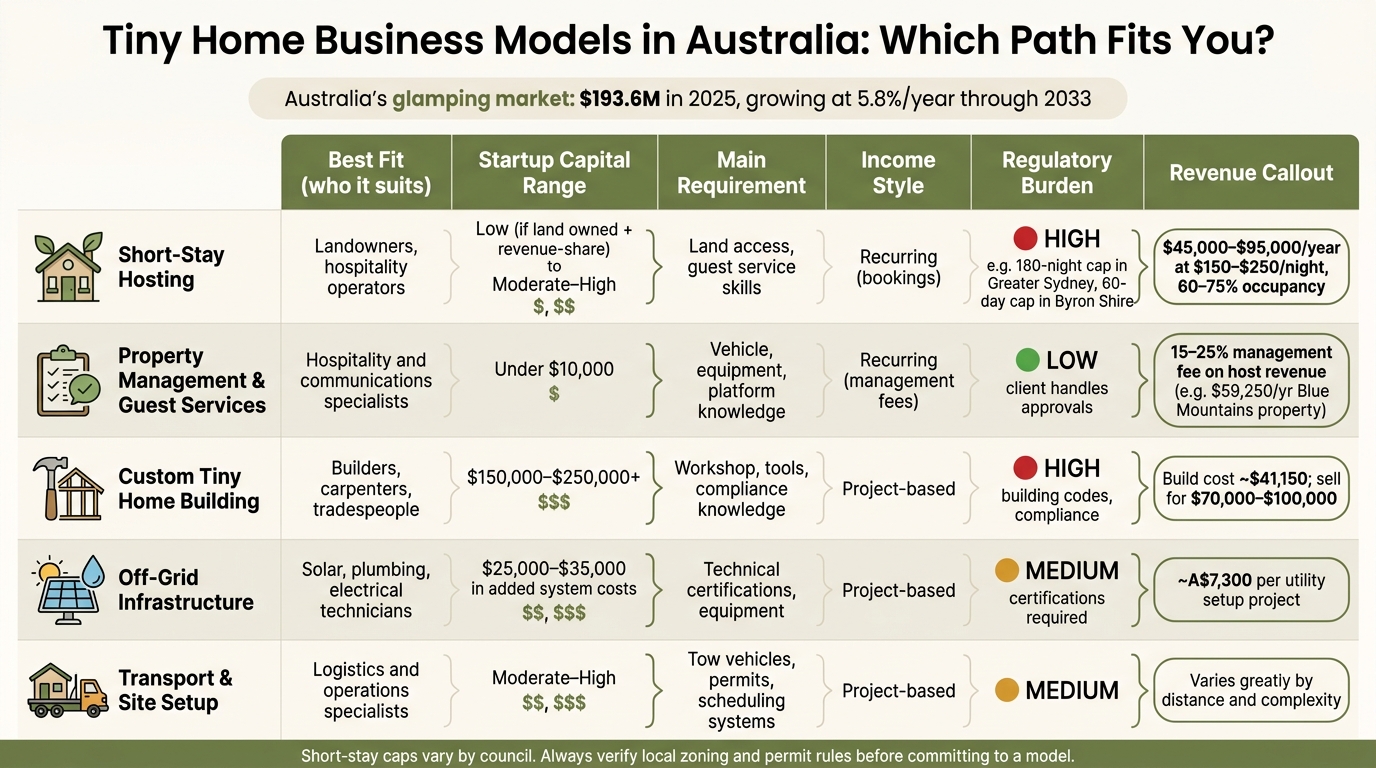
Tiny Home Business Models in Australia: Cost, Skills & Income Compared
The right path comes down to three things: how much money you can put in, what you already know how to do, and what people in your area will pay for. That’s why it helps to sort the four models above - accommodation, construction, infrastructure, and operations - through those filters first.
The table below helps you rule out bad fits fast.
| Pathway | Best Fit | Startup Capital Range | Main Requirement |
|---|---|---|---|
| Short-stay hosting | Landowners, hospitality operators | Low if you already own land and use a revenue-share model; otherwise moderate to high | Land access, guest service skills |
| Property management & guest services | Hospitality and communications specialists | Under $10,000 | Vehicle, basic equipment, platform knowledge |
| Custom tiny home building | Builders, carpenters, tradespeople | $150,000–$250,000+ | Workshop, tools, compliance knowledge |
| Off-grid infrastructure | Solar, plumbing, or electrical technicians | Often $25,000–$35,000 in added system costs | Technical certifications, equipment |
| Transport & site setup | Logistics and operations specialists | Moderate to high | Tow vehicles, permits, scheduling systems |
If you own land but don’t have much cash, short-stay accommodation is often the easiest way in. Annual gross revenue of $45,000 to $95,000 is possible at nightly rates of $150 to $250 with 60% to 75% occupancy. That’s a solid starting point. You can launch with one unit, test demand, and put profits back into the business before adding more.
If you’re a builder or work in the trades, construction-based models give you a clear edge because controlling labor has a big effect on margins. A basic tiny home can be built for about $41,150 in materials and trade costs, with a selling price in the $70,000 to $100,000 range, especially if you’re doing much of the work yourself.
Local rules can kill a business model before it even gets off the ground. In New South Wales, unhosted short-term rentals are capped at 180 days per year in Greater Sydney, and Byron Shire limits some properties to 60 days per year. Those caps can shrink short-stay income and make long-stay rentals, worker housing, or owner-occupied setups a better fit. Check your local council rules before you commit to a short-stay plan. In many cases, that one step will tell you which options are still worth your time.
Conclusion
The best tiny home business ideas in Australia work when they line up with local demand, land rules, and day-to-day costs. Accommodation, custom building, off-grid setup, transport, and management can all work well when they fix a clear local problem. In plain terms, fit matters more than novelty.
What decides if a business works? Three checks: capital, capability, and local demand. Your budget, your skills, and the rules in your area will shape what you can run and what you should avoid. That’s the gap between operators who build a business that lasts and those who get stuck halfway through.
Use those three filters to pick the model that can hold up under local regulation and pricing pressure. Validate demand, compare models, then choose the path you can run at a profit within local rules. Research local tourism data, occupancy rates, and council regulations in your target area. Then score each path - accommodation, construction, infrastructure, and operations - against your investment capacity, skills, and regulatory exposure using conservative numbers.
The opportunity is there, but it only works when it matches the right market. The operators who last are the ones who pair the right model with the right place.
FAQs
Which tiny home business is easiest to start?
The easiest tiny home business to start with very little money up front is co-hosting or property management for short-stay rentals that already exist.
That setup lets you earn by handling listings, guest messages, and cleaning for property owners, without buying a tiny home or owning land yourself.
Another lower-cost path is a niche gardening business or a mobile service business. In most cases, you can get started for $3,000 to $10,000.
Do I need council approval for a tiny home business?
It depends on what you do and where you operate, because rules differ across Australia.
If your business involves events, short-stay accommodation, or property rentals, check with your local council about zoning, development approval, short-term rental permits, occupancy limits, local taxes, and any building rules or local bylaws that apply.
Do that research early. It helps you operate legally and gives customers more confidence in your business.
How much money do I need to launch?
Startup costs can swing a lot depending on the tiny home business you choose.
If you're building and selling tiny homes, startup costs can land around A$41,150. That’s a much bigger upfront spend than a service-based setup.
If you're running a service or management-focused business - like co-hosting vacation rentals - you can usually get started with far less cash.
For other small business ideas in this space, startup costs often fall between A$3,000 and A$18,000.
Your budget should also cover the basics that can sneak up on you:
- Insurance
- Licensing
- Equipment
- Marketing
- Local regulations
Related Blog Posts
- 21 Low-Investment Business Ideas for Women in Australia
- 35 Business Ideas You Can Start From Home in Australia
- What Business Can You Start in Australia With $10,000? 15 Realistic Ideas for 2026
- 19 Low-Cost Business Ideas in Australia With High Profit Potential