Starting a side business while keeping your full-time job is a smart way to earn extra income and build new skills. In Australia, nearly 1 in 5 workers already earns additional income on the side, with many making between $100 and $1,000 a month. Here’s the good news: most side hustles only require 5–10 hours a week, minimal upfront costs, and can align with your existing skills.
Key Ideas for After-Hours Businesses:
- Service-Based Options: Pet sitting, virtual assistant work, or online tutoring can pay $20–$101 per hour and fit easily into your schedule.
- Digital Ventures: Dropshipping, selling digital products like ebooks or templates, and affiliate marketing can generate passive income with low effort after setup.
- Artistic Pursuits: Design logos, sell handmade crafts, or create user-generated content (UGC) for brands, earning $250–$1,000 per project.
- Product-Based Opportunities: Print-on-demand or dropshipping physical products lets you earn without managing inventory.
Steps to Get Started:
- Research demand for your idea.
- Register for an Australian Business Number (ABN) for legal compliance.
- Set up a separate bank account to track income and expenses.
- Dedicate specific hours weekly to your business to avoid burnout.
Starting small, testing your idea, and using online platforms like Etsy, Upwork, or Shopify can help you grow your side hustle without leaving your full-time job.
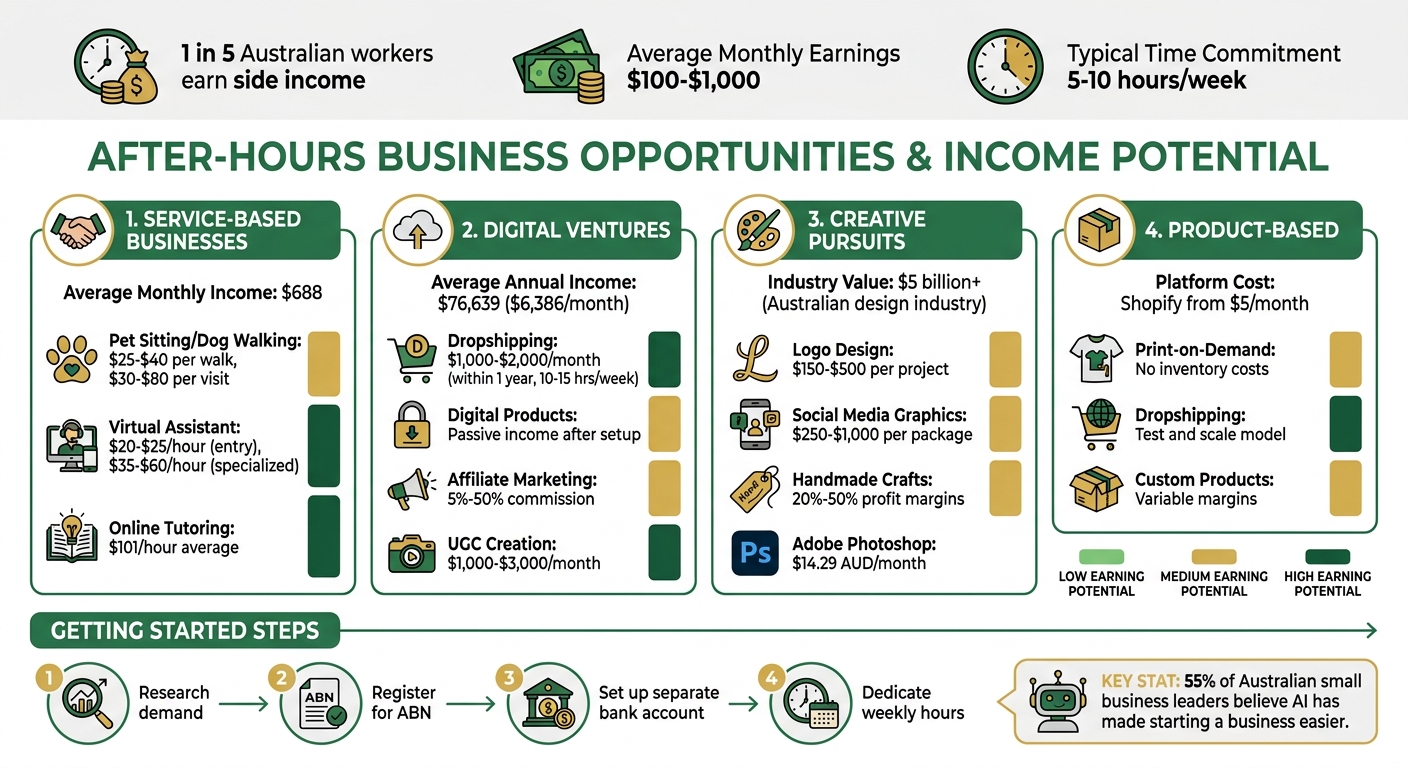
After-Hours Business Ideas in Australia: Income Potential and Time Investment Comparison
10 Simple Businesses You Can Start for Under $100 in Australia
sbb-itb-08dd11e
1. Service-Based Businesses
Service-based businesses are ideal for after-hours work because they often require minimal upfront investment and allow for flexible scheduling. On average, these ventures can bring in about $688 per month with just a few spare hours each week. Here are three popular options that work well in the Australian market:
Pet Sitting and Dog Walking
With over two-thirds of Australian households owning pets, the demand for reliable pet care is significant. Services like daily walks, home check-ins, or overnight stays can be offered through platforms such as Mad Paws. Rates typically range from $25–$40 per walk and $30–$80 for visits or overnight stays [1,8]. The flexibility of this work allows you to fit it into your schedule - whether early in the morning, during lunch, or in the evening. Be sure to get public liability insurance to cover any potential issues [2,8].
Virtual Assistant
The virtual assistant industry is booming, with projections estimating it will hit $23.6 billion globally by 2033. Many Australian small businesses are looking for remote help with tasks like email management, scheduling, bookkeeping, or social media. Entry-level virtual assistants typically earn $20–$25 per hour, while those with specialized skills, such as bookkeeping or tech support, can charge $35–$60 or more per hour [4,8,9]. Platforms like Upwork and Airtasker are great places to start, and you can expand your client base through word-of-mouth referrals.
Online Tutoring
If you’re skilled in academic subjects, languages, or specialized areas like coding, online tutoring offers some of the highest hourly rates among side gigs in Australia - averaging $101 per hour. Demand spikes during exam seasons for HSC and VCE students, making it a lucrative opportunity. Tutoring sessions can be scheduled in the evenings or on weekends using video platforms. Additionally, focusing on niche areas such as test prep or even unique skills like "Canva for Tradies" can help you stand out and charge higher rates [1,8].
2. Digital and Online Ventures
Digital ventures are a great way to combine automation with scalability, making them ideal for after-hours work. Once set up, these businesses can run on autopilot, allowing you to earn income without constant involvement. For instance, businesses selling digital products average $76,639 annually, or about $6,386 per month. This makes them a flexible option for those looking to generate revenue during evenings or weekends without managing inventory or being physically present.
Dropshipping
Dropshipping is an online business model where you sell products without handling inventory. When a customer places an order, the supplier ships the product directly to them. By dedicating 10–15 hours a week, you could potentially earn $1,000 to $2,000 monthly within a year. Platforms like Shopify, which starts at just $5 per month, make it simple to get started. The trick is finding a niche market. Kristen Pumphrey, founder of P.F. Candle Co., shares this advice: "You have to figure out what's not being fulfilled in the market". For example, niches like AI-generated designs for merchandise are gaining traction, using tools such as Midjourney or DALL-E.
Digital Product Creation
Selling digital products like ebooks, online courses, or design templates can be a lucrative venture. Platforms like Etsy and Gumroad make it easy to reach customers. While creating these products requires significant upfront effort, they can generate passive income over time. Once the initial work is done, sales often require minimal ongoing maintenance, making this an excellent option for professionals who can package their knowledge into downloadable formats.
Affiliate Marketing and UGC Creation
Affiliate marketing allows you to earn commissions - ranging from 5% to 50% - by promoting products through social media, blogs, or podcasts. Meanwhile, User Generated Content (UGC) creation is becoming increasingly popular. Brands are willing to pay creators $1,000 to $3,000 per month for authentic-looking content, even if they don’t have a massive following. TikTok Shop affiliate marketing is especially trending for creators with at least 5,000 followers. Both options are easy to start, requiring only a smartphone and a few hours of your time each week.
3. Creative and Artistic Pursuits
Creative ventures offer a fantastic way to turn your artistic talents into extra income outside of your regular job. In fact, the Australian design industry alone generates over $5 billion annually, highlighting the strong demand for artistic services. As Oliver Woolrych, Senior Community Manager at Fiverr, puts it:
"That talent you have that you've always wanted to express, it's a great opportunity to put yourself out there".
Graphic Design and Branding
Small businesses are always on the lookout for logos, social media graphics, and branding materials. With tools like Photoshop or Figma, you can create these assets in your spare time with minimal investment. Logo design projects often pay between $150 and $500, while social media graphic packages can fetch $250 to $1,000. An Adobe Photoshop subscription costs just $14.29 AUD per month, and as Adobe Australia notes:
"One project, such as a logo design or photo editing gig, can easily cover the cost".
To stand out, consider specializing in a niche market, like creating graphics for hospitality businesses or offering real estate photography services.
Handmade Crafts and Art
If digital design isn’t your thing, there’s plenty of demand for handmade and physical products. Platforms like Etsy, Redbubble, and local markets give you access to customers looking for unique items like jewelry, candles, or art prints. Australians are increasingly drawn to second-hand or upcycled goods, opening doors for projects like refurbished furniture or vintage clothing. Custom-made items can yield profit margins of 20% to 50%, making ventures like personalized gift boxes or bespoke illustrations especially rewarding. Starting with the tools you already own and selling locally can help you gain traction.
Content Creation and UGC
If storytelling is your strength, creating user-generated content (UGC) for brands is another flexible and lucrative option. All you need is a smartphone and good lighting to produce high-quality photos or videos for marketing purposes. UGC is incredibly effective - shoppers who engage with it are 144% more likely to make a purchase compared to those who don’t. The demand for creative content continues to rise, with searches for AI art services in Australia surging by 3,731% since late 2023. Content creator Lyn Allure offers this motivational insight:
"You absolutely have talent. You don't have to be the best at something either, you just need to be helpful enough at it to help people".
4. Product-Based Opportunities
Expanding from online business models, product-based opportunities provide a hands-on way to diversify your income streams.
Print-on-Demand and Dropshipping
Looking to sell physical products without the hassle of managing inventory or shipping? Print-on-demand (POD) and dropshipping might be just what you need. These models let you avoid storage and fulfillment headaches - products are only created or shipped when customers place orders.
Ryan McCarthy, founder of Sugoi Shirt, highlights the flexibility of POD:
"It allows me to test designs a little more freely and I don't have to stress so much about... if this design flops".
With POD, you can sell custom items like t-shirts, mugs, or phone cases through platforms such as Shopify, which starts at just $5 per month. Dropshipping, on the other hand, allows you to offer a wide range of products without ever handling inventory. Before officially launching, it’s a good idea to order samples to ensure the quality meets your standards. To succeed, consider targeting a specific niche. For example, cater to pet owners - two-thirds of U.S. households have at least one pet - or appeal to eco-conscious shoppers. This strategy blends creativity with tangible product sales and works well alongside other after-hours business ventures.
Unlike digital-only businesses, product-based models require careful experimentation and scaling. Dropshipping expert Tan Choudhury shares this advice:
"Start small, test products quickly, and scale what works".
Don’t forget to handle the legal and financial aspects. Register for a business identification number to stay compliant, and open a separate bank account to simplify tax preparation. These ventures can be a practical way to add to your income while keeping your day job.
Conclusion: Taking the First Step Toward Your After-Hours Business
Starting an after-hours business doesn’t mean you have to leave your day job or take big financial risks. The trick is to begin small and validate your idea early on. Before investing too much time or money, research the demand for your product or service and test whether people are genuinely interested in what you’re offering. Kristen Pumphrey, founder of P.F. Candle Co., puts it perfectly:
"You have to figure out what's not being fulfilled in the market".
Managing your time effectively is crucial for balancing a side hustle with a full-time job. Most successful after-hours businesses are structured to operate with a limited time commitment each week. Set aside specific hours - whether in the morning, evening, or on weekends - to keep your full-time job and side venture separate. Create a dedicated workspace and stick to a consistent schedule to avoid burnout while building momentum with your customers.
From the start, it’s important to get the legal and financial basics sorted. For example, registering for an Australian Business Number (ABN) ensures your business has a proper legal footing. Opening a separate bank account for your side hustle helps you track income and expenses more easily, simplifies tax time, and ensures you don’t miss out on potential deductions.
With this solid foundation in place, you can use AI and digital tools to give yourself an edge. Platforms like IdeaFloat can help you validate your ideas using real market data, craft a go-to-market strategy, and even build a professional landing page - all without heavy upfront investments in inventory or equipment. In fact, 55% of small business leaders in Australia believe AI has made starting a business easier. These tools can save you hours of work on research, pricing, and finding customers.
It’s worth noting that around 1 in 5 Australian workers already earns side income, with most making between $100 and $1,000 per month. Your after-hours business doesn’t need to replace your full-time salary right away. Learn how to launch your business, stay consistent, and use feedback from real customers to refine your approach. By validating your idea and managing your time wisely, you can build a side venture that supports your career and fits into your life.
FAQs
Do I need an ABN for a side hustle?
Yes, if your side hustle generates income and functions as a business, you’ll need to register for an Australian Business Number (ABN). This is particularly crucial if you’re selling goods or services on a commercial basis. An ABN serves to identify your business and ensures you meet tax and business regulation requirements.
How do I balance a side business with a full-time job?
To juggle a side business alongside a full-time job, it's crucial to keep your primary job as the top priority. Plan your side hustle around your main work schedule and set clear boundaries for when you'll focus on each. Time management is key - use tools to stay organized, track your tasks, and monitor your finances effectively. Be realistic about your limits by picking a side hustle that aligns with your available time and energy. This approach helps you grow your business steadily while keeping a healthy work-life balance.
What are the tax basics for side income in Australia?
If you're earning a side income from a business, it's important to report all your earnings on your tax return, keep accurate records, and register for an Australian Business Number (ABN). Additionally, if your turnover goes over $75,000, you'll need to register for Goods and Services Tax (GST). While income from hobbies isn't taxable, business income is - and it's your responsibility to ensure you meet all tax requirements.
Related Blog Posts
- Best Small Business Ideas in Australia Under $5,000
- 27 Part-Time Business Ideas in Australia You Can Start on Weekends
- Australian Businesses You Can Start Before You Quit Your Job
- High-Margin Small Business Ideas in Australia for One-Person Teams