Starting a business with your partner can be both rewarding and challenging. In Australia, nearly 40% of family-owned businesses are run by couples, and these ventures have a 23% higher success rate over three years compared to solo efforts. However, clear role division and effective stress management are critical, as 47% of couple-run businesses fail within the same period without these factors.
Here are some promising business ideas for couples in 2026:
- Service-Based Ventures: High-end matchmaking, event planning, and pet care services are thriving markets. For example, pet care businesses benefit from over 66% of Australian households owning pets.
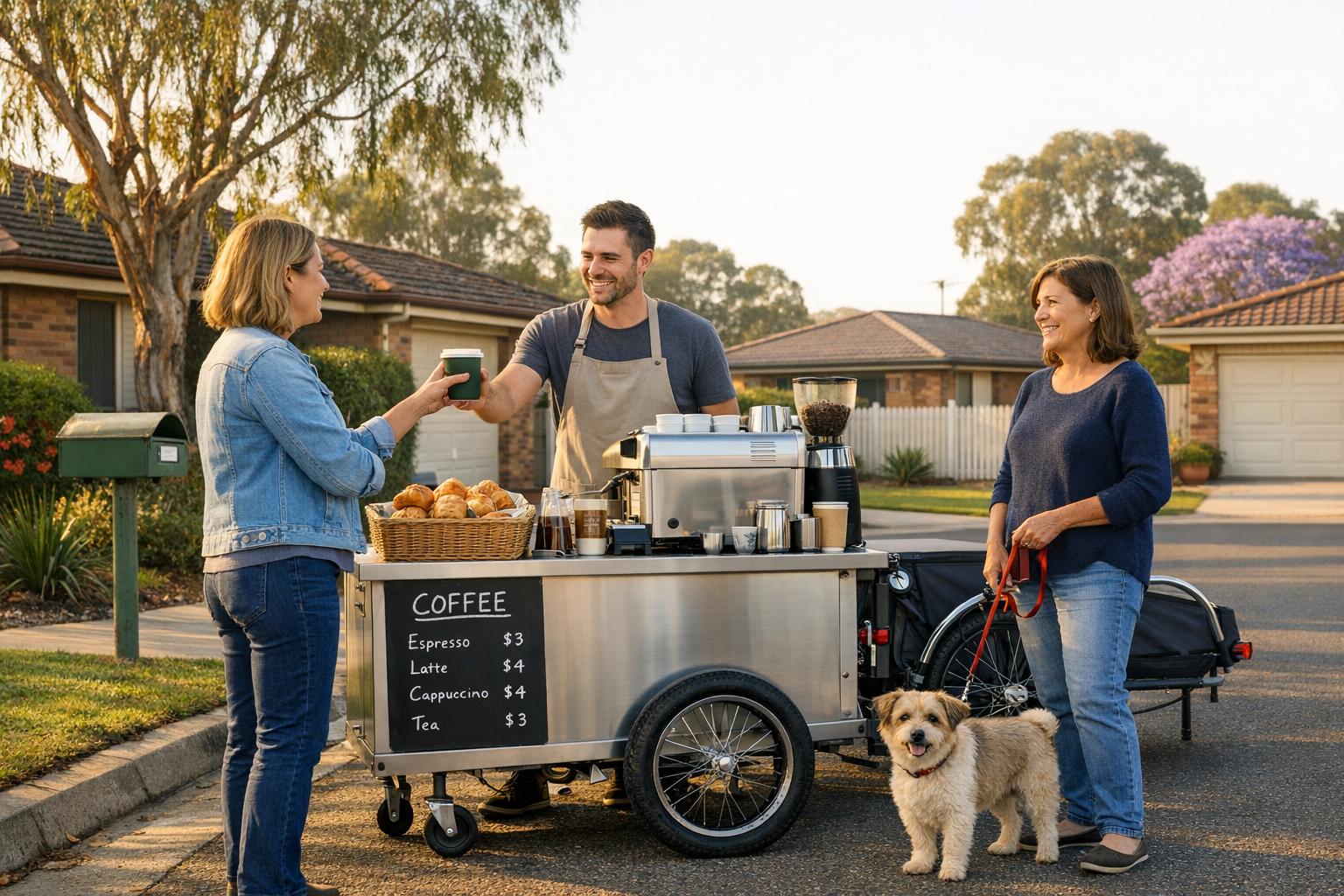
- Food and Hospitality: Mobile coffee trucks, specialty cafés, and meal kit subscriptions offer flexibility and growth potential. Start-up costs for food trucks range from $50,000 to $175,000.
- Digital Businesses: Dropshipping, virtual assistant services, and content creation require minimal upfront investment and allow scalability.
- Specialized Ventures: Singing telegrams and niche services cater to targeted audiences, allowing couples to leverage their unique skills.
Success hinges on dividing responsibilities based on strengths, setting clear boundaries, and maintaining open communication. Regular business meetings and separate workspaces can help balance personal and professional lives. The key is finding a venture that aligns with your shared goals and skills.
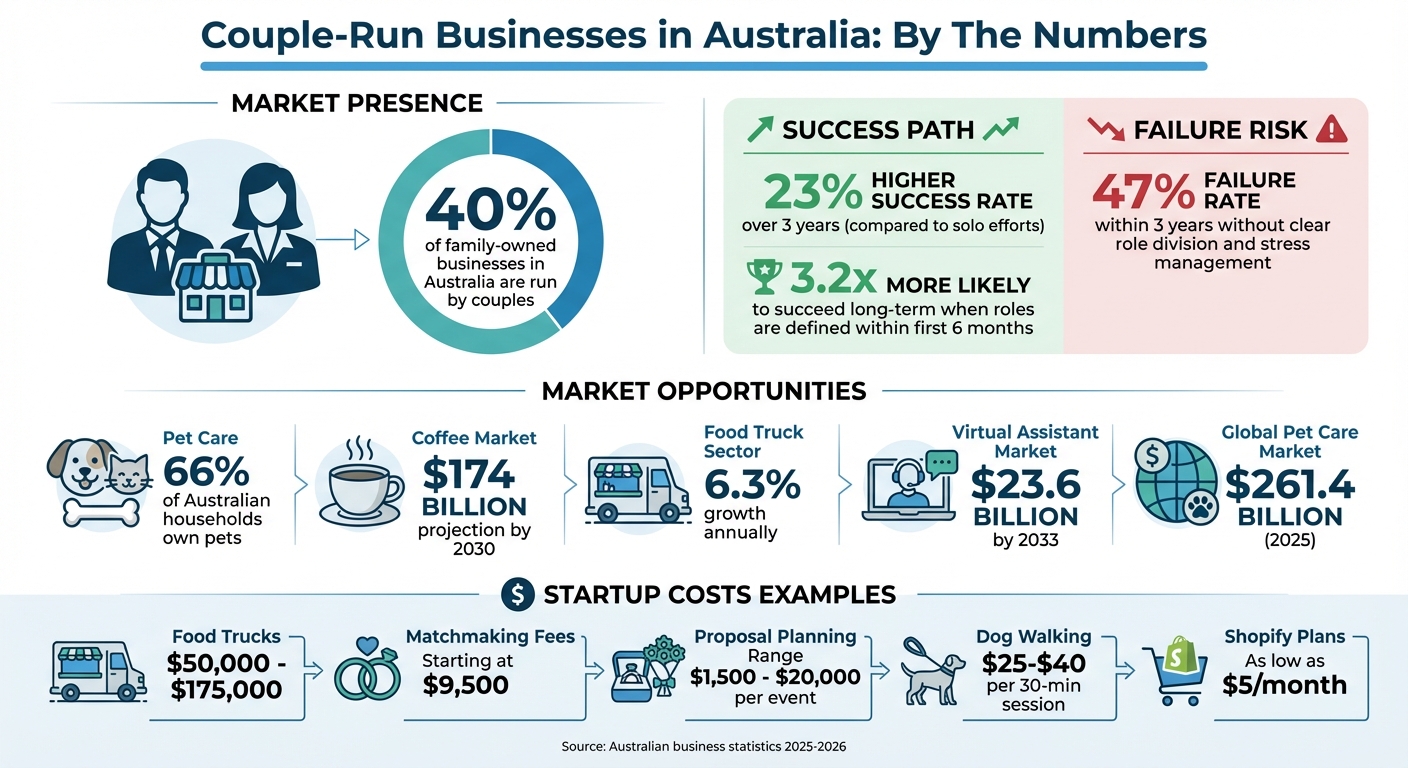
Success Statistics for Couple-Run Businesses in Australia
Power Couples in Business: How to Align Without Losing Your Relationship | Mark & Caroline Creedon
sbb-itb-08dd11e
1. Service-Based Businesses
Service businesses provide couples with a way to start with minimal overhead while offering strong earning potential. By dividing responsibilities - one partner focusing on client relations and marketing, and the other managing logistics and operations - couples can set themselves up for success.
Professional Matchmaking
High-end matchmaking is booming in Australia, especially among busy professionals looking for alternatives to dating apps. A great example is Beau Brummell Introductions, launched in 2010 by partners Vinko Anthony and Andrea Zaza. By June 2025, their efforts had resulted in 1,523 long-term relationships (lasting at least a year) and expanded their business from Sydney to Hong Kong, Singapore, and London. With fees starting at $9,500, their service is aimed at high-net-worth individuals who value discretion. Leveraging your own relationship as part of your brand can be a key differentiator. As Vinko Anthony puts it:
"The biggest commodity that we can give to anyone is time".
Event and Proposal Planning
This field combines intricate logistics with creative design, making it ideal for couples who can divide their skills effectively. For instance, My Proposal Co., founded in 2015, has successfully orchestrated over 2,500 proposals with a perfect "Yes" rate. Proposal budgets range from $1,500 to over $20,000. A successful strategy often involves one partner managing vendor coordination and logistics while the other focuses on designing unique concepts and providing emotional support to clients. Today’s clients are looking for personalized experiences that reflect their stories, rather than generic, pre-packaged options.
Pet Care and Wellness
With more than 66% of Australian households owning a pet, services like dog walking, grooming, and holistic pet care are thriving. In fact, the global pet care market hit $261.4 billion in 2025, with services being its fastest-growing sector. Couples can tap into this demand by offering flexible availability and specialized options. For instance, one partner might handle active tasks like dog walking (which typically costs $25–$40 for a 30-minute session), while the other focuses on grooming or creating tailored diet plans. Profit margins in this space generally range from 30% to 45%, and the business can grow organically as you build a loyal client base.
Next, we’ll look at food and hospitality ventures, another area where couples' complementary talents can shine.
2. Food and Hospitality Ventures
Food and hospitality businesses offer couples a chance to combine creative flair with hands-on skills in Australia's lively food industry. The global coffee market, for instance, is projected to hit $174 billion by 2030, while the food truck sector is growing at 6.3% annually. Below are three business ideas where couples can share responsibilities to create a steady income while maximizing efficiency and profitability.
Mobile Coffee and Food Trucks
Food trucks offer flexibility without the high costs of a permanent location. Startup expenses typically range from $50,000 to $175,000. In this setup, one partner could focus on crafting the menu, while the other handles permits and builds the brand's online presence. The mobility of food trucks allows access to high-traffic spots like festivals, beaches, and corporate events. A great example of scaling a concept is Australian hospitality duo Josh and Julie Niland, who opened their eighth venue - the Catseye Pool Club at The Sundays resort on Hamilton Island - in June 2025, marking seven years of rapid growth.
Specialty Cafés and Ice Cream Shops
Australia's love for coffee makes specialty cafés a promising venture for couples, especially when paired with strong branding and quality offerings. Equipment leasing through distributors can ease initial costs. For ice cream businesses, a batch freezer runs between $8,000 and $30,000, while build-out expenses range from $10,000 to $50,000. With the global ice cream market expected to reach $112 billion by 2030, this is another lucrative option. To address seasonal dips, adding warm items like baked goods during colder months can help maintain steady sales.
Catering and Meal Kit Subscriptions
Specialized catering - such as gluten-free, vegan, or allergen-friendly options - and subscription-based meal kits offer recurring revenue opportunities. Couples can start by renting shared-use commercial kitchens before committing to a dedicated space. Dividing tasks makes this model efficient: one partner could manage recipe creation and food prep, while the other oversees logistics, packaging, and customer service. For deliveries, insulated shippers with gel packs or dry ice ensure food stays below 40°F. Additionally, offering cooking classes, priced between $60 and $100 per person, can generate extra income while fostering community engagement around your brand.
3. Digital and Online Business Models
Digital ventures open up flexible and scalable opportunities that don't require hefty upfront investments. For many couples, starting an online business can be as simple as having a laptop and an internet connection. The global virtual assistant market, for instance, is expected to grow significantly, reaching $23.6 billion by 2033. These types of businesses allow partners to divide tasks based on their individual strengths while creating income streams from virtually anywhere.
E-commerce Without Inventory: Dropshipping and Print-on-Demand
Dropshipping and print-on-demand (POD) are ideal for entrepreneurs who want to avoid managing physical inventory. With POD, items are printed and shipped only after an order is placed. This setup lets one partner focus on designing or selecting products, while the other handles customer service and running the online store. Platforms like Shopify make it easy to get started, offering plans as low as $5 per month, with domain names costing around $10–$20 annually. A growing trend in this space is AI-generated merchandise, where tools can be used to create unique designs, such as meme-based products. Before launching, make sure to register for an Australian Business Number (ABN), and keep in mind that GST registration is required once annual turnover exceeds $75,000.
Virtual Assistant Agency
Virtual assistant (VA) services are another promising option, offering steady income through hourly rates or monthly retainers. VAs typically earn around $24 per hour, but specialized skills can command rates as high as $75 per hour. Couples can start small by offering services like calendar management, bookkeeping, or social media support to small businesses. Over time, this can grow into a multi-person agency. One partner might take charge of client interactions and project management, while the other focuses on marketing and expanding the business. Starting as a sole trader can help minimize costs, with the option to transition to a different structure later for tax benefits and liability protection. Setting up a dedicated business bank account from the beginning is also a smart move to simplify financial management.
Content Creation and Digital Products
Platforms like YouTube, podcasts, and blogs allow couples to monetize their unique dynamic through sponsorships, affiliate marketing, and selling digital products. YouTube, being the second-most-visited website globally, offers a massive audience for niche content. In this collaborative space, one partner can focus on creating content and being on camera, while the other handles editing, SEO, and audience engagement. This teamwork boosts both creative output and technical efficiency. In 2025, side hustles required about 5–10 hours per week and brought in an average of $688 per month. Beyond ad revenue, couples can sell downloadable products like templates, ebooks, or online courses - automated options that generate recurring income with minimal upkeep. TikTok affiliate marketing is also gaining traction, with creators who have at least 5,000 followers using affiliate links to earn commissions.
Next, we’ll dive into creative ventures that combine personal passion with innovation.
4. Creative and Specialized Ventures
Starting a creative business together allows couples to turn shared interests into niche opportunities that can command higher prices and offer potential for growth.
Singing Telegram Business
Imagine combining music and celebration into a business. A singing telegram service delivers personalized musical messages, either in person or via video, for events like birthdays, anniversaries, or even corporate milestones. This kind of venture taps into creativity while targeting a specific market. One partner could take on the performance side, while the other handles logistics, costume design, and digital marketing. To broaden their reach, couples could offer virtual telegrams, custom-written songs, or themed video messages, appealing to customers across Australia. These unique offerings often justify higher prices, especially for special occasions.
Specialized ventures thrive when they address unmet needs. By identifying gaps in the market - such as areas where competitors fall short - couples can create solutions people are willing to pay for. This approach builds trust and gives couple-run businesses an edge that’s harder for traditional setups to replicate.
A winning strategy also involves solving specific, high-value problems rather than offering generic services. For instance, focusing on "Instagram Reels for Australian Cafes" is far more targeted than general social media marketing. By carving out a niche and addressing a distinct pain point, couples can charge premium rates and benefit from word-of-mouth referrals. Setting clear roles from the beginning is equally important, as it prevents one partner from feeling overlooked or undervalued in the business relationship.
Conclusion
Thriving as a couple in business boils down to pairing your individual strengths with the right venture. It's about finding a business idea that suits your natural abilities rather than trying to split every task equally. One partner might shine in creative roles or customer interactions, while the other takes charge of finances and daily operations. This clear division helps avoid unnecessary overlap and reduces potential conflicts.
The numbers back this up: around 40% of family-owned businesses in Australia are run by couples. While romantic partnerships in business face a 47% higher failure rate within the first three years compared to solo founders, those who make it past this hurdle experience a 23% higher success rate. What's the secret? Couples who define distinct roles within the first six months are 3.2 times more likely to succeed long-term.
Before diving in, do your homework. Use tools like Google Trends to identify underserved markets and analyze competitor pricing. Understanding Australian regulations - such as ABN registration and required certifications for your industry - is non-negotiable. This preparation not only sharpens your business idea but also helps you spot opportunities to offer premium services.
Communication is just as critical as your business plan. Mark Creedon, CEO of Metropole, emphasizes this point:
"You can't run a proper business with random conversations at the dinner table. You need a weekly meeting. You need to set clear boundaries".
Establish regular business meetings, create separate workspaces at home, and maintain individual interests outside the business. These habits help preserve both personal and professional balance.
In the end, success stems from a shared vision and well-defined roles. Jewelry designer Nak Armstrong captures it perfectly:
"There's no substitute for someone who is as invested as you are and who cares as much as you do".
FAQs
How do we split roles without fighting?
Couples can sidestep conflicts by dividing roles in a way that plays to each partner's strengths and abilities. Establish clear boundaries to keep work and personal life separate - this could mean setting specific work hours or creating distinct workspaces at home. Open and regular communication is key for addressing any concerns and tweaking responsibilities when needed. A helpful strategy? Try using a framework like the 90-day rule to periodically review and improve how tasks are shared for smoother teamwork.
Which idea fits our budget to start in Australia?
Starting a side hustle can be a smart move, especially when you choose options like offering digital services, pet sitting, or starting a craft-based business. These ideas typically require minimal upfront costs, making them ideal if you're working with a tight budget. Plus, they're flexible, giving you the chance to expand and grow as your business starts to gain traction.
What legal setup do we need first (ABN, GST, licenses)?
To kick off a business in Australia, the first step is registering for an Australian Business Number (ABN). If your yearly revenue surpasses AUD 75,000 - or if you decide to register voluntarily - you’ll also need to sign up for the Goods and Services Tax (GST). Beyond that, it’s important to review local regulations to see if your industry or area requires any specific licenses or permits.
Related Blog Posts
 Report an issue
Get the newest tips and tricks of starting your business!