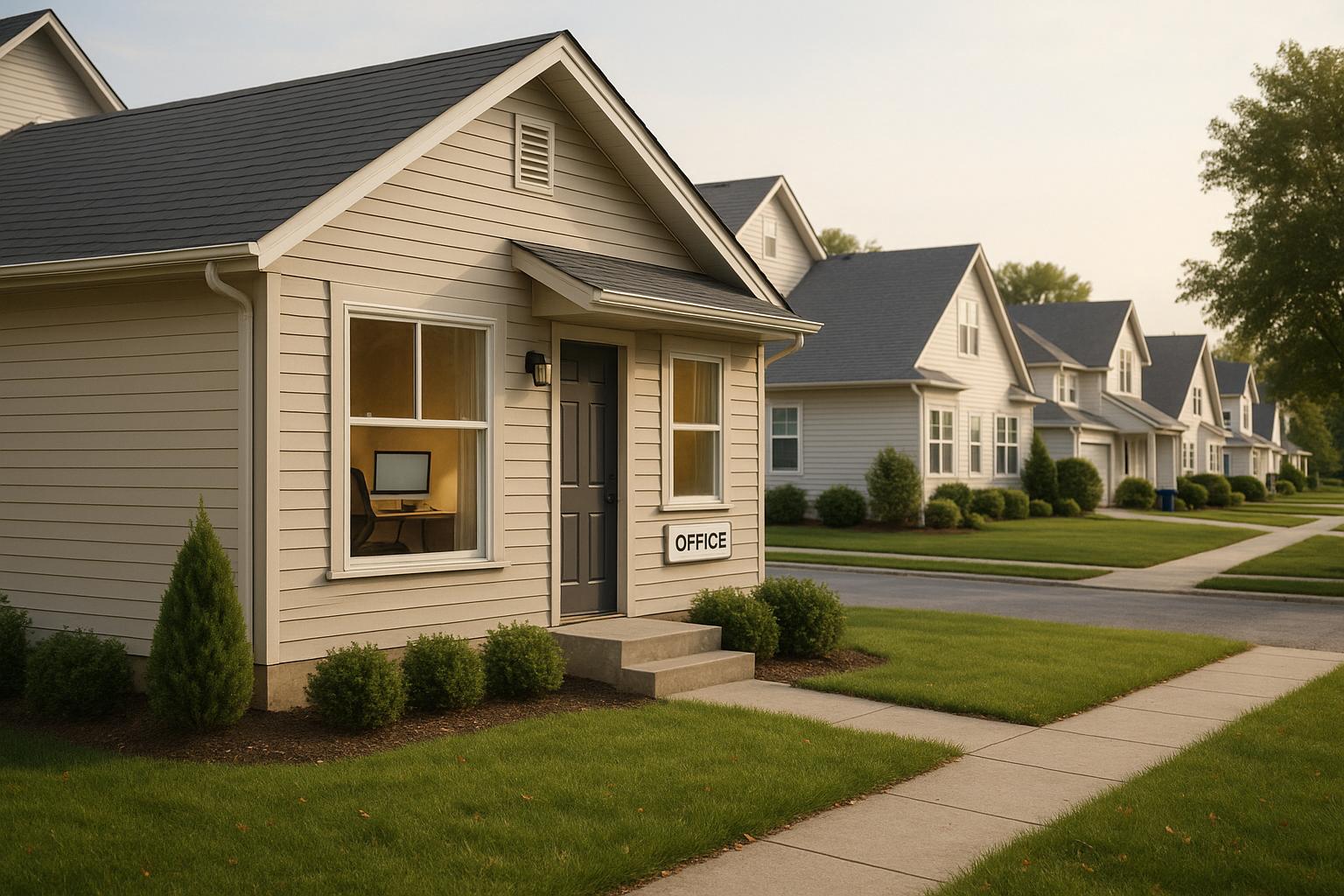
Yes, you can run a business from residential property, but it depends on local zoning laws, permits, and other restrictions. Here's what you need to know:
- Zoning Laws: Regulations determine if and how you can operate a business from home. Small, low-impact businesses (e.g., freelancing, consulting) are often permitted, while large-scale operations are typically banned.
- Permits and Licenses: Most home businesses require a general business license and possibly a home occupation permit. Specific services like daycare or hairstyling may need additional approvals.
- HOA Rules: Homeowners' associations may impose stricter rules, banning client visits, signage, or deliveries.
- Insurance: Standard homeowners' insurance doesn’t cover business-related activities. Additional coverage is often necessary.
Ignoring these rules can lead to fines, legal action, or forced closure. Always check local regulations, review HOA agreements, and consult legal or zoning experts before starting. If your business doesn’t fit residential zoning, you might need to adjust your operations, apply for special permissions, or move to a commercial property.
Zoning Laws and Residential Land Restrictions
What Zoning Laws Are and How They Work
Zoning laws are regulations that determine how land can be used - whether for residential, commercial, industrial, or mixed purposes. Their main goal is to maintain the character of neighborhoods by preventing activities that could clash with the area's intended use. Without these rules, it would be easy for conflicting activities to disrupt the harmony of a community.
The specifics of zoning laws vary widely depending on the city, county, or state. In many areas, small home-based businesses are permitted as long as the residence remains primarily a home and the business doesn't disturb the neighbors.
Some ordinances are fairly general, allowing typical home-based businesses, while others are much more detailed. For instance, certain jurisdictions might explicitly list permitted activities like law practices, medical offices, music lessons, photography studios, or woodworking shops. Next, let’s dive into the typical restrictions these laws impose on residential zones.
Common Business Restrictions in Residential Zones
Even when home businesses are allowed, zoning laws often impose strict limits to ensure the neighborhood's character and quality remain intact. These restrictions usually address things like client visits, signage, noise levels, traffic, parking, and delivery activities.
Take New York City, for example. Its Zoning Resolution allows home businesses only if they are secondary to residential use. Businesses can employ no more than one non-resident worker and use no more than 25% of the home or 500 square feet - whichever is smaller. Certain businesses, such as barbershops, beauty salons, real estate offices, and stockbrokers' offices, are outright prohibited. The rules also limit exterior signs, visible displays of goods, and any activities that generate excessive noise or odors.
Additionally, large-scale operations like factories, construction businesses, or those involving harsh chemicals or animal care are typically banned in residential zones. Industries such as child care, food production, or health services may be permitted but often require additional licenses, inspections, or permits. Violating these rules can lead to penalties, fines, or even legal action. On top of municipal regulations, private agreements can impose further restrictions on home businesses.
HOA Rules and Private Agreements That Affect Businesses
Beyond local zoning laws, homeowners' associations (HOAs) often enforce stricter rules to maintain property values and neighborhood aesthetics. These private agreements can go beyond municipal regulations, placing tighter controls on client visits, visible signage, and business-related deliveries.
Breaking HOA rules can lead to fines or other legal consequences. For instance, a home-based photography studio with frequent client visits might violate HOA guidelines, while an online-only freelance business would likely avoid such issues. If you’re planning to start a business from home, it’s crucial to review your HOA agreement, any Covenants, Conditions, and Restrictions (CC&Rs), and your lease agreement. These documents may impose additional rules that go beyond what is outlined in local zoning laws.
Legal Requirements and Compliance Challenges
Licenses and Permits for Home-Based Businesses
Beyond zoning rules, operating a home-based business legally means securing the right permits and adhering to safety codes that protect both your business and your community. At the very least, you'll need a general business license from your city or county. Additionally, most home-based businesses require a home occupation permit, which ensures your activities are appropriate for a residential neighborhood.
Depending on your business type, you might need more specific permits. For example, regulated services like daycare, hairstyling, or financial advisory require professional licenses. Food-related businesses, on the other hand, often need health and safety permits, which could involve home inspections or fire department approvals. If you’re selling physical products, a sales tax license is essential - operating without one could lead to criminal charges in some areas.
If you’re making structural changes to your home for business purposes, you’ll likely need building permits to ensure compliance with local construction and safety standards. Even something as simple as putting up a sign might require a permit, as local ordinances often regulate its size, type, location, and lighting. To find out exactly what applies to your situation, reach out to your city or county clerk’s office or planning department.
Next, let’s look at how building and safety codes come into play when adapting your home for business use.
Building and Safety Code Requirements
Transforming a residential space into a business area means your property must meet specific commercial safety and building codes. These regulations cover critical aspects like fire safety, accessibility, and proper ventilation.
"You must also ensure that the garage meets local building codes and safety standards for commercial use. This may include fire safety measures, accessibility requirements, and proper ventilation, especially if you're manufacturing or selling goods that require specific safety protocols." - TaxTMI
If your business involves activities like manufacturing, storing inventory, or hosting frequent client visits, you may face inspections to ensure compliance with these stricter standards. Before making any modifications, it’s wise to consult local zoning authorities to understand your responsibilities. Also, don’t forget to update your insurance policy to reflect your property’s commercial use.
Understanding and adhering to these codes can save you from the penalties we’ll discuss next.
Consequences of Violating Zoning Rules
Failing to comply with zoning regulations can lead to hefty fines, forced closures, or expensive modifications to bring your business up to code. If you’re part of a homeowners association (HOA), violating its rules could result in additional fines or legal action. Issues like excessive noise, increased traffic, or parking problems can prompt neighbors to file complaints, potentially triggering investigations and legal trouble.
The best way to avoid these headaches? Consult local zoning authorities or a legal expert before you start your home-based business. Taking these steps early can save you time, money, and stress down the road.
Can You Run A Business On Residential Property? - BusinessGuide360.com

Types of Businesses Allowed on Residential Land
When it comes to running a business from your home, zoning laws and compliance rules play a big role. Understanding which types of businesses fit within residential settings can save you a lot of trouble.
Low-Impact Businesses That Are Usually Allowed
Low-impact businesses are the go-to choice for residential zones because they blend seamlessly into the neighborhood. Freelancing, consulting, and e-commerce ventures are great examples. These businesses, like an online graphic design service or freelance writing, tend to operate quietly and don’t disturb the area, making them a safe bet under most zoning laws.
The key is to maintain the residential feel of your home. Local rules often require that any commercial activity stays secondary to residential use. For instance, you might be allowed a small, non-illuminated nameplate for signage, limited to 2 square feet. However, your business shouldn’t create noticeable disruptions like noise, traffic, or parking issues. That’s why low-impact operations typically gain approval in residential areas.
Businesses That Need Special Approvals
Some businesses fall into a gray area and require special permissions. Think daycare centers, music lessons, or small professional services that involve regular client visits. In these cases, you’ll need to apply to your local planning department and show that your business won’t negatively affect the neighborhood.
This process often includes submitting detailed plans and, in some cases, attending a public hearing where neighbors can share their opinions. These permits are designed to ensure that any potential issues - like increased traffic or noise - are addressed before operations begin. Navigating this approval process can help you avoid crossing into prohibited territory.
Business Activities Prohibited in Residential Zones
Not all businesses are welcome in residential areas. Large-scale industries, factories, and high-traffic retail operations are strictly off-limits. Similarly, businesses like auto wrecking yards, manufacturing facilities with heavy machinery, or those involving hazardous materials are generally not allowed, no matter how much you modify your property.
"The focus and purpose of zoning laws are to separate different or incompatible property uses to avoid issues such as a manufacturing facility being placed in a residential neighborhood"
In some upscale neighborhoods, all commercial activities might be banned outright to preserve the area’s character. Any business that generates significant noise, pollution, or traffic - or involves storing and selling physical merchandise - is likely to clash with residential zoning rules. These restrictions aim to protect the peace and quiet that residents expect in their homes.
sbb-itb-08dd11e
How to Check If Your Business Fits Residential Zoning
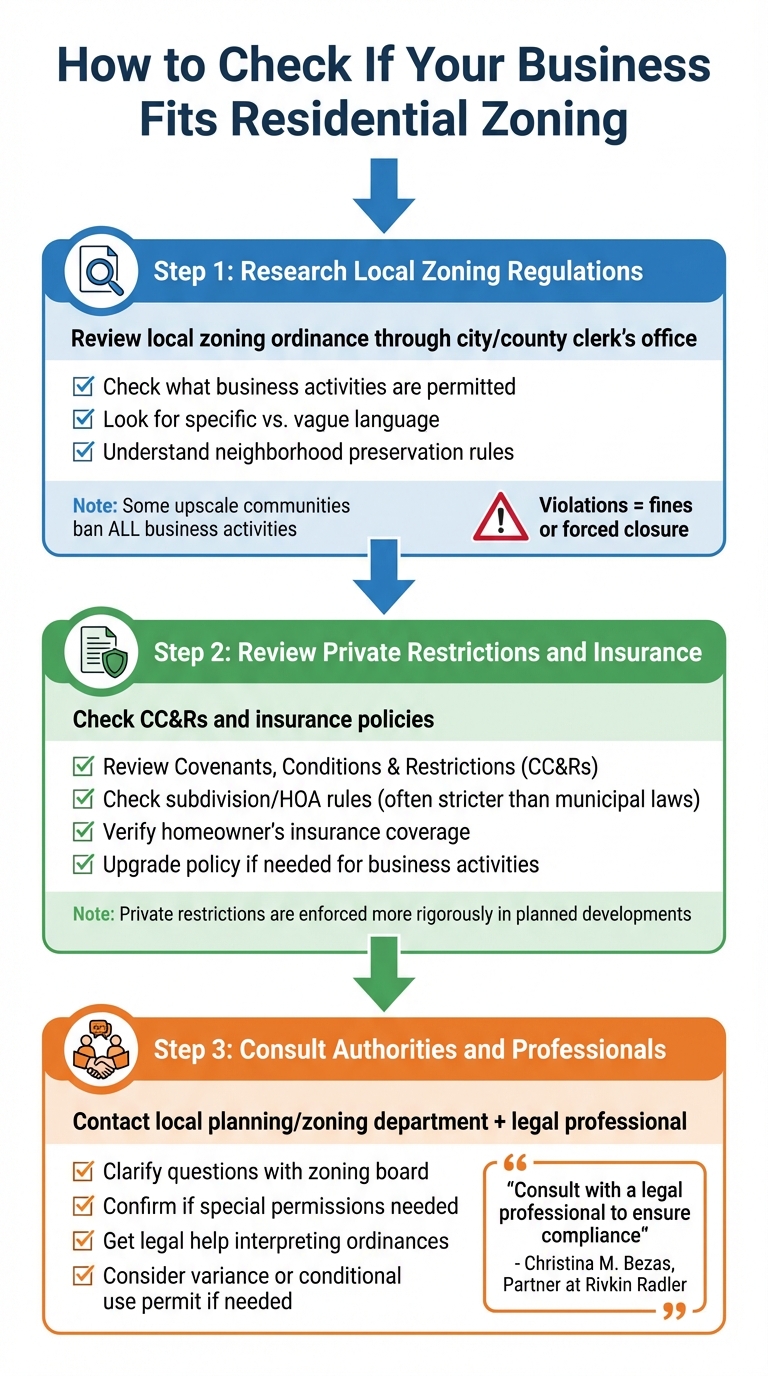
3-Step Process to Verify Home Business Zoning Compliance
Making sure your business complies with local zoning laws is a must if you want to avoid legal headaches and unexpected costs. Before committing resources to a home-based business, take the time to confirm that your business activities are allowed in a residential zone. Here’s how to navigate the process.
Step 1: Research Local Zoning Regulations
Start by reviewing your local zoning ordinance, which you can usually access through your city or county clerk's office. This document will outline what types of business activities are permitted on residential properties. It’s important to pay close attention to the language used - some ordinances are vague, while others provide clear examples. Make sure your business aligns with these rules, as any violations could lead to fines or even force you to shut down operations.
"Buyers must research and understand the zoning laws of the area."
Zoning laws are designed to preserve the character of neighborhoods and separate conflicting land uses. While many municipalities allow small-scale, non-disruptive home businesses - as long as the property remains primarily a residence and doesn’t negatively impact neighbors - some upscale communities may ban all business activities entirely.
After understanding your local zoning rules, the next step is to look into any private restrictions tied to your property.
Step 2: Review Private Restrictions and Insurance Policies
Municipal zoning laws aren’t the only regulations you need to consider. If your property is part of a subdivision, condominium complex, or planned unit development, you’ll need to review the CC&Rs (Covenants, Conditions, and Restrictions). These agreements often impose stricter rules than municipal ordinances, and they are typically enforced more rigorously in planned developments.
Additionally, review your homeowner’s insurance policy. Some communities require proof of financial responsibility or specific types of insurance as part of their business licensing process. If your current policy doesn’t cover business activities, you may need to upgrade your coverage or purchase additional insurance.
Once you’ve done your homework, it’s time to reach out to local authorities and professionals for guidance.
Step 3: Consult Local Authorities and Professionals
After completing your research, contact your local planning or zoning department to clarify any questions and confirm whether your business requires special permissions.
"Before you start a business, it's a good idea to check with your local zoning board to make sure you're following the rules and to see if you need any special permission for your type of business."
It’s also wise to consult a legal professional. They can help you interpret zoning ordinances, guide you through the permit application process, and ensure your business complies with all relevant laws. As Christina M. Bezas, Partner at Rivkin Radler, advises:
"It is important to consult with a legal professional to ensure that your home-based business operates in accordance with all relevant laws and regulations."
- Christina M. Bezas
If your business doesn’t fit neatly within the existing zoning rules, you might have the option to apply for a variance or a conditional use permit (CUP). However, if residential zoning ultimately isn’t a good match for your business model, you’ll need to consider alternative locations or solutions.
What to Do When Residential Land Doesn't Work for Your Business
If your business doesn't align with residential zoning rules, you have a few options: adjust your operations, apply for special permissions, or move to a commercial property.
Adjusting Your Business Model to Meet Zoning Rules
Tweaking your business model can help you comply with zoning rules while staying put. Start by minimizing disruptions to your neighborhood - keep noise, traffic, and parking issues to a minimum. Businesses with quieter, digital-based operations often face fewer zoning challenges compared to those like pet grooming or car repair.
If zoning rules limit the number of employees or clients on-site, consider holding meetings off-site or relocating production elsewhere. Be mindful of increased utility costs, and ensure your insurance covers business-related risks - standard homeowner’s policies usually don’t. If clients visit your home, think about adding a separate entrance to keep things professional.
When operational changes aren't enough, you may need to seek official permissions.
Applying for Variances or Conditional Use Permits
A variance or conditional use permit can provide a way to legally operate your business without needing a full rezoning of your property. A variance allows specific deviations from zoning requirements, while a conditional use permit grants approval for activities typically restricted in your area, provided certain conditions are met.
"You may also need a variance or conditional use permit. These are special approvals that allow you to do something slightly different from the standard rules, without changing the zoning completely."
- Shafiqul Bashar
To apply, prepare a detailed site plan and proposal for your local planning department or zoning board. Be ready for a potentially lengthy review process that might involve public hearings where neighbors can voice their opinions. For more complex cases, hiring a zoning consultant or land use attorney can help smooth the process. If your request is denied, you may have the option to appeal to the city council or county board of supervisors.
Finding and Evaluating Commercial Space
If working from home or obtaining special permissions isn’t feasible, relocating to a commercial property might be your best bet. Start by verifying that the property complies with zoning laws for your specific type of business. Many commercial zones have subdivisions based on use intensity, so double-check the requirements.
Next, assess the property’s condition, location, and any renovation costs. Make sure it meets commercial building standards, including fire safety, accessibility, and structural requirements. Keep in mind that commercial properties usually come with higher property taxes and utility bills, and you’ll likely need to obtain business licenses and permits.
"First thing's first, explore zoning, licensing, and signage issues before making any significant investment or financial commitment."
Don’t forget about signage regulations - local governments often have strict rules about the size, materials, lighting, and placement of business signs. These can be a significant expense, so plan accordingly. Consulting with real estate lawyers and commercial brokers can help you navigate zoning laws, legal requirements, and the property acquisition process efficiently.
Conclusion
Starting a business on residential land is entirely doable, but it requires navigating a maze of legal requirements. Zoning laws are the backbone of this process, determining what types of activities are allowed in residential areas. Ignoring these rules can lead to hefty fines or even being forced to shut down or relocate your business. On top of local regulations, you might also face restrictions from homeowners' associations or private covenants, conditions, and restrictions (CC&Rs), which can be even stricter.
To avoid setbacks, thorough research is a must before diving into your business venture. Start by consulting your local planning department and reviewing any private property restrictions. As Christina M. Bezas, Corporate and General Liability Attorney at Rivkin Radler, points out:
"Generally, zoning laws govern how land or property may be used and set forth any applicable restrictions or limitations on permissible use".
Certain types of businesses - like freelancing, consulting, or running an e-commerce store - typically face fewer regulatory challenges. On the flip side, businesses that create noise, increase traffic, or require significant property changes often require special permits or variances. If zoning laws seem like a roadblock, you might need to tweak your operations, apply for special permissions, or even consider relocating.
Before moving forward, make sure your business idea aligns with both legal requirements and market demand. Use market research tools to gauge interest, define your target audience, and craft a solid business strategy. This step can also help you spot zoning challenges early and adapt your approach. Combining this groundwork with compliance ensures your business starts on solid footing.
FAQs
What kinds of businesses can legally operate on residential property?
Many small businesses that don't cause significant disruptions can legally run from residential properties. Examples include freelancing, consulting, online stores, pet grooming, and various digital services. However, these businesses must adhere to local zoning regulations, secure any required permits, and comply with homeowner association (HOA) rules if those apply.
To steer clear of legal complications, make sure your business doesn’t generate excessive noise, traffic, or other disturbances that might upset the neighborhood. Reaching out to your local government or zoning office is a smart way to understand the specific rules and restrictions in your area.
How can I check if my home business follows local zoning laws?
To make sure your home business follows local zoning laws, your first step should be reaching out to your city or county's planning or zoning department. They’ll give you specific details about the regulations in your area. You can also check local zoning maps and ordinances, which are often accessible online or at government offices. If you’re uncertain about anything, it’s a good idea to consult with a zoning official or a legal expert. This way, you can confirm your business activities comply with the rules and steer clear of fines or legal trouble later on.
What happens if you run a home business without following zoning laws?
Running a home-based business without following zoning laws can have major repercussions. These might range from hefty fines and legal troubles to being ordered to cease operations altogether. In some situations, you could also face expensive modifications to ensure your business aligns with local requirements.
To steer clear of these headaches, make sure you thoroughly understand and follow your area’s zoning rules before launching a business from your home. It’s a step that can save you a lot of trouble down the line.
Related Blog Posts
 Report an issue
Get the newest tips and tricks of starting your business!