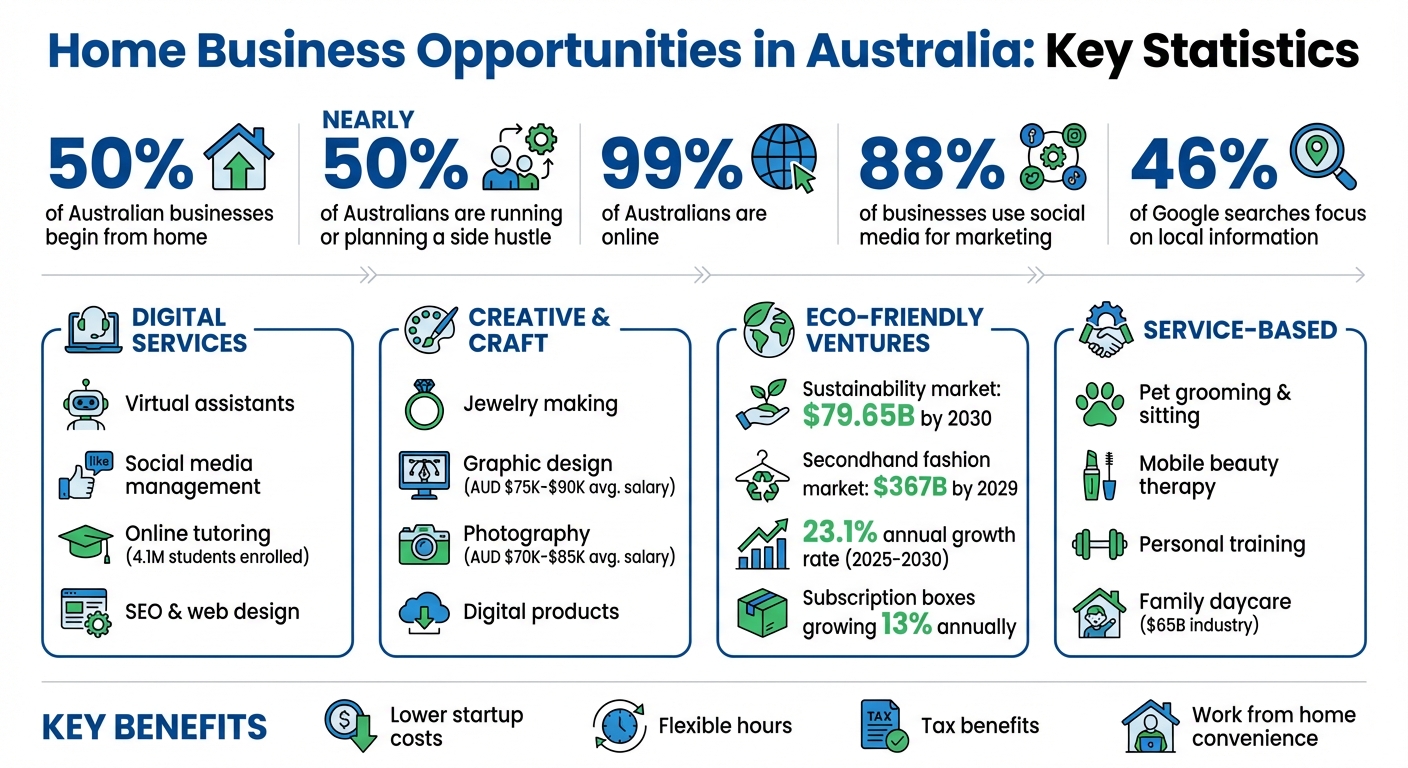
Nearly half of Australians are running or planning to start a side hustle, and 50% of businesses in the country begin from home. The appeal? Lower costs, flexible hours, and tax benefits. From digital services to eco-friendly ventures, Australia's market is primed for home entrepreneurs.
Key Opportunities:
- Digital Services: Virtual assistants, social media management, SEO, and online tutoring.
- Craft-Based Ventures: Handmade jewelry, candles, graphic design, and furniture upcycling.
- Eco-Friendly Businesses: Subscription boxes, secondhand fashion resale, and zero-waste products.
- Service-Based Ideas: Pet grooming, mobile beauty therapy, and personal training.
With strong internet infrastructure and rising demand for local and sustainable solutions, starting small from home can lead to big results. Explore the full list for inspiration tailored to your skills and interests.
Home Business Statistics and Opportunities in Australia 2024
25 Easy Side Hustle / Business Ideas to Make Money in Australia in 2025
1. Digital Services
Australia offers fertile ground for digital services, thanks to low startup costs and excellent internet infrastructure. With 99% of Australians online and 88% of businesses leveraging social media for marketing, the demand for skilled digital professionals is on a steady rise. Here are some digital service ideas that align well with the Australian market:
Virtual Assistant Services
As remote work becomes the norm, virtual assistants are in high demand. Services like email management, scheduling, and basic bookkeeping are particularly appealing to busy entrepreneurs and small businesses accustomed to remote operations.
Social Media Management
With 88% of Australian businesses active on social media, there’s a growing need for professionals who can manage platforms effectively. This includes creating engaging content, responding to audience interactions, and monitoring performance metrics.
Online Tutoring
The education sector in Australia is massive, with over 4.1 million students enrolled in schools as of 2024. Whether teaching English, STEM subjects, music, or specialized skills, you can offer lessons via video calls or create tailored lesson packs for students.
SEO & Search Marketing
With 46% of Google searches focusing on local information, businesses need experts to optimize their content for local audiences. By enhancing visibility in search results, you can help companies attract more local customers.
Web Design & Development
As businesses demand mobile-friendly and responsive websites, web design remains a critical service. The global web design industry is expected to grow from $49.93 billion in 2024 to $112.59 billion by 2032. Focus on building sites that not only look great but also convert visitors into paying customers.
Freelance Writing & Copywriting
Producing blog posts, marketing copy, and articles can be a lucrative venture. In Australia, freelance writers earn an average annual salary of $48,000, with higher rates for those specializing in niches like digital marketing and e-commerce.
Bookkeeping & Financial Consulting
Using cloud platforms like Xero or MYOB, you can manage financial records remotely. With average bookkeeper salaries around $44,000, you can increase your income by offering specialized services such as Single Touch Payroll compliance.
Online Coaching & Consultancy
If you have expertise in a particular field, you can monetize it through video consultations and digital resources. Whether it’s executive coaching, business strategy, or industry-specific consulting, digital platforms make it easy to connect with clients.
UI/UX Design
Businesses are increasingly aware that great design impacts customer satisfaction and conversion rates. Specializing in user interface and experience design for apps and websites can command premium fees.
These digital services not only cater to the growing demand but also provide opportunities for professionals to carve out successful careers in the Australian market. The combination of a tech-savvy population and a strong online presence makes this sector incredibly promising.
2. Creative and Craft-Based Businesses
Australia’s craft market is thriving, fueled by a growing appetite for handmade, one-of-a-kind products. The global secondhand market is projected to hit $367 billion by 2029, reflecting a rising interest in sustainable and distinctive goods. Platforms like Instagram and Etsy have capitalized on these trends, creating ideal spaces for creative entrepreneurs to showcase their work. From jewelry to custom clothing, opportunities abound for blending artistic passion with smart business strategies.
Jewelry Making
Jewelry making is a fantastic home business with low startup costs and strong demand. Platforms like Instagram and Etsy are perfect for showcasing handcrafted designs, where eye-catching visuals can drive sales. By focusing on unique and appealing pieces, you can attract buyers looking for something special [5, 15].
Candle Branding
Scented, hand-poured candles are incredibly popular in Australia. Take inspiration from Tamara Mayne, who launched Brooklyn Candle Studio from her home and gained recognition with her travel-inspired scents. To succeed in this niche, invest in visually appealing branding and packaging that resonates with your audience.
Freelance Graphic Design
There’s always a need for logos, marketing materials, and social media content, making graphic design a lucrative option. Freelance graphic designers in Australia typically earn between AUD $75,000 and $90,000 annually. Building a strong portfolio and targeting specific industries can help you stand out and command higher rates [4, 6].
Photography
Photography offers various niches, including weddings, products, pets, and stock photography. Australian photographers earn between AUD $70,000 and $85,000 per year. To attract clients, invest in quality equipment and create a compelling portfolio. Leveraging local business directories can also help expand your reach.
Handmade Soaps and Bath Bombs
Soaps and bath bombs are high-margin products that often cost little to produce. Lauren Haynes, founder of Wooden Spoon Herbs, started in her kitchen with plant-based tinctures and teas made using traditional methods. Her business later evolved into an online store that even uses AI tools to personalize herbal recommendations for customers.
Furniture Upcycling
Restoring and reselling old furniture is a creative and eco-conscious business idea. Platforms like Facebook Marketplace make it easy to connect with buyers who value sustainable options. This trend aligns with Australia’s growing focus on environmentally friendly consumption [5, 15].
Digital Products
Selling digital goods like templates, e-books, or patterns is a smart way to earn passive income without the hassle of managing inventory. Genna Tatu, founder of Crochet by Genna, highlights the importance of this model:
"They [digital patterns] are passive income, a crucial element for sustained passive income."
Pottery and Ceramics
Handmade pottery, such as planters and kitchenware, appeals to buyers looking for unique home decor. Walter and Margaux Kent, founders of Peg and Awl, began by creating items from reclaimed materials in their home workshop. Today, their brand offers a wide range of handmade goods, from journals to home decor, through a successful online store.
Custom Apparel and Print-on-Demand
Print-on-demand services allow you to launch your own fashion line without upfront risks. These platforms take care of production and shipping, ensuring you only pay for what you sell. This approach eliminates the worry of unsold inventory [15, 19].
These craft-based ventures combine creativity with business savvy, offering countless ways to turn hobbies into profitable, home-based businesses. Whether you’re drawn to handmade goods or digital creations, the opportunities are as diverse as they are rewarding.
sbb-itb-08dd11e
3. Sustainable and Eco-Friendly Ventures
Australia's thriving economy and the increasing demand for environmentally conscious products make this a great time to dive into eco-friendly home-based businesses. Globally, the sustainability market is projected to reach $79.65 billion by 2030, growing at an impressive 23.1% annually from 2025 to 2030. With 88% of Australian businesses already leveraging social media for marketing, promoting eco-friendly brands has never been easier. Here are some eco-conscious business ideas tailored for Australian entrepreneurs working from home.
Eco-Friendly Subscription Boxes
Imagine delivering curated monthly boxes filled with organic skincare or sustainable household items. Subscription boxes are on track to grow by 13% annually from 2025 to 2033, offering a dependable income stream. To stand out, focus on plastic-free packaging and collaborate with Australian suppliers to source bulk products, cutting down on single-use plastics.
Sustainable Home Cleaning
Offer green cleaning services for residential spaces using non-toxic, biodegradable products. This eco-friendly approach not only supports the environment but also attracts customers who value sustainability. Optimize your local SEO strategy - since nearly half of Google searches are for local information, this can significantly boost your visibility and customer base.
Zero-Waste Online Retail
Set up an online store specializing in reusable alternatives and bulk essentials. Platforms like Shopify or Etsy make it easy to launch without the need for a physical storefront, keeping costs manageable. Look for ethical suppliers like DoneGood or Thrive Market, which provide fair-trade and organic products, to stock your inventory.
Secondhand Fashion Resale
Tap into the growing secondhand fashion market, which is expected to hit $367 billion globally by 2029. Source high-quality vintage clothing or upcycled pieces and sell them through platforms like Instagram or Facebook Marketplace. You can also repurpose "deadstock" fabrics from manufacturers to create one-of-a-kind items.
Herbal Wellness Products
Create plant-based products like tinctures, teas, or skincare items using home-grown or locally sourced organic herbs. This aligns perfectly with the rising interest in natural wellness and non-toxic personal care. For an added eco-touch, package your products in biodegradable materials such as Bagasse paper, crafted from sugarcane waste fibers.
Eco-Conscious Car Detailing
Start a mobile car cleaning service that uses water-saving methods and biodegradable detergents. This low-cost business model appeals to eco-conscious car owners. If your annual revenue exceeds $75,000, make sure to register for GST and consider using accounting tools like Xero to track expenses and deductions.
Waste-to-Product Manufacturing
Turn recycled materials like plastic or glass into small household items such as coasters or planters. Source salvaged materials locally to keep expenses low. Before getting started, check with your local council to see if any environmental permits are needed, especially if your process involves handling significant waste or chemicals.
Sustainability Consulting
Help small businesses reduce their environmental footprint by offering sustainability consulting services. With minimal overhead, you can provide digital consultations from home. Considering that 64% of consumers are more likely to trust a brand they’ve had positive interactions with on social media, your expertise can help businesses build trust and credibility.
Zero-Waste Event Planning
Plan weddings or corporate events with an emphasis on reducing waste. Use locally sourced, seasonal materials and biodegradable supplies to create memorable, eco-friendly experiences. This niche blends creativity with a commitment to sustainability, attracting clients who prioritize environmentally responsible choices.
4. Service-Oriented Businesses
Stepping beyond the digital sphere, many home-based service businesses thrive on personalized interactions and building strong local connections. Here are a few ideas for service-oriented businesses you can run from home.
Pet Grooming and Sitting
With Australia's love for pets, offering mobile pet grooming or in-home pet care can be a winning idea. Whether it's traveling to clients' homes for grooming sessions or providing overnight sitting services, convenience is key. Just make sure to check with your local council about permits, especially if clients will be visiting your home frequently.
Mobile Beauty Therapy
Bring salon-quality treatments like facials, waxing, or nail care directly to clients. This setup is perfect for busy professionals or those organizing events. To safeguard your business, invest in both Public Liability and Professional Indemnity insurance to cover potential service-related risks.
Personal Training
Fitness coaching is another service that works well in flexible locations like clients’ homes, local parks, or even online. To get started, you'll need a fitness certification such as Cert III or IV in Fitness. Social media can be an excellent platform for sharing client success stories and building your reputation. As more people look for personalized and virtual wellness solutions, this field continues to grow.
Family Daycare
Running a licensed home daycare is a great way to address the ongoing demand for quality childcare, with the industry valued at over $65 billion. To operate legally, you'll need a Cert III in Early Childhood Education, a Working with Children Check, and compliance with strict health and safety regulations. Don’t forget to check local zoning laws with your council, as frequent parent drop-offs may require special permissions.
Conclusion
Running a home-based business in Australia comes with some great perks - flexibility, lower costs, and even tax deductions for business-related home expenses.
The 35 ideas we've covered here include everything from digital services to creative projects, eco-friendly initiatives, and service-based ventures. Each one taps into Australia's thriving market and the rising demand across various industries.
To make the most of these opportunities, take a close look at your skills, interests, and what your local market needs. Is there a gap you can fill? Can your pricing strategy keep your business profitable? These are the kinds of questions that can guide you toward the right choice. Remember, success takes effort, fresh ideas, and the ability to keep up with changing trends.
FAQs
What tax benefits can I get from running a home-based business in Australia?
Running a home-based business in Australia offers several tax perks that can help cut down your expenses. You might be able to claim part of your household costs - like rent, mortgage interest, electricity, heating, cooling, internet, phone bills, and even equipment depreciation - as long as they’re directly tied to your business activities. To take advantage of these deductions, it’s important to maintain accurate records and clearly separate personal and business expenses.
If you’ve set up a dedicated workspace in your home, you can also calculate deductions using a fixed-rate method based on the hours you work from home. For businesses registered for GST, there’s the added benefit of claiming input tax credits on the GST paid for eligible purchases. And when it’s time to sell your home, you might qualify for small-business CGT concessions to reduce potential capital gains tax - provided you meet the necessary criteria. These tax incentives make running a home-based business not only cost-effective but also manageable under Australia’s tax laws.
What are the best ways to promote my home-based business on social media?
To promote your home-based business on social media, start by focusing on 2–3 platforms where your audience is most active - think Facebook, Instagram, or TikTok. Make sure your profiles look polished and professional by using consistent branding, like the same logo, colors, and tone, across all platforms. This helps people instantly recognize your business.
Next, outline a simple content plan. Include a mix of posts, such as helpful tips, behind-the-scenes glimpses, customer testimonials, and occasional promotions. To save time, use scheduling tools to plan posts in advance, but don’t forget to stay active by replying to comments and messages quickly. Encourage followers to share their own content featuring your products or services, and consider testing out low-cost paid ads to reach a wider audience.
Keep an eye on metrics like likes, shares, and conversions to see what’s working. Use this data to adjust your approach, double down on successful content, and ensure your business stays in front of potential customers.
What permits do I need to start a service-based business from home?
To legally operate a service-based business from your home, there are a few essential steps to follow. Start by contacting your local government or zoning office to confirm that your business activities align with local zoning laws. In many cases, you’ll need a "home occupation" permit, which ensures your business won’t interfere with the residential nature of your neighborhood.
If your business involves clients visiting your home, outdoor signage, or changes to your property, you might also be required to obtain a special use or development permit. Additionally, certain industries - like healthcare, childcare, or food services - may require specific licenses to meet regulatory standards.
Lastly, it’s wise to look into liability insurance to safeguard yourself against potential risks, such as accidents involving clients on your property. Taking these precautions helps ensure your home-based business runs smoothly, legally, and respectfully within your community.
Related Blog Posts
 Report an issue
Get the newest tips and tricks of starting your business!