Starting a business without a physical storefront in Australia is easier than ever. Thanks to low startup costs, supportive regulations, and growing demand for home-based and mobile services, you can launch many ventures with as little as $1,500. Here’s a quick breakdown of opportunities:
- Remote Services: Virtual assistants, social media management, SEO, online tutoring, and AI workflow consulting.
- Online Sales: Digital products, niche subscription boxes, print-on-demand merchandise, personalized goods, and eco-friendly items.
- Creative Professions: Freelance writing, graphic design, online courses, podcast production, and plant styling.
- Mobile Services: Pet grooming, car detailing, massage therapy, tech support, and coffee vans.
With flexible work-from-home laws and a booming e-commerce market (projected to surpass $80 billion in 2026), now is a great time to explore these options. Just ensure you register for an ABN, comply with local regulations, and check your insurance coverage for business activities.
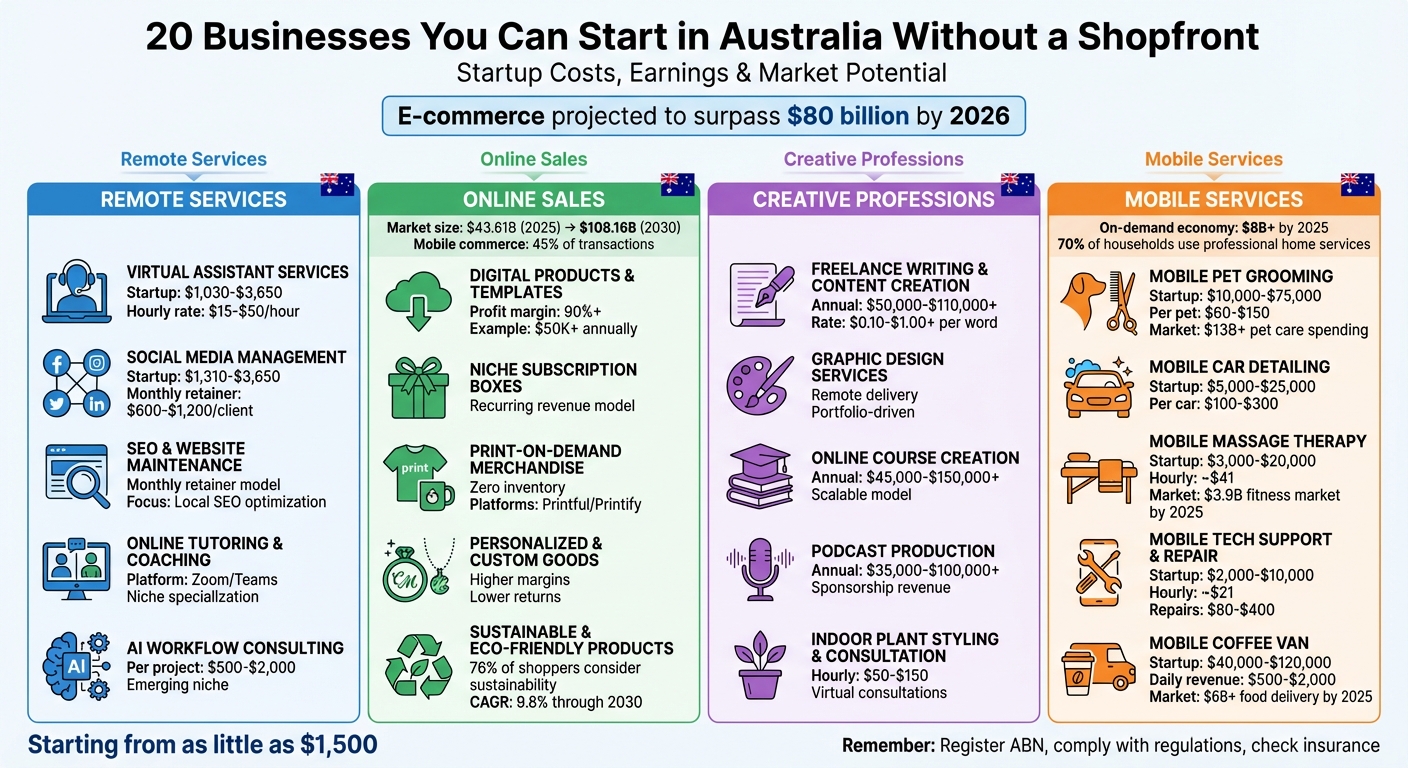
20 No-Shopfront Business Ideas in Australia: Startup Costs and Earnings Comparison
How To Start an Online Business With ZERO Inventory
sbb-itb-08dd11e
1. Remote Services
Remote services require only basic tech equipment, which means lower setup costs for businesses starting out. Australian providers in this space enjoy an advantage over offshore competitors due to their alignment with local time zones, familiarity with domestic markets, and understanding of regulations like GST and the Spam Act 2003. Many of these businesses rely on recurring revenue through monthly retainers, offering a steady and predictable income stream. Below are some examples of remote services that make the most of these benefits.
With the growing demand for flexibility, many remote providers now offer tailored service packages - such as Basic, Standard, and Premium tiers - to clearly communicate value and simplify the sales process.
1. Virtual Assistant Services
Virtual assistants provide remote administrative support, including tasks like managing emails, scheduling, and handling customer service for local businesses. Entry-level virtual assistants typically earn $15–$25 per hour, while those with specialized skills can charge $25–$50 per hour. Startup costs range from $1,030 to $3,650. There’s especially high demand for virtual assistants who cater to tradespeople, assisting with tasks like quoting, scheduling, and general admin work. This model benefits from Australia’s regulatory environment, which is supportive of home-based businesses.
2. Social Media Management
Social media managers help local businesses by creating and managing their online presence. Many use AI-generated content that is then fine-tuned for a human touch. Monthly retainers for these services typically range from $600 to $1,200 per client, with startup costs between $1,310 and $3,650. Small businesses are increasingly turning to boutique studios for personalized service instead of relying on larger agencies. This approach not only keeps overhead low but also leverages a deeper understanding of the local market.
3. SEO & Website Maintenance
This service involves maintaining websites, optimizing them for search engines, and performing regular updates, often on a monthly retainer. Using Australian-based hosting and .au domains ensures better local performance. Adding local SEO services - like targeting geo-specific keywords such as "SEO services Brisbane" - can attract clients looking for expertise within their region. Tools like SEMrush and Ahrefs are essential for competitive analysis in this field. The focus on local market knowledge and regulatory familiarity makes this service particularly appealing to Australian businesses.
4. Online Tutoring & Coaching
Online tutoring and coaching sessions are conducted through platforms like Zoom or Microsoft Teams, allowing providers to reach clients regardless of location. Specializing in niche areas, such as career counseling or specific academic subjects, can help providers differentiate themselves in a crowded market. By operating entirely online, this model eliminates the need for physical office space while maintaining a professional image.
5. AI Workflow Consulting
AI workflow consultants assist local businesses in automating processes, especially those without in-house technical expertise. This emerging niche allows consultants to charge between $500 and $2,000 per project. Popular tools like Mailchimp, ActiveCampaign, and MainWP are often used to deliver these services. As The Business Times notes:
"Start lean. Stay local. Grow fast. These are the Australian small businesses shaping 2026".
This service thrives on low overhead costs while addressing specific needs of local businesses, making it a rapidly growing field.
2. Online Sales
Online sales in Australia are projected to leap from $43.61 billion in 2025 to $108.16 billion by 2030, with over 80% of Australians shopping online. The appeal? Lower overhead costs - no rent, no in-store staff, and the ability to reach customers nationwide. Plus, with mobile commerce making up 45% of total e-commerce transactions, optimizing for mobile browsing is a must.
Platforms like Shopify or Etsy, along with social commerce tools like TikTok Shop, offer cost-effective ways to test the waters. Securing a .au domain can also enhance local credibility. Many businesses partner with third-party logistics (3PL) providers to handle shipping across the country's vast distances, eliminating the need for their own warehouses. These factors make online sales an attractive option for various business models, some of which are outlined below.
Digital Products & Templates
Selling digital products - like resume templates, Canva kits, or Notion planners - can offer profit margins of over 90%, as there's no inventory, shipping, or storage to worry about. For instance, aerial art coach Allie Cooper earned $4,000 in her first week and now makes more than $50,000 annually with just 50+ subscribers.
Niche Subscription Boxes
Subscription boxes, such as zero-waste kits or seasonal gift bundles, provide steady recurring revenue and simplify inventory management. Daily Blooms, an Australian floral company, has found success with its subscription service, delivering fresh bouquets fortnightly or monthly in major cities. This model works well for specialized interests - like pet care or eco-friendly products - encouraging customer loyalty and smoothing cash flow.
Print-on-Demand Merchandise
Using platforms like Printful or Printify with Shopify allows you to sell custom products - like t-shirts, mugs, or art prints - without maintaining inventory. Items are created only after an order is placed, cutting upfront costs and storage needs. This setup is especially appealing for artists and creators, as it reduces the risk of unsold stock.
Personalized & Custom Goods
Custom items, such as bespoke jewelry or personalized gifts, tend to have higher margins and fewer returns. StyleRocks, an Australian company, lets customers design one-of-a-kind jewelry and even offers 3D-printed ring prototypes for trials. As Appinventiv explains:
"Trying to sell to everyone usually means you end up selling to no one. Niche stores work because they solve specific problems for specific people".
Sustainable & Eco-Friendly Products
With 76% of Australian shoppers factoring sustainability into their purchasing decisions, eco-friendly products like zero-waste kits, ethical clothing, and plastic-free household items are in high demand. Items like bamboo toothbrushes or reusable food wraps attract environmentally conscious buyers willing to spend more. The rise of circular commerce - reselling or repairing items - also supports growth in this space.
3. Creative Professions
Creative professions offer the chance to work flexibly with minimal overhead, often requiring just a computer, internet connection, and essential software. In Australia, the growing acceptance of remote work has made these professions even more viable, allowing individuals to earn competitive incomes without needing a physical storefront. These opportunities align well with other remote business models, relying on digital tools to reach local audiences effectively.
Freelance Writing & Content Creation
Freelance writing is a lucrative option, with Australian writers earning between $50,000 and $110,000+ annually. Beginners typically start at around $0.10 per word, while seasoned professionals can command rates exceeding $1.00 per word. Popular niches include wellness, technology, and SEO-driven content for e-commerce. Tools like Grammarly and ChatGPT can simplify the writing process, and platforms such as Medium or LinkedIn serve as excellent spaces to showcase your portfolio when pitching to clients.
Graphic Design Services
Graphic design remains a popular choice for home-based creative work. Designers craft logos, branding materials, and digital assets, all of which can be done remotely. A strong visual portfolio on platforms like Instagram or Pinterest is key to attracting clients. Additionally, tools like Canva provide cost-effective solutions for maintaining professional standards without requiring significant investment, making this an accessible option for many.
Online Course Creation
Transforming expertise into digital courses is another scalable option, with potential earnings ranging from $45,000 to $150,000+ annually. Once created, courses can be sold repeatedly without incurring additional production costs. Tools like LearnDash, a WordPress plugin, make it easy to build and sell courses directly from your website.
Podcast Production
Podcast production offers a creative outlet with earning potential between $35,000 and $100,000+ annually, depending on audience size and sponsorship deals. The growing demand for on-demand audio content opens doors for storytellers and audio editors. Focusing on niche topics, such as true crime or business interviews, can help attract loyal listeners and lucrative sponsorship opportunities.
Indoor Plant Styling & Consultation
The biophilic design trend has spurred demand for plant stylists, who offer virtual consultations on plant care, placement, and selection. These consultations are typically conducted via video calls, with stylists charging $50–$150 per hour. By tailoring recommendations to factors like lighting, maintenance preferences, and aesthetic goals, plant stylists help clients enhance their spaces with greenery from the comfort of their own homes.
4. Mobile Services
Mobile businesses bring services straight to customers, cutting out the need for a permanent storefront and keeping startup costs relatively low. In Australia, the on-demand economy was projected to exceed $8 billion by 2025, with around 70% of households using professional help for at least one home service annually. Operating a mobile business can be as simple as using a vehicle, trailer, or traveling with equipment to serve clients. Here are some examples of mobile service opportunities.
Mobile Pet Grooming
With over 60% of Australian households owning pets and annual spending on pet care surpassing $13 billion, mobile pet grooming is a promising venture. Startup costs typically range from Startup costs typically range from $10,000 to $75,0000,000 to $75,000, and service fees are set between $60 and $150 per pet. Many groomers build loyal client bases by offering convenient at-home services, often partnering with apartment complexes or setting up near local parks to attract busy pet owners.
Mobile Car Detailing
Mobile car detailing offers another affordable business option. Initial investments usually fall between $5,000 and $25,000, covering equipment, cleaning supplies, and a reliable vehicle. Detailers charge $100 to $300 per car, focusing on corporate parking lots or residential areas to establish steady clientele. Expansion opportunities include hiring staff or broadening service areas. Just be sure to follow local rules for proper water disposal.
Mobile Massage Therapy
Entering the wellness market is easier with mobile massage therapy. Startup costs range from $3,000 to $20,000, covering essentials like a portable massage table, oils, and marketing materials. Therapists earn an average of about $41 per hour. With the Australian fitness market projected to hit $3.9 billion by 2025, there’s strong demand for at-home wellness services. Partnering with coworking spaces or gyms can also help secure regular bookings.
Mobile Tech Support & Repair
Mobile tech support services cater to individuals and small businesses needing on-site help with computers, smartphones, and networks. Startup costs are relatively low - between $2,000 and $10,000 for diagnostic tools, software licenses, and transportation. Technicians earn about $21 per hour, though specialized services like data recovery and network setups can bring in higher rates. Mobile phone screen repairs typically cost $80 to $200, while other small jobs range from $200 to $400. Many providers focus on smaller tasks that larger companies often neglect, carving out a niche in the market.
Mobile Coffee Van
Coffee vans are a favorite for entrepreneurs looking to serve beverages at events, markets, or busy commuter hubs. Startup costs range from $40,000 to $120,000, depending on whether you choose a used van or a custom-built one. Successful coffee vans can earn daily revenues of $500 to $2,000. With Australia’s online food delivery market set to surpass $6 billion by 2025, there’s clear demand for convenient food and drink options. Starting with pop-up stalls or temporary setups can help test the waters before committing to a full-scale launch.
Conclusion
Starting a business without a physical storefront in Australia is not just possible - it’s an attractive option. Opportunities abound in areas like remote services, online sales, creative ventures, and mobile businesses. These models come with lower overhead costs, more flexibility, and solid profit potential. With Australia’s eCommerce industry projected to surpass $80 billion in online sales by 2026 and the digital economy expanding rapidly, there’s no better time to take the leap.
However, before diving in, it’s critical to validate your business idea with real-world data. Platforms like IdeaFloat can help you gauge market demand and refine your strategy before making significant investments. As Sharon Kenny, Head of Marketing at BizCover, aptly says:
"In a time when economic challenges and rising costs are making it harder than ever for small businesses to thrive, it's inspiring to see that some industries are continuing to adapt and grow".
Learn how to plan and launch your business through thorough preparation and research. Once your concept is validated, make sure your operations comply with local regulations. This includes registering with ASIC, obtaining an ABN, and meeting tax and employment requirements. Don’t forget to check that your insurance policy covers home-based or mobile business activities, especially as superannuation contributions are set to increase to 12% by 2025–26.
Focusing on high-growth niches is another key to success. Consider sectors like pet tech, sustainable products, or specialized tutoring. For instance, the sustainable products market in Australia is expected to grow at a CAGR of 9.8% through 2030, while the NDIS continues to drive demand in aged and disability care, supporting over 640,000 participants. By 2026, businesses that combine eco-friendly design with digital convenience and hyper-personalization are likely to lead the pack.
With a validated idea and a strong market fit, Australia’s entrepreneurial ecosystem provides the perfect platform to launch your business.
FAQs
Do I need an ABN for a home-based or mobile business?
Yes, you'll need an ABN (Australian Business Number) to legally run a home-based or mobile business in Australia. Having an ABN is crucial for things like registering your business name, issuing invoices to clients, and ensuring you comply with tax requirements.
What insurance do I need if I work from home or travel to clients?
When you work from home or travel to meet clients, it's a good idea to look into professional liability insurance. This type of coverage helps protect you against claims tied to your services. If clients visit your home office or you often work in public spaces, general liability insurance can safeguard you from potential accidents or damages.
For those who travel frequently, equipment insurance is worth considering. It can help protect your devices, like laptops or cameras, from loss or damage while on the go. Be sure to consult with local insurance providers to tailor your coverage to your specific needs.
How do I validate demand before I spend money on a new business idea?
To ensure your business idea has real potential, start by researching your target market. Identify who your potential customers are and measure their interest in your product or service. You can use tools like surveys, landing pages, or even run small pilot programs to collect genuine feedback and data. This method helps you confirm there’s a demand, avoid relying on guesses, and minimize risks before putting in significant time or money.
Related Blog Posts
 Report an issue
Get the newest tips and tricks of starting your business!