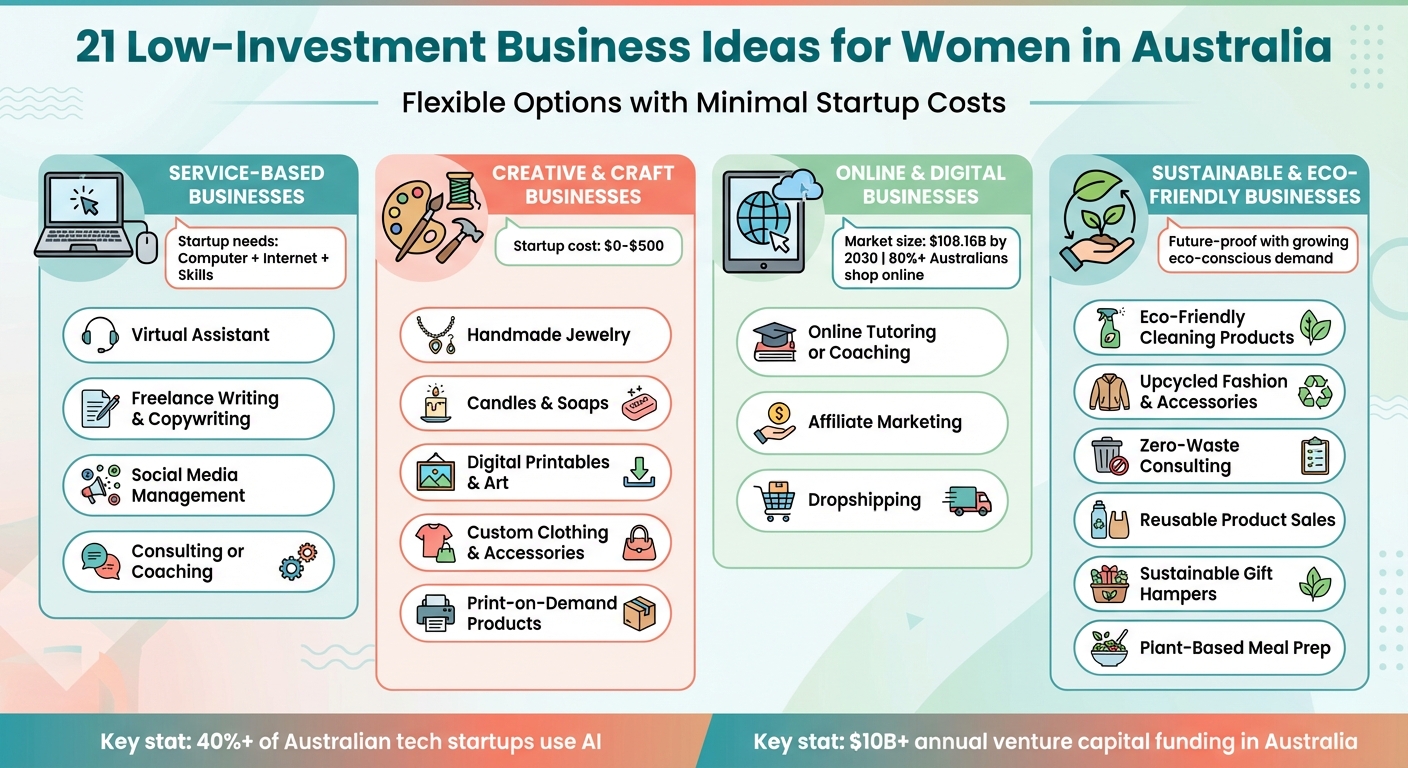
Starting a business doesn’t have to cost a fortune. This article highlights 21 low-investment business ideas tailored for women in Australia, focusing on flexible options that align with various skills and lifestyles. Whether you're interested in service-based work, selling handmade products, or launching an online venture, these ideas are designed to minimize startup costs while offering growth potential. Here’s a quick look:
- Service-Based Options: Virtual assistance, freelance writing, social media management, and consulting.
- Handmade Products: Jewelry, candles, soaps, digital printables, or custom clothing.
- Online Businesses: Tutoring, affiliate marketing, and dropshipping.
- Eco-Friendly Ideas: Natural cleaning products, upcycled fashion, zero-waste consulting, and more.
Australia’s tech-savvy market and growing demand for sustainable solutions make it easier than ever to start small and expand over time. Whether you’re leveraging existing skills or exploring new opportunities, there’s something here for everyone.
21 Low-Investment Business Ideas for Women in Australia by Category
10 small business ideas Women can start under $100
1. Service-Based Businesses
Starting a service-based business is a smart way to keep costs low while making the most of your skills and technology. All you really need is a computer, an internet connection, and your expertise - no need to worry about stocking up on inventory or buying expensive equipment. Here are four ideas to get you started:
Virtual Assistant services are a great option if you're organized and tech-savvy. You can offer remote support to clients by managing emails, scheduling appointments, handling data entry, or even providing customer service. With just basic tools and software, you can run your business from anywhere.
Another idea is Freelance Writing and Copywriting, where you create content like articles, blog posts, marketing materials, or website copy. If you have a knack for writing and can adapt your tone to fit different brands, this could be a perfect fit.
If social media is more your thing, consider Social Media Management. Businesses are always looking for help to grow their presence on platforms like Instagram, Facebook, and LinkedIn. To succeed, you'll need a good understanding of what makes content stand out and how to engage audiences effectively.
Finally, Consulting or Coaching lets you share your expertise in areas like business strategy, career development, health, or personal finance. If you're knowledgeable and enjoy helping others, this could be a rewarding choice. With video calls, you can connect with clients far and wide, all while keeping your expenses low.
2. Creative and Craft Businesses
If you're someone who loves crafting or has a knack for creativity, there’s a real opportunity to turn your passion into a business. The appetite for handmade, personalized, and one-of-a-kind products is still thriving in 2025. What’s even better? You can often start with a small budget - typically between $100 and $500 for physical goods. Plus, running your business from home makes it easier to juggle work and personal responsibilities.
One popular avenue is Handmade Jewelry. With some basic tools and materials, you can create custom earrings, necklaces, or bracelets. Platforms like Etsy or local craft fairs are great places to showcase and sell your work.
Another option is crafting Candles and Soaps. With a few essential supplies and simple packaging, you can create products that are always in demand.
For those with a flair for design, Digital Printables and Art is a low-cost option. All you need is a computer and design software like Canva (which has free features), Adobe Illustrator, or Photoshop. You can design planners, wall art, or templates and sell them on platforms like Etsy or your own Shopify store. Startup costs for this type of business can be as low as $0 to $150.
If sewing or fashion design is your thing, Custom Clothing and Accessories might be a perfect fit. Create unique pieces and use social media platforms like Instagram or TikTok to connect with customers who want something distinct.
Finally, there’s Print-on-Demand Products, such as custom t-shirts or mugs. With access to print-on-demand services, you don’t need to worry about inventory. Just focus on creating designs using software, and the service will handle production and shipping for you.
These creative businesses let you turn your skills into income while keeping overhead costs low. They’re a great complement to service-based ventures, giving you flexibility and room to grow.
sbb-itb-08dd11e
3. Online and Digital Businesses
Digital businesses offer the chance to run a venture with nothing more than a laptop and a Wi-Fi connection - no need for a physical storefront or a full staff. With Australia's e-commerce market expected to reach $108.16 billion by 2030 and over 80% of Australians shopping online regularly, the opportunities in this space are immense. Plus, operating online means you can connect with customers far beyond your local area.
The digital world also opens up creative ways to turn your expertise into income.
Online Tutoring or Coaching is a great way to share your knowledge, whether it’s in academic subjects, fitness, or business skills. Tools like Zoom make it simple to work with clients from anywhere, giving you the flexibility to set your own rates and schedule.
Affiliate Marketing lets you earn commissions by promoting products you genuinely believe in. Start a blog, YouTube channel, or social media account focused on a niche you’re passionate about. From there, you can partner with brands through affiliate programs to reach a national - or even global - audience.
Another option is Dropshipping, a model that allows you to sell products without keeping inventory. Platforms like Shopify and WooCommerce make it easy to set up an online store. When a customer places an order, the supplier ships the product directly to them. This means you can focus on marketing and customer service while keeping costs low and reaching customers far and wide.
4. Sustainable and Eco-Friendly Businesses
Sustainable ventures are stepping into the spotlight, combining ethical practices with cost-effective strategies to meet the growing demand for eco-conscious solutions. For Australians, who are becoming increasingly aware of their environmental impact, this shift opens the door for businesses that align with personal values while catering to a growing market.
Not only do sustainable businesses address consumer demand, but they also offer a degree of future-proofing. With regulations tightening around packaging, shipping, and production practices, businesses built on eco-friendly principles are better positioned to adapt and thrive. The best part? You can create a profitable business while contributing to a greener planet.
Here are some ideas to get started:
- Eco-Friendly Cleaning Products: Create and sell natural cleaning solutions using simple, everyday ingredients. Start small by offering your products at local markets or through social media. As your brand gains traction, you can expand to wholesale accounts with cafes, offices, or other businesses.
- Upcycled Fashion and Accessories: Transform secondhand clothing and materials into one-of-a-kind pieces. With just some creativity and basic sewing supplies, you can repurpose thrift-store finds into unique garments or accessories that appeal to eco-conscious shoppers.
- Zero-Waste Consulting: Help households and small businesses reduce their environmental footprint. Offer audits, develop customized waste reduction plans, and guide clients toward sustainable swaps. This type of business allows you to share your expertise without needing to manage inventory.
- Reusable Product Sales: Sell eco-friendly items like cloth bags, beeswax wraps, or stainless steel straws. You can either craft these products yourself or source them from ethical suppliers. Online platforms or local markets are great avenues for selling these items.
- Sustainable Gift Hampers: Curate gift boxes filled with eco-friendly products for corporate clients or special occasions. By partnering with local sustainable brands, you can keep startup costs low while supporting other green businesses.
- Plant-Based Meal Prep: Tap into the growing demand for sustainable eating by preparing and delivering plant-based meals. Using local ingredients, you can start small from your kitchen (with the necessary certifications) and scale up as your customer base grows.
These ideas not only reflect a shift toward responsible entrepreneurship but also offer practical ways to align business goals with environmental values.
Conclusion
These low-cost business ideas offer women in Australia the chance to create flexible and manageable ventures. Starting a business with minimal investment often requires just a laptop, a phone, and a strong sense of determination. The trick is to find an opportunity that matches your skills, passions, and what the market is currently looking for.
Before you dive in, take the time to research. Understand your target audience, study your competitors, and pinpoint what makes your offering stand out. Platforms like Etsy, Instagram, or even local markets are great places to test your idea and gauge interest through pre-sales.
Once you've established your foundation, remember that the business world changes quickly. This is especially true in digital and tech-driven industries, where over 40% of Australian tech startups are already incorporating AI into their operations. To stay ahead, keep an eye on industry trends, learn new skills, and adapt to shifting customer needs.
Starting and running a business isn't without its challenges. You’ll likely face uneven workloads and tight deadlines. As niche business expert Lynda Falkenstein points out, successful ventures align with a clear long-term vision, solve real customer problems, plan strategically, and grow by diversifying revenue streams while maintaining a strong core focus.
Whether you’re drawn to a service-based business, a creative outlet, an online opportunity, or a sustainable initiative, you’re stepping into an ecosystem that champions entrepreneurship and values fresh ideas. With annual venture capital funding in Australia now exceeding $10 billion and a growing emphasis on sustainable innovation, the opportunities are vast. Take that first step, stay adaptable, and see where the journey takes you.
FAQs
What are the main advantages of starting a low-cost business in Australia?
Starting a low-cost business in Australia comes with plenty of perks. For one, it lets you dive into ventures that match your skills and passions without needing a hefty upfront investment. This approach helps you keep financial risks low while giving you the breathing room to concentrate on building and expanding your business.
A lot of budget-friendly businesses - especially in the digital space - need little more than a laptop and an internet connection. There’s no need for a physical store or a big team, which makes these kinds of businesses perfect for anyone looking for flexibility, whether that’s to achieve a better work-life balance or to start something on a tight budget.
How do I choose a business idea that matches my skills and passions?
Start by reflecting on what you’re good at, what you love doing, and the experiences that bring you joy or a sense of achievement. Consider how these strengths and interests could address a problem or fill a gap in the market. Once you have some ideas, dig into research - look into whether there’s demand for those services or products in your local area or online. This step is crucial to gauge whether your idea has room to grow and turn a profit.
As you narrow your focus, weigh practical factors like how much it will cost to get started, how much time you can realistically dedicate, and whether the idea can grow over time. Choose something that fits your goals, resources, and the way you want to live your life. This thoughtful approach will set you up with a business idea that’s both fulfilling and sustainable.
How can I make sure my business idea is environmentally sustainable?
Creating a business that cares for the environment starts with focusing on ways to cut waste and save resources. Simple steps like using recyclable materials or offering eco-friendly products and services can go a long way in reducing your impact on the planet.
You might also look into options like opening a zero-waste store, switching to sustainable packaging, or integrating energy-efficient tools into your daily operations. Even small adjustments, such as sourcing local and sustainable materials, can have a meaningful impact - and they’ll likely resonate with customers who value environmentally responsible choices.
Related Blog Posts
 Report an issue
Get the newest tips and tricks of starting your business!