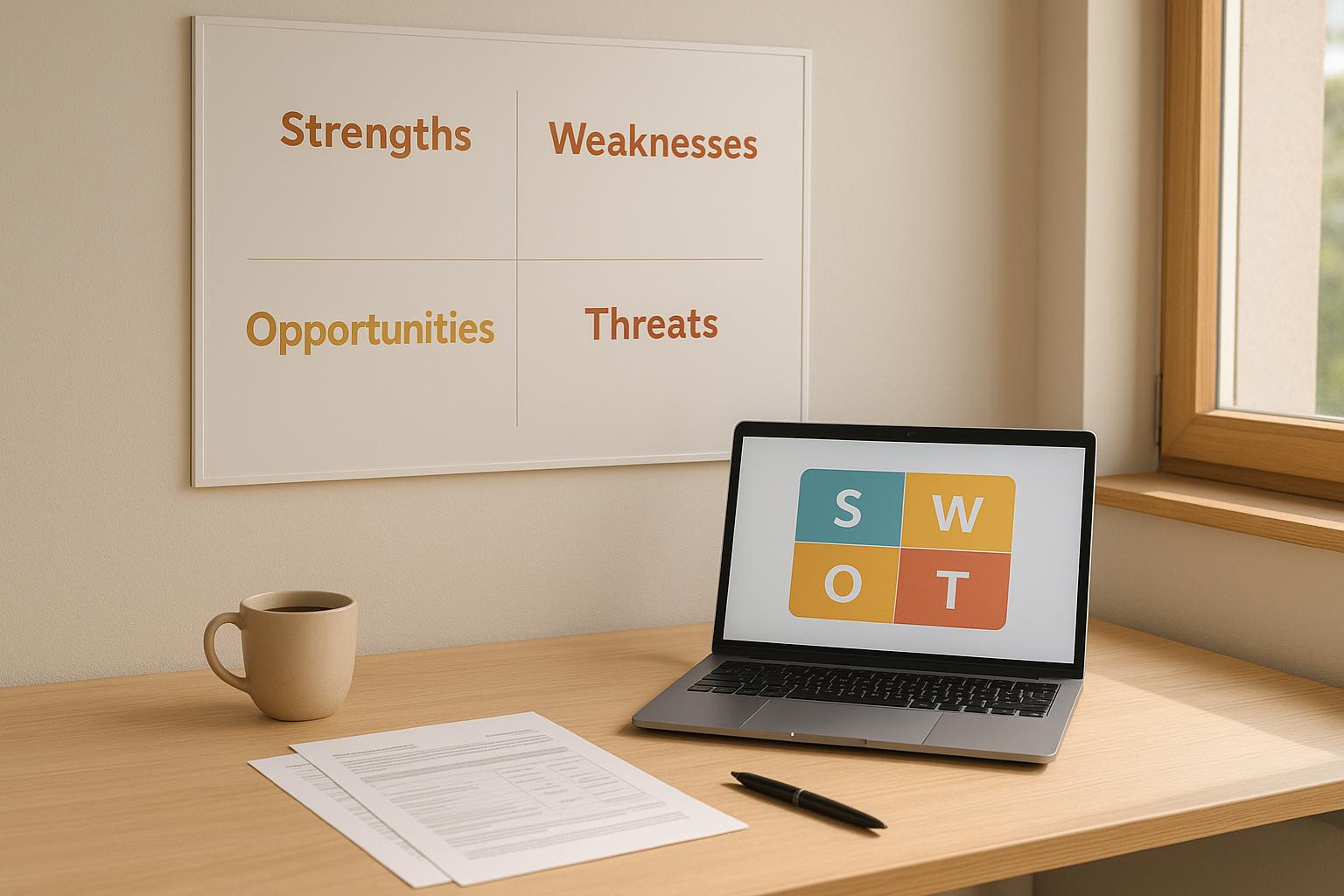
If you're a small business owner, a SWOT analysis is one of the simplest ways to evaluate your business and plan for growth. It helps you identify:
- Strengths (what you do well internally)
- Weaknesses (areas to improve internally)
- Opportunities (external factors that can benefit you)
- Threats (external risks to address)
This article provides examples of how businesses like digital agencies, bakeries, and fitness studios use SWOT analysis to make smarter decisions. It also includes free templates in Word, PowerPoint, and Google Sheets to help you get started. Whether you're managing inventory, improving customer service, or competing with larger companies, this tool can guide your decisions effectively.
Key takeaway: Use SWOT analysis to assess your current position, plan for challenges, and act on opportunities. Download the free templates to start today.
Conduct a SWOT Analysis for Your Small Business
1. Service-Based Businesses
Service-based businesses come with their own set of challenges when it comes to planning. Unlike product-based companies, the core assets here are expertise, time, and reputation. A SWOT analysis can help evaluate these intangible assets and give you a clearer picture of your position in the market.
Here’s how different types of service-based businesses use SWOT analysis effectively.
Digital Marketing Agency
Let’s look at how a small digital marketing agency might approach a SWOT analysis.
Strengths could include niche expertise, like advanced Google Ads certifications or a track record of successful e-commerce campaigns. On the flip side, weaknesses might involve limited staff capacity, making it tough to handle multiple large clients, or relying too heavily on a few key clients for revenue.
When it comes to opportunities, market trends like the growing need for social media management and website development can open new doors as small businesses move online. However, threats such as bigger agencies offering discounted packages or economic downturns shrinking marketing budgets can’t be ignored.
Independent Consulting Practice
Now, consider an independent business consultant.
Strengths here often revolve around deep industry expertise and strong client relationships. For example, 15 years of experience in the restaurant industry could be a major edge. Weaknesses, however, might include limited visibility due to relying mostly on word-of-mouth referrals.
Opportunities could lie in scaling up services, like offering online courses or group workshops, or teaming up with accountants or lawyers to provide bundled services. On the other hand, threats might include regulatory changes affecting clients’ industries or increased competition as former colleagues enter the consulting space.
Local Home Cleaning Service
A residential cleaning service has its own unique dynamics.
Strengths might include a loyal customer base, dependable staff, and an efficient scheduling system. But weaknesses could stem from high employee turnover, seasonal demand dips (like slower summers when families travel), or challenges in scaling without affecting service quality.
Opportunities could involve expanding the range of services - offering deep cleaning, home organization, or eco-friendly options that justify higher prices. Tapping into new markets, like Airbnb hosts needing quick turnaround cleanings, is another avenue. However, threats such as rising labor costs, competition from national franchises, or liability risks from property damage during cleanings are important to consider.
2. Product-Based Businesses
Product-based businesses, unlike service-driven ones, face unique challenges like managing production, inventory, supply chains, and logistics. A well-executed SWOT analysis can help clarify their market position and steer better decision-making.
Artisanal Bakery
Let’s take a local artisanal bakery as an example to see how a SWOT analysis can work effectively.
Strengths:
- The bakery is known for its high-quality, handmade cakes, which keep customers coming back for more.
- Their social media marketing has been a hit, building a large and engaged following.
- Located in a prime suburban spot near a busy train station, it benefits from heavy foot traffic during rush hour.
Weaknesses:
- Revenue fluctuates significantly between peak and off-peak times, making ROI inconsistent.
- There’s no e-commerce option, like click-and-collect, which limits convenience for customers.
- The kitchen relies on outdated equipment, increasing the risk of expensive repairs and potential delays in production.
sbb-itb-08dd11e
3. Retail and Local Businesses
Retail and local businesses face tough competition in today’s digital-first world. To stand out, they need to deliver excellent customer experiences and build strong community connections. A SWOT analysis can help these businesses identify what they’re doing well, where they need to improve, and how to navigate challenges. Below are examples of how different types of retail and local businesses use SWOT analysis to address their unique situations.
Independent Bookstore
Take the example of an independent bookstore that uses community-focused events to compete with online giants.
Strengths:
- Weekly author events and book clubs draw a loyal crowd and keep foot traffic steady.
- Staff members are avid readers who offer personalized book recommendations, creating an experience that online stores can’t replicate.
- Strong partnerships with local schools and libraries result in consistent bulk orders for educational books.
Weaknesses:
- Managing inventory manually leads to frequent stockouts of popular titles and overstock of slower sellers.
- The website doesn’t support online orders, which forces customers to check availability in person or by phone.
- The store’s lease costs $4,500 per month, adding significant financial pressure.
Opportunities:
- Offering educational workshops or writing classes could bring in extra revenue beyond book sales.
- Partnering with local coffee shops to add a café corner could increase customer dwell time and average purchase amounts.
- Launching a curated subscription box service could tap into the growing popularity of subscription-based products.
Threats:
- Online retailers offer steep discounts - up to 30-40% off list prices - that are hard to match without sacrificing profitability.
- Rising downtown lease costs could make it difficult to renew the store’s location.
- Younger readers are increasingly opting for e-books and audiobooks, reducing demand for physical books.
Local Fitness Studio
A boutique fitness studio shows how small businesses can leverage community ties to address challenges and grow.
Strengths:
- Offers unique classes like aerial yoga and HIIT that aren’t available at larger gyms in the area.
- Membership retention is strong at 78%, thanks to a close-knit community and strong relationships with instructors.
- Flexible class schedules accommodate both early risers and evening attendees.
Weaknesses:
- Limited class size (15 people) due to space constraints caps revenue during high-demand times.
- The studio relies heavily on one key instructor, whose departure could disrupt member loyalty.
- Monthly equipment maintenance costs of $800 cut into already thin profit margins.
Opportunities:
- Adding virtual class options could attract clients who travel often or prefer working out from home.
- Partnering with nearby office buildings for corporate wellness programs could provide steady revenue from group memberships.
- Selling branded merchandise and fitness accessories could generate additional income from loyal members.
Threats:
- Competition is growing, with three new fitness studios opening within a 2-mile radius in the past year.
- Economic uncertainty may lead customers to cut discretionary spending, with gym memberships often among the first to go.
- Rising insurance premiums - up 25% year-over-year - add financial strain due to liability concerns in the fitness industry.
Family-Owned Hardware Store
A third-generation hardware store demonstrates how traditional businesses can adapt to changing market dynamics while staying true to their roots.
Strengths:
- Decades in business have earned deep trust from the community, with contractors and homeowners valuing the staff’s expert advice.
- The store stocks specialty and vintage items that big-box retailers don’t carry.
- Same-day delivery within a 5-mile radius appeals to local contractors working under tight deadlines.
Weaknesses:
- The outdated point-of-sale system doesn’t integrate with inventory management, making stock tracking inefficient.
- Limited store hours (9:00 AM to 6:00 PM, Monday through Saturday) miss potential sales from evening and Sunday shoppers.
- The building needs costly repairs, including a $35,000 roof replacement and HVAC updates.
Opportunities:
- Hosting DIY workshops on weekends could attract younger homeowners and position the store as more than just a retailer.
- Building relationships with property management companies could lead to recurring orders for maintenance supplies.
- A loyalty program could formalize relationships with regular customers and encourage repeat visits.
Threats:
- Big-box stores just 3 miles away offer lower prices on common items like lumber and paint.
- Younger shoppers prefer researching products online, and the store’s minimal web presence puts it at a disadvantage.
- Supply chain disruptions have made it harder to keep products in stock, frustrating customers who expect availability.
4. Actionable Insights
Turn Your SWOT Analysis Into a Strategic Action Plan
Once you've outlined your SWOT analysis, the next step is putting those insights to work. Start by aligning your strengths with opportunities to create strategies that drive growth. For instance, if personalized customer service is one of your strengths and there's an opportunity to attract corporate clients, craft a targeted outreach campaign that emphasizes your standout service.
Address weaknesses proactively before they become larger problems. Set specific goals with clear deadlines for improvement. For example, if outdated technology is slowing down your operations and impacting sales, prioritize upgrading essential systems as soon as possible.
When dealing with threats, don't just identify them - prepare for them. For example, if rising lease costs are cutting into profits, consider options like renegotiating your lease, relocating to a more affordable space, or diversifying revenue streams to reduce dependency on one source. Having contingency plans in place ensures you're ready to adapt.
To stay on track, establish measurable goals and review your SWOT analysis quarterly. This helps you adjust strategies based on market changes and ensures your plan remains relevant.
Finally, involve your team in the process. Employees who interact with customers or handle daily operations often spot issues and opportunities that management might overlook. By collaborating with your team, you'll gain valuable insights and create a more comprehensive and effective action plan.
Conclusion
SWOT analysis is a powerful tool for small business owners looking to make smart, well-informed decisions. Whether you run a consulting business, sell handmade goods online, or manage a local retail store, evaluating your strengths, weaknesses, opportunities, and threats gives you a clear sense of where your business stands and where it could go.
The examples shared earlier highlight how adaptable SWOT analysis can be across different business types. While the framework remains consistent, the insights you uncover are unique to your specific situation. This flexibility allows businesses to tackle challenges and capitalize on opportunities in ways that align with their goals.
The real impact of SWOT analysis comes from turning insights into action. Use it to prioritize improvements, act on opportunities before competitors do, and prepare for potential challenges. Success doesn’t come from avoiding weaknesses or threats altogether - it comes from acknowledging them and planning effectively.
To help you get started, download our free templates and carve out time this week to complete your SWOT analysis with your team. You might be surprised at the clarity and ideas that emerge when you take a step back to look at your business strategically. Revisit your analysis every quarter to adjust your strategies as the market evolves, keeping your plans aligned with current realities.
SWOT analysis not only helps you understand your business’s present state but also sets the foundation for intentional growth. Strategic planning doesn’t require a fancy boardroom or an advanced degree - it simply requires honesty about where you are, a clear vision of where you want to go, and a commitment to taking action. Your business already has unique strengths waiting to be leveraged. Recognize them, protect them, and build on them. The growth you’re striving for begins with understanding your position today and making thoughtful choices for tomorrow.
FAQs
What’s the best way for a small business owner to use a SWOT analysis to strengthen their business strategy?
To make the most of a SWOT analysis, start by assembling a small team with a range of perspectives. Together, brainstorm and list your business's strengths, weaknesses, opportunities, and threats. Focus on elements that directly influence your goals, and narrow down the list to the most important points in each category. This keeps the analysis sharp and actionable.
Once the list is ready, think about strategies that maximize your strengths and opportunities while addressing weaknesses and minimizing threats. For instance, if exceptional customer service is one of your strengths, you could use it as a tool to enhance customer loyalty. Make it a habit to revisit and update your SWOT analysis regularly. This ensures your strategy stays aligned with any shifts in your business landscape.
What mistakes should small business owners avoid when doing a SWOT analysis?
When working on a SWOT analysis for your small business, it's crucial to steer clear of common mistakes that can reduce its impact. Start by ensuring your points are specific and actionable - vague statements won’t provide the clarity you need to make informed decisions. Also, don’t overlook external factors like market trends and competition. A narrow focus on internal aspects alone can leave you with an incomplete view.
Another trap to avoid is overemphasizing your strengths while neglecting weaknesses or threats. This imbalance can create a false sense of security and blind you to potential risks. Similarly, failing to prioritize your findings can make the analysis feel overwhelming and harder to use effectively.
Lastly, keep in mind that a SWOT analysis isn’t a one-and-done exercise. It’s a tool that should be revisited regularly to reflect shifts in your business environment. By keeping your analysis focused, actionable, and up-to-date, you can use it to support smarter strategies and long-term success.
How often should small businesses update their SWOT analysis to keep it relevant?
Small businesses should take the time to update their SWOT analysis at least twice a year to keep it aligned with current realities. For those growing quickly or navigating unpredictable markets, quarterly reviews might be a smarter choice.
By revisiting the analysis regularly, businesses can stay ahead of the curve, respond to shifts effectively, and base decisions on the latest insights into their strengths, weaknesses, opportunities, and threats.
Related Blog Posts
 Report an issue
Get the newest tips and tricks of starting your business!