Want to start a business from home in Australia? Here’s the good news: It doesn’t take a fortune to get started. Many women are turning their skills and passions into profitable ventures right from their living rooms. Whether you’re looking to offer digital services, create handmade goods, or provide local services, there’s a path for you.
Here are some ideas to get started:
- Digital Services: Virtual assistance, freelance writing, or social media management. Low-cost, flexible, and scalable.
- Handmade Products: Jewelry, candles, or even digital templates sold online. Perfect if you’re crafty or artistic.
- Local Services: Pet care, cleaning, or professional organizing. These businesses cater to local needs and are easy to start with minimal investment.
- Specialized Opportunities: AI consulting, VR real estate tours, or even indoor farming for high-value crops like saffron.
Each idea offers flexibility, low startup costs (often under $1,000), and the chance to grow at your own pace. Start small, validate your idea, and build from there. You can even learn how to launch your business through structured online courses.
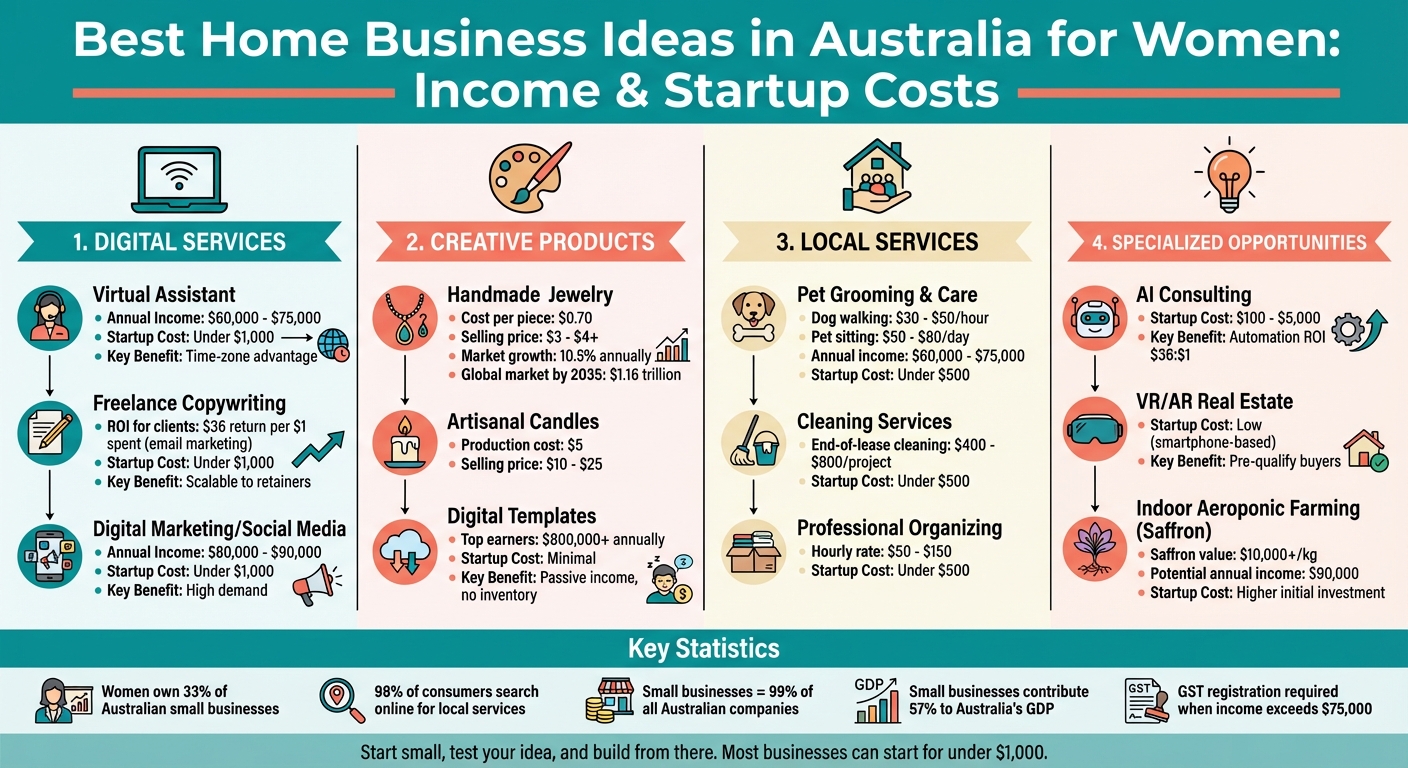
Home Business Ideas for Women in Australia: Income Potential and Startup Costs Comparison
10 Business Ideas That You Can Start Under $100 As A Woman.
sbb-itb-08dd11e
1. Digital Services
Digital services are perfect for low-cost, location-independent work - an excellent fit for home-based businesses. In Australia, women now own about 33% of small businesses. Many of these ventures thrive on delivering services remotely. Let’s dive into three standout digital service areas that can lead to profitable outcomes.
Virtual assistant services are a straightforward entry point. Virtual assistants handle tasks like managing emails, scheduling, and customer support. In Australia, they typically earn between $60,000 and $75,000 annually. Their local time-zone alignment and understanding of the market give them an edge over offshore competitors. Specializing in a specific niche can also help you charge premium rates.
Freelance copywriting and content strategy is another in-demand field. Companies need everything from SEO-friendly blog posts to website copy and email campaigns. This service can scale from hourly projects to lucrative retainers. Plus, email marketing is a goldmine for clients, delivering an average return of $36 for every $1 spent.
Digital marketing and social media management rounds out the list. Australian consultants in this space can earn between $80,000 and $90,000 per year. Focusing on a specific platform or industry niche can help you stand out in this competitive field. Don’t forget, registering for an Australian Business Number (ABN) is a must - it’s essential for operating legally and issuing tax invoices.
These roles not only offer flexibility but also create pathways for growth, making them ideal for women in Australia looking to build a home-based business.
2. Creative Products
Creative products offer a hands-on, skill-driven option for home-based businesses, providing a refreshing alternative to digital services. The global market for handmade goods is projected to reach an impressive $1.16 trillion by 2035, with a steady growth rate of 10.5% annually.
Take handmade jewelry, for example - it’s a fantastic way to turn craftsmanship into profit. Beaded jewelry materials cost roughly 70¢ per piece, while the finished products usually sell for $3–$4, with niche designs fetching even higher prices. Finding a niche, such as allergy-friendly metals or minimalist styles, can set your work apart. Kristen Pumphrey, founder of P.F. Candle Co., emphasizes this point:
"All the candle brands that you admire already exist. You have to figure out: What is my niche in the market and what's not being fulfilled?"
Before diving in, use tools like Google Trends or follow fashion influencers to identify trending styles. Beyond jewelry, other handmade goods also present scalable opportunities.
Artisanal candles, for example, cost around $5 to make but can sell for $10–$25. Bath bombs, costing about $1 to produce, typically retail for $5–$10. Current trends lean toward unisex scents, nature-inspired fragrances, and minimalist packaging. For products with a shelf life, it’s smart to keep inventory small and ensure compliance with local safety regulations and insurance requirements.
In addition to physical goods, digital templates and printables open the door to inventory-free, scalable income. Many creators have found significant success - some, like designers of personalized cash-stuffing envelope systems, reportedly earn over $800,000 annually on platforms like Etsy. Whether it’s budget planners, wedding invitations, or business templates, digital products can create a steady stream of passive income. Starting with a low-cost item is a practical way to gauge demand before expanding your offerings. These ventures are easy to manage from home and align perfectly with the growing preference for flexible, locally-run businesses.
3. Local Services
Local services cater to the growing need for personalized, community-focused support, with 98% of consumers searching online for such offerings. These businesses often come with low startup costs - usually under $500 - covering essentials like equipment, insurance, and business registration. This aligns with the trend of small-scale, home-based businesses gaining traction.
Pet Grooming and Care
Pet grooming and care services - like washing, trimming, dog walking, and pet sitting - are popular among Australian pet owners who value hands-on, personalized care for their furry friends. Dog walkers can earn $30–$50 per hour, while pet sitters typically make $50–$80 per day. For pet groomers, the average annual income ranges between AUD $60,000 and $75,000. To get started, consider promoting your services on platforms like Rover or local Facebook groups to connect with potential clients. Operating from home or offering mobile services can help keep costs low.
Residential and End-of-Lease Cleaning
Cleaning services, especially end-of-lease cleaning, are a profitable option in areas with a high concentration of rental properties. These jobs usually bring in $400–$800 per project. Establishing relationships with property managers is key - aim to partner with at least five to ensure a steady flow of work. Platforms like Cleaners Now or Find a Mover can also help you find clients quickly. This type of business is perfect for those seeking flexibility, such as parents working around school schedules.
Professional Organizing
Professional organizing services help clients declutter and optimize spaces like home offices, kitchens, or kids' rooms. With rates ranging from $50–$150 per hour, this service often thrives on word-of-mouth recommendations and compelling "before and after" photos. Offering a free initial consultation can demonstrate your value and unique approach. The beauty of this business lies in its simplicity - clients are paying for your expertise and time rather than costly materials or equipment. It's a straightforward way to tap into a growing market while keeping overhead low.
4. Specialized Opportunities
Specialized businesses focus on niche markets that often go unnoticed by many entrepreneurs. These ventures typically demand specific skills or technologies, which allow them to command premium prices while facing less competition. In Australia, small and medium-sized businesses make up 99% of all companies and contribute 57% to the nation’s GDP, creating a wealth of opportunities for specialized services. By combining the adaptability of digital tools with localized services, these ventures open doors to impactful and profitable business models.
AI Consulting for Small Businesses
AI consulting helps small businesses adopt automation tools that simplify operations without overwhelming them. By offering services like crafting effective AI prompts, setting up automated chatbots, and streamlining workflows, consultants can help businesses save time and scale operations. Startup costs for this type of business range from $100 to $5,000, depending on the tools and technologies involved. Plus, with email marketing generating an average return of $36 for every $1 spent, automation services are especially appealing to businesses aiming to enhance their outreach efforts.
VR/AR Real Estate Services
Virtual and augmented reality are changing the way properties are marketed. Real estate professionals can use tools like Google Cardboard or smartphone-based AR apps to create immersive 360° property tours. These virtual experiences help pre-qualify buyers, cutting down on unnecessary in-person visits while providing a modern edge to property marketing strategies.
Indoor Aeroponic Farming
Aeroponic farming offers a chance to grow one of the world’s most lucrative crops: saffron. With saffron fetching over $10,000 per kilogram, this high-value crop can turn a small indoor space into a profitable venture. Although the initial setup costs are higher, compact aeroponic systems can generate up to AU$90,000 annually. With proper climate control and equipment, even a spare room can become a thriving production hub. This approach aligns with the growing trend of home-based businesses, offering a unique way to capitalize on unused space.
Conclusion
Starting a home-based business in Australia doesn’t require a huge investment or lengthy preparation. The ideas shared here - from digital services and creative products to specialized local ventures - showcase how women can create profitable businesses that fit their skills, schedules, and budgets. With Australia’s small business scene thriving, it’s an exciting time to dive into entrepreneurship.
The best strategy? Start small and grow steadily. Many successful entrepreneurs say their early experiences taught them lessons they couldn’t learn any other way. By beginning with a side hustle, you can test the waters, confirm there’s demand for your idea, and fine-tune your approach - all while keeping risks low. Whether it’s launching a virtual assistant service for less than $1,000 or another budget-friendly venture, starting simple allows you to gather feedback and build confidence before scaling up.
Once you’ve validated your idea, it’s time to lay a strong foundation. Take these key steps to set yourself up for success: register for an ABN, open a dedicated business bank account, and create a workspace that helps you focus. If your business income exceeds AU$75,000 annually, don’t forget to register for GST. To keep things running smoothly, focus on a clear niche and use affordable digital tools for tasks like invoicing and payment management.
As Kristen Michaelides puts it:
"The key to success is having a solid business plan that outlines your goals, startup costs, and strategies for reaching your target market"
Whether your passion lies in digital services like virtual assistance, creative fields like photography or makeup artistry, or personalized local services, choose an idea that plays to your strengths. Start with what you have, build a clear plan, and let your business grow as your expertise deepens.
FAQs
How do I choose the best home business idea for my skills?
To kick things off, take a good look at your skills, interests, and any certifications you might have. This self-assessment can help you pinpoint business ideas that align with what you already know and enjoy. Think about areas that excite you - whether it’s coaching, selling products online, or creating handmade crafts.
Next, dive into some research. Check out the market demand and see where the growth opportunities are, especially in your local area. This step is key to identifying ideas with real profit potential. By focusing on what you’re good at and aligning it with what people currently need, you’ll be in a strong position to choose a home business idea that works for you.
What licenses or insurance might I need to start from home?
To launch a home-based business in Australia, it's important to understand the necessary licenses and permits, which can vary based on your business type and local council rules. A helpful resource is the Australian Business Licence and Information Service (ABLIS), where you can check the specific requirements for your situation.
Additionally, think about insurance to safeguard your business and personal assets. The type of coverage you'll need depends on the nature of your operations, so it's worth consulting with an insurance provider to ensure you're adequately protected.
How can I get my first paying clients quickly?
To get your first paying clients quickly, tap into the people you already know. Reach out to friends, family, or members of your community and offer your services. This approach helps you build trust and collect valuable testimonials.
Make use of social media platforms and local online groups to spread the word about your business. You might also consider offering introductory discounts to spark interest and draw in your first customers. Be sure to emphasize what makes your product or service stand out, and engage directly with potential clients to encourage sign-ups and referrals.
Related Blog Posts
 Report an issue
Get the newest tips and tricks of starting your business!