Australia's unique seasons create predictable opportunities for businesses to thrive by aligning with consumer demand during summer, winter, and holiday peaks. Here's a quick breakdown:
- Summer (December–February): High demand for outdoor services and tourism-related ventures like pool cleaning, mobile car detailing, and water equipment rentals. For example, paddleboard rentals can generate over $4,500 in one season.
- Winter (June–August): Opportunities in alpine accommodations, tax preparation services, and heating solutions like firewood sales. A ski lodge in the Australian Alps can earn $60,000–$80,000 during peak season.
- Holiday Peaks (November–January): Businesses like holiday decorating, gift wrapping, and pet sitting see increased demand. Professional decorators can charge up to $25,000 for premium setups.
Timing and preparation are key. Use slower months to refine services and plan for peak periods to maximize revenue.
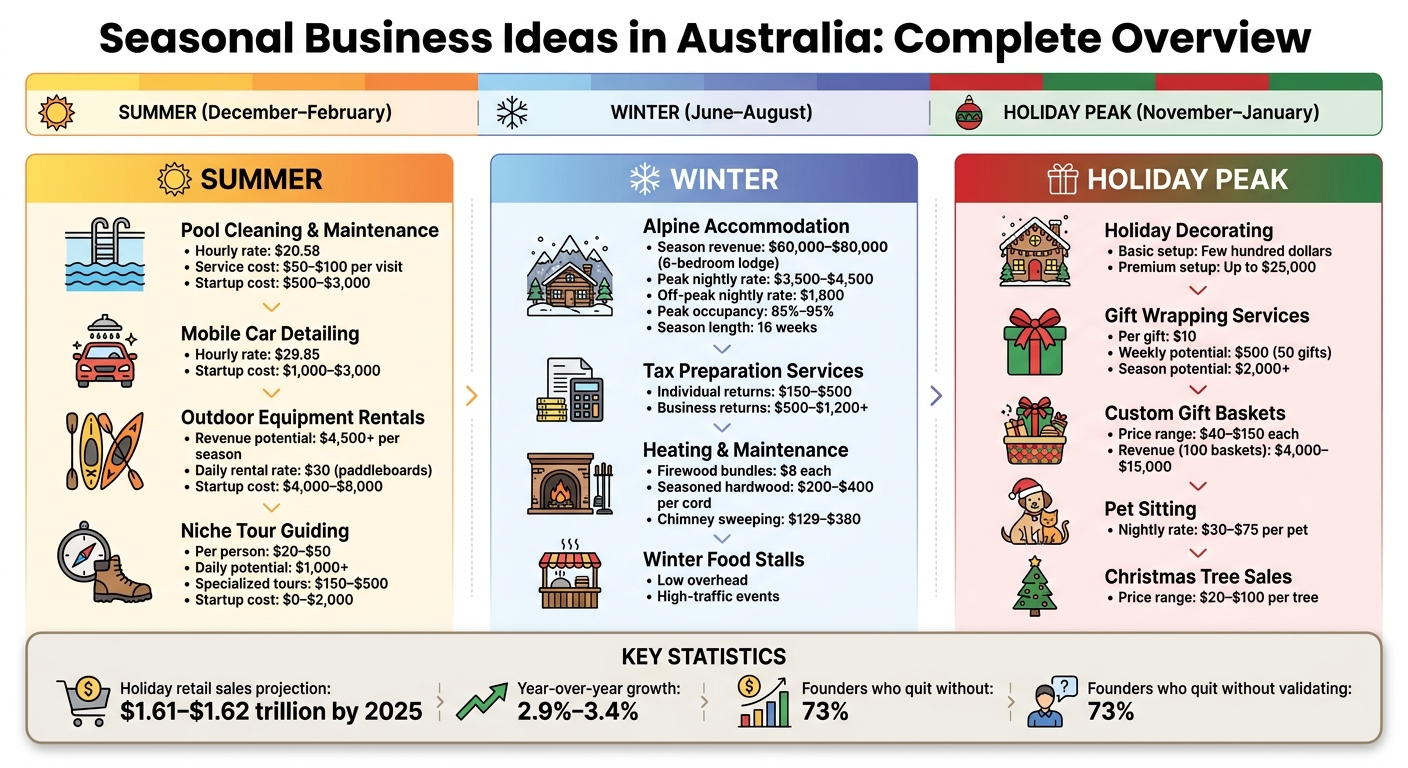
Seasonal Business Opportunities in Australia: Revenue and Costs by Season
1. Summer Businesses
Australia's summer, stretching from December to February, brings a wave of outdoor activities, tourism, and property upkeep. The warm weather draws people to beaches, parks, and events, creating a surge in demand for specific services. By aligning your business with these seasonal needs, you can tap into quick revenue opportunities. Below are some business ideas that cater to Australia's summer market.
Pool Cleaning and Maintenance
With the summer heat, keeping pools clean and safe becomes a priority. Routine maintenance visits typically cost between $50 and $100, while more thorough cleanings can go up to several hundred dollars. Pool cleaners earn about $20.58 per hour on average, and startup costs range from $500 to $3,000. Offering packages like "season passes" or flat-rate monthly plans can help create steady, predictable income throughout the summer.
Mobile Car Detailing
Summer is the perfect time to take advantage of the convenience factor. Mobile car detailing services thrive in busy areas like beaches, festivals, and parks. These services earn detailers an average of $29.85 per hour, with startup costs ranging from $1,000 to $3,000. By positioning your service in high-traffic summer hotspots, you can attract a consistent flow of customers.
Outdoor Equipment Rentals
Renting out water sports equipment can be a profitable summer venture. For example, a small fleet of paddleboards could generate over $4,500 in a single season, with daily rental rates around $30 . Startup costs typically fall between $4,000 and $8,000 , meaning you could recover a significant portion of your investment in just one busy season. To boost income, consider servicing equipment and offering early-bird discounts during the off-season.
Niche Tour Guiding
Tourist hotspots are ripe for specialized walking tours and unique outdoor experiences. Group tours generally charge $20 to $50 per person, and a guide running two tours daily could potentially earn over $1,000 per day. More tailored experiences, such as culinary tours or nature walks, can fetch fees ranging from $150 to $500 per trip. With startup costs as low as $0 to $2,000, this is an accessible business idea. Partnering with local hotels and visitor centers can also lead to valuable referrals.
sbb-itb-08dd11e
2. Winter Businesses
Australia's winter, which spans from June to August, offers plenty of opportunities for businesses in both alpine regions and urban areas. Timing and tailored services are key to success during this season. The ski season, for instance, lasts around 16 weeks, with demand peaking during the school holiday overlap from late June to mid-July. A prime example: a 6-bedroom lodge in the Australian Alps can generate between $60,000 and $80,000 in gross revenue during this period. Nightly rates start at about $1,800 in early winter but can jump to $3,500–$4,500 during peak times, with occupancy rates soaring to 85%–95% in July.
Alpine Accommodation and Rentals
Owning and operating a ski lodge can be a profitable venture, especially when you diversify its offerings. One investor in Jindabyne turned a $1.2 million lodge into an annual revenue stream of $112,000, with $45,000 of that coming from off-peak months. Implementing minimum stays of 5 to 7 nights during peak periods helps reduce turnover costs and smooth out booking gaps. Properties that cater to larger groups (10–20 people) are particularly scarce in mountain towns, giving them added pricing leverage. These strategies highlight how focusing on niche winter markets can lead to impressive returns.
Tax Preparation Services
Winter coincides with the end of the Australian financial year on June 30, creating a surge in demand for tax preparation services. Individual tax returns typically cost between $150 and $500, while small business filings range from $500 to $1,200 or more. With low startup costs and predictable seasonal demand, tax consultants can plan their workload and marketing efforts to maximize this opportunity.
Heating and Maintenance Services
As the cold sets in, homeowners and businesses need reliable heating and maintenance solutions. Firewood bundles sell for around $8 each, while seasoned hardwood cords fetch between $200 and $400. Chimney sweeping services, essential for safety, usually cost between $129 and $380 per visit. Since firewood seasoning takes 6 to 12 months, it's essential to prepare inventory well in advance.
Winter Food and Beverage Stalls
Pop-up stalls offering hot chocolate, mulled cider, and hearty seasonal soups can thrive in busy winter hotspots like ice rinks, ski resorts, and festivals. These stalls operate with relatively low overhead and benefit from the winter demand for warming treats. Events like Vivid Sydney and Hobart's Dark Mofo draw large crowds, creating excellent opportunities for these vendors to capitalize on consumer interest during the season's peak.
3. Holiday Peak Businesses
After capitalizing on winter demand, Australia’s holiday season - spanning November through January - offers another prime opportunity for businesses. This period sees a surge in consumer spending, with holiday retail sales projected to hit between $1.61 trillion and $1.62 trillion by 2025. Spending is expected to grow by 2.9% to 3.4% year over year during this bustling time. Businesses that cater to convenience and seasonal needs can thrive during these months. Here are some ideas to tap into this concentrated demand.
Holiday Decorating Services
Professional holiday decorating is a booming niche, with fees ranging from a few hundred dollars for basic setups to as much as $25,000 for premium displays in upscale neighborhoods. Offering tiered pricing packages - such as basic, standard, and premium - helps keep costs clear for customers while maximizing revenue. To further increase profits, consider upselling additional services like takedown assistance and storage for decorations.
Gift Wrapping and Basket Services
Mobile gift wrapping services charge around $10 per gift, which could lead to seasonal earnings of over $2,000 if you wrap just 50 gifts per week. Selling custom gift baskets priced between $40 and $150 each can bring in $4,000 to $15,000 from 100 baskets during the holiday rush. For higher margins, target corporate clients and offer luxury wrapping options. Partnering with local artisans to create themed bundles can also help your business stand out in a crowded market.
Pet Sitting During Travel Peaks
The holiday season often means increased travel, which drives up demand for pet care services. Rates typically range from $30 to $75 per night per pet during peak times. The busiest periods include school breaks and the Christmas–New Year stretch, as families head out for vacations. To secure steady revenue, consider offering early-bird discounts or setting up off-season waitlists.
Christmas Tree Sales
Christmas trees sell for $20 to $100 each, depending on their size and type. Offering a "cut your own" experience at tree farms can add an extra layer of appeal, turning a simple purchase into a memorable outing for families. This business model is particularly attractive because it captures high seasonal demand while requiring minimal effort during the rest of the year.
Conclusion
Australia's seasons bring clear moments when consumer demand surges. Whether it's maintaining pools in summer, providing heating services in winter, or decorating for the holidays, success hinges on offering the right services at the right time.
But thriving in a seasonal business isn't just about timing - it’s about preparation. Use the slower months wisely to fine-tune your services, upgrade tools, and lock in pre-bookings. This groundwork ensures you're ready to hit the ground running when demand spikes, helping you maximize revenue during peak periods.
Another critical step is validating your business idea before diving in. Did you know that 73% of founders give up without ever confirming if customers are willing to pay for their product? Avoid this pitfall by conducting market research, running financial forecasts, and starting small - like testing your concept with a market stall or mobile service. This approach lets you gauge demand without overcommitting.
Finally, keep your business visible year-round. Stay active on social media during quieter times by sharing behind-the-scenes updates, collecting customer feedback after each busy season, and even introducing small complementary services to bridge cash flow gaps. With thoughtful planning, seasonal businesses can become steady income streams, leveraging Australia’s predictable demand cycles. Whether it's summer pool care, winter services, or holiday preparations, these strategies lay the foundation for a strong seasonal business.
FAQs
How do I pick the best season for my business idea in Australia?
To figure out the best season for your business idea in Australia, think about the climate, market demand, and seasonal trends. Match your product or service to the season - like summer for beach gear or winter for warm drinks and indoor activities. Study your industry, understand local weather patterns, and observe consumer habits. Planning ahead lets you take advantage of peak periods, ensuring your business is ready to meet demand when it matters most.
What licenses or insurance do I need for seasonal services?
For seasonal services, you might need specific permits, such as a license to operate an open-air market if you're selling crafts or produce. Additionally, you'll need to secure business permits, which vary depending on your location and the nature of your activities. Insurance requirements will also depend on the type of service you provide and local laws. It's essential to consult your local authorities to make sure you meet all the necessary permit and insurance regulations.
How can I make money in the off-season?
To keep income flowing during the off-season, consider broadening your services or adjusting your business to cater to other market demands. For instance, seasonal businesses might delve into online sales, take up freelance projects, or organize community events. Another smart move is to gear up for the next busy season by nurturing a loyal, year-round customer base or introducing new products. These strategies can help stabilize cash flow and keep profits steady, even when things slow down.
Related Blog Posts
- 21 Low-Investment Business Ideas for Women in Australia
- What Business Can You Start in Australia With $10,000? 15 Realistic Ideas for 2026
- Business Ideas for Rural and Coastal Australia
- Best Small Business Ideas in Australia Under $30,000