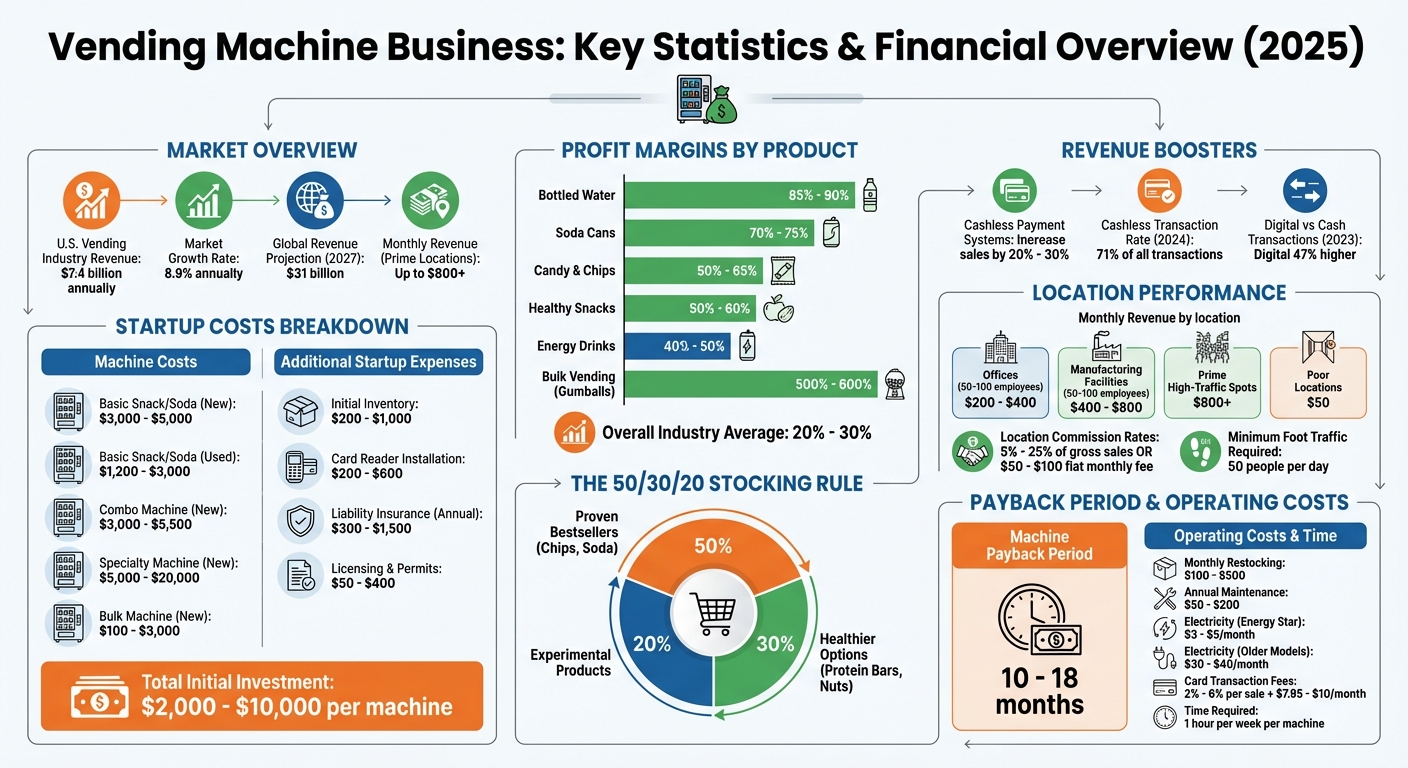
Want to start a vending machine business? Here’s the bottom line: Success comes down to location, product selection, and managing costs. By 2025, the U.S. vending industry was pulling in $7.4 billion annually, with machines in high-traffic spots earning up to $800+ per month. Here’s a quick breakdown of what you need to know:
- Startup Costs: $2,000–$10,000 per machine, plus $200–$1,000 for inventory and other expenses.
- Profit Margins: Typically 20%–30%, with bottled water offering 85%–90% margins.
- Best Locations: Offices, gyms, factories, and transit hubs with at least 50 daily visitors.
- Stocking Strategy: Use the "50/30/20" rule - 50% bestsellers, 30% healthier options, 20% experimental items.
- Revenue Boosters: Cashless payments can increase sales by 20%–30%.
Key takeaway: Prime location and a well-stocked machine are the difference between $50 and $2,000 monthly profits. Keep costs low, monitor inventory, and target spots with high foot traffic to maximize success.
Vending Machine Business Startup Costs, Profit Margins, and Revenue Potential 2025
The Vending Machine Business in 2025
Current Market Conditions and Opportunities
The U.S. vending machine market is expanding at an annual rate of 8.9%, with global revenues projected to reach $31 billion by 2027. This growth is fueled by the increasing popularity of unattended retail - self-service options that operate 24/7.
Profit margins in this industry typically range from 20% to 30%, and well-placed vending machines can pay for themselves within 10 to 18 months. Emma Parker, Senior Funding Manager at Clarify Capital, highlights the appeal:
"In 2025, vending machines offer entrepreneurs an accessible entry point into business ownership with fairly low startup costs and flexible time commitments."
To maximize revenue, integrating cashless payment systems like credit card readers and mobile payment options (e.g., Apple Pay, Google Pay) can increase sales by 20% to 30%. Additionally, modern machines equipped with remote monitoring systems allow operators to track inventory and sales in real time, streamlining operations.
Consumer preferences are also shifting. There’s growing demand for healthier options like fresh salads, organic snacks, and protein bars instead of traditional junk food. Micro markets - small, self-service areas offering premium and fresh products - now account for about 20% of convenience service revenue.
Startup Costs and Budget Planning
Launching a vending machine business typically requires an initial investment of $2,000 to $10,000 for a single machine setup. The machine itself is the largest expense. Here’s a breakdown of costs:
| Machine Type | New Cost | Used/Refurbished Cost |
|---|---|---|
| Basic Snack/Soda | $3,000 - $5,000 | $1,200 - $3,000 |
| Combo (Snack & Drink) | $3,000 - $5,500 | $1,500 - $3,500 |
| Specialty (Coffee/Ice Cream) | $5,000 - $20,000 | Varies widely |
| Bulk (Gumball/Toy) | $100 - $3,000 | Under $500 |
Other startup expenses include initial inventory costs ($200 to $1,000), card reader installation ($200 to $600), and liability insurance ($300 to $1,500 annually). Licensing and permits can range from $50 to $400, depending on local regulations.
Ongoing costs involve monthly restocking ($100 to $500), annual maintenance ($50 to $200), and location commissions, where property owners typically take 10% to 20% of gross sales. Securing a location contract before purchasing a machine is critical to ensure your product offerings align with the site’s needs.
Once your budget is in place, the next step is choosing the right products for your target audience.
Picking Your Product Category
When starting out, it’s best to focus on a single product category. Beverages, for example, account for 23% of all U.S. vending sales and perform particularly well in gyms, offices, and transit hubs. Snacks are another reliable option for beginners.
A helpful strategy for stocking inventory is the "50/30/20" rule:
- 50% proven bestsellers (e.g., chips, soda)
- 30% healthier options (e.g., protein bars, nuts)
- 20% experimental products to test customer preferences
This approach reduces risk while allowing room for experimentation.
Specialty vending machines can yield higher profit margins but often require more research. For example, bulk vending machines (like gumball machines) can achieve margins of 500% to 600%. A $35 bag of 850 gumballs can generate over $200 in sales at $0.25 per gumball. Similarly, ice vending machines can deliver strong returns with low overhead. Success in these categories depends heavily on location - bulk machines thrive in schools and amusement parks, while ice vending machines perform well at gas stations.
Tailor your product selection to the demographics of the location. For instance:
- Schools and universities: Energy drinks and quick snacks
- Corporate offices: Healthy sandwiches, salads, and premium coffee
- Gyms: Protein bars and electrolyte drinks
Monitor inventory closely and replace unsold products after two to three restocks to keep offerings fresh and appealing.
How To Start a Vending Machine Business (Ultimate Vending Guide)
Finding Profitable Locations
Choosing the right location can make or break your vending machine business. The spot you pick could be the difference between pulling in $800 a month or barely covering costs. To make a location worthwhile, at least 50 people per day need to walk past your machine. And here’s the kicker: high-traffic areas can bring in 2 to 3 times more revenue than less ideal spots.
Manufacturing facilities are a goldmine for vending machines, with 32% of operators naming them the most profitable locations. Meanwhile, office buildings account for 30% of vending placements nationwide. The key is finding places with both high foot traffic and long dwell times - think auto repair shops, medical waiting rooms, or transit hubs. These are spots where people linger, leading to impulse purchases, which make up a whopping 65% of vending machine sales.
Finding High-Traffic Areas
Start by surveying a 15- to 30-mile radius for underserved locations and scoping out the competition. Google Maps is your friend here - search for clusters like office parks, medical centers, or manufacturing hubs. Look out for "food deserts", places like warehouses or hospitals where people spend hours but lack access to convenience stores or cafeterias, especially during late-night shifts.
Here’s a breakdown of potential earnings:
- Offices with 50–100 employees: $200–$400 per month
- Manufacturing facilities with similar headcounts: $400–$800 per month
Gyms are another standout choice, especially for beverage machines, as fitness enthusiasts tend to consume more drinks.
Indoor placements come with perks like built-in security, climate control, and easier maintenance. On the flip side, outdoor spots - like parks or beaches - can be riskier due to vandalism and weather damage. Regardless of location, make sure there’s 24/7 electrical access and enough space for restocking.
Negotiating with Property Owners
When approaching property owners, aim for the decision-maker - usually a Facilities Manager, Building Owner, or HR representative. Pitch your vending machine as a free amenity that enhances the experience for employees, tenants, or customers, all at no cost to them.
Expect commission rates to range from 5% to 25% of gross sales, with higher rates for busier locations. If the owner seems hesitant, suggest a 3- to 6-month trial period to ease their concerns and showcase your reliability. Emphasize your commitment to regular restocking and maintenance.
"A great machine can make you $2,000 a month in a good location, or $50 a month in a bad one." - Michael Benson, Author
Also, negotiate electricity costs upfront. Modern Energy Star machines are budget-friendly, costing just $3 to $5 a month to run, while older models can climb to $30 to $40. Make sure to clarify who’s responsible for these costs during your initial discussions.
Once you’ve secured a location, customize your product lineup to match the needs of the people using the space.
Analyzing Customer Demographics and Foot Traffic
After locking in a spot, take time to understand the people passing through. Stock your machine with products tailored to their preferences. For example:
- Schools might require energy drinks and budget-friendly snacks.
- Corporate offices often favor premium coffee and healthier options.
- Gyms thrive on protein bars and sports drinks, while warehouses benefit from cold beverages and filling snacks.
Observe traffic patterns by manually counting visitors at different times and days. Pay close attention to midday traffic, as vending sales tend to peak between 11:00 AM and 1:00 PM. Locations that operate 24/7, like hospitals or nursing homes, can generate steady income even when cafeterias are closed.
Security is just as important as foot traffic. Place machines in well-lit, supervised areas to deter theft and vandalism. A busy location won’t help if it’s in a restricted area or a corridor where people rush by without stopping. The best spots balance accessibility with natural oversight, like staff presence or security cameras.
| Target Demographic | Ideal Location Types | Recommended Products |
|---|---|---|
| Students | Schools, Colleges, Dorms | Energy drinks, affordable snacks, ramen |
| Office Workers | Corporate parks, Coworking spaces | Healthy snacks, premium coffee, quick meals |
| Travelers | Airports, Train/Bus stations | Bottled water, grab-and-go items, electronics |
| Fitness Enthusiasts | Gyms, Yoga studios, Rec centers | Protein bars, sports drinks, vitamin water |
| Blue-Collar Workers | Factories, Warehouses, Construction sites | Cold beverages, energy drinks, hearty snacks |
Stocking and Managing Inventory
Once you've nailed down your product selection strategy, the next step is managing your inventory effectively. The products you stock directly influence your revenue, so every slot in your vending machine needs to pull its weight. Keep in mind that the cost of goods sold (COGS) typically takes up 40%–55% of your revenue.
Choosing Products for Your Customers
Before filling your vending machine, take a close look at the demographics of your location. Talk to the property manager or owner to get a better sense of what the people in that space are likely to want. For example:
- Gyms: Stock sports drinks and protein bars. Sports drinks alone make up 11% of beverage sales nationwide.
- Offices: Diet sodas (which account for 12% of sales) and coffee are great choices to help workers power through the day.
- Manufacturing facilities: With 24/7 shifts, energy drinks and high-calorie snacks are essential for keeping workers fueled [3, 7].
One product you can’t go wrong with? Bottled water. It leads the pack with 30% of beverage sales and delivers an impressive 85% to 90% profit margin. Pair it with regular sodas, which make up 20% of sales, to round out your drink options. For snacks, aim for a mix of classic favorites like chips and candy (with 50% to 65% margins) and healthier options, which offer slightly lower but still solid margins of 50% to 60%.
Managing Your Inventory
To stay on top of inventory, use vending management systems with telemetry. These systems track sales in real time, so you’ll know exactly when and what to restock - no guesswork required [11, 23]. Stick to a consistent restocking schedule, whether that’s weekly or biweekly, to maintain steady earnings.
Keep a close eye on product performance. If something isn’t selling well, replace it with a proven bestseller. Position your top-selling items at eye level to catch customers' attention. And don’t forget to monitor expiration dates - spoilage and theft can account for 1% to 3% of your inventory losses.
"In How To Start A Vending Machine, facility managers choose vendors who keep machines full, stock proven best-sellers, and accept cards. Consistent service and clear SLAs win placements." – The Vending Locator
By using real-time data, you can adjust your inventory to meet seasonal and event-driven demand shifts.
Adjusting for Trends and Seasons
Your inventory shouldn’t stay static; it needs to adapt to changing trends and seasons. For instance, when the temperature drops by 10°F, hot coffee sales can spike by 15%. Stock up on hot beverages and cocoa in the winter months, then switch to iced teas and lemonades - which account for 8% of beverage sales - during summer.
Universities are another example of shifting demand. During finals week, students might prefer energy drinks and snacks, while semester breaks could call for a different mix. Use historical sales data to anticipate these patterns.
Local events can also impact sales. If your vending machine is near a stadium or in a hospital with frequent shift changes, be prepared for spikes in demand during those times. Also, offering cashless payment options is a smart move. Customers expect speed and convenience, and cashless payments can boost revenue by 20% to 30%. By 2024, 71% of vending machine transactions were cashless, with 77% of those using contactless taps.
sbb-itb-08dd11e
Pricing and Profit Margins
When it comes to running a vending machine business, understanding pricing and managing profit margins are key to staying in the black. The formula is straightforward: Profit = Revenue - Cost of Goods Sold (COGS) - Operating Expenses - Commission. Typically, COGS takes up 40% to 55% of your revenue. On top of that, you’ll need to account for operating expenses like gas and transportation ($15 to $50 per month), spoilage and theft (1% to 3% of inventory), and repairs and maintenance ($10 to $30 per month). Location fees can range from 10% to 25% of sales or be a flat monthly rate of $50 to $100.
Breaking Down Your Costs
It’s crucial to track both fixed and variable expenses. For example, restocking and maintaining each machine typically requires about 1 hour per week. Card transaction fees will eat up 2% to 6% of each sale, along with a monthly fee of $7.95 to $10. You’ll also need to budget for electricity, which can cost anywhere from $5 to $30 per month.
A good location can bring in $400 to $600 per month, while prime high-traffic spots can exceed $800. With the average vending machine transaction hovering around $1.70, choosing a location with steady foot traffic is critical to success. Profit margins will vary depending on where your machines are placed - schools and offices usually yield 15% to 20%, hospitals average 30% to 40%, and airports can hit around 35%.
Setting Your Prices
Pricing your products correctly is just as important as controlling costs. One common strategy is the 2X markup rule, which means doubling the wholesale price. For instance, if you’re buying bottled water at $0.25 per unit, you can sell it for $1.50 to $2.00, giving you a profit margin of 85% to 90%. Similarly, candy and chips purchased at $0.50 to $0.75 can be sold for $1.50 to $2.00, delivering margins of 50% to 65%.
Psychological pricing can also help boost sales. Customers tend to prefer clean, rounded prices ending in .00 or .50, which makes their decision-making process faster. To keep your margins intact, review your pricing at least once every three months or whenever wholesale costs change.
Increasing Your Profit Margins
After setting your prices, the next step is to maximize your margins. Some products naturally offer better returns - bottled water leads the pack with 85% to 90% margins, while soda cans bring in 70% to 75%. Energy drinks, though popular, yield lower margins of 40% to 50%.
Negotiating commissions is another way to protect your profits. Start with a 10% commission for property owners, but be willing to go up to 25% for locations with proven high traffic.
Buying wholesale is another cost-saving move. Clubs like Costco or Sam’s Club can reduce your COGS by 10% to 20% compared to retail prices. Remote monitoring systems can also save money by cutting down on unnecessary trips for restocking or maintenance. Additionally, offering cashless payment options can increase revenue by 20% to 30%, as machines with digital payment systems tend to outperform cash-only ones. In fact, in 2023, digital transactions at automated kiosks were 47% higher than cash transactions.
Growing Your Vending Machine Business
Once you've nailed down pricing and margins, it's time to expand your vending machine business. Growth not only boosts your revenue but also builds on strategies like effective pricing and smart product management. To scale successfully, focus on streamlining operations, staying on top of legal requirements, and choosing the right locations for expansion.
Operations and Machine Maintenance
Smooth operations are the backbone of any growing vending business. Regular maintenance is essential - clean your machines, check for issues with coin mechanisms, and fix any problems weekly to avoid downtime.
Efficient route planning is another key factor. Group your machines by proximity to your home or warehouse to cut down on fuel costs and travel time.
Technology can make a world of difference here. Vending Management Software (VMS) allows you to track inventory and optimize routes, a tool already used by nearly 70% of vending operators. Remote monitoring systems can show which products sell the fastest and which need replacing, helping you keep your machines stocked with customer favorites.
Upgrading to cashless payment systems is another smart move. These systems can increase revenue by 20%–30% and encourage higher spending. With nearly 80% of Americans now opting out of cash for everyday purchases, accepting card payments is practically essential for a modern vending business.
Once your operations are running efficiently, ensure your business complies with all legal and regulatory requirements to support your growth.
Permits, Licenses, and Legal Requirements
As your business grows, staying compliant with legal requirements becomes even more important. Most states require vending operators to have permits like sales tax registration, while local governments typically require business licenses. If you're operating food and beverage machines, you'll also need permits from the health department and may face regular inspections. Non-food machines often require only general business licenses.
For example, in Texas, vending operators pay an annual occupation tax of $60 per machine, along with a general business fee ranging from $200 to $1,000, depending on the size of their operation and the timing of their filings. Skipping these permits could result in fines of up to $2,000 per violation. Always check with your local health department and city clerk before placing machines in new areas.
As you expand, forming an LLC can protect your personal assets by separating them from business liabilities. General liability insurance usually costs between $500 and $1,000 annually, while commercial vehicle insurance for restocking routes typically runs $100 to $300 per month. Remember to comply with ADA standards as well - this includes features like specific control heights, Braille labels, and audio assistance for your machines.
Adding New Locations
With efficient operations and compliance in place, the next step is finding high-traffic locations. Use tools like a "Traffic & Convenience Matrix" to identify areas with lots of foot traffic and easy accessibility. Machines in busy spots can generate two to three times the revenue of those in less active areas. For instance, a vending machine in a bustling office building might bring in $600 per month, while one in a quieter location might make only $300.
When working with property owners, propose a 3- to 6-month trial to prove the value of your machines. Be sure to use written contracts that spell out commission rates (usually 5% to 25% of sales), maintenance responsibilities, and termination terms.
Diversifying your locations can also help you weather seasonal shifts in demand. For example, schools may see lower sales during summer breaks, but gyms often experience higher traffic during the same period. Placing machines in a mix of venues - like hospitals, schools, and gyms - can balance out these fluctuations.
Reinvesting your profits is key to scaling. Take Marcus Gram of Joyner Vending, for example: starting with a $10,000 investment in 2018, he grew his business to over 20 machines across seven states, generating up to $500,000 in annual revenue by 2025. Similarly, Tina Paine of Wicked Healthy Vending expanded from five machines in 2013 to nearly 50 machines across Massachusetts and Southern New Hampshire by 2025.
Lastly, look for underserved spots like laundromats, car dealerships, or apartment complexes, where competition is lower. With the U.S. vending machine market pulling in around $22 billion annually and 45% of operators now earning over $10 million a year in revenue, there's still plenty of room for smaller operators to find success.
Conclusion
Launching a vending machine business in 2025 boils down to three key priorities: choosing the right locations, stocking smartly, and maximizing profits. It's worth keeping the 80/20 rule in mind - about 80% of your revenue will likely come from just 20% of your locations, making location selection your most critical decision. High-traffic areas where people naturally pause, like office lobbies, factories, or transit hubs, are the backbone of steady earnings.
Once you’ve secured a great spot, use real-time data to tailor your inventory. Focus on stocking high-margin essentials and adjust your product mix to reflect seasonal trends and customer preferences. Matching your offerings to the demographics of each location can significantly boost your sales and bottom line.
Boosting profit margins means keeping costs in check and leveraging technology. Cashless payment systems and remote monitoring tools not only make operations more efficient but also help increase revenue and reduce maintenance costs.
Whether you’re starting with one machine or planning to expand over time, opportunities still exist in overlooked locations like laundromats. By following these streamlined strategies, you’ll be well-positioned to succeed in this growing market. The time to turn potential into profit is now.
FAQs
What factors should I consider when choosing a profitable vending machine location?
Picking the right spot can make or break your vending machine business. The most profitable locations are those with heavy foot traffic, such as office buildings, hospitals, schools, and transportation hubs. These areas naturally draw steady crowds, which means more opportunities for consistent sales.
But there’s more to it than just traffic. You’ll also want to match your product offerings to the local demographics. For instance, young professionals might gravitate toward healthier snack options, while factory workers could appreciate quick, filling choices. And don’t overlook visibility and accessibility - machines placed near entrances, break rooms, or other high-traffic spots tend to attract more customers.
Other factors to keep in mind include:
- Operating hours: Locations like hospitals or airports that are open 24/7 can significantly boost sales.
- Safety: Well-lit, low-crime areas not only reduce the risk of theft but also help lower maintenance costs.
- Exclusive agreements: Securing a deal with property managers to be the sole vending machine provider can help you sidestep competition.
By carefully weighing these elements, you can make smarter decisions about where to place your machines and set yourself up for success.
How do I efficiently manage and optimize vending machine inventory?
Efficient inventory management for vending machines is all about staying organized, leveraging data, and keeping an eye on profitability. Start by consistently monitoring sales data to pinpoint which products are flying off the shelves and which ones are gathering dust. This allows you to stock items that match local preferences while phasing out underperformers.
Keep your machines well-stocked by setting minimum inventory thresholds and scheduling regular restocks. For high-traffic locations, aim for weekly restocking, while quieter spots might only need attention every other week. When restocking, always follow the first-in, first-out (FIFO) method. This ensures older products sell first, reducing waste and keeping your inventory fresh.
Profitability should be a priority. Focus on stocking high-margin items and analyze your profit margins after each restock. If a product isn’t pulling its weight, consider tweaking its price or replacing it with something more lucrative. Inventory-tracking tools can also be a game-changer, helping you maintain accurate records and avoid costly errors. By staying proactive with these strategies, you’ll keep your vending machines running efficiently and maximize your returns.
How can I increase profits in my vending machine business?
To increase profits in your vending machine business, focus on choosing the right locations. High-traffic spots like office buildings, gyms, and schools are excellent choices since they attract a steady flow of potential customers. Stock your machines with popular and profitable items that align with local tastes, and consider including healthier options to cater to shifting consumer preferences.
Work with suppliers to negotiate better wholesale prices, and set pricing that strikes a balance between being affordable for customers and profitable for you. Keep operating costs low by streamlining service routes, maintaining your machines regularly, and offering cashless payment options, which can appeal to a broader audience. Use sales data to fine-tune your inventory and restocking schedules, ensuring your machines are stocked with the products that sell the most.
Related Blog Posts
 Report an issue
Get the newest tips and tricks of starting your business!