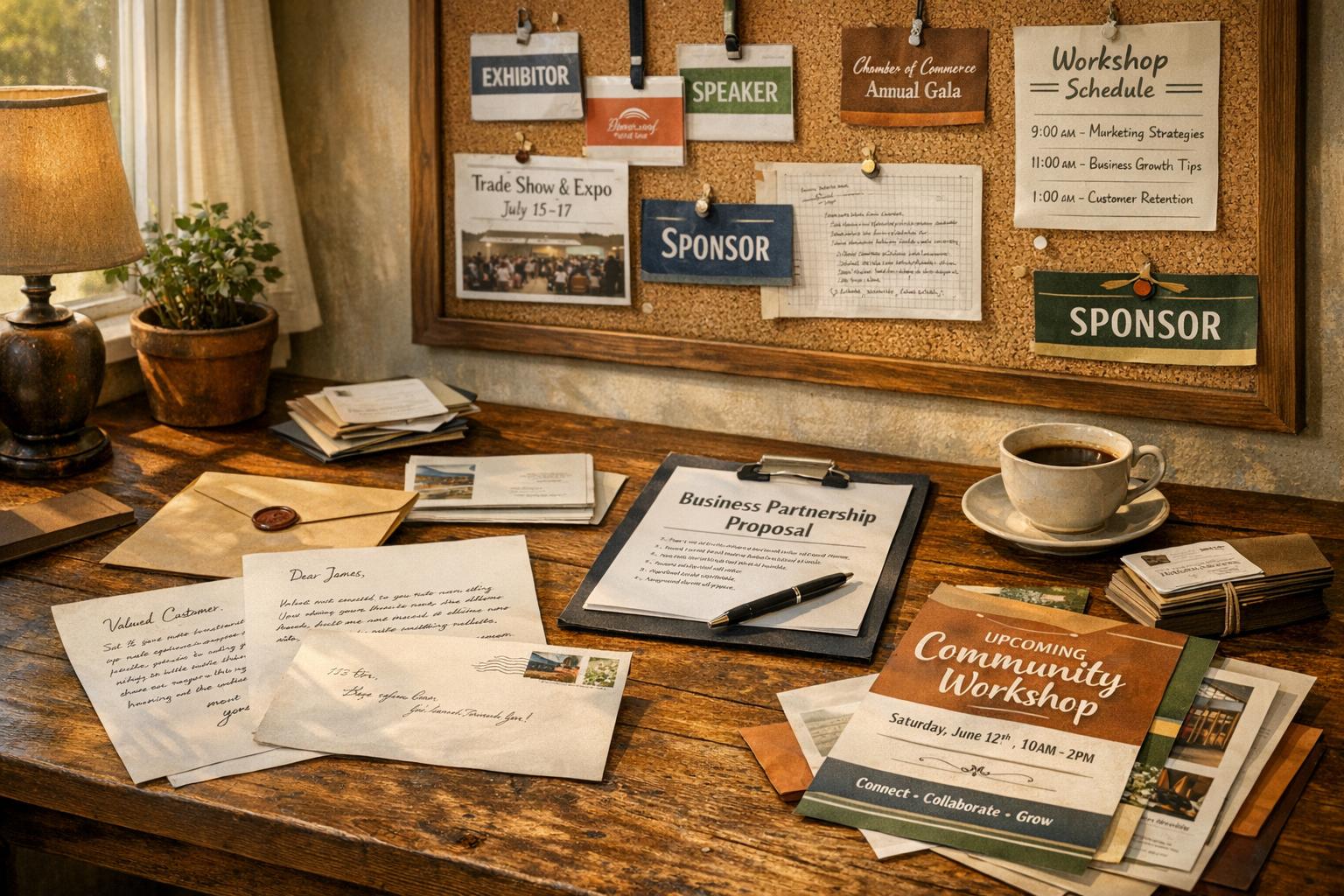
Running a business without social media is not only possible but can be a smart move. Social platforms often limit your reach to just 7% of your followers, while offline strategies like networking events, trade shows, and direct mail can deliver stronger results. For example, direct mail campaigns see response rates of 2-3%, and email marketing boasts open rates of 30-50%. Trust-building methods like personal recommendations remain highly effective, with 92% of people favoring them over traditional ads.
Here’s a quick overview of seven offline strategies to grow your business:
- Host Local Networking Events: Meet potential clients face-to-face and build trust in your community.
- Participate in Trade Shows: Engage directly with decision-makers and showcase your brand.
- Build Word-of-Mouth Through Partnerships: Collaborate with local businesses to expand your reach.
- Use Flyers, Direct Mail, and Print Ads: Leverage tangible materials to connect with your audience.
- Sell at Farmers Markets and Pop-Up Shops: Create personal connections and test new products.
- Host Workshops and Product Demonstrations: Educate your audience while showcasing your offerings.
- Sponsor Local Events and Charity Runs: Increase visibility and connect with your community.
Offline marketing focuses on direct, personal interactions that build trust and generate higher-quality leads. By using tools like IdeaFloat to validate your ideas and track results, you can ensure these strategies lead to meaningful growth without relying on social media.

7 Offline Marketing Strategies to Build Your Business Without Social Media
Top 10 Tips for OFFLINE Marketing
1. Host Local Networking Events
Hosting local networking events is a powerful way to establish yourself as a go-to person in your field while connecting directly with your audience. This approach is especially effective when you're trying to grow a business without relying on social media. By taking the lead in organizing these gatherings, you naturally position yourself as both a connector and a trusted authority. Here's a compelling stat to back it up: 28% of consumers visit a local business after attending a local event. Face-to-face connections build trust in ways that digital ads simply can't.
Plan and Promote Your Event
The first step is choosing the right venue that aligns with your event's purpose. For casual meetups, pubs or cafes work great. If you're hosting an educational workshop, community centers are a better fit. Once you've locked in the venue, it's time to spread the word - offline. Use flyers on local bulletin boards at libraries, grocery stores, and businesses. Place ads in neighborhood newspapers or school newsletters. For a creative touch, send out "lumpy mail" invitations to pique curiosity. If you're planning something bigger, like a high-profile workshop, consider issuing press releases to local newspapers and radio stations.
Make the Event Worth Attending
Getting people to your event is only half the battle - you need to make it memorable. Skip the boring lecture-style format and opt for interactive elements. Think hands-on workshops, fun contests, or even a branded photo booth for attendees to enjoy. At the registration desk, take the opportunity to engage with guests directly, answering their questions and potentially speeding up their decision-making process. You can also offer event-exclusive product bundles or limited-time deals to create a sense of urgency.
Turn Attendees Into Leads
Don't let the connection end when the event does - make sure you have a solid follow-up plan. Use sign-up sheets or raffles with enticing prizes to collect contact information. Hand out business cards that include a special bonus offer, and use QR codes on posters or stickers that link directly to a landing page. Once the event wraps up, add the collected leads to your CRM and follow up promptly with a well-structured plan. These steps ensure that your in-person efforts translate into meaningful business opportunities.
2. Participate in Trade Shows and Industry Expos
Trade shows and expos offer a rare opportunity to engage directly with decision-makers. Unlike the fleeting nature of social media, these events bring together a focused audience actively searching for solutions. The key to success? Picking the right event and making every moment count. Before committing to a pricey booth, attend as a visitor first. This lets you evaluate the audience, check out competitors, and read reviews from past exhibitors to ensure the event aligns with your goals.
Booth space can cost between $150–$250 per square foot. For example, a 10'x10' booth at $150 per square foot will cost $15,000, with total expenses potentially reaching $45,000. To make this investment worthwhile, set clear, measurable goals like "gather 25 qualified leads" or "secure 10 demo appointments." These targets keep your team focused and help you gauge the event's return on investment.
Set Up an Eye-Catching Booth
Your booth has about 3–5 seconds to grab attention - so make it count. Use tall signage, bold, brand-aligned colors, and strategic lighting to stand out. Spotlights can highlight key areas, while LED strips or ambient lighting can create a welcoming atmosphere. Design your space thoughtfully: allocate 60% for visitor movement and interaction, and the remaining 40% for displays and furniture. To keep visitors engaged, consider live demonstrations (under 10 minutes), interactive games, or even a photo booth.
"Your booth is a 3D testament to your brand; it should tell your story." - TPG Trade Show & Event Marketing
Keep things tidy by incorporating built-in storage and hiding extra inventory behind decorative panels. Use large screens for presentations and tablets for self-paced exploration and lead collection. Most importantly, staff your booth with energetic, knowledgeable team members who can clearly communicate your value. Avoid having disinterested staff sitting behind tables - it sends the wrong message.
Perfect Your Elevator Pitch
A polished 30-second pitch can make all the difference. Equip your team with "battle cards" that outline your key value propositions. Train them to ask open-ended questions that uncover visitors’ specific challenges instead of defaulting to generic sales talk. This approach not only helps identify serious leads but also encourages deeper, more meaningful conversations.
Collect and Follow Up on Leads
Ditch the old-fashioned business card collection and go digital. Use tools like badge scanners, CRM-integrated apps, or QR codes that sync directly with your database. To entice visitors to share their information, offer exclusive show-only deals or high-value giveaways like branded USB drives. Contests or raffles can also make the process fun and less intimidating.
Timing is everything. Reach out to leads within 24–48 hours while your brand is still fresh in their minds. Personalize your follow-ups by referencing specific products or conversations from the event to show you were paying attention. Combine email automation with personal touches like phone calls or LinkedIn messages to guide leads through your sales funnel, turning those initial conversations into actual sales.
3. Build Word-of-Mouth Through Community Partnerships
Did you know that 80% of online sharing happens through "dark social" channels like texts, WhatsApp, and email? This makes offline collaborations incredibly impactful. By teaming up with local businesses that complement your offerings, you can tap into each other’s customer bases and amplify your reach. The secret? Partner with businesses that target a similar audience but don’t compete with what you sell. For instance, imagine a coffee shop joining forces with a bookstore or a gym collaborating with a fitness course creator. Start by identifying local businesses that align with your audience and offer something different.
Identify the Right Partners
To find the perfect partners, consider joining your local Chamber of Commerce or industry networking groups. These connections can help you meet businesses whose values and customer demographics align with yours. Such partnerships can strengthen your offline presence while complementing your broader engagement strategies. Take Canadian entrepreneur Barb McGrath as an example. She sells marketing and SEO courses and partnered with her local Chamber of Commerce to connect with business owners. By setting up a commission-based referral deal, she managed to launch a six-figure online course in just one year. When approaching potential partners, focus on mutual benefits. A casual lunch or a roundtable discussion can be a relaxed way to explore ideas without any pressure.
Design Mutually Beneficial Promotions
Successful partnerships offer clear value to both sides. A great example? In 2023, a minifridge brand collaborated with Wölffer Estate Vineyard to create a limited-edition pink fridge stocked with rosé, generating a wave of media attention. You can create similar buzz by bundling offers, co-hosting workshops, or exchanging discount cards to drive local traffic. If you have a physical location, consider teaming up with nearby businesses to share the costs of hosting events. Whatever the collaboration, make sure to formalize the arrangement with clear terms - whether it’s a flat fee, referral commissions, or mutual discounts.
Measure the Impact of Partnerships
To understand how well your partnerships are working, track their performance creatively. Assign unique coupon codes to each partner to identify which collaborations are driving sales. QR codes on flyers can help you track when offline interest translates into online engagement. You can also ask new customers, “How did you hear about us?” - though response rates might be low, the insights you gain can be invaluable. Another effective metric is the Word of Mouth Coefficient, which divides new organic customers by active users to measure the rate of referrals. Regularly check in with your partners to review shared metrics and decide whether to expand, tweak, or wrap up the collaboration. These insights will not only improve your partnerships but also set the stage for the next strategy.
"Partner marketing is all about value exchange. Even relatively small companies can connect with other brands to forge meaningful collaborations that create buzz and expand their reach." - Shopify Staff
4. Distribute Flyers, Direct Mail, and Print Ads
Pair your offline strategies with well-targeted print and mail campaigns. Why? Print ads not only encourage 20% more consumer action, but also 56% of consumers trust print over digital ads. Additionally, 85% of marketers agree that direct mail boasts the highest conversion rate. If you're steering your business without relying on social media, these tangible materials could be your ace for connecting with local customers weary of endless screen time.
Create Targeted Marketing Materials
Your flyer has one job: grab attention fast. To do that, craft a strong headline, use bold colors, and include high-quality graphics that reflect your brand. Keep the design clean and focus on benefits - show people how you can solve their specific problem. Add a clear call-to-action (CTA) like "Bring this flyer in for 15% off" or include a QR code leading to a special landing page. Personalizing direct mail can make an even bigger impact - using names can increase responses by 135%, and adding more personalized details can boost that up to 500%. Michael Glauser, Executive Director of the Clark Center for Entrepreneurship at Utah State University, explains:
"Direct mail can be an inexpensive strategy for targeting specific geographic markets. The cost per piece can be as little as 50 cents, and a 2 to 3 percent response rate can cover the entire cost of the campaign".
Once your materials are ready, it’s time to think about where and how to distribute them for maximum impact.
Distribute Strategically
Where you place your materials is just as important as how they look. Use direct mail to target specific neighborhoods or have local staff deliver door hangers to ensure full coverage. Post flyers on community bulletin boards in places like coffee shops, libraries, and doctors' offices. Don’t overlook local newspapers, which reach about 60% of adults aged 35 and older weekly. Other hyper-local options include HOA newsletters, school yearbooks, and Chamber of Commerce publications.
You can also collaborate with nearby businesses to cross-promote by exchanging discount cards. For direct mail, try “lumpy mail” by adding a small promotional item to the envelope - it sparks curiosity and can significantly increase open rates.
Track Campaign Effectiveness
Measuring the success of your print campaigns doesn’t have to be complicated. Assign unique promo codes to each flyer or mailer so you can pinpoint which ones are driving sales. QR codes linked to dedicated landing pages make it easy to track when someone takes action online. Train your team to ask every new customer, “How did you hear about us?” and log their responses in your CRM. For direct mail, use Intelligent Mail barcodes to track pieces through the postal system. Keep an eye on response rates - calculated by dividing the number of responses by the total pieces sent - and monitor trends over 90 days. Even a modest 2% to 3% response rate can often cover your campaign costs.
"71% of small business owners consider physical marketing tactics like flyers, banners and posters to be important for connecting with new and existing customers." - 2024 Small Business Marketing Report, VistaPrint x Wix
sbb-itb-08dd11e
5. Sell at Farmers Markets and Pop-Up Shops
Selling in-person at farmers markets and pop-up shops brings something unique to the table that online channels simply can’t replicate: the chance for customers to see, touch, and even taste your products before buying. These face-to-face interactions build trust and create a personal connection that digital experiences often lack. Plus, they reinforce the local, community-centered value that many small businesses stand for. 28% of consumers have visited a local small business because of a local event, and 41% prefer supporting small businesses over larger ones to help their community. These events are also a great testing ground for new products, a way to get immediate feedback, and an opportunity to turn casual browsers into loyal customers. A well-designed booth can be the key to drawing people in.
Set Up an Inviting Booth
Your booth is your storefront for the day, so make it stand out. Use eye-catching elements like flags, tents, and good lighting to grab attention. Keep your branding consistent - your signature colors and logo should be on everything from banners to tablecloths. This helps tell your brand’s story at a glance. Arrange your products neatly on shelves or risers to make them easy to browse, and avoid clutter that might overwhelm customers.
Tony Ehrbar, Owner & CEO of American Tent, emphasizes the importance of presentation:
"A thriving vendor booth display sends you soaring above the competition, making a lasting impression. Implementing successful vendor booth ideas are key to boosting sales and generating brand recognition".
Adding seating can make your booth more inviting and encourage longer visits, giving you more time to connect with potential customers. Use lighting strategically - front lighting can make your products look more appealing, while string lights or lanterns add a warm, welcoming touch. Don’t forget to prepare a packing checklist to ensure nothing important gets left behind.
Offer Exclusive Deals and Samples
Nothing drives sales like a sense of urgency. Limited-time offers and event-only deals can create that “buy now” mentality. For example, during the WebSummit conference in Lisbon in November 2023, Sephora offered attendees 25% to 30% off selected items if they showed their event pass. This simple strategy turned their store into a buzzing hotspot. You can do something similar by offering discounts, limited-edition items, or products that are only available at the event. Free samples are also a great way to draw people in - letting them experience your product firsthand often sparks conversations and builds interest.
Build Relationships with Customers
Once you’ve captured customers’ attention with deals and samples, focus on building lasting relationships. The real value of these events isn’t just in the sales you make that day - it’s in the connections you create. Use tools like QR codes on business cards, signage, or packaging to guide customers to your online store and collect their contact information for follow-ups. After the event, send a handwritten thank-you note or postcard with a special offer to keep the connection alive. Physical loyalty tools like punch cards or referral programs can also encourage repeat visits. And don’t underestimate the power of direct mail - 38% of consumers say they’re influenced to visit a local business after receiving a flyer or postcard.
6. Host Workshops and Product Demonstrations
Hosting workshops and product demonstrations is a powerful way to position your business as an expert in your field. These events not only provide valuable insights to attendees but also serve as an excellent opportunity to generate leads. Meeting potential customers face-to-face helps establish trust and credibility - something that’s hard to achieve through other marketing channels. Plus, workshops are great for driving foot traffic and boosting sales.
Michael Glauser, Executive Director of the Clark Center for Entrepreneurship at Utah State University, sums it up perfectly:
"Hold a workshop that has educational value for potential customers. Your products and services can be included as a solution to challenges they face".
By addressing customer pain points directly during the session, you can often shorten the sales cycle. Here's how to make your workshops as impactful as possible, from selecting topics to following up after the event.
Identify Relevant Topics
The success of your workshop hinges on picking a topic that resonates with your audience. Start by identifying common questions or recurring issues your customers face. For instance, a bakery could host a bread-making class, while a fitness coach might offer a workshop on injury prevention. Choose a topic that highlights your expertise but is broad enough to attract a good turnout.
To keep costs manageable, consider partnering with local businesses that complement your offerings. For example, a fitness instructor could collaborate with a nearby gym to secure a venue and share promotion efforts.
Plan and Execute the Event
A well-organized event is crucial. Create a clear schedule and prepare materials that align with the workshop’s theme. Subtly integrate your products or services as solutions to the issues you’re addressing.
Promote the event locally to maximize attendance. Use a mix of traditional and digital channels, such as flyers in coffee shops, posters on community boards, and posts on platforms like Nextdoor. Don’t forget to collect attendee information - use sign-up sheets or QR codes to build your email list. Keep the session engaging and interactive, and consider recording it so you can repurpose the content later.
Follow Up with Attendees
Your job isn’t done when the workshop ends. Follow up promptly by adding attendees to your CRM system and sending personalized thank-you emails within a few days. Sweeten the deal by including a discount or coupon to encourage their first purchase.
For an extra personal touch, send physical thank-you cards or postcards - 38% of consumers say direct mail influences their decision to visit a local business. You can also share a recording of the session or invite attendees to a follow-up mini-course for added value.
To measure the event’s success, use unique coupon codes or QR codes to track how many attendees convert into paying customers. This will give you a clear picture of your return on investment.
7. Sponsor Local Events and Charity Runs
Sponsoring local events and charity runs is a smart way to boost your brand's presence, build trust, and connect with people who share your values. Here's a telling stat: 28% of consumers have visited a local small business after attending a local event. With 32% of small businesses increasing their spending on traditional marketing in 2023, it’s a great time to get involved.
John Shieldsmith from LocaliQ sums it up well:
"Community engagement is paramount to offline marketing success. When you're involved with your community, people get to know you, trust you, and, by proxy, know and trust your business".
The key to success? Pick the right events, make your brand impossible to miss, and track your results. Let’s break it down.
Choose Events That Fit Your Brand
Not every event will give you the same return on investment. The trick is to choose ones that align with your business and attract your ideal audience. For example, if you run a gardening business, sponsoring a local flower show and handing out branded potted plants makes sense. Meanwhile, a car dealership might sponsor a "coffee and cars" event. The idea is to meet your customers where they already are - whether that’s an industry trade show for B2B buyers or a farmers' market for local shoppers.
Start your search on platforms like Eventbrite or Facebook Events. Check out local libraries, bookstores, or your chamber of commerce for event calendars. Community newspapers and radio stations are also great sources for finding upcoming gatherings.
When selecting events, focus on those that complement your brand. If you’re all about outdoor adventures, a trail run or desert festival makes sense. Partnering with businesses that serve the same audience but aren’t direct competitors - like a yoga studio teaming up with a health food shop - can also be a winning strategy.
Make Your Sponsorship Stand Out
Once you’ve secured a sponsorship, the next step is ensuring people notice your brand. Start by putting your logo everywhere - on banners, T-shirts, race bibs, and event programs. Set up a booth or tent to engage directly with attendees, and hand out branded items they’ll actually use, like water bottles, T-shirts, or stickers. According to a 2024 report, the most popular swag items are apparel (34%), pens (27%), stickers (22%), and drinkware (20%).
For an extra touch, create event-specific giveaways. For example, if you’re sponsoring a summer charity run, hand out "essentials" kits with sunscreen, fans, or hats. Offering exclusive discounts - like 30% off for attendees who show their event pass or race bib - can also drive immediate visits to your business.
Interactive elements are another great way to draw attention. Host a raffle with an appealing prize to collect attendee contact details, or set up a photo booth with fun, branded props. You could even hire someone to wear a costume or carry a sandwich board near the event entrance. Including QR codes on your materials makes it easy for attendees to visit your website or a landing page.
Andrew deLeon, CEO of Jade Marketing & Technology, offers a helpful tip:
"The 3-3-3 rule is a guideline that suggests breaking down your marketing message into three parts, each lasting three seconds, three minutes, and 30 minutes, respectively."
Measure Your Sponsorship’s Impact
Visibility is great, but how do you know if your sponsorship worked? The answer lies in tracking. Start by handing out physical coupons or referral cards with unique codes tied to the event. This helps you see how many attendees actually become customers.
Use QR codes on your event materials - posters, stickers, and booth displays - to track website or landing page visits. Collect contact details through prize drawings or digital sign-ups, and tag those leads in your CRM to monitor long-term conversions.
Finally, compare your foot traffic during the event period to your usual numbers. Keep an eye on social media, too - track hashtags or mentions to see how much buzz your brand generated among attendees. By analyzing these metrics, you’ll know exactly what worked and where to tweak your strategy for next time.
Using IdeaFloat for Offline Success
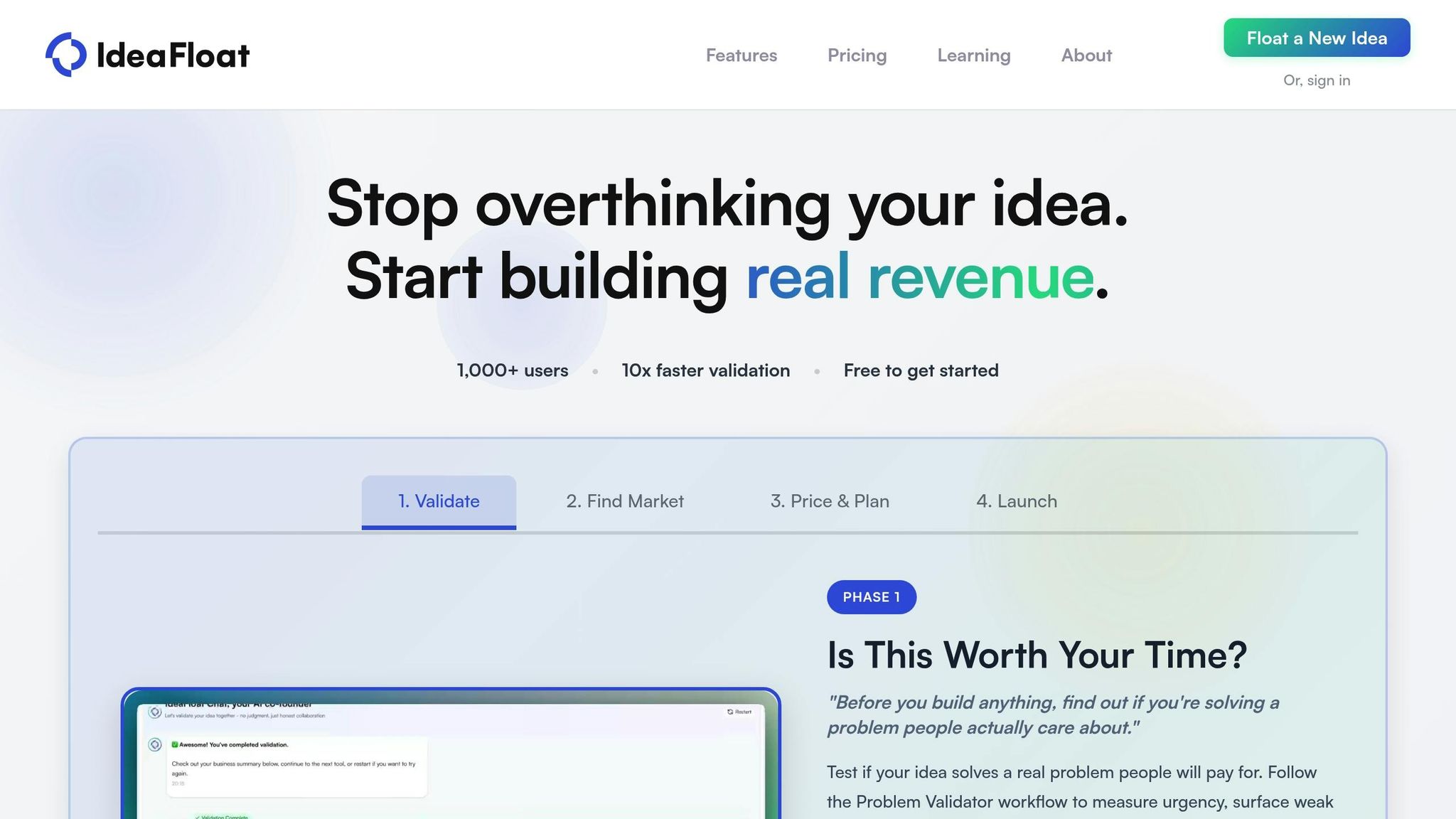
Once you've mapped out solid offline strategies, the next step is ensuring they deliver measurable results. This is where IdeaFloat steps in, turning gut instincts into data-backed actions. Before diving into offline marketing, you need to confirm if your approach will hit the mark. IdeaFloat helps you validate your business idea, understand your audience, and craft a go-to-market plan - all before spending a single dollar on offline efforts.
Start with the Problem Validator to see if your idea solves a problem people are actually willing to pay for. This tool gauges urgency and identifies early indicators of success, giving you confidence before making any investments. Once you’ve validated the problem, move on to the Consumer Insights tool. By analyzing online conversations, this feature reveals the exact language your potential customers use, verifies demand, and helps you understand what resonates with them. As Belinda, Founder of Soul and Self, explains:
"SEO tools [help] discover what your clients and customers are actually thinking, feeling and desiring - including the exact language they are using".
Next, use IdeaFloat's audience analysis framework to prioritize your offline tactics. This tool organizes customer frustrations, wants, fears, and aspirations into a clear four-square grid, helping you decide where to focus your efforts. Whether it’s hosting a networking event or sponsoring a local charity run, this framework ensures your first move aligns with your audience's needs. Sarah Moon, a Marketing and Business Strategist, highlights the importance of this step:
"Deeply understand who they are, what they need, and what their biggest aspirations are. Without a deep understanding of 'your people,' you will be doing a lot of guesswork".
Once your approach is clear, the Go-to-Market Strategy tool provides a detailed customer acquisition plan. It includes specific channels, cost estimates, and even pre-written outreach scripts, ensuring your strategy is actionable and focused.
After launching your offline initiatives, tracking results becomes essential. IdeaFloat’s Financial Model and Cost Analysis tools let you measure the ROI of each tactic, from investment to conversion time. Offline marketing often requires patience, as it can take at least 90 days to identify meaningful trends. As Sarah MacDonald advises:
"If you're running offline and online marketing efforts, ensure campaigns are focused with metrics for each channel".
Finally, connect your offline efforts to online conversions. Tools like the Waitlist Landing Page and Community Launch Map make this seamless. For instance, you could hand out QR-coded business cards at events or direct workshop attendees to join your email list. This not only captures leads but also keeps the momentum going for future engagement.
Conclusion
Running a business without relying on social media isn’t just doable - it can actually lead to a more stable and self-reliant operation. The seven offline strategies discussed here - like hosting local events or sponsoring charity runs - offer what marketers often call a "diversified portfolio" of marketing channels. The key difference? These methods allow you to own your relationships, whether through email lists, in-person connections, or community collaborations, rather than depending on platforms you don’t control.
Offline marketing has a unique advantage: it builds trust and fosters genuine connections. Studies show that 92% of people trust personal recommendations over traditional ads. Events like trade shows, workshops, and even casual dinners create opportunities for meaningful face-to-face interactions, which often lead to high-quality referrals. These relationships are built on trust, a cornerstone for long-term business success.
To make the most of your offline efforts, tools like IdeaFloat can help validate your strategies. With IdeaFloat, you can confirm that your solutions address real problems, understand the language your audience uses, and craft a go-to-market plan complete with cost estimates and outreach templates. Since offline leads often take a more indirect path than digital ones, tracking results for at least 90 days is key. As Sarah Moon, Marketing and Business Strategist at Sarah Moon Consulting, wisely advises:
"Marketing without social media is absolutely possible - but you need to be smart about your strategy".
Successful offline entrepreneurs don’t just rely on instinct - they plan, measure, and refine their approach. They use tools like IdeaFloat’s Financial Model to monitor ROI, bridge offline efforts to online conversions with QR codes and landing pages, and make consistent follow-up a priority. By taking control of your marketing channels and combining these strategies with data-driven insights, you can build a business that operates entirely on your own terms - no social media required.
FAQs
How can I track the success of offline marketing efforts?
Tracking offline marketing success means translating real-world efforts into measurable outcomes. A good starting point is to observe sales growth and shifts in foot traffic after specific initiatives like local events, direct mail campaigns, or community collaborations. By comparing revenue and visitor numbers before and after these activities, you can pinpoint any noticeable impact.
Another key step is documenting new leads by using a CRM system. For instance, track how many contacts you collect from networking events or workshops. This not only helps gauge lead generation but also simplifies follow-ups with potential customers.
Lastly, evaluate the influence of word-of-mouth referrals by calculating how many new customers are referred by current ones. This straightforward ratio sheds light on the effectiveness of your offline buzz. By consistently analyzing sales data, lead generation, and referral numbers, you’ll gain a clear understanding of which strategies are working and where to channel your energy.
What are some effective offline strategies to generate word-of-mouth for my business?
Generating word-of-mouth offline starts with creating experiences that people can’t help but share. One effective way to do this? Ask for referrals right after you’ve delivered an outstanding product or service. Be clear about the type of customers you’re looking to connect with, and show your appreciation with a small reward - think a $25 gift card or a discount on future purchases. Personal recommendations carry a lot of weight and are often the most trusted form of marketing.
Another way to get people talking is to engage with your local community. Show up at or host networking events, collaborate with businesses that complement yours, or volunteer at community activities. Handing out branded items like tote bags or T-shirts with your logo can also turn your customers into walking billboards for your brand. Most importantly, focus on delivering experiences so exceptional that people naturally want to share them with their friends and family.
How does IdeaFloat support offline marketing strategies?
IdeaFloat offers a range of tools and resources to support your offline marketing efforts. It’s designed to provide practical insights that can help you plan and execute strategies like hosting local events, forming partnerships within your community, and boosting word-of-mouth promotion.
By using IdeaFloat, you can simplify your offline campaigns. Track your progress, set clear goals, and access personalized recommendations to strengthen your local presence - all without depending on social media.
Related Blog Posts
- Profitable Business Ideas You Can Start This Weekend
- The $50 Marketing Strategy That Outperformed My $5000 Campaign
- The Exact Email Templates I Used to Get My First 50 Clients
- The 'Zero-Budget Marketing Plan' That Got My First 100 Customers