Starting a business in Australia with $30,000 or less is achievable and offers great potential across various industries. Whether you're looking into services, e-commerce, digital products, or event-based ventures, there are plenty of options that require minimal investment yet promise healthy profit margins.
Key Opportunities:
- Service-Based Businesses: Mobile cleaning services, gardening, or AI workflow consulting with startup costs ranging from $3,000 to $18,000.
- E-Commerce Ventures: Sustainable products, custom pet items, or vintage fashion, often starting with under $5,000.
- Digital Products: Online courses, niche newsletters, or AI integration services, typically needing less than $5,000.
- Event-Based Businesses: Boutique event planning or niche experiences, with budgets between $5,000 and $30,000.
Why Now?
Australia’s small businesses make up 97% of enterprises, and trends like sustainability, convenience, and digital transformation are driving consumer demand. With tools and platforms simplifying operations, starting lean and scaling quickly is more feasible than ever.
Choose an idea that aligns with your skills and local market needs, and validate it with tools like IdeaFloat to ensure demand before launching. Dive into this thriving market and make your mark in 2026.
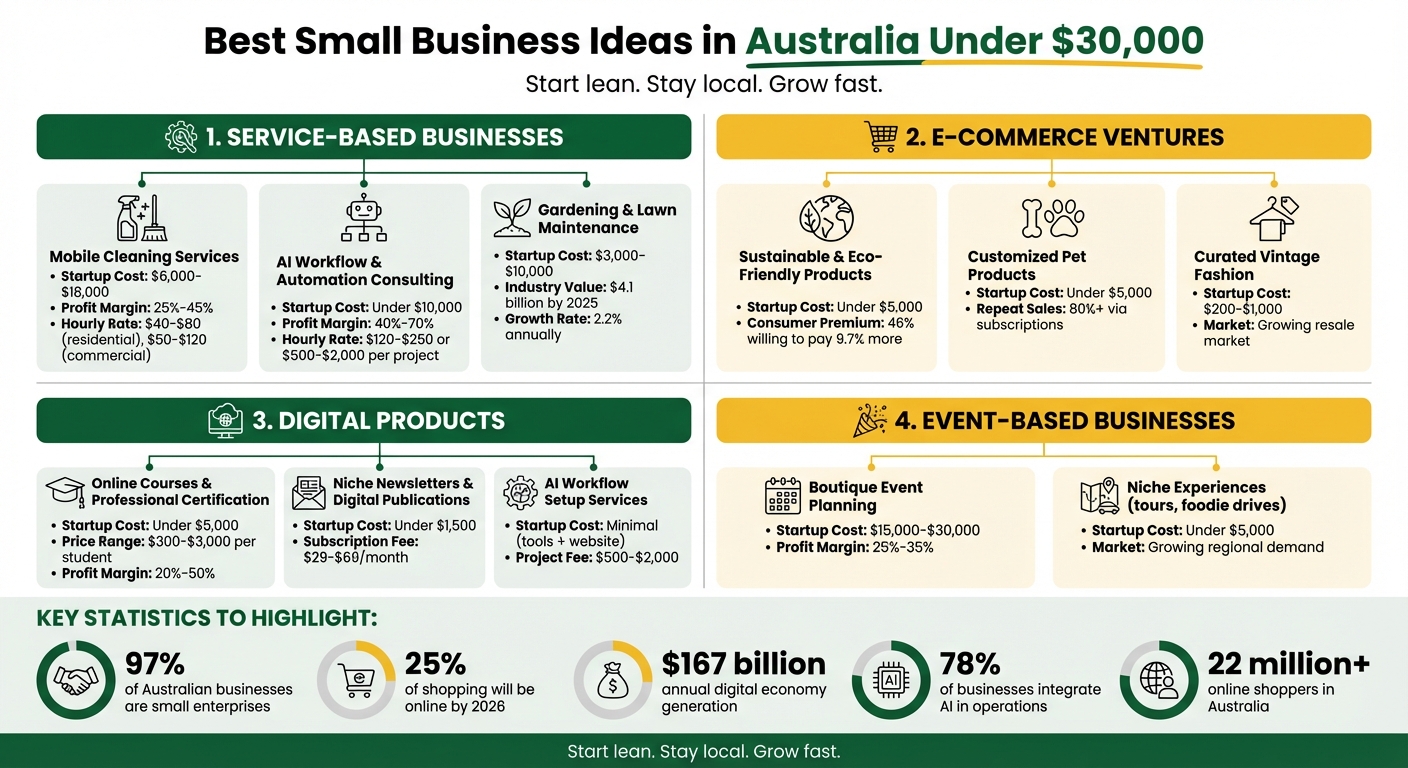
Small Business Ideas in Australia Under $30,000: Startup Costs and Profit Margins Comparison
🇦🇺 5 Small Business Ideas in Australia 2025 | Australian Entrepreneurs Guide to FAST Success
sbb-itb-08dd11e
1. Service-Based Businesses
Service-based businesses are a cornerstone of Australia's small business economy, offering a way to generate income quickly without hefty investments. With 97% of Australian businesses classified as small enterprises, this model allows entrepreneurs to bypass the costs of managing inventory or running traditional storefronts. Here are a few service-based opportunities that combine low start-up costs with strong earning potential.
Mobile Cleaning Services
Cleaning services are an easy entry point for aspiring business owners. Start-up costs typically fall between $6,000 and $18,000, covering essentials like equipment, insurance, and licensing. Once operational, these businesses often achieve net profit margins of 25%–45% after accounting for labor and transportation. Residential cleaning services generally charge $40–$80 per hour, while commercial contracts can bring in $50–$120 per hour. Building a small but loyal client base and securing recurring contracts can help establish steady monthly revenue.
AI Workflow & Automation Consulting
With 78% of businesses integrating AI into at least one area of their operations, there’s a growing need for consultants who can streamline workflows using automation. Local businesses like cafés, gyms, and real estate offices are increasingly seeking help to implement tools for automated customer responses, booking systems, and accounting. Start-up costs are relatively low, generally staying under $10,000. Consultants can charge hourly rates of $120–$250 or offer project-based pricing from $500–$2,000, with profit margins ranging from 40%–70%.
Gardening & Lawn Maintenance
Australia’s gardening services industry is thriving, generating $4.1 billion by 2025 with an annual growth rate of around 2.2%. Basic equipment like a mower, trimmer, and blower costs between $1,500 and $3,000, making total start-up expenses - including vehicle setup and insurance - fall between $3,000 and $10,000. While most general gardening tasks don’t require special licenses, more specialized services like structural landscaping or tree removal may need state certifications, particularly for jobs exceeding $5,000 in NSW. Leveraging local SEO and tapping into community networks can help attract initial clients.
2. E-Commerce Ventures
E-commerce is reshaping the retail landscape in Australia, with projections showing that 25% of all shopping will happen online by 2026. While launching a traditional online store can cost around $40,000, models like dropshipping and print-on-demand allow entrepreneurs to start with less than $1,000. These options are ideal for those working within a $30,000 budget. Success in this space often comes down to targeting high-margin niches and offering products that customers regularly need to replenish. Here are three niches that combine low start-up costs with growing consumer demand.
Sustainable & Eco-Friendly Products
With nearly half (46%) of Australian consumers willing to pay a 9.7% premium for sustainable products, eco-friendly e-commerce ventures are a promising choice. Popular items include biodegradable essentials, zero-waste household goods, and organic skincare. Using dropshipping or print-on-demand models keeps start-up costs low - often under $5,000 - while eliminating the need for warehousing. This approach taps into the growing eco-conscious mindset of Australian shoppers. Focusing on specific needs, like plastic-free household items or biodegradable pet supplies, can help your business stand out.
Customized Pet Products
Australians increasingly treat their pets as family, fueling demand for personalized pet accessories and premium products. Print-on-demand services make it easy to offer items like custom pet apparel, engraved feeding bowls, and personalized toys without maintaining inventory. Andrew Feld, founder of Fresh Patch, emphasizes the importance of offering products that customers need to replenish:
Try and find something that is necessary and needs to be replenished.
Subscription models for items such as specialty treats or grooming supplies can create consistent revenue streams. Fresh Patch demonstrates the potential here, with over 80% of their sales coming from repeat subscriptions.
Curated Vintage Fashion
The resale market is thriving, especially among younger Australians who value unique and sustainable fashion. Starting a vintage clothing business can cost as little as $200–$1,000 by sourcing thrift store finds and reselling them on platforms like Etsy or Shopify. Curated collections, such as 1990s streetwear or vintage denim, can turn low-cost items into high-margin products. Specializing in a specific niche not only attracts a loyal customer base but also helps reduce competition.
3. Digital Products
Digital products provide an opportunity to scale sales with relatively low overhead costs. In Australia, the digital economy generates over $167 billion annually, supported by more than 22 million online shoppers. This creates a fertile ground for entrepreneurs who can offer specialized tools or knowledge. With the help of AI tools, a single entrepreneur can handle workloads that used to require entire teams, making operations more efficient. Plus, starting a digital micro-business often requires less than $5,000. These digital ventures align well with the physical and service-based ideas already mentioned.
Online Courses & Professional Certification
Educational content is one of the most promising digital opportunities. Online courses typically sell for $300 to $3,000 per student, with profit margins ranging from 20% to 50%. Focusing on niche areas like STEM coaching for kids, technical certifications for trades, or skills such as AI workflow automation can make your offerings stand out. Australian parents are especially investing in digital education for their children, particularly in areas like coding and robotics. Platforms that handle payments and course delivery keep startup costs low and simplify operations.
Niche Newsletters & Digital Publications
Specialized newsletters are thriving on platforms such as Substack, generating revenue through subscriptions and sponsorships. The key to success lies in targeting underserved niches, such as local tourism guides, financial advice for young families, or regional news in growing areas like Noosa or Byron Bay. Starting this type of business often requires less than $1,500 upfront and can generate ongoing income through monthly subscriptions. Subscription fees typically range from $29 to $69 per month. With regional migration creating new markets outside major cities, localized content is becoming increasingly valuable.
AI Workflow Setup Services
Rather than traditional consulting, this digital service focuses on scalable, project-based AI integrations. Many small businesses in Australia want to adopt AI but lack the technical know-how. Offering services like automating customer responses, streamlining accounting, or improving booking systems can bring in $500 to $2,000 per project. Targeting tradespeople and small retailers - businesses that may not afford large agencies - can be particularly profitable. With minimal costs for AI tool subscriptions and a basic website, this service offers excellent profit potential.
4. Event-Based Businesses
Event-based businesses bring people together through personalized, in-person experiences, offering a great way to tap into local demand. These ventures often have low startup costs but can deliver impressive profits. In Australia, people spend generously on tailored events, ensuring a steady need for skilled event organizers. To succeed, focus on building a visually appealing portfolio and carving out a niche that sets you apart.
Boutique Event Planning
Focusing on specific event types - like weddings, corporate gatherings, or milestone celebrations - can generate profit margins of 25% to 35%. Starting such a business typically requires an investment of $15,000 to $30,000. This budget generally covers essentials like professional branding, a well-designed website with contact features, and targeted advertising on social media platforms. Don’t forget to handle the legal side, such as securing an ABN and registering for GST if needed.
A strong online presence is non-negotiable. High-quality photos and videos from past events act as your best sales pitch. Platforms like Instagram and Facebook are ideal for advertising, especially when targeting local audiences. Optimizing for "near me" searches can also attract organic leads. Additionally, eco-conscious planning is gaining traction - using sustainable decorations and supplies appeals to today’s socially and environmentally aware clients.
"An effective online presence is one of your most powerful tools." - Lawpath
While traditional event planning thrives on larger, structured occasions, there’s growing interest in smaller, unique experiences. Starting small with mobile operations - like sunrise photography tours or foodie drives in picturesque areas such as Noosa or Byron Bay - can be a smart move. These micro-experiences require minimal investment, often under $5,000, and cater to niche markets in growing regions outside major cities. They’re a great way to deliver high margins while standing out in the industry.
Conclusion
Starting a small business in Australia with under $30,000 is not only possible in 2026 but also a savvy move. With low entry barriers and advanced tools readily available, solopreneurs can create lean, home-based businesses without taking on hefty debt or long-term leases. Whether you focus on service-based ventures that bring in quick cash or digital products that generate passive income, there are plenty of opportunities waiting to be tapped.
The key is to align your business with your personal skills, lifestyle, and the needs of your local market. Take time to assess your strengths and identify gaps in your community to uncover emerging opportunities. Australian consumers continue to prioritize convenience, wellness, pet care, and home improvement, making these areas ripe for exploration.
As The Business Times puts it:
"Start lean. Stay local. Grow fast. These are the Australian small businesses shaping 2026." – The Business Times
Before diving in, validate your idea with real-world data. Tools like IdeaFloat can help you gauge market demand, study your competitors, forecast financials, and craft a strong go-to-market strategy. These AI-driven platforms streamline the process, making it easier to move from concept to paying customers while embracing the lean startup approach.
The businesses highlighted in this article - from AI workflow services to boutique event planning - prove that starting small doesn’t mean limiting your potential. Choose an idea that excites you, validate its demand, and take action. Australia’s micro-business boom is here - make your mark.
FAQs
How do I choose the best idea for my skills and city?
To find the right business idea, start by matching your skills and passions with what people in your area need. Look into local trends and figure out where there might be unmet demand or opportunities that fit your expertise. Your budget plays a big role too - whether you're working with less than $30,000 or more. Focus on affordable ideas with strong potential, like service-based businesses or digital offerings that align with your strengths and the needs of your community.
What licenses or insurance will I need to start?
Starting a small business in Australia means navigating various requirements, including industry-specific licenses and permits. For example, if you're in food services, you'll need food handling permits, while trade businesses might require specific trade licenses. Don't forget about health and safety compliance, which is essential across many industries.
Equally important is securing the right insurance coverage to protect your business. Some common options include:
- Public liability insurance: Covers claims of injury or property damage caused by your business.
- Workers' compensation insurance: Mandatory if you employ staff, providing protection for work-related injuries.
- Professional indemnity insurance: Essential for businesses offering professional advice or services, covering claims of negligence or mistakes.
To ensure you're fully compliant, consult with local authorities or industry organizations for tailored guidance based on your specific business type.
How can I validate demand before spending money?
To see if your small business idea has real potential, start by using market research tools. These tools can help you understand customer interest, figure out pricing, and estimate the market size. Another smart move? Test your idea with a basic version of your product or service. This could be anything from a prototype to a simplified offering. Use this opportunity to gather feedback and study how customers respond. These steps let you measure demand without spending too much money upfront, giving you a clearer picture of whether your idea can work.
Related Blog Posts
- 21 Low-Investment Business Ideas for Women in Australia
- Best Small Business Ideas in Australia Under $5,000
- 18 Low-Investment Business Ideas in Australia for 2026
- What Business Can You Start in Australia With $10,000? 15 Realistic Ideas for 2026