In suburban Australia, starting a small-scale business is more feasible than ever. With low startup costs (starting at $1,500), growing demand for local services, and technology simplifying operations, suburban areas are ideal for entrepreneurs. Key opportunities include:
- Home-based services: Pet grooming, tutoring, and virtual assistant roles are thriving due to community demand and high profit margins (25–60%).
- Eco-friendly ventures: Cleaning services, sustainable landscaping, and refill stations cater to the rising demand for green solutions.
- Community-focused businesses: Meal prep, STEM coaching for kids, and local delivery services address practical neighborhood needs.
- Skill-based services: Mobile tech support for seniors and small businesses fills gaps left by larger companies.
Suburbs offer a strong sense of community and lower costs, making them perfect for businesses that solve local problems. Successful ventures focus on immediate needs, build trust, and leverage technology to grow. Always validate your idea using tools like IdeaFloat to ensure demand before investing.
Small Scale Business Ideas in Australian Suburbs: Startup Costs and Profit Margins
10 Simple Businesses You Can Start for Under $100 in Australia
sbb-itb-08dd11e
1. Home-Based Services
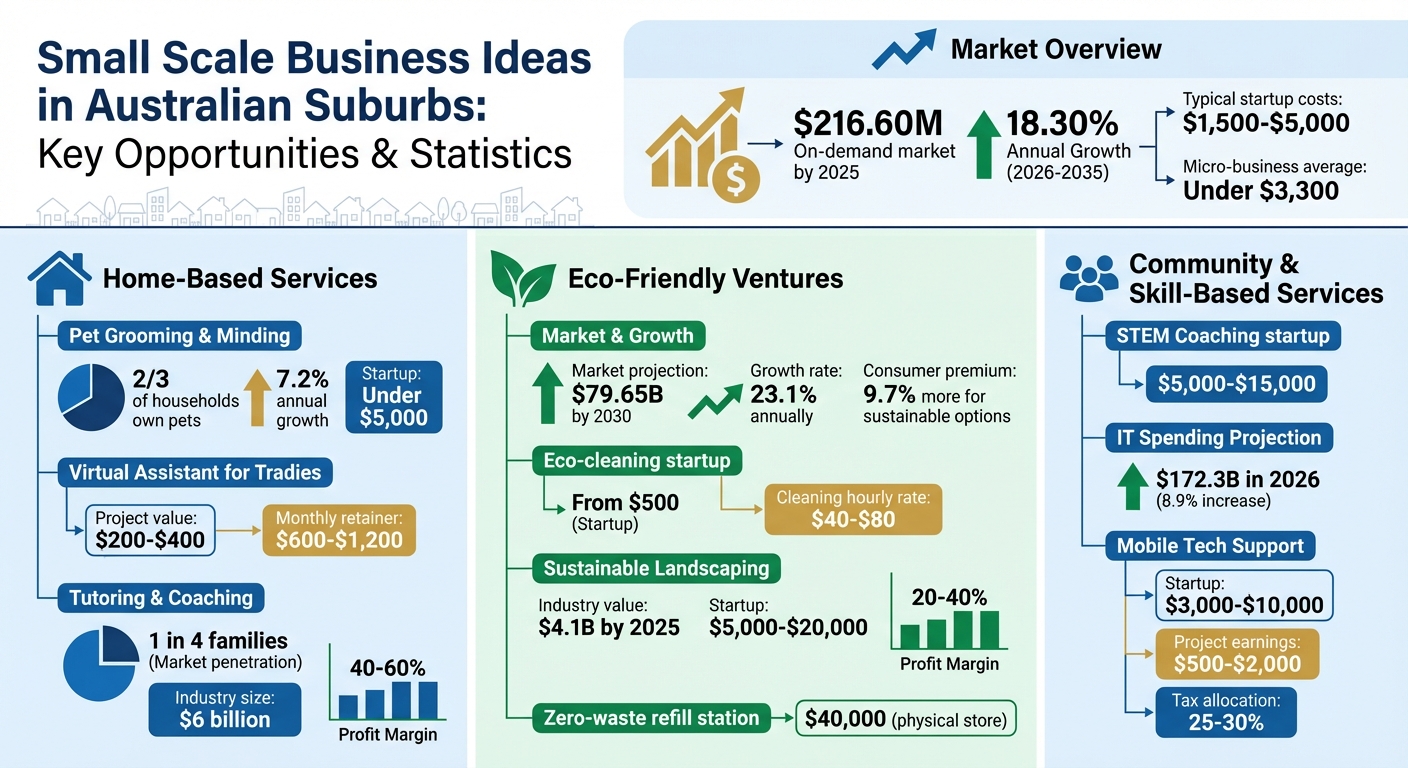
Home-based services are booming across Australian suburbs. The on-demand market is projected to hit $216.60 million by 2025, with an expected annual growth rate of 18.30% from 2026 to 2035. These businesses are attractive because they require low startup costs - typically under $5,000 - and cater to immediate neighborhood needs. Here are some examples of home-based services that align with this trend.
Mobile Pet Grooming & Minding
With more than two-thirds of Australian households owning a pet, mobile pet services have become a growing opportunity, expanding at a rate of 7.2% annually. Services like grooming, washing, and pet sitting can be offered at clients' homes, removing the need for a physical storefront. This convenience is a big draw for busy suburban families, making it easier to provide their pets with quality care without the hassle of travel. It’s a practical solution for today’s time-strapped pet owners.
Virtual Assistant for Tradies
Local tradespeople often juggle a mountain of administrative tasks - like quoting, scheduling, and invoicing - on top of their regular work. By stepping in to handle these responsibilities remotely, you can help them focus on their trade. These jobs typically involve small projects valued between $200 and $400, and virtual assistants can charge monthly retainers ranging from $600 to $1,200. This creates a reliable income stream while offering a much-needed service to local trades.
Professional Tutoring & Coaching
Private tutoring is a massive $6 billion industry in Australia, with one in four families investing in extra educational support. Whether you specialize in academic subjects, coding, music, or test preparation, you can run sessions from a home studio or online. With profit margins of 40–60%, offering subscription packages for weekly or monthly sessions can provide steady income while fostering strong relationships with students. It’s a service that resonates with families seeking personalized education solutions close to home.
2. Eco-Friendly Ventures
The sustainability market is booming, with projections estimating it will hit $79.65 billion by 2030, growing at an impressive annual rate of 23.1%. What's more, nearly half of consumers - 46% - already lean toward eco-friendly products and are willing to spend 9.7% more for sustainable options. This trend opens up exciting opportunities for suburban entrepreneurs to bring green solutions to their communities. Here are three ventures that align with this growing demand.
Eco-Friendly Cleaning Services
There’s a rising demand for chemical-free cleaning, especially among families and pet owners who want safer, non-toxic living spaces. This business idea is budget-friendly to launch - starting costs can be as low as $500 with simple supplies like vinegar, lemon, and baking soda. Residential cleaning services typically charge $40 to $80 per hour, and with a team-based approach, daily revenues can climb to $1,000.
A standout example in this space is Blueland, founded by Sarah Paiji Yoo. The company revolutionized the cleaning industry with plastic-free cleaning tablets, eliminating the need for single-use bottles. Yoo emphasizes the importance of transparency in this field:
"There's so much greenwashing in this day and age. None of these terms - eco-friendly, sustainable, green - none of it's regulated."
By being upfront about your products and methods, you can earn the trust of eco-conscious clients.
Sustainable Landscaping & Native Gardens
Sustainable landscaping is another promising venture, catering to homeowners looking to conserve water and create eco-friendly outdoor spaces. This business involves designing landscapes with native plants, installing rain gardens, or building pollinator habitats - features that require less water and maintenance. Rising water costs make these solutions especially appealing.
In Australia, the gardening services industry is projected to be worth $4.1 billion by 2025, growing at 2.2% annually. Starting this business typically requires an investment of $5,000 to $20,000, with profit margins ranging from 20% to 40%. To attract local clients, you can leverage local SEO tactics, such as targeting phrases like "native garden design [Suburb Name]" to increase visibility online.
Zero-Waste Refill Stations
Zero-waste refill stations are gaining traction as more people seek plastic-free alternatives for everyday items like pantry staples, cleaning products, and toiletries. These stations allow customers to bring their own containers, making them a practical and eco-friendly shopping option.
The Zero Waste Store, co-founded by JJ Follano and Sarah Cieslinski, is a prime example of success in this space. Their focus on plastic-free household essentials grew their sales from $6,000 to $2 million in just one year. While opening a physical store might require an upfront investment of around $40,000 for build-out costs, you can start smaller. A mobile van or a weekend market stall is a great way to test demand in your area before committing to a larger setup. This is a crucial step to validate your idea before scaling.
3. Community-Oriented Businesses
Community-focused ventures are all about addressing the everyday needs of neighborhoods, especially in suburban areas. While eco-friendly and home-based models play a role, there's also room for businesses that tackle smaller, often-overlooked tasks that make life easier for busy families and seniors. These businesses thrive by offering practical solutions that larger companies might not prioritize.
Local Food-Prep & Delivery
Imagine running a meal prep and delivery service tailored to suburban families juggling work, school, and extracurricular schedules. By preparing healthy, family-friendly meals from your own kitchen, you can keep costs low while building a loyal customer base through word-of-mouth. Suburbs are the perfect market for this, as many households struggle to find time for cooking nutritious dinners. To reach your audience, consider promoting your service in local Facebook groups or on community boards where parents often look for convenient meal options.
Kids' STEM & Robotics Coaching
Parents are increasingly aware that traditional schools don't always teach key skills like coding and robotics. By offering hands-on STEM coaching in a home studio, community center, or even in clients' homes, you can help children build tech skills for the future. While the initial investment might range from $5,000 to $15,000, the demand for early tech education is growing. For instance, Australian IT spending is projected to surpass AUD 172.3 billion in 2026, reflecting an 8.9% increase from the previous year. This trend highlights the importance of preparing kids for a tech-driven world, making STEM coaching a valuable service.
Hyper-Local Errand & Delivery Service
Suburban areas often face challenges when it comes to "last-mile" delivery - getting urgent items like groceries, medications, or documents to residents quickly. A hyper-local errand service can bridge this gap by focusing on same-day delivery for essential items. Starting such a business requires little more than a reliable vehicle and a mobile payment system like Square or EFTPOS Air. By handling tasks that larger delivery services might overlook, you can build a trusted network in your community. As The Business Times puts it:
"Start lean. Stay local. Grow fast. These are the Australian small businesses shaping 2026."
4. Skill-Based Services
Mobile Tech Support for Seniors and Small Businesses
Everyday tech challenges - like setting up smart devices or automating schedules - can be a major headache for local seniors and small businesses. Larger IT firms often skip these smaller, hands-on jobs, leaving an opportunity for mobile tech support specialists to step in. By offering in-home or on-site services, you can fill a much-needed gap in your community.
Starting this kind of business typically requires an investment of $3,000 to $10,000, but the payoff can be significant. Jobs in this space, often tied to AI workflow automation and basic troubleshooting, can bring in $500 to $2,000 per project. It’s a practical and flexible option for those with solid tech skills, and it strengthens community ties by addressing immediate tech needs.
To get started, you’ll need to register with an ABN as a Sole Trader, secure Professional Indemnity and Public Liability Insurance, and set aside 25–30% of your profits for taxes and GST.
Skill-based services like this thrive because they solve specific, local problems that larger companies tend to overlook. Suburban families and older homeowners often struggle to find dependable help for tasks that are too small for big firms but too tricky to handle on their own. By building trust through word-of-mouth and delivering reliable service, you can establish steady, long-term client relationships without needing heavy marketing efforts.
Validating Your Suburban Business Idea with IdeaFloat
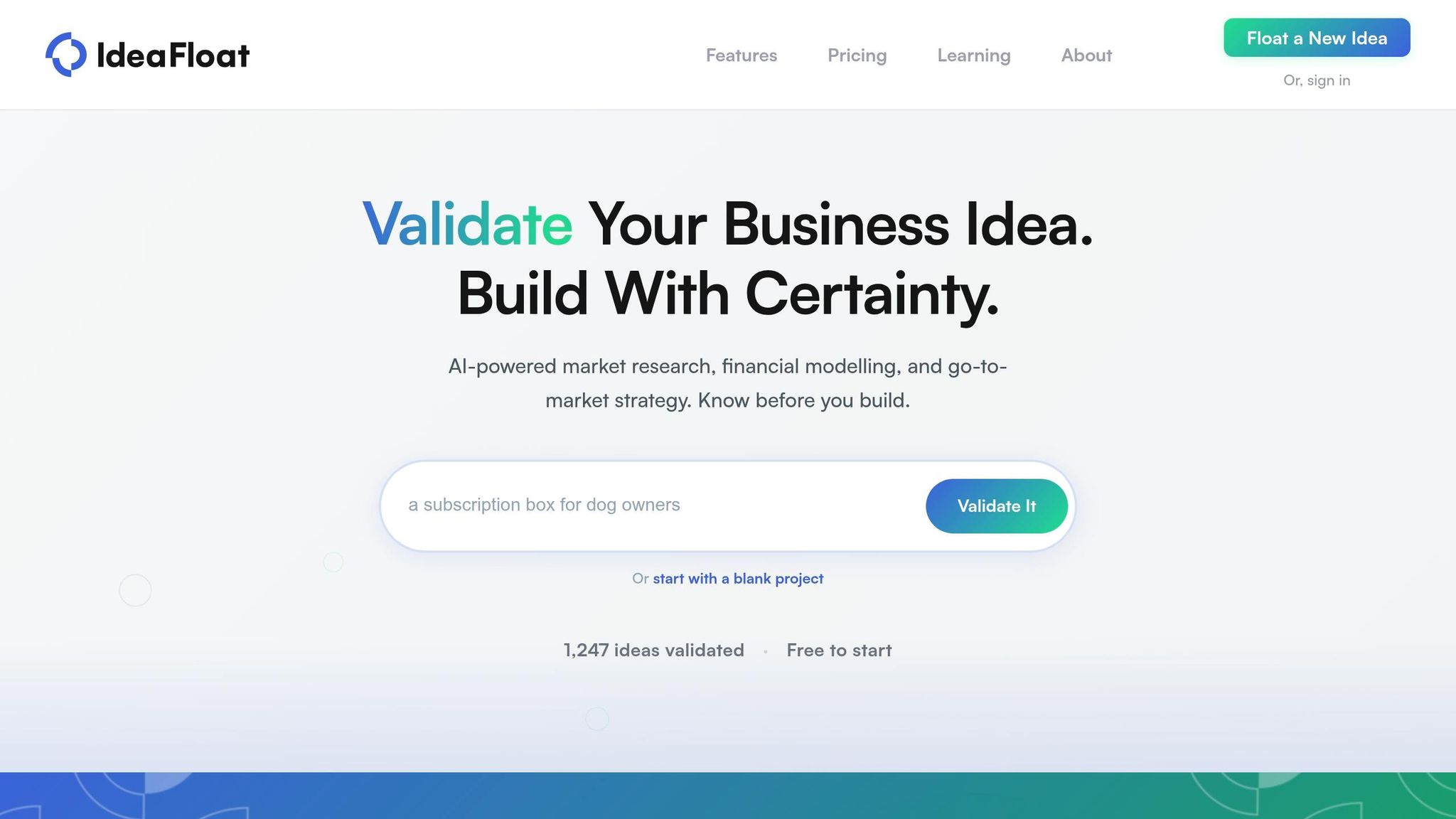
Before diving into any of these ventures, it’s crucial to confirm there’s demand for your idea. As seen with home-based and eco-conscious businesses, understanding local needs is a key ingredient for success.
To avoid costly missteps, you need solid evidence that your suburban business idea fits the local market. That’s where IdeaFloat comes in. This platform takes the guesswork out of validation by using real data. For example, it examines demographic trends - like the increasing number of aging homeowners who require landscaping or home maintenance services - and identifies overlooked opportunities, such as "small jobs" that large contractors often ignore in the $200–$400 price range. Interestingly, most micro-businesses can get started with less than $3,300. Shifting consumer preferences and regional migration patterns are also fueling demand for services like convenience-based offerings, wellness, pet care, and home improvements in suburban areas.
With tools like the Problem Validator, Smart Market Sizing, and Financial Model, IdeaFloat provides clear insights into your idea’s feasibility, startup costs, and local market potential. Whether you’re thinking about mobile tech support or eco-friendly lawn care, IdeaFloat helps you decide whether to move forward or adjust your plan - before you invest time and money into something that might not work in your area.
This data-driven approach ensures you’re building on a solid foundation, giving your idea the best chance to thrive.
Conclusion
Suburban Australia presents plenty of opportunities for businesses that focus on solving specific, local problems. The most successful ventures don’t rely on cookie-cutter ideas - they’re shaped by the needs of the community, the lifestyle habits of residents, and the gaps that big companies often miss. Whether it’s helping older homeowners with garden maintenance, offering affordable handyman services for smaller tasks, or creating mobile wellness studios for families, the secret is addressing what matters most to the people around you.
Peter Wilson from Appinventiv put it well: "Australia is transitioning from the 'Lucky Country'... to a sophisticated 'Innovation Country' powered by high-moat technology". Suburban entrepreneurs thrive by earning trust within their communities and using innovative tools to meet local needs. Most micro-businesses get off the ground for less than $5,000, which means validating your business idea before committing resources is essential.
Before diving in, ask yourself: Does your neighborhood actually need your service? And just as importantly, are people willing to pay for it? While regional migration is creating new suburban markets beyond major cities, not every idea will succeed in every area. Careful research and planning can help you avoid costly missteps.
As we’ve discussed, the key to thriving in suburban business is tackling local challenges head-on. By 2026, the businesses that stand out will be the ones that start small, focus on their immediate community, and build real relationships. Your suburb doesn’t need another generic service - it needs thoughtful solutions that make life better for everyone. Take the time to understand your neighbors’ priorities, ensure your business fits seamlessly into the community, and create something that genuinely improves the area.
When you solve real problems for the people around you, you’re doing more than just running a business - you’re becoming an integral part of your community’s fabric. That’s the kind of entrepreneurship that not only generates income but also enhances suburban life for everyone involved.
FAQs
How do I pick the best business idea for my suburb?
To find the right business idea for your suburb, begin by pinpointing the services or products your local community needs but lacks. Look for opportunities that fit your personal skills and passions while keeping startup costs and available resources in mind. Make sure your idea adheres to local laws and taps into popular trends, like environmentally friendly or health-oriented goods. Balancing these factors will guide you toward a business idea that’s practical and well-suited to your area.
What permits or insurance do I need to start?
To launch a small business in Australia, you’ll need to secure the appropriate permits and insurance based on your business type. This process typically involves registering for licenses through state resources or using the Australian Business Licence and Information Service (ABLIS). On top of that, having the right insurance is crucial - whether it’s public liability insurance for food-related businesses or tailored coverage for home-based services. It's a good idea to consult with a business adviser to ensure you’re meeting all the necessary legal obligations.
How can I validate demand before spending money?
Before diving headfirst into your business idea, it’s smart to check if there’s actual demand for it. Start by researching your local market to spot any unmet needs or emerging trends. This could mean looking into what people are talking about, searching for, or struggling to find in your area.
Once you have an idea, test it out with low-cost methods. For example:
- Surveys: Ask potential customers directly about their interest or pain points.
- Pilot Services: Offer a scaled-down version of your idea to a small group and gather feedback.
- Landing Pages: Create a simple webpage to gauge interest - track visits, clicks, or sign-ups.
These approaches let you measure interest without spending too much upfront. Plus, they give you a clearer picture of whether your idea has real potential.
Related Blog Posts
- 21 Low-Investment Business Ideas for Women in Australia
- 18 Low-Investment Business Ideas in Australia for 2026
- Business Ideas for Outer-Suburban Australia With Local Demand
- Best Small Business Ideas in Australia Under $30,000