Starting a business in Australia doesn’t have to break the bank. With under $1,000, you can launch a venture that offers high profit potential and low overhead. Here are some standout ideas:
- AI Workflow Setup Services: Help businesses automate tasks for $500–$2,000 per project.
- Virtual Assistant Services: Earn $25–$60+ per hour with startup costs under $500.
- Social Media Management: Manage accounts for $600–$1,200 per client monthly.
- Digital Downloads: Sell templates or eBooks with 90%+ profit margins.
- Mobile Pet Grooming: Requires $15,000–$30,000 but eliminates salon rent.
- Car Detailing: High 90% profit per vehicle with minimal equipment costs.
- Home Maintenance Subscriptions: Offer recurring services for $29–$69 monthly.
- Vintage Fashion Resale: Start with $200 by flipping thrifted items online.
- Hyper-Local Delivery: Serve underserved areas with just a car and smartphone.
- Home-Based Meal Prep: Cater to busy families for $50/hour plus groceries.
- Print-on-Demand Merchandise: Design and sell custom goods without inventory.
Australia’s 2026 market favors small, lean businesses. Whether you’re tech-savvy or hands-on, these ideas cater to low-cost startups with strong earning potential. Focus on your skills and target local needs to get started.
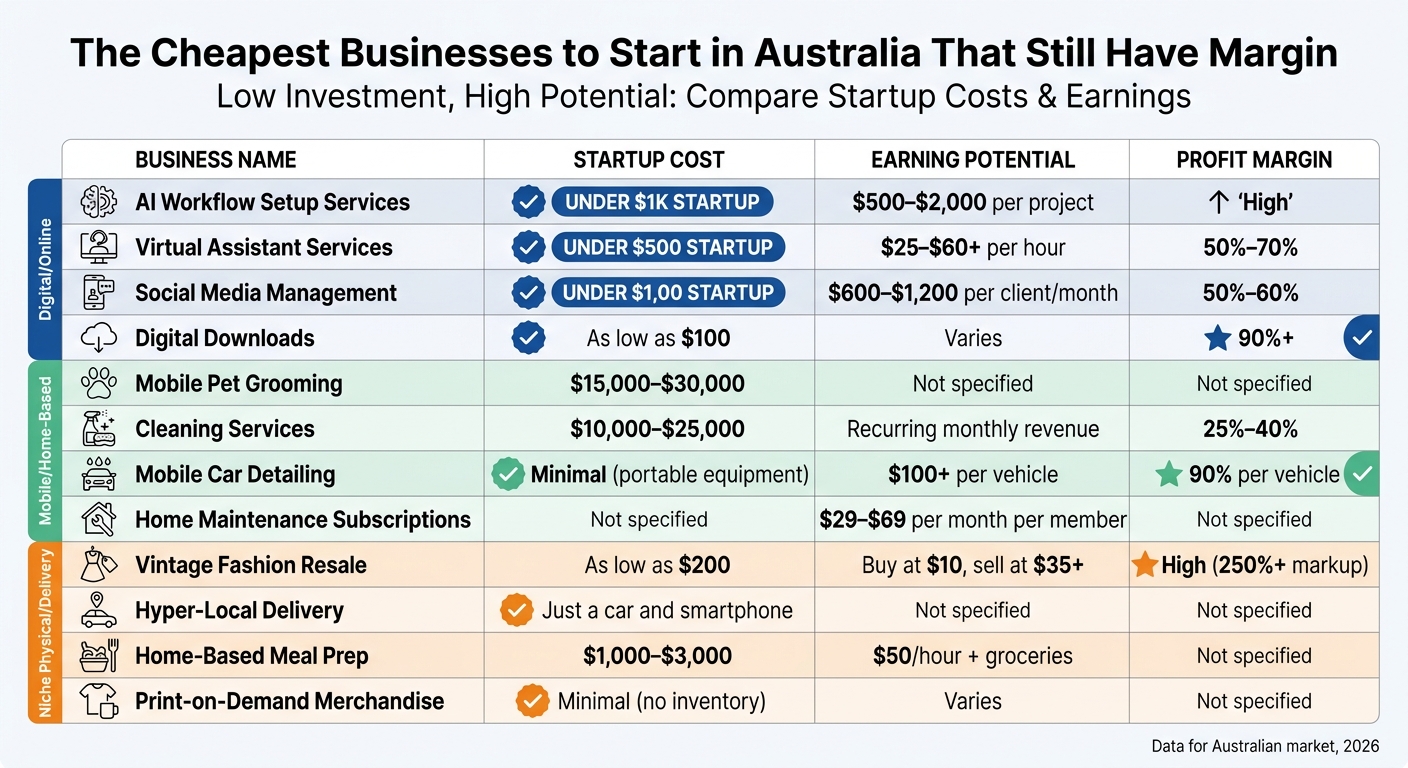
11 Low-Cost Business Ideas in Australia: Startup Costs, Earnings & Profit Margins Comparison
10 Simple Businesses You Can Start for Under $100 in Australia
sbb-itb-08dd11e
1. Digital Products and Online Services
Starting a digital business can be a smart move if you're looking to avoid the hassle of physical inventory and high overhead costs. Many of these ventures can be launched with just a few hundred dollars, making them accessible for almost anyone. Below, we’ll dive into a few specific digital service models that offer a combination of low startup costs and strong earning potential.
AI Workflow Setup Services
With many Australian businesses leaning toward streamlined operations, AI workflow setup services are in demand. Small businesses often deal with repetitive tasks like managing customer inquiries, booking schedules, and accounting processes. Specialists who can implement AI-driven automation using advanced tools are highly sought after. The best part? You can charge between $500 and $2,000 per project, and the initial investment is minimal. This service is particularly appealing to busy local businesses looking for efficiency.
Virtual Assistant Services
Virtual assistant work is another great option, offering hourly rates between $25 and $60+, depending on your expertise. You can get started for under $500, covering essential software and a basic website. Many local tradespeople and small business owners need help with tasks like scheduling, invoicing, and follow-up communications. With low overhead costs, profit margins can range from 50% to 70%, as your primary expense is your time.
Social Media Management
The social media management industry is booming, with projections showing it could surpass $124 billion by 2032. By managing social media accounts for local businesses, you can secure monthly retainers of $600 to $1,200 per client. This business model typically offers profit margins of 50% to 60%. It’s a great fit for businesses that understand the importance of social media but lack the expertise or time to manage it effectively.
Digital Downloads and Templates
Creating and selling digital products like templates, ebooks, PDFs, and design assets is another lucrative avenue. These products can deliver profit margins of over 90%, as there’s no inventory or shipping involved. If you’re a skilled designer, you can start with as little as $100. A standout example is Kat Norton, also known as Miss Excel, who turned her expertise in Microsoft Office into a scalable income stream by selling online courses. Platforms that handle payment processing and delivery make it even easier to sell these products directly to your audience.
2. Mobile and Home-Based Services
If you'd rather engage with customers face-to-face than sit behind a desk, mobile and home-based services could be a perfect fit. These types of businesses often come with lower overhead costs and focus on delivering convenience directly to customers. Some can be started with minimal investment, while others may need a bit more upfront funding. The big win here? No rent costs - and with smart planning, you can maintain strong profit margins.
Mobile Pet Grooming
Did you know that more than 70% of families have pets? That makes mobile pet grooming a solid business opportunity. With an initial investment of $15,000 to $30,000, you can set up a van and purchase the essential grooming tools. Mobile grooming stands out because it eliminates the need for a physical salon while offering the convenience of at-home service. This model not only saves on rent but also appeals to busy pet owners, making it a profitable choice.
Cleaning Services
From homes to offices, cleaning services are always in demand. Margins in this industry typically range from 25% to 40%, making it a reliable option for steady income. Starting costs are usually between $10,000 and $25,000, covering essentials like cleaning supplies, liability insurance, and marketing. Once you establish a recurring client base, monthly revenue becomes predictable. To attract local customers, focus on local SEO and optimize your Google My Business profile for "near me" searches.
Mobile Car Detailing
Car detailing is another business with excellent potential. Operators can earn 90% profit per vehicle, with each job often bringing in $100 or more. You don’t need much to get started - just some portable equipment and a willingness to work in customers' driveways. Social media is your friend here: sharing before-and-after photos is a great way to turn local interest into bookings. Plus, as your reputation grows, so does your client base.
Home Maintenance Subscriptions
Why not create a "Home Care Club" subscription service? For a monthly fee of $29 to $69, members can enjoy routine maintenance checks for their home systems. This model targets smaller jobs, typically in the $200 to $400 range, that larger contractors often overlook. Subscriptions provide steady, recurring income and help offset the seasonal ups and downs that often come with handyman work.
Whether it’s grooming pets, cleaning homes, detailing cars, or maintaining properties, these services tap into the growing demand for convenience right at the customer’s doorstep. And with the right approach, they can be both profitable and rewarding.
3. Niche Physical and Delivery Businesses
Expanding beyond digital and mobile services, there’s plenty of potential in combining physical products with local delivery. Not all profitable ventures rely solely on digital models. In fact, some of the most promising low-cost opportunities in Australia focus on physical goods or delivery services, especially when targeting underserved markets. Many of these ideas can be started with an investment of $1,500 to $5,000, aligning with trends like eco-consciousness, local convenience, and wellness.
Curated Vintage Fashion Resale
The vintage and upcycled fashion market is thriving, particularly with younger audiences. It’s a business you can dive into with minimal upfront costs - starting as low as $200. By sourcing items from thrift stores or estate sales, you can resell them online or at local markets. For example, buying an item for $10 and selling it for $35 or more is a common practice. Focusing on a specific niche, like 90s streetwear, can help you stand out. Social media is a powerful tool for building a loyal customer base in this space.
Hyper-Local Errand and Delivery Services
Australia’s regional migration has created a need for hyper-local delivery services, especially in suburbs far from major commercial hubs. These businesses cater to immediate needs - think medications, groceries, documents, or even midnight snack runs. All you need to get started is a reliable vehicle and a smartphone. By focusing on areas overlooked by larger delivery platforms, you can carve out a steady customer base in your community.
Home-Based Specialty Food Preparation
Busy families are increasingly looking for fresh, healthy meals prepared by local home-based chefs. With an initial investment of $1,000 to $3,000 for professional-grade cookware and permits, you can start offering meal delivery services. Charging around $50 per hour (plus grocery costs) makes this a potentially lucrative venture. Just make sure your kitchen and processes meet your state’s health and safety requirements before launching.
Print-on-Demand Merchandise
Print-on-demand is a great way to sell custom merchandise - like t-shirts, tote bags, or water bottles - without having to hold inventory. You simply design the products, and a third-party supplier handles printing and shipping once an order is placed. This model minimizes financial risk and storage costs, while also allowing you to experiment with different ideas quickly.
These niche physical and delivery business ideas complement digital service models, offering a broader range of low-cost opportunities for aspiring entrepreneurs.
Conclusion
Lean strategies are a perfect fit for Australia's ever-evolving entrepreneurial scene. Building a profitable business here doesn’t demand a massive investment or years of preparation. In fact, many opportunities require only a small upfront cost while offering impressive profit margins. The trick is finding a model that aligns with your skills, budget, and how quickly you need to generate income.
Australia’s 2026 market is leaning toward small, local businesses. With regional migration opening up underserved markets outside the big cities and AI tools enabling solo entrepreneurs to handle tasks that once needed entire teams, the playing field has never been more accessible. Whether it’s setting up AI workflows for $500–$2,000 per project, managing social media accounts for $600–$1,200 per month, or offering hyper-local services in your community, these are real, tangible opportunities.
Before diving in, it’s vital to validate your business idea. Use a simple five-question framework to guide your decision-making: What’s your available capital? Do you have unique skills or certifications? Would you prefer remote work or in-person engagement? Do you want recurring income or one-off projects? And how quickly do you need cash flow? Answering these questions will help you pinpoint the business model that fits your goals and resources.
The businesses making waves in Australia today share three key qualities: they start small, focus on local markets, and adapt quickly. Forget about crafting a flawless plan - what you need is a solid idea, feedback from your community, and the flexibility to adjust as you go. The tools, market trends, and consumer needs are all working in your favor.
FAQs
What business can I start with under $1,000 and get paid quickly?
Launching a virtual assistant service or providing AI workflow setup services can be excellent business ideas. These ventures typically have low startup costs - usually under $1,000 - and can begin generating income within just a few weeks. The combination of minimal overhead and growing demand makes them attractive options for entrepreneurs looking to get started quickly.
What licenses or insurance do I need for these businesses in Australia?
The licenses and insurance you’ll need for starting a low-cost business in Australia depend on what kind of business you’re running. At a minimum, you’ll need to register your business and look into any industry-specific licenses that may apply. For example, a food business might require health and safety permits, while a tradesperson could need a professional license.
On top of that, securing insurance is key. Common options include public liability insurance, which protects you if someone is injured or their property is damaged due to your business activities, and professional indemnity insurance, which covers claims of negligence or mistakes in the services you provide.
It’s essential to check local regulations and guidelines to ensure you’re ticking all the legal boxes. This not only keeps you compliant but also helps manage potential risks.
How do I validate demand and price my first offer locally?
To understand your local market, begin by exploring what your audience truly values. Use tools like surveys, social media polls, or even face-to-face conversations to get a clear picture of their needs. Look at what your competitors are charging - this can help you spot pricing gaps or areas where you can stand out.
Start small by introducing a minimum viable product (MVP) or a pilot version of your offering at a lower price. This lets you test the waters and gather real-world feedback. Pay close attention to customer reactions and sales patterns, then tweak your pricing strategy accordingly. Keep the process ongoing - regularly collect insights from your audience and analyze your data to make sure your pricing stays in step with local demand.
Related Blog Posts
- 21 Low-Investment Business Ideas for Women in Australia
- Best Small Business Ideas in Australia Under $5,000
- 18 Low-Investment Business Ideas in Australia for 2026
- Best Small Business Ideas in Australia Under $30,000