Australia in 2026 offers fertile ground for starting a small business. With inflation steady at 3.8% and AI tools reducing operational costs, you can launch many ventures for under $5,000. Current trends show high demand in areas like health, digital services, and local experiences. Regional migration is also expanding markets beyond cities. Here are some key small business ideas to consider:
- Service-Based Businesses: Virtual assistants for tradespeople, AI workflow setup, mobile pet grooming, and home maintenance subscription services.
- Digital Businesses: Freelance web design, e-commerce consulting, digital product creation, and social media management.
- Food and Beverage: Mobile coffee carts, meal prep services, artisan bakeries, and food trucks.
- Craft Businesses: Digital printables, handmade candles, custom jewelry, and pet accessories.
- Tourism: Micro-experiences, equipment rentals, co-hosting for short stays, and pet-friendly tourism services.
- Specialized Services: AI workflow consultants, indoor plant styling, and agricultural tech consulting.
- Eco-Focused Ventures: Sustainable landscaping, secondhand retail, and eco-friendly cleaning services.
- Tech Businesses: AI automation, cybersecurity consulting, low-code development, and STEM coaching for kids.
- Niche Ideas: Subscription-based home maintenance, curated fashion, and men's grooming products.
These ideas cater to various budgets, skills, and interests, making it easier to find a business that suits your goals. The focus is on small, scalable ventures that solve specific problems and align with market trends.
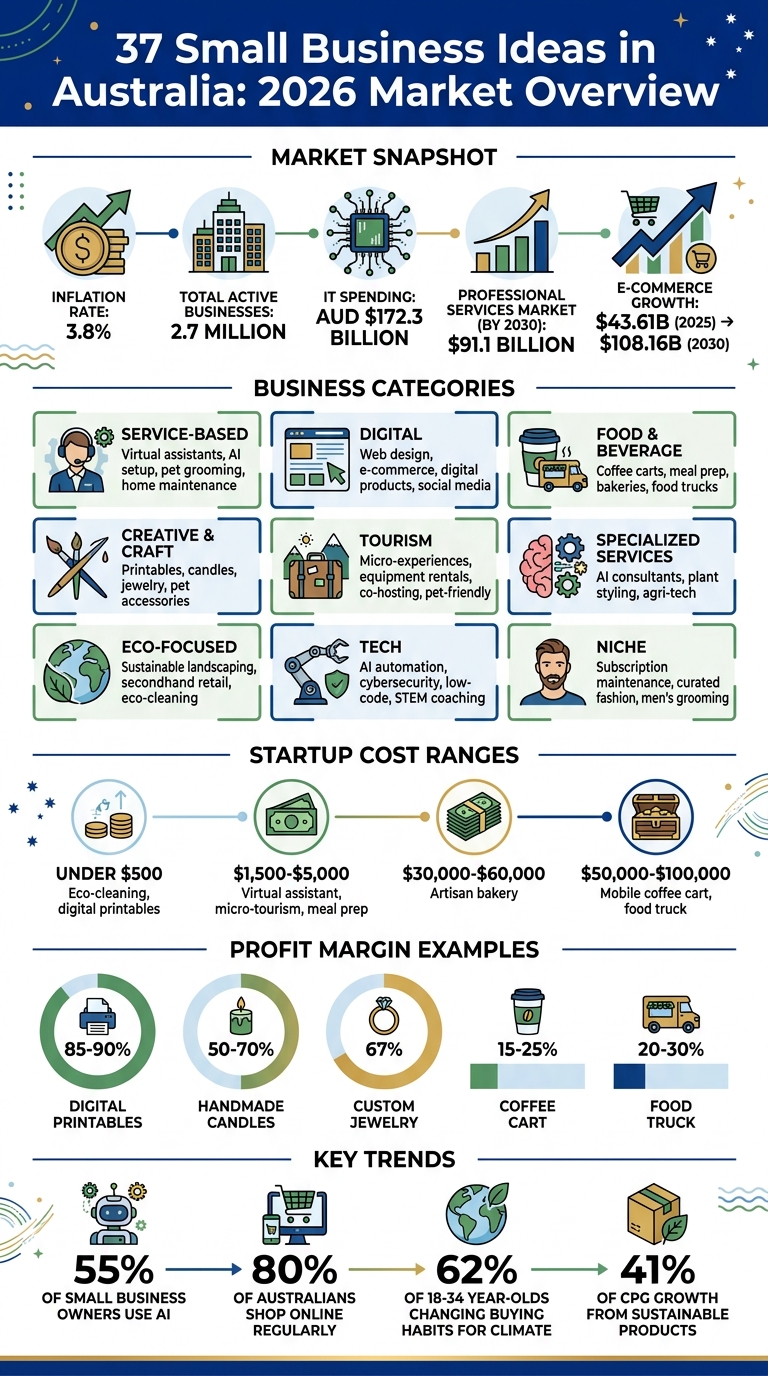
37 Small Business Ideas in Australia: Market Overview and Key Statistics 2026
20 High-Demand Business Ideas for Australia in 2026
sbb-itb-08dd11e
1. Low-Investment Service-Based Businesses
Starting a service-based business in 2026 presents a great opportunity for Australian entrepreneurs. These businesses often have minimal startup costs - many can be launched for under $5,000, with some requiring as little as $1,500. The profit margins are typically high since your biggest investment is your time, allowing you to increase rates as your skills and expertise grow. With AI-driven tools making operations more efficient, small service businesses can rival larger firms while staying nimble. The professional services market is also expected to hit $91.1 billion by 2030, signaling a bright future for these ventures.
Here are a few service-based business ideas that combine low costs with high efficiency.
Virtual Assistant for Australian Tradies
For many Australian tradespeople, administrative tasks like quoting, scheduling, and invoicing can take up valuable time that could be spent on billable work. As a virtual assistant, you can handle these tasks remotely, freeing up their time to focus on their trade. Specializing in Australian-standard software like Xero or MYOB can make your services even more appealing. Hourly rates typically range from $35 to $60 or more, and the startup costs are minimal - just a laptop, a reliable internet connection, and basic business insurance.
AI Workflow Setup for Local Businesses
Small businesses across Australia are eager to adopt AI tools to streamline their operations, from automating customer service to managing email workflows and chatbots. If you have the skills to set up these systems, you could charge between $500 and $2,000 per project. Offering free consultations at the start can help you build a portfolio and establish trust in this growing market.
Home Maintenance Subscription Club
Instead of taking on one-off handyman jobs, consider offering a subscription service for regular home maintenance. Homeowners could pay a monthly fee - typically between $29 and $69 - for tasks like smoke alarm checks, gutter cleaning, and air filter replacements. This model not only provides a steady income but also fosters long-term relationships with clients, especially busy families and elderly homeowners who value convenience and preventative care.
Mobile Pet Grooming
With over two-thirds of Australian households owning at least one pet, mobile pet grooming is a lucrative option. By bringing grooming services directly to clients’ homes, you eliminate the hassle of pet transportation for owners. Depending on the pet’s size and the services offered, you can charge $30 to $100 or more per session. Initial costs include setting up a grooming van, purchasing equipment, and obtaining pet first aid certification. Focusing on specific neighborhoods can help you build a loyal client base while reducing travel time.
These ideas demonstrate how low-cost service businesses can open doors to exciting entrepreneurial opportunities, with more options to explore in the following sections.
2. Home-Based Digital Businesses
Home-based digital ventures are an excellent way to start a business with minimal upfront costs. With over 80% of Australians shopping online regularly and the e-commerce market projected to jump from $43.61 billion in 2025 to $108.16 billion by 2030, the opportunities are immense. All you need to get started is a laptop, an internet connection, and the right tools to serve clients across the country from the comfort of your home.
Here are four ideas for home-based digital businesses:
Freelance Web Design and Development
Every business needs a functional and professional website, and this demand creates a lucrative opportunity for freelance web designers and developers. With hourly rates ranging from $50 to $100 or more, you can create anything from basic landing pages to complex e-commerce platforms. Using a .au domain and local hosting ensures faster load times and compliance with data regulations, which are key selling points for Australian clients.
E-commerce Consulting
With nearly 70% of Australian shoppers expecting personalized online experiences and mobile commerce making up 45% of e-commerce activity, businesses often need guidance to stay competitive. As an e-commerce consultant, you can assist clients in refining their sales strategies, meeting GST obligations, and boosting conversion rates. This role combines technical expertise with marketing skills, allowing you to work with multiple businesses from your home.
Digital Product Creation
Selling digital products like online courses, eBooks, or templates offers high margins and eliminates the need for inventory management. Platforms like Teachable or Thinkific (costing $29–$71 per month) make it easy to create and sell your products. To safeguard your work, consider using expiring links or watermarks to prevent unauthorized sharing.
Social Media Management for Local Businesses
Local businesses such as cafes, gyms, and retailers often need help maintaining a strong social media presence. From your home office, you can manage their accounts and charge monthly retainers ranging from $600 to $1,200 per client. Start by offering your services to nearby businesses to build your portfolio and gain experience.
3. Food and Beverage Ventures
Australia's foodservice market is projected to reach a staggering US$50.0 billion by 2028, with specialist coffee and tea shops growing at an annual rate of 5.7%. Coffee is a daily staple for millions of Australians, making food and beverage ventures an appealing option for entrepreneurs looking for lean startup opportunities and niche markets.
Here are four business ideas in the food and beverage sector:
Mobile Coffee Cart
A mobile coffee cart is a cost-effective alternative to a traditional café, with startup expenses ranging from $50,000 to $100,000. By setting up in high-traffic areas like office districts, parks, or weekend markets, you can capture the morning coffee rush without committing to a long-term lease. Profit margins typically range from 15–25%, and once you’ve built a loyal customer base, expanding with a second cart could be a logical next step.
Home-Based Meal Prep Service
With 40% of Australian consumers opting for ready meals to save time and effort, a home-based meal prep service has strong potential. Operating from your home kitchen (pending local council approvals), you can offer fresh, nutritious meals tailored for busy households. Options like per-meal pricing or weekly subscriptions allow you to test the waters before scaling up to a larger operation.
Artisan Bakery or Custom Cake Business
The demand for artisan breads and custom cakes is on the rise, with startup costs ranging from $30,000 to $60,000 and profit margins of 20–30%. You could start small by selling your creations at local farmers' markets or through social media platforms. Specializing in a single product, such as gourmet donuts or artisan brownies, can streamline operations and help establish a recognizable brand.
Food Truck
A food truck offers the freedom to move between festivals, office parks, and other high-traffic events without the overhead of a permanent location. Startup costs typically fall between $60,000 and $90,000, with profit margins hovering around 20–30%. This flexibility makes it an attractive choice for entrepreneurs looking to explore different customer bases.
Next, let’s dive into creative and craft businesses that combine artistry with market appeal.
4. Creative and Craft Businesses
Australia's creative economy is a hotbed of opportunity. Globally, the handicrafts market reached a staggering $830.4 billion in 2023 and is expected to grow by 9.2% annually, hitting $1.8 trillion by 2032. Many creators are starting businesses for less than $1,500, combining artistic passion with impressive profit margins and repeat sales.
With rising global demand and low startup costs, creative entrepreneurs have a chance to turn their talents into thriving businesses. Below are four ideas in the creative and craft space:
Digital Printables
Digital printables - like wall art, planners, and educational worksheets - are a goldmine for creators. These products boast net profit margins of 85–90% because they don’t require shipping or reproduction costs. With startup costs often under $100, you can design once and sell repeatedly on platforms like Etsy or a Shopify store. Pairing digital items with physical products can also increase earnings.
Handmade Candles and Bath Products
Scented candles and bath items are not only popular but also profitable, with margins ranging from 50–70%. For example, candles that cost $3–$4.50 to produce often sell for around $15. Batch production helps reduce labor costs, and an initial investment of $1,500 is enough to test your products in local markets.
Custom Jewelry
Handmade jewelry is another lucrative option. Materials often cost just $0.70 to $2.10 per piece, yet items typically retail for $30 or more, yielding gross margins of about 67%. A good rule of thumb is to mark up material costs by four times to ensure profitability. Customization, such as name necklaces or engraved pieces, is particularly popular and continues to drive demand.
Handmade Pet Accessories
With the pet accessories market growing at 6.9% annually and projected to hit $9.97 billion globally by 2030, this is a sector worth exploring. In the U.S. alone, 94 million households have pets, and Gen Z pet ownership has increased by 43.5%. Items like personalized collars, bandanas, and toys are in high demand as more people treat their pets like family members.
Next, we’ll explore tourism and experience-based businesses that leverage Australia’s stunning landscapes and cultural richness.
5. Tourism and Experience-Based Businesses
Australia's tourism scene is evolving. Instead of the traditional week-long vacations, there's a growing trend toward flexible, authentic weekend getaways. This shift, along with regional migration, is opening doors for businesses offering specialized local experiences.
Globally, the travel and tourism industry is expected to hit $988 billion by 2025 and grow further to $1.39 trillion by 2030. In Australia, the spotlight is on regional hubs like Byron Bay, Noosa, Margaret River, and Hobart, where niche services are thriving. Here are four business ideas tapping into this trend to create unforgettable experiences.
Tourism Micro-Experience Provider
Unique, tailored activities like sunrise photography tours, secret lookout visits, foodie trails, and wildlife spotting are becoming increasingly popular. These experiences appeal to weekend travelers and hobbyists seeking more than the usual sightseeing options. By using local knowledge, you can reveal hidden gems that mainstream tours often miss. Starting one of these ventures is relatively affordable, with initial startup costs ranging from initial costs ranging from $1,500 to $5,000,500 to $5,000. Plus, they offer high profit margins and require minimal overhead, making them an attractive option for entrepreneurs.
Lifestyle Equipment Rentals
Regions with high foot traffic, especially coastal or adventure-heavy areas, are perfect for renting out gear like e-bikes, stand-up paddleboards, or beach equipment. This business model is straightforward, requiring minimal staffing and benefiting from repeat customers during busy seasons. Focusing on hotspots frequented by adventure enthusiasts and day-trippers can maximize the potential for success.
Short-Stay Co-Hosting
For Airbnb property owners, managing guest communications and operations can be a challenge, especially in regional areas. That’s where co-hosting services come in. Co-hosts typically earn 15–20% of booking revenue without owning any property themselves. This service is particularly appealing in regions where property owners may live elsewhere or lack the time to handle bookings and logistics.
Pet-Friendly Tourism Services
With pet ownership at an all-time high, travelers are increasingly including their pets in their plans - or seeking care for them while they explore. Services like dog-friendly tours, specialized pet walking, and pet-sitting for tourists are growing in demand. This niche combines personalized care with strong profit potential, as many pet owners are willing to spend extra for reliable, high-quality services while they enjoy local attractions.
6. Specialized Service Businesses
Australia's specialized service industry is on the rise, with sectors like Medical and Health Care Services projected to grow by 6.6% in 2024-25. This trend toward niche expertise is opening doors for businesses that can address highly specific technical challenges while keeping costs low and leveraging scalable, knowledge-driven solutions.
Looking ahead to 2026, success will likely depend on identifying service gaps that larger companies often overlook. Professionals and tradespeople are increasingly seeking specialized help for administrative and technical tasks. Interestingly, over 55% of Australian small business owners say AI has streamlined their operations, creating opportunities for experts who can help businesses navigate and utilize these technologies effectively.
Here are four specialized service ideas designed to fill specific market needs and cater to professional clients.
AI Workflow Consultant
Many small businesses want to automate repetitive tasks but lack the expertise to implement AI solutions effectively. As an AI workflow consultant, you could help businesses automate customer service responses, accounting tasks, appointment scheduling, and data analysis. This service is particularly appealing to local retailers, professional service providers, and tradespeople who are competing with larger firms.
Consultation fees typically range from $500 to $2,000 per project, and you can operate with minimal overhead since the work can be done remotely. By mastering tools like Zapier, ChatGPT integrations, and software tailored to specific industries, you can focus on delivering targeted, technical solutions. The low entry barrier makes this an accessible yet lucrative option.
Virtual Assistant for Tradespeople
Tradespeople often find it challenging to manage administrative tasks like quoting, scheduling, invoicing, and following up with customers. A virtual assistant service tailored to this group could charge between $35–$60 per hour or offer monthly retainer packages for ongoing support.
Unlike general virtual assistant services, this niche requires familiarity with industry-specific software and licensing. By handling everything from job calendars to warranty claims, you enable tradespeople to concentrate on revenue-generating work. The recurring revenue model ensures steady income, and you can scale by hiring additional assistants as your client base expands.
Indoor Plant Styling and Maintenance
The growing popularity of biophilic design has turned indoor plants into a thriving service category. Both homeowners and corporate offices are investing in custom plant installations that require regular upkeep. Initial consultations might cost around $150, while full-scale commercial installations could run into the thousands.
Monthly maintenance contracts provide a consistent revenue stream, as many clients lack the time or expertise to care for high-end plants. A Certificate of Horticulture can help establish your credibility quickly. This service fits neatly between interior design and horticulture, with a focus on corporate clients in business districts or affluent neighborhoods where aesthetics are highly valued.
Agricultural Technology Consultant
Farmers are under increasing pressure to adopt modern technologies while navigating complex regulations and sustainability goals. As an agricultural technology consultant, you could specialize in implementing tools like precision farming systems, soil monitoring devices, and water management technologies. Depending on your expertise, daily rates range from $200 to over $500.
This business requires technical know-how but involves minimal equipment costs, offering strong profit margins. You can target regional farming communities, especially those undergoing generational transitions. Younger farmers are often more open to adopting new technologies but need guidance on selecting and implementing the right solutions for their needs.
Stay tuned as we dive into sustainability and eco-focused business opportunities that are shaping Australia’s entrepreneurial future.
7. Sustainability and Eco-Focused Businesses
Australia's sustainability market is growing fast, with the global sector expected to hit $79.65 billion by 2030, growing at an annual rate of 23.1%. Consumers are showing their commitment to eco-friendly choices, paying a 9.7% premium for sustainable products, while 62% of people aged 18 to 34 are actively changing their buying habits to address climate change. Between 2013 and 2024, 41% of consumer packaged goods growth came from items marketed as sustainable.
But success in this space requires more than just buzzwords. As Sarah Paiji Yoo, founder of Blueland, points out:
"There's so much greenwashing in this day and age. None of these terms - eco-friendly, sustainable, green - none of it's regulated".
To stand out, businesses need to build trust through certifications like GOTS for organic fibers or Fair Trade for beauty products. These not only enhance credibility but also justify higher pricing. Below are some practical ideas for starting an eco-focused business in Australia.
Eco-Friendly Cleaning Services
Non-toxic, biodegradable cleaning services are gaining traction among families, pet owners, and environmentally conscious businesses. With startup costs often under $500 for basic supplies, this business model is both affordable and impactful. By using safe products, you can deliver high-quality cleaning without harming people, pets, or the environment. Targeted marketing to households with young children or businesses focused on sustainability can help you carve out a niche.
Sustainable Landscaping and Garden Supply
Water scarcity is a growing concern, and sustainable landscaping offers a smart solution. Xeriscaping, which uses drought-tolerant native Australian plants, creates low-maintenance gardens that conserve water and promote biodiversity. Incorporating organic fertilizers and pollinator-friendly designs can further enhance these spaces. Services like garden design, installation, and maintenance contracts can appeal to both homeowners and businesses in areas where traditional lawns are becoming less practical.
Curated Secondhand Retail
The circular economy is thriving, with 59% of Gen Z consumers embracing upcycled products. Opening a curated secondhand shop for vintage clothing, repurposed furniture, or other household items helps reduce landfill waste while meeting the demand for unique, sustainable goods. Startup costs depend on your inventory, but the appeal of one-of-a-kind items can justify premium pricing. This approach aligns with the growing preference for sustainable shopping.
Ecotourism Micro-Experiences
Australians are increasingly interested in eco-friendly travel, making low-impact experiences like guided nature walks, sunrise tours, or wildlife conservation activities a promising business idea. Locations such as Noosa, Byron Bay, and Tasmania are perfect for these types of offerings. Minimal equipment is needed, but expertise, permits, and strong marketing are essential. Partnering with local conservation groups can add an educational aspect, while small group sizes ensure minimal environmental impact. Starting with weekend or seasonal operations lets you test the waters before committing full-time.
8. Technology and Innovation Businesses
Australia's tech industry is thriving, with IT spending projected to top $172.3 billion in 2026 - an 8.9% jump from 2025. Globally, IT spending is expected to grow by 9.8%, surpassing $6 trillion for the first time. What's fueling this surge? Many small businesses need technology to improve efficiency but often lack the knowledge to implement it effectively. For instance, while 75% of established business owners use AI tools for tasks like content creation and brainstorming, 29% admit they don’t fully understand the capabilities of AI. This gap offers a golden opportunity for tech-savvy entrepreneurs to step in and provide solutions.
The focus in 2026 isn’t on building complicated platforms but on integrating existing technologies into everyday operations. AI, for example, enables solo entrepreneurs to manage workloads that previously required teams of three to five people. Here are four practical tech business ideas you can start this year to tap into this growing demand.
AI Workflow Automation Specialist
Small businesses often spend too much time on repetitive tasks like responding to emails, bookkeeping, and scheduling. As an AI workflow automation specialist, you can help these businesses set up systems using tools like ChatGPT or Zapier to automate these processes. Startup costs are relatively low - usually under $10,000 - and you can charge anywhere from $500 to $2,000 per project. This approach focuses on integrating existing tools to improve efficiency. Industries like real estate, fitness centers, and professional services are ideal targets, as they often struggle with high administrative workloads.
Cybersecurity Compliance Consultant
With over 90 million records leaked globally in late 2025, cybersecurity has become a top priority for small businesses. Many Australian SMEs face challenges in meeting mandatory privacy regulations, such as the Australian Privacy Principles (APP) and the Essential Eight cybersecurity framework. Starting a cybersecurity consulting service involves initial costs between $11,000 and $19,000. Services you could offer include Zero-Trust audits, employee training, and compliance documentation. While technical expertise is required, online certifications can help you get started. Given the increasing costs of data breaches, businesses are more willing than ever to invest in robust protection.
Low-Code/No-Code Development Services
Low-code and no-code platforms are transforming software development, with 87% of enterprise developers now using these tools. Small businesses are beginning to adopt these platforms too, creating opportunities for you to build custom apps, websites, or databases without needing advanced coding skills. Platforms like Bubble, Webflow, and Airtable make it possible to develop tailored solutions for specific industries. For example, you could create a booking system for mobile pet groomers or an inventory tracker for boutique retailers. Startup costs are around $16,800, and you can deliver a minimum viable product (MVP) in about three months.
STEM and Coding Coaching for Kids
As parents look for ways to enhance their children’s education, there’s growing demand for private coaching in STEM subjects, coding, and robotics. The global online education market is projected to reach $289.14 billion by 2030, and Australia is no exception. You can start by offering weekend or after-school sessions, teaching programming languages like Python or Scratch, or running hands-on robotics workshops. Initial costs are low, primarily for equipment and marketing, and you can charge premium rates for specialized instruction. Partnering with local schools or community centers can help you secure facilities and build a strong reputation. These skills are becoming increasingly important in today’s tech-driven world.
9. Niche and Emerging Opportunities
In 2026, businesses that focus on specific niches are thriving, leaving behind those attempting to cater to everyone. Entrepreneurs are shifting from chasing broad markets to honing in on hyper-specialized areas. The goal? Find those overlooked gaps and position yourself as the go-to expert - whether it’s guiding seniors through AI tools or managing pet-friendly vacation rentals.
Here are five promising opportunities that align with current Australian trends. They require relatively low startup costs and cater to the growing demand for convenience, wellness, sustainability, and local authenticity. By refining proven business models with a tech-savvy, niche-focused approach, these ideas are ideal for today’s resourceful entrepreneur.
AI Workflow Automation for Tradies
Tradespeople like electricians, plumbers, and landscapers often lose valuable time on repetitive admin tasks. You can step in by helping them set up advanced automation systems using tools like ChatGPT and Zapier. Think beyond basic scheduling - these solutions can handle multi-step workflows, such as generating quotes or managing customer follow-ups.
This service appeals to small operators who lack the time or expertise to implement such systems. With minimal overhead, you could charge between $500 and $2,000 per setup. It’s a win-win: they save time, and you build a scalable, high-margin business.
Subscription-Based Home Maintenance Club
Homeowners love predictable and stress-free solutions, which is why a "Home Care Club" model could work. For a monthly fee of $29–$69, you could offer recurring services like smoke alarm checks, gutter cleaning, HVAC filter replacements, and seasonal maintenance.
This approach provides steady, recurring revenue while addressing a real need - those small tasks that larger contractors often ignore because they’re not worth their time. All you need to start is some basic equipment and a reliable vehicle. From there, you can grow your subscriber base and expand your offerings.
Regional Micro-Tourism Experiences
With international travel costs still high, Australians are exploring closer to home - and they’re looking for meaningful, one-of-a-kind experiences. Regional hotspots like Noosa, Byron Bay, and Margaret River are perfect for niche tourism ventures.
You could offer activities like sunrise photography walks, hidden food trails, or nature tours that highlight the unique charm of your area. These short, high-margin experiences appeal to travelers who want something personal and memorable rather than a cookie-cutter tour.
Circular Economy Fashion Curation
Younger Australians, especially Gen Z and young families, are prioritizing sustainability. This is fueling demand for curated second-hand fashion and vintage Australian clothing. But this isn’t about running a thrift store - it’s about crafting a brand that tells a story.
By sourcing, restoring, and showcasing quality vintage pieces, you can tap into the growing interest in sustainable style. Operating online or at local markets, you can build a loyal customer base willing to pay a premium for unique, well-curated finds.
Men's Wellness and Grooming Micro-Brand
The men’s grooming and wellness market is booming in Australia, particularly for specialized, locally made products. There’s room to create a niche brand focused on specific needs, like sun protection for outdoor workers or skincare for different skin types.
By starting small and selling directly to consumers online, you can test products and refine your offerings before scaling. Authentic storytelling and a focus on solving real problems will set your brand apart from mass-market competitors.
These opportunities highlight how entrepreneurs in 2026 can thrive by focusing on specialization and expertise. In an increasingly crowded market, carving out a niche is the key to standing out and building a sustainable business.
Conclusion
The small business scene in Australia by 2026 offers incredible opportunities for entrepreneurs who stay focused and lean. With over 2.7 million businesses actively trading across the country and IT spending surpassing AUD 172.3 billion, the environment is primed for those who can carve out a niche and dominate it.
"Pick a niche and become the best in it. Generalists struggle in 2026, specialists win." - The Times
Before diving in, take the time to evaluate your skills and the market’s needs. Is there demand for your idea? Can you estimate the startup costs? What makes your approach stand out? With nearly 90% of startups failing, thorough preparation and market validation are non-negotiable.
The most successful ventures in this era lean on AI, prioritize creating experiences over just selling products, and embrace subscription models for steady income. Whether your focus is a home-based digital service, a sustainability-driven business, or a highly specialized niche, the potential is there - you just need to take action.
"The smartest play is to start small, stay flexible, embrace AI, and build something that solves real problems for real people." - The Times
This guide gives you the tools to turn market insights into your next big success. If you're ready to begin, learn how to launch your business with our free entrepreneurship courses.
FAQs
Which idea fits my skills and budget best?
If you're working with a tight budget, think about affordable digital or service-based opportunities like virtual assistant services, freelance writing, or pet care. These options typically demand very little upfront investment and offer a lot of flexibility.
For those with specialized skills or a bit more money to invest, ventures such as AI-powered services or niche consulting can bring in higher returns. The key is to choose something that matches your abilities, interests, and financial situation. Focus on what you're good at and what you can realistically support with your available resources.
What licenses or permits might I need in Australia?
In Australia, the licenses and permits required for your business depend on factors like your industry, the nature of your activities, and where you operate. To find out exactly what applies to your business, you can use tools such as the Australian Business Licence and Information Service (ABLIS). This resource helps pinpoint the licenses and permits you need based on your specific circumstances.
How can I validate demand before I spend money?
To make sure there's a real demand for your idea before diving in financially, try a few key strategies. Start with market research to understand your audience and competitors. Then, connect with your target audience directly through surveys or interviews to get insights straight from potential customers. Another option is to test a Minimum Viable Product (MVP) - a basic version of your product or service - to gauge interest and see if people are willing to pay for it.
By gathering feedback early in the process, you can spot potential issues, refine your idea, and reduce the risk of investing in something that might not resonate with the market.
Related Blog Posts
- 21 Low-Investment Business Ideas for Women in Australia
- Best Small Business Ideas in Australia Under $5,000
- 18 Low-Investment Business Ideas in Australia for 2026
- Best Small Business Ideas in Australia Under $30,000