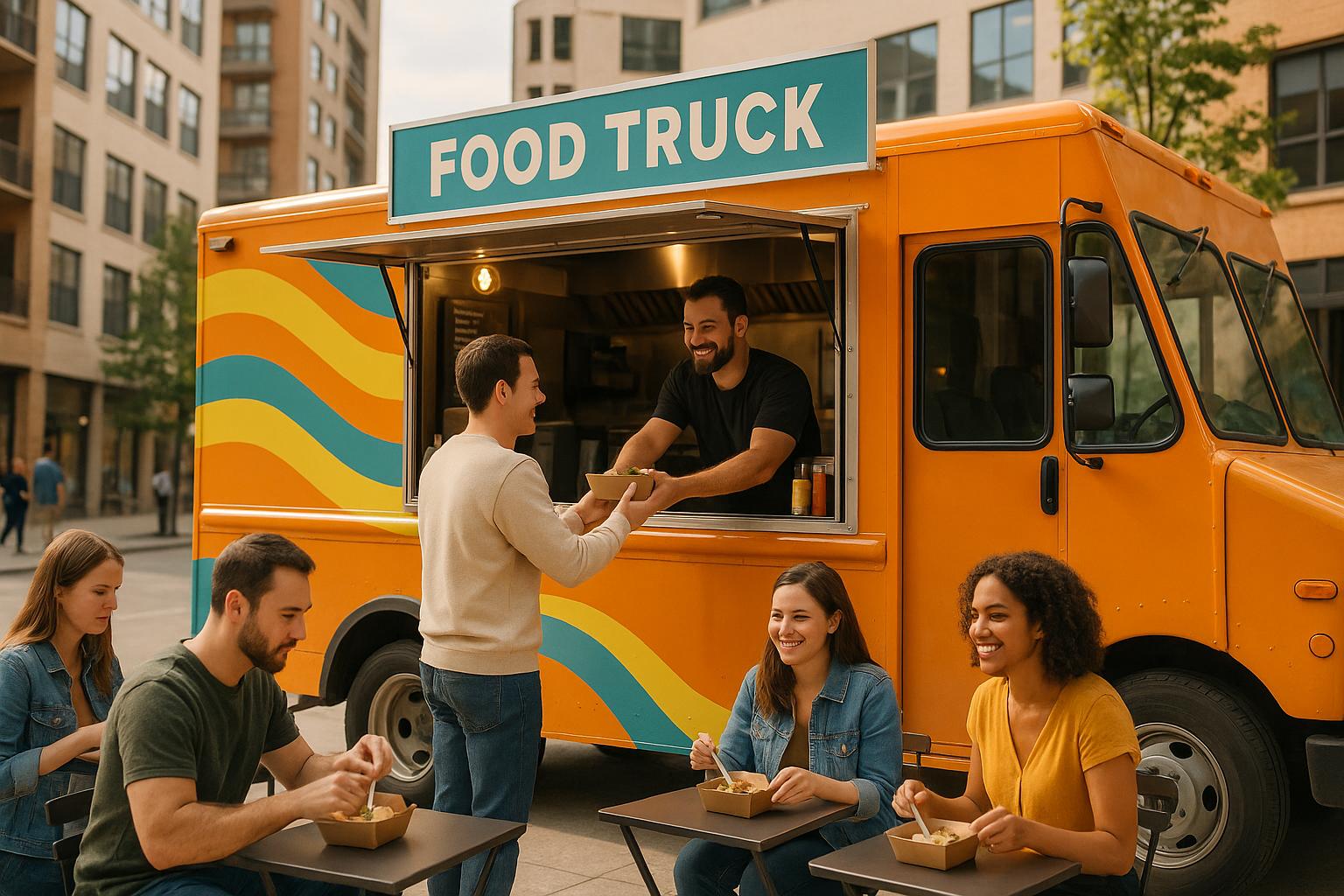
Want to launch a food truck business? Here’s the quick guide:
Starting a food truck is a great way to test your food ideas without the high costs of a restaurant. But success requires careful planning. You’ll need to:
- Define your concept: Research local food trends and create a clear brand and simple menu.
- Write a business plan: Include startup costs, revenue goals, and marketing strategies.
- Get permits and licenses: Secure health permits, business licenses, and insurance.
- Equip your truck: Invest in the right tools and design for efficiency.
- Market your business: Use social media, branding, and community events to attract customers.
- Track your progress: Monitor sales, costs, and customer feedback to improve and grow.
Costs to expect:
Startup expenses range from $60,000 to $175,000, with monthly operating costs around $8,000–$12,000. To break even, you’ll need daily sales of about $364 or more.
This guide walks you through every step to turn your food truck idea into a profitable reality.
How to Start a Food Truck Business with Bill Moore
Step 1: Define Your Food Truck Concept and Brand
Start by crafting a clear concept that fills a specific market need. The U.S. food truck industry brings in over $2.7 billion annually, with growth continuing as more consumers embrace convenient, high-quality dining options. To stand out in this competitive space, you'll need to do your homework and develop a distinct vision for what you'll serve and how you'll present it.
Research Market Trends and Find Opportunities
Before diving into permits or equipment purchases, take a close look at your local food scene. Market research can help you avoid overcrowded niches and uncover areas where demand exceeds supply.
Spend time observing high-traffic areas and analyzing nearby restaurant and food truck offerings. Which trucks have the longest lines? What cuisines attract the most attention during peak hours? If a certain area already has several similar eateries, consider offering a fresh twist on a popular cuisine or focusing on affordability to carve out a niche.
Expand your research beyond your immediate area. National food truck trends can provide inspiration - check out festivals, industry blogs, and social media to see what’s gaining traction. Borrow ideas from other cities and adapt them to fit local preferences. Also, consider your location’s demographics. Are you near a college campus, a bustling office district, or a family-oriented neighborhood? These insights can help you decide on your menu, pricing, and operating hours.
Use this research to shape a brand story that resonates with your target audience.
Develop a Strong Brand Story
To stand out, focus on a few core elements that define your food truck's identity. Your concept isn’t just about the food; it’s about creating a memorable experience that sets you apart.
Choose a name that’s simple, clear, and reflective of your cuisine. For example, "The Lobster Shack" immediately signals seafood, while "Seoul on Wheels" suggests Korean dishes with a mobile flair. Avoid names that are too abstract or clever, as they might confuse potential customers.
Next, create a brand story that connects with people. What inspired you to start this business? What makes your approach special? Maybe you’re sharing cherished family recipes or focusing on locally sourced ingredients. Use your market research to highlight what makes your truck unique. Your story should flow through every detail of your brand, from your mission statement to your truck’s design.
Your visual identity - logo, color scheme, and overall truck aesthetic - should reinforce your story and make your truck instantly recognizable. A cohesive brand helps build customer loyalty and sets the tone for your business.
Keep Your Menu Simple and Focused
A streamlined menu is key to running an efficient food truck. With limited space and equipment, focusing on a few standout items allows you to perfect each dish, speed up service, and minimize waste by overlapping ingredients.
Write clear, enticing descriptions that showcase what makes each dish special while staying true to your brand. A focused menu not only simplifies operations but also strengthens your identity, giving customers a clear sense of what your truck is all about.
Step 2: Create Your Business Plan
A well-thought-out business plan is your guide from idea to profitability. It ensures you consider every detail before spending money, helps you secure funding, and provides measurable goals to track your progress. Without one, you risk being unprepared for the challenges ahead.
Your plan should lay out your concept, target audience, financial forecasts, and operational strategy. Think of it as a flexible document that grows with your business, helping you make informed decisions about pricing, marketing, and even potential expansion.
With your concept solidified, this plan will help transform your vision into a thriving business.
Key Sections to Include in Your Business Plan
Start with an executive summary that highlights your business idea, target market, and what sets you apart. This section should immediately grab the attention of potential lenders or investors.
In your market analysis, build on the research you conducted earlier. Use specific, data-driven insights to show you understand your audience and have identified a real opportunity. For example, operating near an office district with 5,000 daily workers or noting that the nearest taco truck is two miles away with long lunch-hour lines are compelling details.
The operational plan should spell out the nuts and bolts of your daily activities. Include details like operating hours, parking locations, staffing requirements, and supplier schedules. This shows you've carefully considered the logistics of running your business.
Your marketing strategy should explain how you’ll attract customers. Whether it’s leveraging social media platforms like Instagram and TikTok to target college students or partnering with local event organizers, connect your tactics directly to your audience.
Lastly, the financial section is where you demonstrate that your business can make money. Include startup costs, monthly expenses, revenue projections, and profit forecasts. Be realistic and back up your numbers with data - investors will scrutinize these details.
Breaking Down Startup and Operating Costs
Understanding your financial needs upfront helps you avoid surprises and plan your funding. Divide your costs into two categories: one-time startup expenses and recurring monthly costs.
Startup costs might include:
- Truck: $50,000 to $175,000 (used trucks range from $60,000 to $80,000, while new, customized trucks can exceed $150,000)
- Kitchen equipment: $10,000 to $30,000 for grills, fryers, refrigerators, and warmers
- Permits and licenses: $500 to $5,000, depending on your city
- Initial inventory: $2,000 to $5,000 for ingredients, packaging, and supplies
- Point-of-sale systems: $1,000 to $3,000 for setup
- Initial marketing: $2,000 to $5,000 for truck wraps, signage, menu boards, and promotional materials
Operating costs are your ongoing monthly expenses:
- Food and beverage inventory: 25% to 35% of revenue
- Fuel: $300 to $800 per month
- Commissary or kitchen rental: $400 to $1,200 per month
- Insurance premiums: $200 to $500 per month
- Employee wages: $2,000 to $3,000 per month for part-time staff, or $3,500 to $5,000 for full-time employees, including payroll taxes
- Permits and license renewals: $100 to $300 per month, averaged out
- Maintenance and repairs: $200 to $500 per month
- Marketing expenses: $200 to $500 per month
- Credit card processing fees: 2.5% to 3.5% of sales
Create a spreadsheet to list each expense category with realistic estimates. Add a 10% to 15% buffer for unexpected costs. This detailed breakdown not only shows lenders you’ve done your homework but also helps you avoid cash flow issues in your early months.
Setting Revenue and Profit Goals
Once your costs are clear, set revenue targets to ensure your business is profitable. Financial projections will help you determine when you’ll break even and how much you need to sell daily to cover expenses.
Start by calculating your breakeven point - the revenue needed to cover all costs without profit. For example, if your monthly operating costs are $8,000 and you operate 22 days a month, you’ll need to earn about $364 daily to break even. If the average customer spends $12 per order, you’ll need around 31 customers a day to hit that target.
Research revenue figures for similar food trucks in your area. Successful trucks typically generate $500 to $2,000 per day, depending on location, menu pricing, and hours of operation. Be conservative in your projections for the first few months as you build awareness, then factor in gradual growth as you attract regular customers and refine your processes.
Map out monthly revenue projections for your first year. Expect lower sales in the first month as you work out operational kinks and build a customer base. By month three or six, you should see steady growth as word spreads and you optimize your service. Don’t forget to account for seasonal changes - summer might bring higher sales, while winter could slow things down.
Finally, calculate your profit margins by subtracting total costs from revenue. A strong food truck typically aims for a net profit margin of 6% to 9%. For example, if you project $15,000 in monthly revenue and $12,000 in costs, you’ll have a $3,000 profit, or a 20% margin. However, if your costs rise to $14,000, your profit drops to $1,000, or just 6.7%, leaving little room for error.
Set clear financial milestones, such as when you’ll break even, repay loans, and generate enough profit to consider expansion. These benchmarks keep you focused and provide measurable goals to track your progress. Review your financial projections regularly and adjust them based on actual performance to ensure your business stays on course.
Step 3: Get Permits, Licenses, and Insurance
Setting up a food truck involves navigating a maze of legal requirements, but handling these early ensures your business runs smoothly and stays protected. Be prepared for potential delays and fees, as regulations vary widely across cities and counties.
Before diving into food-specific permits, make sure your business is properly registered and structured.
Register Your Business and Obtain Licenses
Start by selecting a business structure. Many food truck owners go with a Limited Liability Company (LLC) because it separates personal assets from business liabilities - essentially protecting your home, savings, and other personal belongings in case of legal disputes. Setting up an LLC costs anywhere from $50 to $500 depending on your state, with annual fees ranging from $0 to $800. If you’re operating under a different name than your registered business name (like "Taco Paradise" instead of "Smith Food Services LLC"), you’ll need a "Doing Business As" (DBA) registration, which usually costs $10 to $100.
Next, apply for an Employer Identification Number (EIN) through the IRS website. It’s free, takes about 15 minutes, and provides the federal tax ID you’ll need to open business bank accounts, hire employees, and file taxes.
You’ll also need a general business license from your city or county clerk’s office. This license, which typically costs $50 to $400 annually, allows you to legally operate in your area.
Don’t forget to secure a seller’s permit or sales tax license from your state’s tax authority so you can collect and remit sales tax. If you’re hiring employees, you’ll also need to register for state unemployment insurance and workers’ compensation through your local labor department.
Health Department Requirements
Your local health department plays a critical role in ensuring your food truck meets safety standards. Noncompliance can lead to shutdowns, so it’s crucial to meet their requirements.
Start by scheduling a pre-operational inspection with your county health department. Your truck will need to meet specific health codes, including installing a three-compartment sink (for washing, rinsing, and sanitizing), a separate handwashing sink, and ensuring adequate potable water and wastewater capacity. Wastewater tanks are typically required to be at least 15% larger than your freshwater capacity. Food prep surfaces must be approved, and proper ventilation is a must.
To operate legally, you’ll need a mobile food facility permit, which costs between $200 and $1,000 annually. This permit confirms your truck meets health standards and must be renewed annually, often with regular inspections.
All food handlers on your truck must complete a food handler certification course, which costs about $10 to $30 per person and takes 2–3 hours online. Additionally, at least one person on your team should complete a food manager certification course. This more in-depth training covers foodborne illness prevention, cooking temperatures, and avoiding cross-contamination. It typically costs $100 to $200 and requires passing an exam.
Your truck must also maintain proper food storage temperatures: cold foods below 41°F and hot foods above 135°F. Use calibrated thermometers and keep a log to ensure compliance.
Many cities require food trucks to operate out of a commissary kitchen - a licensed commercial kitchen where you can prep ingredients, store supplies, and clean your truck. Renting a commissary typically costs between $400 and $1,200 per month and provides access to commercial-grade equipment and waste disposal facilities.
Once health requirements are met, the next step is to protect your business with insurance and follow zoning laws.
Insurance and Zoning Laws
Insurance is essential for protecting your food truck business. General liability, commercial auto, and workers’ compensation insurance are often required by events, festivals, and commissary kitchens.
- General liability insurance covers customer injuries, property damage, and advertising claims. Expect to pay around $42 per month (about $500 annually).
- Commercial auto insurance is mandatory for your truck and covers accidents, theft, vandalism, and weather damage. This typically costs $170 per month (around $2,041 annually). Keep in mind that personal auto insurance won’t cover vehicles used for business purposes.
- A Business Owner’s Policy (BOP) combines general liability and property coverage, often including business interruption and equipment breakdown protection. If you qualify, it averages $84 per month (about $1,007 annually).
- Workers’ compensation insurance covers medical expenses and lost wages if an employee gets injured. Rates average $78 per month (around $940 annually). Even if you’re a solo operator, consider coverage to protect your income in case of injury.
- If you serve alcohol, liquor liability insurance is essential. This policy covers claims related to serving intoxicated customers and typically costs $58 per month (around $700 annually).
- Cyber insurance is worth considering, especially if you handle customer data or online payments. It averages $145 per month (about $1,740 annually).
Work with an insurance provider experienced in food truck businesses to ensure you’re adequately covered. Compare quotes from multiple carriers, as rates can vary based on location, revenue, and coverage needs.
Finally, familiarize yourself with zoning laws. Cities often regulate where food trucks can operate, designate specific zones, or enforce distance requirements from brick-and-mortar restaurants. Check your local zoning ordinances by contacting the city planning or zoning department.
Mobile vending permits are often required for specific locations or events, with fees ranging from $50 to $500. If you plan to operate on private property, always secure written permission from the property owner to avoid trespassing issues or towing.
sbb-itb-08dd11e
Step 4: Equip and Design Your Food Truck
Set Up Your POS System
Having a dependable POS system is essential for keeping up with the fast pace of food truck operations. Opt for a system that can handle card payments, mobile payments, and contactless options while also supporting tipping. Make sure it includes offline payment processing so transactions are safely stored even when your internet connection drops.
Consider a system with integrated inventory tracking to monitor ingredients in real time. This helps you stay on top of stock levels and avoid running out of key items. Detailed sales reports are also a must - they provide insights into customer preferences and sales trends, helping you fine-tune your menu and improve your overall business strategy. If you’re planning to expand to multiple locations, choose a system that can handle multi-location management.
To streamline operations further, look for features like online ordering for advance pickups and a user-friendly, tablet-based interface to simplify order entry. Before your grand opening, test the system during a soft launch to ensure everything runs smoothly. This will help you identify and fix any issues before serving customers in full swing.
Step 5: Market Your Food Truck and Build Your Customer Base
Think of your food truck as a moving billboard - it should grab attention and instantly communicate what makes your brand special.
Create a Strong Visual Identity
Your truck's look should reflect its personality. From the color scheme and menu boards to staff uniforms, every element should work together to tell your brand's story.
Visual appeal is key - people often decide where to eat based on what catches their eye. Make sure your truck's exterior clearly shows what you’re offering, and design menu boards with large, easy-to-read text and mouthwatering images of your best dishes. Adding a touch of humor to your branding can also help create a more personal connection with customers. These visual elements don’t just draw people in - they lay the groundwork for your broader marketing efforts.
Consider adding QR codes to your menus. They’re a simple way to keep your offerings updated and let customers interact with your brand digitally. A strong visual identity doesn’t just make your truck stand out - it also sets the stage for using social media and local outreach to grow a loyal customer base.
Step 6: Track Performance and Increase Profits
If you're not tracking your numbers, you're essentially running your business blind.
Monitor Key Metrics
Keep an eye on daily sales, average ticket size, food and labor cost ratios, and customer feedback. These metrics help you spot trends, uncover inefficiencies, and make smarter decisions about pricing and staffing [15, 16, 18, 19, 20]. Pay close attention to ingredient costs to avoid cutting into your profits [16, 18, 19, 20]. To measure how well your marketing efforts are working, calculate your customer acquisition cost (total marketing spend divided by the number of new customers). Also, analyze sales performance by location to see which areas are pulling their weight [15, 16, 18, 20]. Use this data to fine-tune your menu and make your operations more efficient.
Improve Your Menu and Operations
The numbers you gather don't just tell you about your finances - they also point the way to operational improvements.
Look at which menu items are hits and which ones aren't performing well, then adjust your offerings accordingly [16, 18, 20]. Test out new specials gradually, keeping track of their cost, prep time, and how customers respond. Cut down on waste by tweaking prep quantities or finding creative ways to use leftover ingredients [19, 20]. During busy times, evaluate your workflow to see if reorganizing workstations or shifting staff responsibilities could speed things up and improve efficiency. Also, make sure your equipment is being used effectively and aligns with your menu needs [16, 18, 20].
Plan for Growth
Once you've got a handle on your metrics and operations, it's time to think bigger. The US food truck industry has shown resilience, growing at a 10.9% compound annual rate despite the challenges of the pandemic. While the market dipped by 0.5% in 2023, it's projected to grow at a 6.4% compound annual rate through 2030. Millennials are a key driver of this growth - 54% of them contributed to food truck sales in 2020, and over 60% have eaten at a food truck. These stats highlight the potential for steady growth if you take a data-driven approach. As you plan to expand, make sure your strategies align with both your resources and your ability to operate effectively.
Conclusion
Starting a food truck business isn’t just about serving delicious meals - it’s about laying the groundwork for lasting success. From defining your concept and refining your menu to securing permits and designing a functional truck layout, each step helps turn your vision into a thriving business.
Preparation is key in this industry. Following regulations, crafting a solid business plan, and investing in reliable equipment are all essential for smooth operations. But beyond logistics, your focus on customer satisfaction and community involvement will set your business apart. Consistently serving high-quality food, maintaining health and safety standards, and engaging with local events foster trust and loyalty, creating a strong foundation for repeat customers.
Success also requires keeping an eye on the numbers. Tracking performance metrics, fine-tuning your operations, and staying connected with your community are all part of building a sustainable business. Whether you’re just starting out or expanding your fleet, having a clear plan and staying committed to delivering value will prepare you for the challenges ahead.
Your journey from permits to profits starts now - take the first step today.
FAQs
What challenges do new food truck owners often face, and how can they address them?
Starting a food truck business isn’t without its challenges, but with the right strategies, you can tackle them head-on. One of the biggest obstacles is understanding and following local regulations. Every city has its own rules for permits, health inspections, and zoning laws. Taking the time to research these thoroughly will help you avoid any compliance issues down the road.
Another key challenge is finding locations that drive sales. To secure profitable spots, build connections with property owners, attend local events, and identify high-traffic areas where your ideal customers are likely to be. A great location can make all the difference.
Lastly, keeping your cash flow in check can be a bit of a balancing act, especially early on. Invest in a dependable financial tracking system to monitor your income and expenses, and stick to a realistic budget to ensure your business stays on solid ground.
What are the best ways to use social media to promote my food truck and grow a loyal customer base?
Social media offers an incredible way to promote your food truck and create a loyal customer base. Start by setting up profiles on popular platforms like Instagram, Facebook, and X (formerly Twitter). Post regularly to keep your audience updated on your menu, share your current location, and interact with followers. Eye-catching, high-quality photos and videos of your food or behind-the-scenes moments can make a big impact.
Encourage your customers to tag your food truck in their posts or leave reviews - this kind of user-generated content can create buzz and attract new customers. Consider running promotions, such as discounts or giveaways, to boost engagement and keep people excited about your brand. By staying consistent and genuine in your posts, you'll build a strong connection with your community and keep customers coming back for more.
How can I choose the best locations and events for my food truck to boost sales?
To increase sales, position your food truck in high-traffic spots such as bustling streets, busy parks, office hubs, or areas near popular landmarks. Choose locations with steady foot traffic and ensure they’re convenient for customers to access. Don’t forget to check local regulations to confirm your truck can legally operate in these areas.
Getting involved in community events, festivals, or farmers' markets is another great way to expand your reach. Tailor your menu to match the preferences of the crowd. For instance, kid-friendly options might work well at a family-oriented event, while a music festival crowd might lean toward trendy or unconventional food choices.
Keep evaluating your chosen locations and events to see what works best. Being willing to adjust and experiment will help you increase your food truck's visibility and, ultimately, your profits.
Related Blog Posts
 Report an issue
Get the newest tips and tricks of starting your business!