
Starting a business in Australia doesn’t require a fortune. Many ventures can begin with less than A$5,000 (about US$3,300), and some even under A$1,500 (roughly US$990). With AI tools and shifting consumer trends, solo entrepreneurs can now manage tasks efficiently, reducing costs and boosting profits.
Here’s a quick look at some ideas:
- Virtual Assistant for Tradies: Help tradespeople manage scheduling, invoicing, and admin tasks. Rates range from $15 to $150/hour.
- AI Workflow Automation Consultant: Simplify business processes using AI tools like ChatGPT and Zapier. Typical projects cost $500–$2,000.
- Mobile Tech Support: Offer tech help to seniors or regional residents, focusing on small jobs like Wi-Fi setup. Charge $200–$400 per visit.
- Handyman Services: Tackle small repair jobs that larger contractors avoid, earning up to $73,200 annually.
Each idea focuses on low startup costs, leveraging niche markets, and using smart tools to increase efficiency. Before starting, ensure you meet local regulations and launch your business and validate your concept with platforms like IdeaFloat.
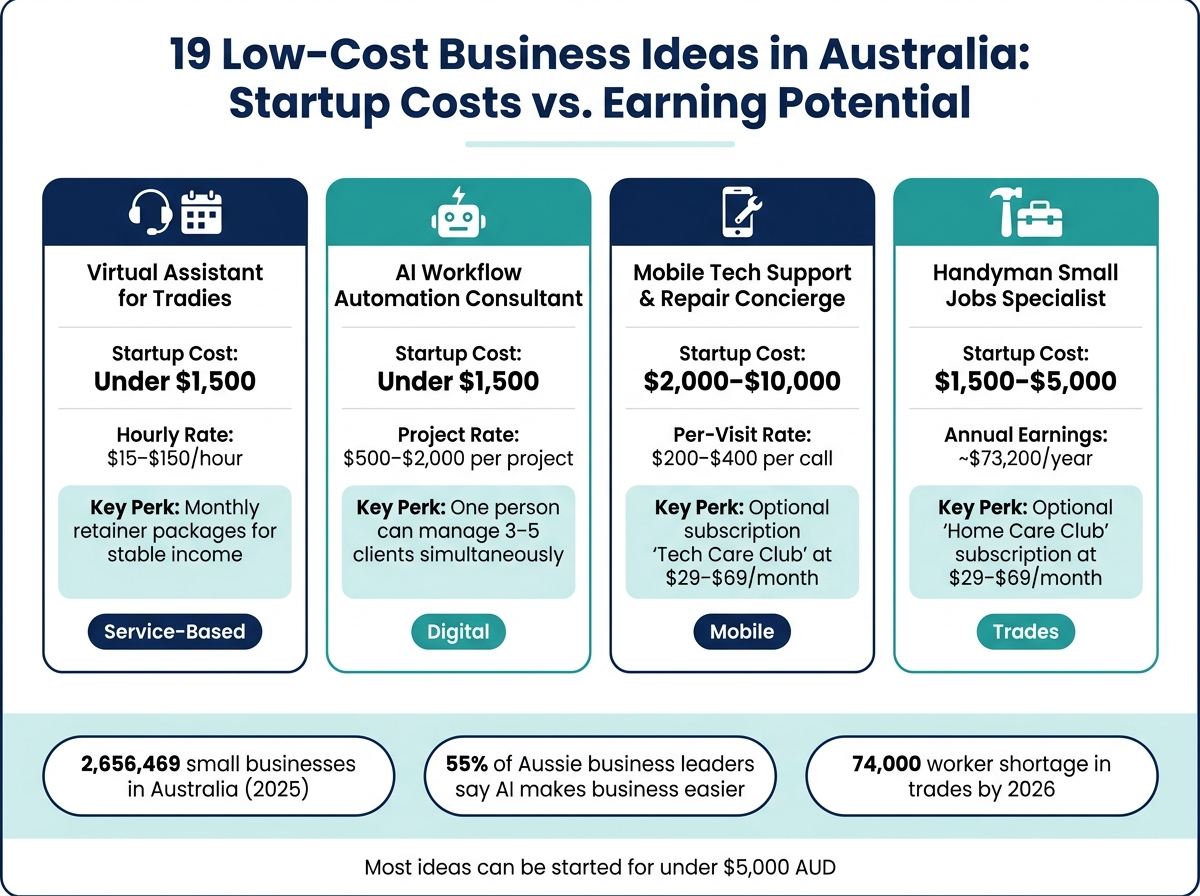
19 Low-Cost Business Ideas in Australia: Startup Costs vs. Earning Potential
10 Simple Businesses You Can Start for Under $100 in Australia
sbb-itb-08dd11e
1. Service-Based Businesses
Service-based businesses are a great option for entrepreneurs looking for an affordable and quick way to enter the market. With no need for inventory or storage space, startup costs are often under $5,000 - and in many cases, even below $1,500. One niche worth exploring is providing specialized virtual assistance for tradies.
Virtual Assistant for Tradies
Tradespeople in Australia - like plumbers, electricians, and builders - often find themselves bogged down by administrative tasks such as scheduling, invoicing, and handling customer communications. This opens up a valuable opportunity for virtual assistants who focus specifically on serving this industry. By tailoring services to the unique needs of tradies, you can position yourself as an expert and charge premium rates. Plus, mastering the tools and systems they use makes your services even more indispensable. Typical rates for virtual assistants in this niche range from $15 to $150 per hour, depending on the complexity of the work. Many professionals also offer monthly retainer packages, which provide a steady income stream.
"The main expense for service providers is time. As your knowledge and experience grows, you can increase your rates without dramatically increasing expenses." - Elise Dopson, Shopify
Fixed monthly service packages - covering tasks like inbox management, scheduling, and invoicing - can help stabilize your income. Chloe Sapienza, founder of Telescope, shared that creating standardized service packages allowed her to grow her company’s revenue by 200%. This example highlights how focusing on a specific niche can lead to impressive profits with minimal upfront costs.
Getting started doesn’t require much: a laptop, a reliable internet connection, and a good grasp of basic business admin tools are enough to begin. To attract clients without a hefty marketing budget, lean into local SEO strategies. For instance, optimizing for searches like "virtual assistant for tradies near me" can help you connect with your first clients.
2. Digital and Online Ventures
Starting a digital business is one of the easiest ways to dive into entrepreneurship. Many of these ventures can be launched for less than $1,500, don’t require a physical location, and can grow rapidly with the right tools.
AI Workflow Automation Consultant
Small businesses in Australia - like cafés, tradespeople, and retail shops - often manage tasks like customer inquiries, bookings, and invoicing manually. While many are aware of AI's potential, they’re unsure how to implement it effectively. That’s where an AI Workflow Automation Consultant steps in.
Your role would be to identify repetitive tasks and introduce AI tools to streamline processes like customer communication, accounting, and booking systems. The cost for these services typically ranges from $500 to $2,000 per project, with minimal expenses beyond your time and a laptop.
"Solopreneurs can now manage the workload of 3–5 staff." - The Business Times
This kind of scalability is a big reason why this career path is gaining traction. AI tools allow one person to handle multiple clients without needing extra employees. By customizing AI solutions to fit a client’s specific needs - rather than relying on one-size-fits-all automations - you can charge higher rates and even secure ongoing retainer contracts.
To get started, familiarize yourself with tools like ChatGPT, Zapier, and AI-powered CRM plugins. Then, approach local businesses with a simple pitch: “I’ll save you hours every week.” The demand for these services is climbing, and by 2026, lean, AI-driven micro-businesses are expected to thrive across Australia. This approach offers a streamlined and profitable path for entrepreneurs looking to tap into the digital space.
3. Mobile and On-the-Go Services
Mobile businesses are a smart way to cut down on startup costs and overhead by bringing services directly to customers. Similar to digital ventures, these businesses focus on lean operations but take it a step further by physically meeting customers where they are, eliminating the need for a traditional storefront.
"Mobile businesses often have lower startup costs and fixed overhead, which makes them particularly appealing to new business owners." - Lizzie Davey, Shopify Australia
Mobile Tech Support & Repair Concierge
This idea taps into the increasing digital needs of older adults and people living in regional areas. For many Australians - especially seniors and those in less urbanized regions - tasks like setting up a new device, improving Wi-Fi connections, or troubleshooting tech issues can be overwhelming. Since larger IT companies often don't handle these smaller jobs, there's a clear opening for a mobile tech support service.
Getting started in this niche typically requires an investment of $2,000 to $10,000. This covers essentials like diagnostic tools, transportation, and a wireless point-of-sale system. Focus on smaller, overlooked tasks - services like optimizing Wi-Fi, setting up devices, or helping seniors with tech issues can fetch $200–$400 per call. With more Australians moving to regional areas, demand for these services is growing beyond major cities, creating opportunities in underserved locations.
To ensure steady income, you could introduce a subscription option - something like a "Tech Care Club" priced at $29–$69 per month. This package could include priority service and regular check-ins. Another way to build a loyal customer base is by partnering with aged care facilities, coworking spaces, or apartment complexes to offer "drop-in" service days. Combining mobility with creative service options allows these businesses to thrive, aligning well with lean, tech-driven business models.
4. Local Trades and Physical Services
Local trades thrive on community demand, offering steady self-employment opportunities in Australia. Unlike digital ventures, these businesses are deeply tied to the local community. With a labor shortage expected to reach 74,000 workers by early 2026, the gap between the demand for skilled tradespeople and the available workforce continues to grow.
Handyman "Small Jobs" Specialist
There's a lucrative niche in tackling small repair jobs that larger contractors typically avoid, especially those priced between $200 and $400.
"Big tradies won't touch $200–$400 jobs. You can." - The Business Times
Getting started in this field doesn't require a massive investment. Initial costs range from $1,500 to $5,000, which covers basic tools, liability insurance, and a simple website with online booking capabilities. The payoff? The average handyman in Australia earns approximately $73,200 annually, making this a rewarding path for those seeking low-cost self-employment.
To boost income, consider offering a "Home Care Club" subscription service. For $29–$69 a month, clients can sign up for routine maintenance tasks like smoke alarm checks and filter replacements. On top of that, administrative tasks like quoting, scheduling, and invoicing can be automated using AI tools, allowing a single operator to handle what would typically require a team.
"Start lean. Stay local. Grow fast. These are the Australian small businesses shaping 2026." - The Business Times
Conclusion
Australia’s small business scene is full of possibilities. By 2025, there were 2,656,469 small businesses operating nationwide - an increase of over 66,000 compared to the previous year. Many of these ventures began with limited capital, showcasing the entrepreneurial spirit of Australians.
The secret to success lies in aligning your business idea with your personal situation. Think about what you need: Do you require immediate income, or can you afford to build your business at a slower pace? Are your current skills enough to get started, or will you need a license or further training? Would you rather have steady monthly income from retainers, or are you okay with the unpredictability of project-based work? These questions can help you quickly narrow down your options. Once you’ve chosen a direction, the next step is to test your idea.
Before committing time or money, validate your business concept. As Lizzie Davey from Shopify wisely says, "The most successful business starts with a good idea." But even great ideas need market validation. This is where tools like IdeaFloat come in handy. They help you test your concept, assess market demand with solid data, create financial models, and build a go-to-market strategy - all without spending a dime on setup.
Interestingly, 55% of Australian small business leaders now say that AI has made starting and running a business easier. With AI tools, you can streamline your processes and speed up growth.
FAQs
Which business idea fits my skills and budget best?
The best business idea often hinges on what you're good at, what you enjoy, and how much you're willing to invest. For instance, if you’re experienced in digital marketing, launching a digital marketing agency or offering social media management services can be affordable and practical. On the other hand, if you prefer more hands-on work, options like mobile pet grooming or cleaning services might be a better fit. The key is to match your skills and budget with market demand to find an idea that offers strong earning potential.
Do I need licenses or insurance for these businesses in Australia?
To run your business legally, you'll need the right licenses and insurance. This might involve workers' compensation insurance if you have employees, and public liability insurance for industries where it's required. The exact requirements depend on your business type and location, so it's essential to research the rules that apply to your situation.
How can I validate demand fast before I spend money?
To gauge demand without spending too much, try low-risk approaches like "smoke tests" or basic prototypes. For example, you could set up a landing page or pitch your service directly to potential customers through social media or direct outreach. Pay attention to meaningful responses - things like pre-orders or actual payments. These actions show real interest and let you validate your idea without sinking a lot of money upfront.
Related Blog Posts
- 21 Low-Investment Business Ideas for Women in Australia
- Best Small Business Ideas in Australia Under $5,000
- Best Small Business Ideas in Australia Under $30,000
- The Cheapest Businesses to Start in Australia That Still Have Margin