
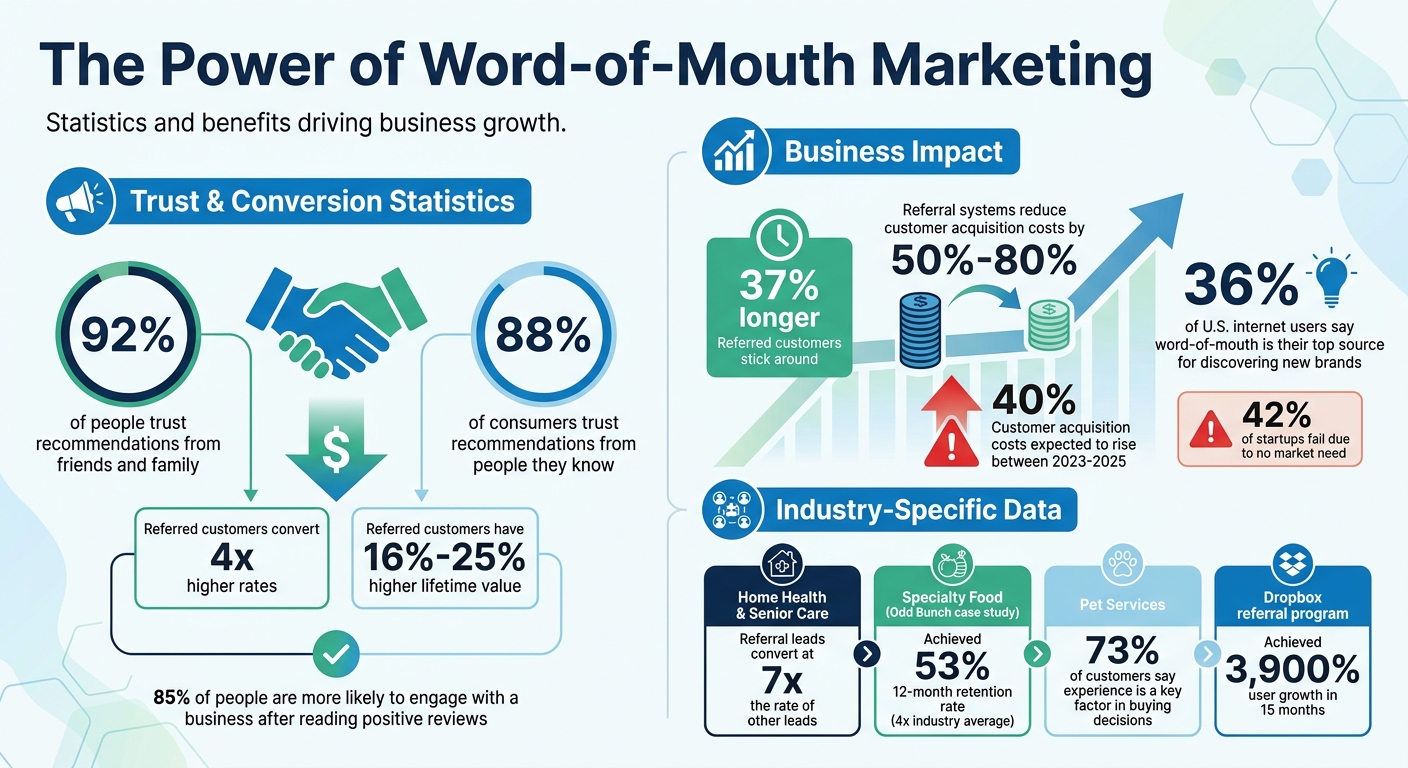
Some businesses naturally thrive on referrals because they solve pressing problems, evoke strong emotions, or build trust. Word-of-mouth marketing is powerful: 92% of people trust recommendations from friends and family, and referred customers often convert at 4x higher rates with 16%-25% higher lifetime value. With rising customer acquisition costs, focusing on word-of-mouth is smart and cost-effective.
Here are three niches with high referral potential:
- Home Health & Senior Care: Trust is key. Families seek recommendations for reliable care, and referral leads convert 7x better. Build relationships with healthcare professionals and offer clear communication.
- Specialty Food Stores: Customers love sharing unique, hyperlocal food finds. Engage local communities, create shareable moments, and focus on sustainability.
- Pet Stores & Services: Pet owners are passionate and share trusted recommendations. Personalize experiences, partner with veterinarians, and offer referral rewards.
To boost word-of-mouth:
- Launch referral programs with mutual rewards (e.g., “Give $10, Get $10”).
- Share customer testimonials and success stories.
- Actively engage in local and online communities.
Word-of-Mouth Marketing Statistics and ROI Benefits
15 word-of-mouth marketing ideas
sbb-itb-08dd11e
Business Niches That Generate Strong Word-of-Mouth
Some industries naturally inspire referrals. They address needs that customers feel compelled to share - whether it’s finding reliable care for a loved one or discovering a one-of-a-kind food product with a great backstory. When these needs are met, customers often turn into enthusiastic advocates.
Here’s a closer look at three niches with strong referral potential and practical tips for each.
Home Health and Senior Care Services
When it comes to home health and senior care, trust is everything. Families often rely on recommendations from physicians, hospital staff, and other trusted professionals, forming a strong referral network. This dynamic is driven by the high stakes involved - families need assurance that their loved ones will receive the best care possible.
Referral leads in this sector are especially powerful, converting at seven times the rate of other leads. Plus, these clients often require more intensive services, which translates to higher revenue per client. Key players in this ecosystem, like case managers and geriatric care specialists, act as referral hubs, directing families to agencies known for their reliability and clear communication.
"Building a referral program isn't about gimmicks, donuts, or brochures stacked in a hospital lobby. It's about trust. Referrers want to know that if they send someone your way, that family will get what they need."
- Lowrie Hilladakis, Head of Growth, Sage
To stand out, agencies should map every touchpoint in the client’s journey, from hospital discharge planners to insurance advisors. Providing a referral packet that includes direct contact information and clear messaging can make a big difference.
Specialty Food Stores and Hyperlocal Food Products
Specialty food businesses thrive on social currency. Customers love sharing recommendations for artisanal or hyperlocal products because it reflects their values - whether it’s supporting small businesses, being eco-conscious, or simply enjoying unique experiences. For example, discovering a family farm’s small-batch preserves or a store selling discounted “imperfect” produce often feels like uncovering a hidden gem .
A great case study is Odd Bunch, a company that scaled from 87 customers to over 100,000 households by addressing local food waste issues and tapping into community networks. Their 12-month retention rate hit an impressive 53%, nearly four times the industry average.
"Virality is rented, retention is owned."
- Divy Ojha, Founder, Odd Bunch
To build momentum, businesses in this niche should focus on connecting with local communities through neighborhood groups or sustainability-focused platforms. Eye-catching packaging and in-store displays that create “Instagrammable” moments can also encourage organic sharing. On the supply side, visiting local producers to understand their challenges can help entrepreneurs craft a brand that resonates with both suppliers and customers.
Pet Stores and Services
Pet owners are passionate and deeply invested in their furry friends, which makes them eager to share trusted recommendations. Whether it’s a go-to groomer or a knowledgeable pet store, businesses that position themselves as experts can create a steady stream of referrals. Partnering with local veterinarians, trainers, and groomers can also serve as valuable referral channels.
Customer experience plays a huge role here - 73% of customers say their experience with a brand is a key factor in their buying decisions. Successful pet businesses focus on personalization, like hosting workshops such as “Puppy Basics” or breed-specific meetups. Even small touches, like using Point of Sale systems to remember a pet’s name or favorite treats, can leave a lasting impression.
"Building a solid referral network is a game-changer for sustainable business growth, consistently bringing in new clients who trust you before they even step through the door."
A simple referral program offering mutual rewards - like a free training session for the referrer and a discount for the new client - can significantly boost word-of-mouth .
How to Increase Word-of-Mouth in These Niches
Once you’ve identified a niche, the next step is encouraging customers to share their positive experiences. By turning customer satisfaction into a marketing tool, you can achieve impactful results without the hefty price tag of traditional advertising.
Create Customer Referral Programs
Referral programs are a great way to make sharing easy and rewarding for customers. The key? Offer benefits for both the referrer and the new customer. This approach feels more like giving a gift than just earning a reward.
For subscription services like pet food or wellness memberships, credits or extra product often outperform small cash incentives. For instance, a specialty food store could offer a “Give $10, Get $10” deal, while a paid newsletter might reward referrals with exclusive content or branded swag like stickers.
Timing matters too. Ask for referrals during those “aha moments” when customers are most satisfied - like after a successful outcome, a glowing review, or a key milestone. In home health services, this could be when a patient achieves a recovery goal; for pet services, it might follow an exceptional grooming session.
Why focus on referrals? Customers brought in through referrals tend to stick around 37% longer and have a 16% higher lifetime value. Plus, referral systems can reduce customer acquisition costs by 50% to 80%.
"Referral marketing is like putting gasoline on an existing fire, not like getting a fire started."
- Grace Parazzoli
To make things even easier, provide pre-written, one-click sharing options. And if your customer isn’t the decision-maker - like an employee at a senior care facility - consider offering personal perks like gift cards instead of company discounts.
| Niche Type | Recommended Incentive | Best Timing for Referral Request |
|---|---|---|
| Home Health / Senior Care | Gift cards or account credits | After a health milestone or positive feedback |
| Specialty Food / Pet Stores | "Give $10, Get $10" or free samples | After purchase or during unboxing |
| Paid Newsletters / Communities | Swag or exclusive content | After hitting a user milestone |
| Wellness / Addiction Centers | Support-based rewards or gift cards | After recovery milestones or program completion |
Once you’ve got referrals rolling, strengthen your efforts by showcasing real customer stories.
Use Social Proof and Customer Testimonials
Customer testimonials build trust, turning happy customers into your best advocates. Social proof is particularly important for online shoppers who can’t physically experience a product or service before buying. In fact, 85% of people are more likely to engage with a business after reading positive reviews.
The most effective testimonials aren’t vague - they tell stories with clear outcomes. For example, a home health agency might share how their care plan helped a patient regain mobility in three months. And since 44% of consumers prefer recent reviews, keeping feedback fresh is essential.
Embed reviews from trusted platforms like Google or Yelp directly on your website, especially on pricing or service pages. You can also repurpose five-star reviews into social media posts or email content. Adding “Verified Buyer” badges and responding to negative reviews constructively (instead of deleting them) helps boost credibility.
Encourage feedback by offering small, non-monetary perks like “customer of the month” features or loyalty points for detailed reviews. If you have a physical location, create Instagram-worthy moments with eye-catching decor, interactive displays, or unique packaging that customers naturally want to share.
A great example of referral success? Dropbox’s program offering free storage for both referrers and new users led to a staggering 3,900% user growth in just 15 months.
Participate in Local and Online Communities
For businesses that rely on word-of-mouth, being active in both local and digital communities is crucial. Brick-and-mortar stores like pet shops or specialty food businesses can benefit from becoming a trusted local resource. Joining community boards, sponsoring events, or partnering with local organizations can help establish this connection.
Hosting events is another way to stand out. Pet stores could organize breed-specific meetups or workshops, while specialty food businesses might host cooking classes or tastings. These events not only foster community but also create shareable moments for social media.
Service-based businesses like home health agencies or wellness centers can leverage platforms like Care.com or Rover to gather testimonials and attract customers. Wellness brands can also collaborate with local partners, such as eco-lodges or community service providers, to expand their reach.
Don’t forget about “dark social” spaces - private groups on WhatsApp, Slack, or Discord - where much of today’s word-of-mouth happens. Make it easy for customers to share in these spaces by offering one-click referral links and pre-written messages. For newsletters or membership communities, private forums can encourage members to promote your brand naturally.
"We felt it was our responsibility to bring people together physically to demonstrate what the word 'community' means … which is human interactions, support, networking."
- Michelle Cordeiro Grant, Founder, Lively
Validate Your Niche With IdeaFloat
Before diving into word-of-mouth strategies, it’s crucial to confirm that your niche addresses real, pressing customer needs. Why? Because word-of-mouth thrives when your product or service solves a genuine problem. It amplifies an existing buzz - it doesn’t create one from scratch. Here’s a sobering fact: 42% of startups fail because there’s no market need for their product. That’s where IdeaFloat comes in, helping you identify opportunities that have the potential to spark true advocacy.
Using AI-powered validation tools, IdeaFloat evaluates whether your niche naturally lends itself to word-of-mouth success by identifying urgent problems, market gaps, and the kind of social triggers that get people talking. The platform has already validated over 1,247 business ideas, and the process takes just 15 minutes.
Find Real Customer Problems
IdeaFloat’s Problem Validator tool helps you determine if your niche solves a problem that people are willing to pay to fix. Satisfied customers are great, but advocates - those who actively recommend your product - are what drive word-of-mouth. This tool analyzes customer conversations from across the web to help you distinguish between "nice-to-have" solutions and those that people truly need.
The Consumer Insights feature takes this a step further, diving into online communities to uncover the exact language customers use when discussing their pain points. This is crucial because 88% of consumers trust recommendations from people they know. And those recommendations? They only happen when customers feel genuinely enthusiastic about a product.
"IdeaFloat saved us weeks of work by helping us explore demand for new products across different regions and took the guesswork out of finding gaps in the market." - Nick Sherwing, Founder, woohoPets
The platform also identifies emotional highlights in customer feedback - those moments that trigger referrals. For example, a home health service might see referrals spike during milestone moments like recovery celebrations, where emotional resonance plays a key role.
Once you’ve validated the problem, the next step is to analyze your competition and uncover untapped opportunities.
Research Competitors and Find Market Gaps
IdeaFloat’s Competitor Analysis feature maps out your entire competitive landscape, highlighting underserved areas and weaknesses you can leverage. These "Blue Ocean" opportunities - where unmet needs are waiting for solutions - are fertile ground for word-of-mouth growth.
Why does this matter? The best referrals happen when customers face real challenges, but existing solutions are unclear or inadequate. For instance, a specialty food store offering hyperlocal products or a pet service providing personalized care can create social currency - the kind of experiences people naturally want to share. Customers love being the first to recommend a hidden gem, which also boosts their own social status.
The platform even calculates your market potential using TAM (Total Addressable Market), SAM (Serviceable Available Market), and SOM (Serviceable Obtainable Market) metrics. This ensures you’re targeting a niche large enough to sustain growth but focused enough to foster meaningful referrals.
Once you’ve identified these gaps, it’s time to craft a message that resonates.
Create Your Value Proposition
After pinpointing real customer problems and market gaps, IdeaFloat’s Unique Value Proposition (UVP) tool helps you develop messaging that connects immediately. This tool identifies your "unfair advantage" - the unique factor that sets you apart from competitors.
Ask early testers how they’d describe your product to a friend. Their responses can become the foundation of your referral strategy. The UVP tool organizes this feedback into a complete messaging framework, including a concise one-liner pitch and brand positioning.
For word-of-mouth-driven niches, your value proposition should include triggers - specific cues that remind people of your brand in relevant contexts. For example, a home health agency might focus on "regaining independence", while a paid newsletter could emphasize "insider knowledge you can’t find anywhere else." These triggers keep your business top-of-mind when customers share recommendations.
Finally, IdeaFloat helps you pinpoint where your audience gathers online, identifying 23+ key communities where word-of-mouth thrives naturally. Since much of today’s referrals happen in "dark social" spaces like WhatsApp groups or private Slack channels, knowing where to spark these conversations is essential.
Launch Your Business With IdeaFloat
Once you've validated your niche and fine-tuned your messaging, the next big step is launching your business. This stage is critical for generating buzz and turning early adopters into advocates who spread the word. With IdeaFloat's tools, you can create excitement, engage the right communities, and execute a launch that builds momentum. A key part of this process? Using a strategic waitlist to spark early interest.
Build Early Interest With a Waitlist Landing Page
IdeaFloat's Waitlist Landing Page tool helps you set up a "Coming Soon" page that captures email addresses and builds anticipation before your official launch. This is especially effective for niches that thrive on word-of-mouth. By integrating milestone rewards, you can turn early signups into active promoters.
Here’s how it works: users sign up with their email and get a referral link. As they hit referral milestones, they unlock perks like discounts or free products. This gamified system encourages people to share your business, transforming passive interest into active advocacy.
"In a crowded market, a Referral-Led Go-to-Market Strategy is a secret weapon that leverages existing customer trust to create a sustainable, cost-effective, and powerful acquisition engine." - Aya Musallam, Viral Loops Insider
Take NutriSense as an example. In September 2019, this metabolic health platform launched with pre-sales in niche Facebook groups focused on keto diets and Oura Ring users. By offering continuous glucose monitoring paired with dietitian coaching, co-founder Dan Zavaratni grew the company from under $1 million to $3.3 million in monthly recurring revenue within a year, amassing 16,000 paying customers. Their waitlist approach validated demand and built a loyal customer base before scaling.
To keep the momentum going, make sharing simple. Ensure your referral system works seamlessly on mobile, with one-click sharing options for WhatsApp, Messenger, and Instagram DMs. Since much of word-of-mouth happens in these "dark social" channels, automated systems that instantly deliver unique coupon codes or credits for successful referrals can make all the difference.
Use Community Launch Strategies
IdeaFloat's Community Launch Map helps you identify online communities where your potential customers already hang out and provides tailored posts to spark interest. This is crucial because 36% of U.S. internet users say word-of-mouth is their top source for discovering new brands, even outperforming social media ads at 32%.
The tool pinpoints relevant spaces like Facebook groups, Reddit threads, Discord servers, and niche forums. By focusing on genuine engagement in these spaces, you can build trust. After all, 88% of consumers trust recommendations from peers more than any other form of advertising.
To avoid coming across as a "spammy marketer", use community-specific outreach scripts that align with the culture and rules of each group. For businesses in word-of-mouth-driven niches - think addiction treatment centers or pet services - this approach is invaluable. Instead of interrupting, you’re joining conversations where people are already looking for solutions.
A "soft opening" can be a great way to start. Invite friends, family, and VIP community members 1–2 weeks before your public launch. This gives you time to refine operations, collect testimonials, and generate early buzz. These early advocates can become the backbone of your word-of-mouth strategy. Once you’ve engaged these communities, use a structured launch plan to keep the momentum going.
Follow a Complete Launch Checklist
IdeaFloat's Launch Checklist brings everything together into a step-by-step roadmap tailored to your business. It combines your waitlist page, community outreach, branding efforts, and customer acquisition strategies into a cohesive timeline, ensuring no detail is overlooked.
This daily roadmap sequences key steps like building your waitlist, engaging communities, and delivering that first moment of customer satisfaction to maximize referrals. It also includes reminders to track "dark social" referrals using unique codes. These insights help you measure the true reach of organic buzz happening in private WhatsApp groups or Slack channels, so you can focus your efforts on the most effective channels.
Conclusion
Building a successful business starts with selecting a niche that aligns with a genuine customer need - something so compelling that it naturally encourages people to share. The niches discussed here, from home health services to paid newsletters, all address problems that customers are eager to talk about.
But before word-of-mouth can take off, you need a strong foundation. It’s crucial to ensure your idea solves a problem people are willing to pay for. Tools like those offered by IdeaFloat can help you test demand, evaluate competitors, and fine-tune your messaging. Once you’ve nailed product-market fit, strategies like referral programs and community engagement can amplify your reach.
Here’s why this matters: customers referred by others tend to have a 16% to 25% higher lifetime value compared to those acquired through paid ads. And with customer acquisition costs expected to rise by 40% between 2023 and 2025, relying on organic, word-of-mouth growth isn’t just smart - it’s necessary for long-term success. This approach allows you to build a sustainable growth strategy rooted in authentic customer advocacy.
Once your niche is validated, every effort you make can support organic growth. Use IdeaFloat’s tools to confirm your idea, create a waitlist landing page to spark early interest, and connect with the communities your customers already trust. By pairing a validated idea with thoughtful word-of-mouth strategies, you’re doing more than starting a business - you’re creating a self-sustaining movement.
Take the first step: validate your niche and let your customers become your most powerful advocates.
FAQs
How do I know if my niche will actually get referrals?
To figure out if your niche has the potential to drive referrals, start by examining two key factors: how specialized it is and its ability to inspire customer advocacy. A niche that stands out with a clear identity and top-notch offerings - like a pizzeria that’s all about authentic Italian pizza - tends to naturally spark word-of-mouth recommendations.
The secret lies in delivering real value and unforgettable experiences. When your customers genuinely love what you do and can’t stop talking about it, you’ve likely tapped into a niche with strong referral power.
What’s the easiest referral program to launch first?
The easiest way to kick off a referral program is by offering clear, simple incentives to customers who bring in new business. Set up a basic reward system - think discounts, freebies, or similar perks - and make sure the details are easy to understand. Use your existing communication channels, like email campaigns, social media posts, or your website, to spread the word. This kind of program is simple to launch, hassle-free for customers to participate in, and can encourage organic word-of-mouth referrals.
How can I track word-of-mouth from private messages?
To keep tabs on word-of-mouth activity happening in private spaces, focus on dark social channels like messaging apps or group chats. One way to track this is by encouraging customers to share their experiences using referral links or unique codes. These tools make it easier to pinpoint when private messages lead to new customers.
Using tools that analyze referral data can give you insights into how private sharing drives growth. By activating and incentivizing customers to share privately, you can boost advocacy. At the same time, tracking these efforts ensures you can measure their effectiveness and refine your strategy.
Related Blog Posts
- 18 Low-Investment Business Ideas in Australia for 2026
- Best Business Ideas in Australia for Women Starting From Home
- Low-Competition Business Ideas You Can Start From Home
- Business Ideas in Australia With Low Startup Cost and High Repeat Customers