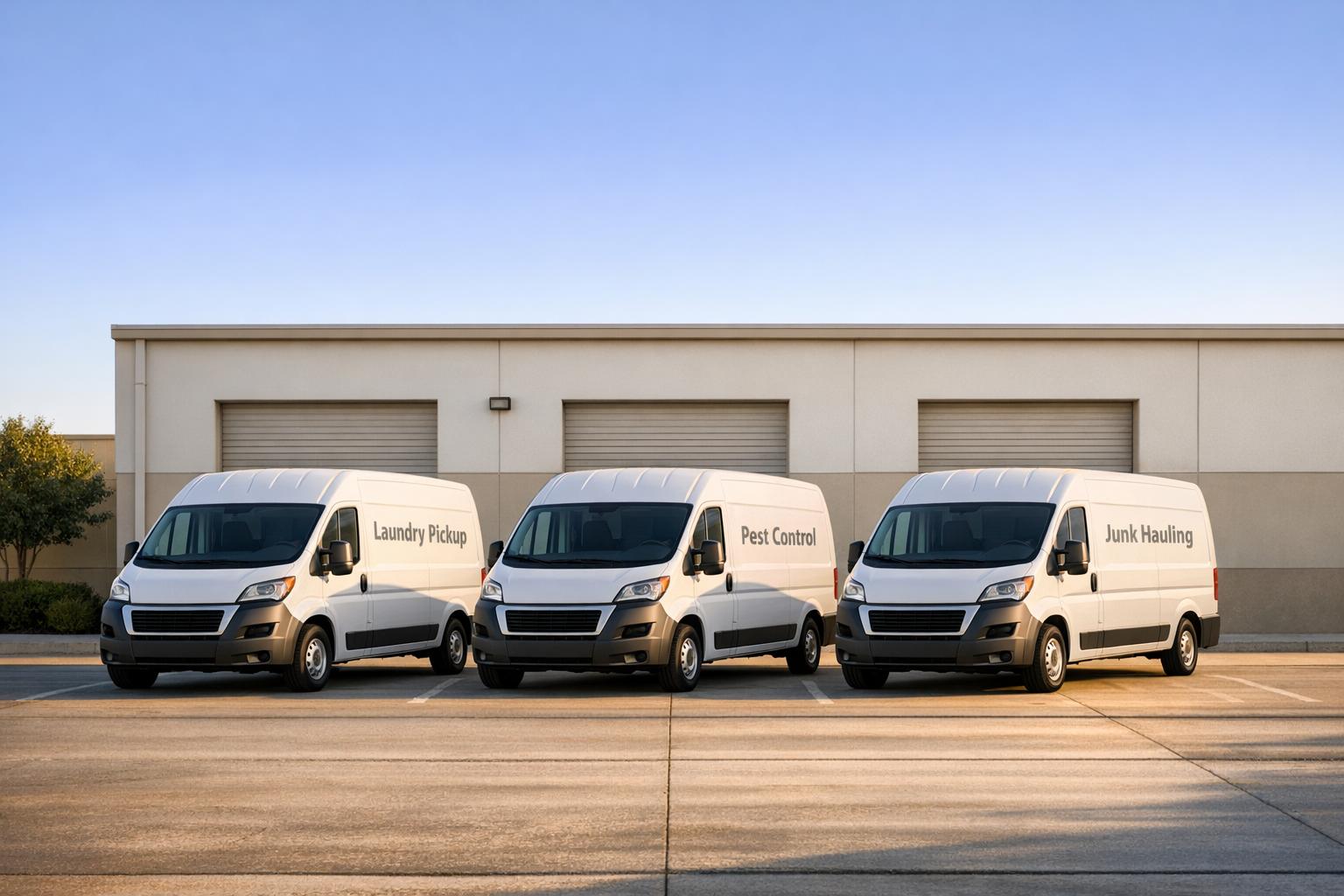
Forget flashy tech startups. The real wealth in 2026 comes from simple, everyday businesses that solve basic problems. These "boring" businesses - like laundromats, junk hauling, and pest control - are thriving because they provide services people can’t skip, even during tough economic times.
Here’s why these businesses work:
- Recurring Revenue: Predictable income from monthly contracts makes them stable and profitable quickly.
- Low Competition: Many avoid these industries due to their lack of glamour, creating opportunities for those willing to step in.
- Scalability: Systems and automation allow these businesses to grow without requiring constant owner involvement.
- Essential Services: They focus on needs people can’t ignore, like cleaning, repairs, and waste management.
Examples include:
- Laundromats earning $1.8M annually with 50% margins.
- Junk Hauling scaled into $3M a year.
- Pest Control tapping into a growing $34B market by 2030.
These businesses succeed because they focus on solving everyday problems with steady demand. If you’re looking to start a business, aim for something simple, indispensable, and profitable.
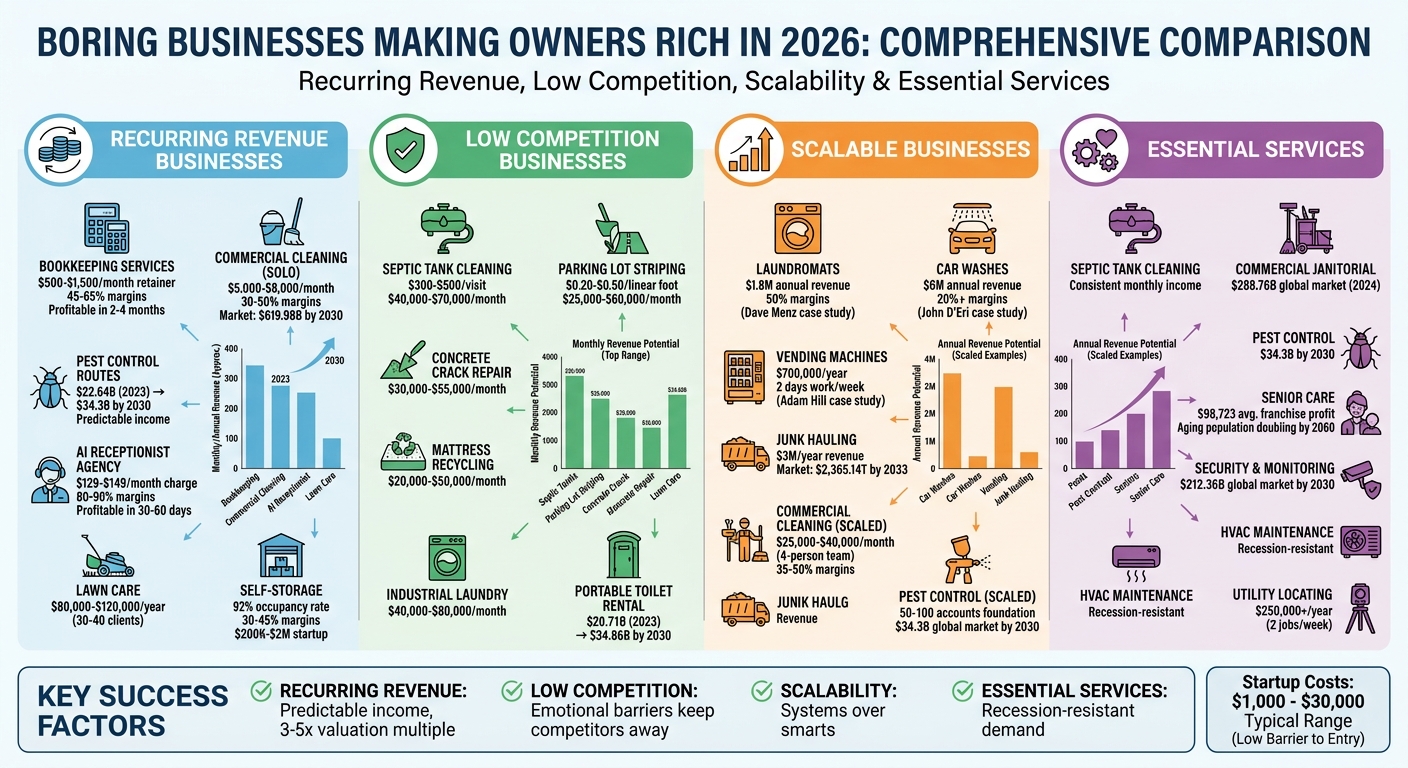
25 Boring Businesses Revenue Potential and Profit Margins Comparison 2026
10 'BORING' Businesses Making People Rich (Low Failure Rate)
sbb-itb-08dd11e
1. Recurring Revenue
Building a business with predictable monthly income is the hallmark of success for many entrepreneurs. Unlike one-time sales models, which constantly require new customers to reach goals like $5,000 a month, recurring revenue models gradually stack up, creating a more stable financial foundation.
This model transforms everyday services into long-term assets. Businesses with recurring revenue often sell for 3–5 times their annual revenue, compared to just 1–2 times for businesses relying on one-off sales. The ability to forecast income not only brings peace of mind but also increases the overall value of the business.
Here are six examples of recurring revenue ventures that are thriving in 2026:
1. Bookkeeping Services for Small Businesses
By offering monthly retainers ranging from $500 to $1,500, bookkeepers manage tasks like financial reports, payroll, and tax preparation. With startup costs under $500 and profit margins between 45–65%, solo operators can become profitable within 2–4 months. For instance, a single client paying $800 monthly could generate $48,000 over five years.
2. Commercial Cleaning Contracts
Securing multi-year agreements with offices, clinics, and gyms provides steady income, with profit margins typically ranging from 30–50%. A solo operator with just five recurring clients per week can earn $5,000–$8,000 monthly. The global cleaning services market, fueled by health and safety standards, is projected to hit $619.98 billion by 2030.
3. Pest Control Routes
Route-based subscription services for residential and commercial properties offer dependable income. The pest control market, valued at $22.64 billion in 2023, is expected to grow to $34.3 billion by 2030. Customers often remain loyal due to the high cost of switching providers.
4. AI Receptionist Agency
By using white-label AI phone services, businesses like dental offices and law firms can outsource bookings and FAQs around the clock. Charging $129–$149 per month, operators can achieve profit margins of 80–96% with startup costs as low as $300–$500. Profitability is often reached within 30–60 days.
5. Lawn Care & Landscaping
Weekly mowing and maintenance contracts create a steady stream of revenue. A one-person operation serving 30–40 residential clients can earn between $80,000 and $120,000 annually. Consistent, quality service helps build lasting customer relationships.
6. Self-Storage Facilities
Renting out storage units on a monthly basis offers a low-maintenance business model. With an average nationwide occupancy rate of 92%, self-storage facilities enjoy profit margins of 30–45%. While startup costs range from $200,000 to $2 million, this model serves as a reliable long-term investment.
2. Low Competition
While flashy tech startups often grab the spotlight, some industries thrive precisely because they aren't glamorous or heavily featured on social media. These businesses succeed by operating in spaces with minimal competition.
"The barrier to entry isn't technical. It's emotional. People feel embarrassed pitching a carpet cleaning business... That embarrassment is your competitive advantage." - MetaFluxTech at CodeToDeploy
Here are six niche ventures that thrive in low-competition environments.
These businesses often remain under the radar due to factors like their "ick factor", the need for specialized tools, or their lack of online appeal. But this scarcity of competitors creates a steady and reliable market for those willing to step in.
1. Septic Tank Cleaning
Homes in suburban and rural areas depend on routine septic tank maintenance, yet few people are eager to take on this less-than-glamorous work. Service fees range from $300 to $500 per visit, and established operators can bring in $40,000 to $70,000 per month.
2. Parking Lot Striping
Commercial properties need clear parking lines, which ensures ongoing demand for this niche service. With rates of $0.20 to $0.50 per linear foot and the need for specialized equipment, operators can earn between $25,000 and $60,000 monthly, often with little local competition.
3. Concrete Crack Repair
Sidewalks and parking lots need timely crack repairs to avoid liability issues, but this niche is often ignored by general contractors. Focusing on this specific service can generate monthly revenues of $30,000 to $55,000.
4. Mattress Recycling
Cities face challenges with mattress disposal, creating a unique opportunity. Entrepreneurs can earn from both pickup fees and payments from recycling centers for salvaged materials. This overlooked market can generate $20,000 to $50,000 per month.
5. Industrial Laundry for Boutique Hotels
Smaller hotels and Airbnb hosts often lack in-house laundry facilities, creating a gap in the market. Catering to this "missing middle" of the hospitality industry can yield monthly revenues between $40,000 and $80,000, with little competition from large-scale industrial plants.
6. Portable Toilet Rental
Construction sites and outdoor events consistently require portable restroom facilities. This route-based business, valued at $20.71 billion globally in 2023 and projected to grow to $34.86 billion by 2030, demands logistical expertise that keeps casual competitors away.
3. Scalability
The best "boring businesses" don’t just generate income - they have the potential to grow that income exponentially. Scalability is what turns a simple side hustle into a sellable, thriving enterprise. By leveraging stable income streams and limited competition, these businesses can transform into million-dollar operations.
"Boring businesses scale on systems, not smarts." – Logan Zane
The key to scaling lies in three main factors: route density, recurring revenue, and systems that run independently of the owner. With the help of modern automation tools, tasks like scheduling and billing can be streamlined, enabling small teams to serve hundreds of clients at once.
Examples of Scalable Ventures
Laundromats
Dave Menz took a struggling laundromat and turned it into a chain generating over $1.8 million annually, with 50% profit margins. His success came from introducing wash-and-fold services and upgrading to card payment systems. Membership models and automation also played a big part in creating passive income streams.
Car Washes
John D’Eri scaled a car wash business to nearly $6 million in annual revenue with over 20% profit margins. His approach relied on standardized systems, making it easy to replicate operations across multiple locations.
Vending Machine Routes
Adam Hill developed a vending machine business that earns $700,000 per year while requiring only two days of work each week. This model grows through volume rather than complexity, creating assets that can be sold for 1–2 times their annual revenue.
Junk Hauling
Kyle Landwehr turned a basic junk-hauling operation into a $3 million-per-year waste management business by streamlining processes and expanding his team. The waste management industry, fueled by municipal contracts and recurring routes, is projected to hit $2,365.14 trillion globally by 2033.
Commercial Cleaning
A solo residential cleaner can earn between $5,000 and $8,000 monthly. Scaling up to a team of four increases monthly revenue to $25,000–$40,000, with margins ranging from 35% to 50%. The cleaning services market is expected to grow to $619.98 billion globally by 2030, thanks to predictable, multi-year contracts.
Pest Control Services
Establishing 50–100 recurring accounts provides a solid foundation for scaling by adding more trucks and crews. The pest control services market, driven by route density and regulatory compliance, is forecasted to reach $34.3 billion globally by 2030.
4. Essential Services
Some services remain indispensable no matter the state of the economy. The most resilient businesses focus on addressing needs that people can’t ignore. When finances get tight, consumers may skip vacations or delay buying a new car - but they still need essential services like pest control, office cleaning, or septic maintenance. These aren’t optional luxuries; they’re necessities that keep cash flowing even when spending habits shift. Businesses in these areas often enjoy steady revenue streams, even during economic slowdowns.
Another advantage of essential services is what experts call an "emotional barrier." This refers to the psychological hurdle that discourages competitors from entering certain markets. Many entrepreneurs shy away from pitching services like septic cleaning or carpet care to investors because they’re seen as unglamorous. This hesitation creates opportunities for those willing to step in, offering high-margin, reliable income streams.
Here are seven essential services that provide stability and growth even in challenging economic times:
- Septic Tank Cleaning: This critical service ensures consistent monthly income by addressing fundamental infrastructure needs.
- Commercial Janitorial Services: Offices, schools, and medical facilities require daily cleaning to operate. The global janitorial market hit $288.76 billion in 2024.
- Pest Control: Recurring inspections, often driven by health regulations, make this a dependable business. The global market is projected to reach $34.3 billion by 2030.
- Senior Care & Transportation: With an aging population expected to nearly double by 2060, non-medical assistance is in high demand. Franchise owners in this sector average $98,723 in yearly profit.
- Security & Monitoring Services: These are essential for protecting assets and ensuring liability coverage, with the market forecasted to grow to $212.36 billion globally by 2030.
- HVAC & Facility Maintenance: Climate control is a necessity, and repair-focused businesses thrive during downturns when people opt to fix rather than replace systems.
- Utility Locating: Legally required before any digging or construction, this service can be highly profitable. Small operations handling just a couple of jobs weekly can generate over $250,000 annually.
Conclusion
These businesses thrive on stability and consistent demand, offering a practical path for growth. Unlike tech startups chasing elusive funding rounds, these ventures often require modest initial investments - typically ranging from $1,000 to $30,000 - and focus on meeting recurring consumer needs in markets that remain steady over time.
What sets these opportunities apart is their low competition. As Logan Zane aptly puts it:
"Boring businesses don't need disruption. They just need owners who care more than the competition."
Industries like pest control or septic cleaning often go overlooked because they lack glamour, creating what some call a "psychological moat." This keeps competition low and opportunities wide open for those willing to step in and solve essential problems.
The formula for success here is refreshingly simple: choose a service people rely on regularly, streamline your operations early, and focus on building steady, recurring revenue instead of chasing one-off projects. Whether it’s maintaining HVAC systems, managing waste removal, or cleaning office spaces, the key is delivering consistent solutions to everyday problems.
If you're ready to turn a practical business idea into real income, IdeaFloat's AI-powered tools can help you get started. From testing demand and analyzing market potential to building pricing models and creating a launch plan, you'll have everything you need to hit the ground running. Stop overthinking - your first customers are waiting.
FAQs
Which boring business is best to start with little money?
Starting a bookkeeping business is an excellent choice if you're looking for a low-cost venture with steady demand. For around $150, you can obtain the necessary certification to get started. With 33 million small businesses in the U.S., many of which prefer to outsource their bookkeeping, there's a consistent need for these services. This combination of affordability and demand makes it a smart option for those ready to dive into entrepreneurship.
How do I land my first recurring monthly contracts?
To lock in your first recurring monthly contracts, begin by selecting a payment processor that offers automated billing. This will simplify the process for both you and your customers. Next, create customer profiles with clearly defined billing intervals (like weekly or monthly) and transparent terms. Be specific about what "recurring" means for your business to avoid confusion.
You might also want to explore subscription management software to help manage these ongoing agreements efficiently. Beyond the technical setup, focus on building strong relationships with your customers and consistently delivering value. When clients see the benefits of your service, they’re more likely to commit to ongoing contracts.
What licenses or insurance do I need for these services?
Licenses and insurance requirements can differ significantly depending on your industry and where you're located. Typically, businesses might need licenses like general business licenses, operational permits, or certifications tailored to their field - such as a QuickBooks certification for bookkeeping professionals.
When it comes to insurance, options like general liability, workers' compensation, or professional liability are often suggested to safeguard your business. It's crucial to review local regulations to ensure you're meeting all necessary requirements, as these will vary based on the services you provide and your operating location.
Related Blog Posts
- 7 Business Ideas That Thrive When the Economy Crashes
- 5 "Boring" Businesses Making Their Owners Rich in 2025
- Are 'boring businesses' the best way to make money in 2025?
- Recession-Proof Service Businesses With Everyday Demand